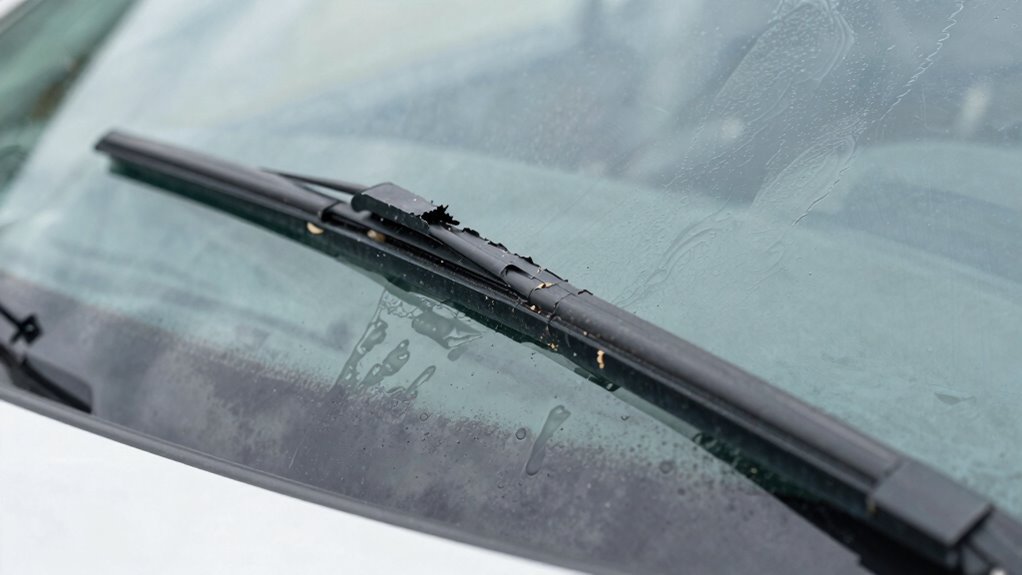
You’ll know your wiper blades are truly done when they leave streaks or smudges, make squeaking or chattering noises, or skip across the windshield. Visible cracks, tears, or missing rubber also signal failure. If you notice increased effort to clear rain or uneven wiping, it’s time to replace them. Paying attention to these signs can keep your windshield clear and driving safe. Keep exploring to learn more about how to avoid these issues before they happen.
Key Takeaways
- Visible cracks, tears, or missing rubber chunks indicate the blades are worn out.
- Streaks, smudges, or uneven wiping suggest the rubber has degraded.
- Squeaking, chattering, or skipping noises during use signal deterioration.
- Increased pressure or frequent use needed to clear water shows reduced effectiveness.
- Blades lift off windshield at high speeds or in windy conditions, indicating loss of proper contact.
Wiper blades are essential for clear visibility, especially during rain or snow, but they don’t last forever. When the rainy season hits, you rely heavily on your wipers to keep your windshield clear and maintain windshield clarity. If your blades are worn out, your view becomes obstructed, increasing your risk while driving. Recognizing the signs early can save you from dangerous situations and the cost of premature replacements.
One of the most obvious indicators that your wiper blades are done is when they leave streaks or smudges on your windshield. If you notice lines running across your view or uneven wiping, it’s time to inspect your blades. Streaking often happens because the rubber has degraded, losing its flexibility and ability to make uniform contact with the glass. During heavy rain, these streaks can considerably impair your ability to see clearly, which is dangerous, especially during high-speed driving or in low-visibility conditions.
Streaks or smudges on your windshield signal worn-out wiper blades, reducing visibility and safety during heavy rain.
Another clear sign is if your blades make noise when wiping. Squeaking, chattering, or skipping sounds indicate that the rubber has become hard or cracked. When blades become stiff or brittle, they don’t glide smoothly across the windshield, causing unnecessary noise and reducing wiping efficiency. During the rainy season, this noise can become more pronounced as water is pushed unevenly, compromising windshield clarity. Proper material durability can influence how long your blades last under different weather conditions.
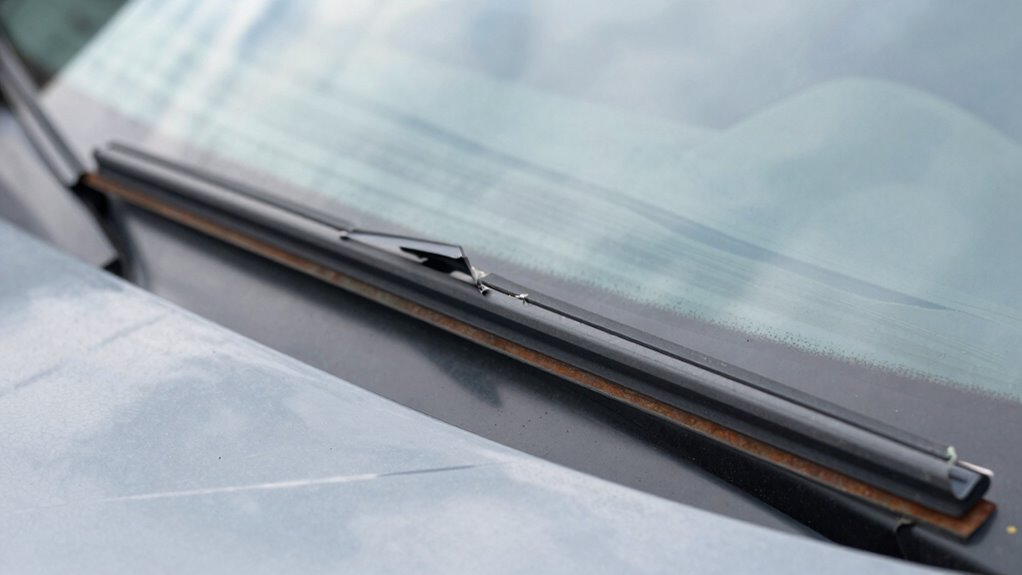
You should also pay attention to the physical condition of the blades. If you notice cracks, tears, or missing chunks of rubber, your blades are no longer functioning properly. Sometimes, the blades may lift away from the glass, especially at high speeds or during windy conditions. This can happen when the rubber loses its elasticity or if the frame becomes warped over time. When blades lift off the windshield, they can’t effectively clear water, leaving you vulnerable during storms or heavy rain.
In addition, if you find yourself needing to use your wipers more frequently or with increased pressure to clear the windshield, it’s a sign they’re losing their effectiveness. This often means the rubber has hardened or the blade frame has weakened, both leading to reduced windshield clarity. Regularly inspecting your wipers and replacing them when necessary guarantees you maintain peak visibility and safety on the road. Knowing that wiper blade lifespan varies based on usage and weather conditions can help you plan timely replacements and ensure optimal performance during the rainy season.

AJK Wiper Blades for Toyota Avalon 2013 2014 2015 2016 2017 2018, 2 Piece All Weather OEM Quality Automotive Replacement Windshield Wipers for My Car
Fitment: AJK Replacement for Toyota Avalon 2013 2014 2015 2016 2017 2018 silicone wiper blades offers advanced technology…
As an affiliate, we earn on qualifying purchases.
As an affiliate, we earn on qualifying purchases.
Frequently Asked Questions
How Often Should I Replace My Wiper Blades?
You should replace your wiper blades every 6 to 12 months for ideal wiper blade maintenance. Seasonal weather impacts, like snow or intense sun, can accelerate wear, so check your blades regularly. If you notice streaks, cracks, or squeaking, it’s time for replacements. Keep your windshield clear and safe by staying attentive to these signs and replacing your blades promptly, especially after harsh weather conditions.
Can Weather Affect the Lifespan of Wiper Blades?
Weather acts like a relentless sculptor, shaping your wiper blades’ lifespan. Rain resistance wears down faster in heavy downpours, while UV degradation from sun exposure causes cracks and brittleness. Harsh weather accelerates deterioration, making your blades less effective at clearing your windshield. To keep your visibility clear and safe, regularly check for signs of wear, especially after extreme weather, and replace blades when they lose their flexibility or leave streaks.
Are There Different Types of Wiper Blades for Specific Vehicles?
Yes, there are different types of wiper blades designed for specific vehicles. You should check for compatibility, as some blades are made for particular makes and models. Vehicle-specific design guarantees a perfect fit and peak performance, preventing streaks or chatter. When replacing your blades, always verify the type compatibility so you get the right wiper blades that suit your vehicle’s size and attachment style, guaranteeing clear visibility during weather conditions.
What Are the Signs of Damaged Wiper Blade Connectors?
Think of damaged wiper blade connectors like loose puzzle pieces—you’ll notice them slipping or not fitting snugly. Signs of connector damage include wobbling blades, uneven streaks, or complete detachment during use. This often results from blade deterioration or wear over time. If you see rust, cracks, or feel looseness when inspecting the connection points, it’s time to replace the connectors or the entire blade assembly to maintain clear visibility.
Can I Repair Worn Wiper Blades Myself?
Yes, you can repair worn wiper blades yourself if you’re comfortable with basic tools. Start by inspecting the wiper blade materials, like rubber, for cracks or tears. If the blade frame is intact, you might replace just the rubber strip or the entire assembly, which is cheaper than the replacement cost of new blades. However, if the frame is damaged, it’s better to replace the entire wiper blade for safety.
![Rain-X 810363 Repellency Water Repellent Wiper Blades, 22" Windshield Wipers (Pack of 2) New & Improved Version of Latitude [Amazon Exclusive]](https://m.media-amazon.com/images/I/41edCAV7JFL._SL500_.jpg)
Rain-X 810363 Repellency Water Repellent Wiper Blades, 22" Windshield Wipers (Pack of 2) New & Improved Version of Latitude [Amazon Exclusive]
Patented Rain Repellent Technology: This new and improved version of Latitude clears your windshield while applying Rain-X water…
As an affiliate, we earn on qualifying purchases.
As an affiliate, we earn on qualifying purchases.
Conclusion
In the end, paying attention to your wiper blades’ performance is key. If they leave streaks, chatter, or don’t clear the windshield properly, it’s time for a change. Don’t wait until you’re caught in a storm with poor visibility—trust your instincts and replace them early. After all, a little preventive maintenance can save you from bigger headaches down the road. Keep your view clear, and stay safe on the road!

PEAK Snow Beast Winter Windshield Wiper Blade, 22-inch
QUALITY: Designed with beam blade technology to provide superior performance in extreme winter weather
As an affiliate, we earn on qualifying purchases.
As an affiliate, we earn on qualifying purchases.

Rain-X 820149 WeatherBeater Wiper Blades, 22" Windshield Wipers (Pack of 2), Automotive Replacement Windshield Wiper Blades That Meet Or Exceed OEM Quality And Durability
Over 15 Years Of Trusted Quality – Conventional wiper blades that have stood the test of time, meeting…
As an affiliate, we earn on qualifying purchases.
As an affiliate, we earn on qualifying purchases.