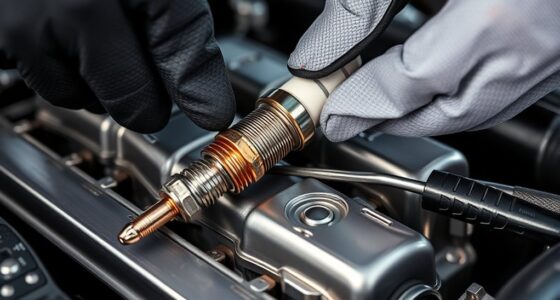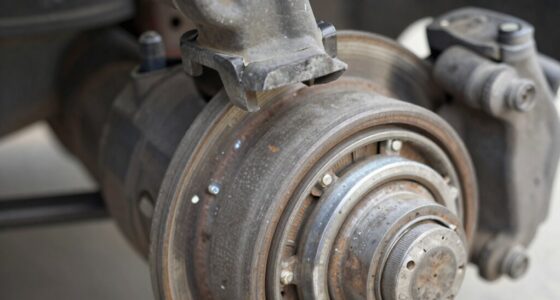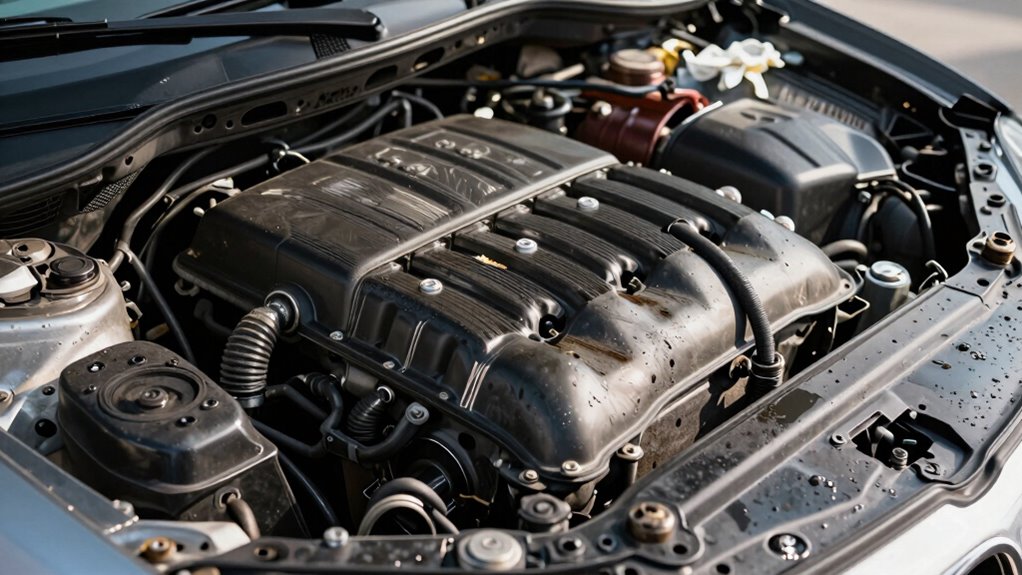

Neglecting proper engine bay cleaning can lead to costly problems, like electrical malfunctions and damage to seals. Avoid spraying water directly on electrical components or using harsh cleaners that can cause corrosion or short circuits. Don’t forget to dry thoroughly and protect sensitive parts. Overlooking battery corrosion or oil leaks can worsen issues over time. Keep these mistakes in mind—if you stay attentive, you’ll discover how to clean safely and avoid big expenses.
Key Takeaways
- Failing to disconnect the battery risks corrosion and electrical damage during cleaning.
- Using high-pressure water or harsh cleaners can waterlog electrical components, causing malfunctions.
- Ignoring oil leaks or washing over them can weaken seals and worsen leaks over time.
- Not thoroughly drying electrical parts after cleaning increases corrosion and short-circuit risks.
- Neglecting protective measures around electrical connections and seals can lead to costly repairs.
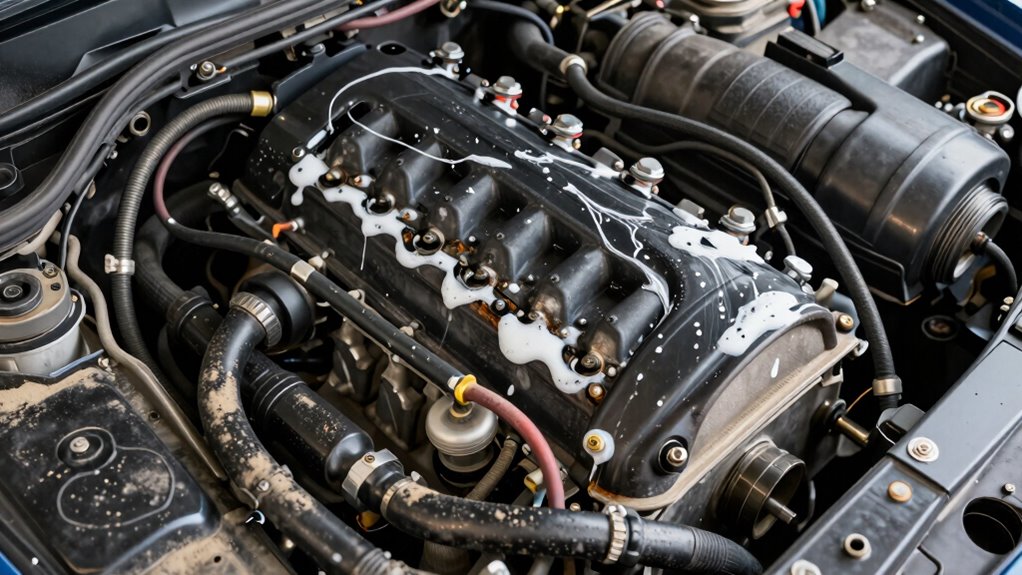
Cleaning your engine bay might seem straightforward, but making common mistakes can lead to costly damage. One of the biggest errors you can make is neglecting to protect the battery properly. Battery corrosion is a frequent issue in engine bays, especially if you ignore the buildup of white or bluish-green residue on the terminals. When you start cleaning without disconnecting the battery, you risk disturbing this corrosion, which can cause poor electrical connections or even damage the battery itself. To avoid this, always disconnect the negative terminal before cleaning, and gently scrub away corrosion with a wire brush or a mixture of baking soda and water. If you overlook this step, you may face starting issues or short circuits later on, both of which can be expensive to fix.
Another common mistake is using high-pressure water or harsh cleaners that can seep into sensitive components. Many people think that a vigorous wash will make their engine look spotless, but the reality is that excess water can reach areas like the alternator, fuse box, and other electrical connections, causing corrosion or malfunctions. Be cautious to spray water only where appropriate and avoid directly aiming at electrical parts. Instead, use a spray bottle or a gentle stream of water, followed by a thorough dry with compressed air or a microfiber cloth. Failing to do so not only risks electrical issues but also increases the chance of oil leaks becoming more problematic, since moisture can weaken seals or promote corrosion in engine parts. Proper electrical protection during cleaning is essential to prevent such issues.
Oil leaks are another issue that can be worsened by improper cleaning. If you spray or splash water onto an oily engine, you might wash away protective coatings or accelerate the deterioration of seals, making existing leaks worse over time. When cleaning around oil leaks, focus on removing grime carefully without disturbing the source of the leak. Using degreasers specifically designed for engine cleaning helps break down oil without damaging rubber or plastic components. If you neglect to clean these areas properly, you may misdiagnose the severity of the leak or inadvertently cause more damage, leading to costly repairs.
As an affiliate, we earn on qualifying purchases.
Frequently Asked Questions
Can Cleaning the Engine Bay Improve Vehicle Performance?
Cleaning your engine bay can improve engine performance by removing dirt and grime that may hinder cooling and cause overheating. It’s a useful maintenance tip to keep components functioning smoothly. When you clean it carefully and correctly, you prevent potential damage and guarantee your vehicle runs efficiently. Regular engine bay maintenance not only boosts performance but also helps identify issues early, saving you money and costly repairs in the long run.
How Often Should I Clean My Engine Bay?
Think of your engine bay as the face of your vehicle’s personality—clean and vibrant, or dull and cluttered. You should clean it every 6 to 12 months to maintain engine bay aesthetics and prevent dirt accumulation. Regular cleaning keeps components in top shape, reduces corrosion, and guarantees peak performance. If you drive in harsh conditions, consider more frequent cleanings to keep your engine looking sharp and functioning smoothly.
Are There Eco-Friendly Products for Engine Bay Cleaning?
Yes, there are eco-friendly products for engine bay cleaning. You can find sustainable cleaning options that use biodegradable ingredients, which are gentle on the environment and safe for your engine components. Look for products labeled as eco-friendly or plant-based, and avoid harsh chemicals. These solutions help you clean effectively while reducing your ecological footprint, making your maintenance routine more responsible and sustainable.
Should I Disconnect the Battery Before Cleaning?
Yes, you should disconnect the battery before cleaning your engine bay. This guarantees battery safety and reduces the risk of electrical hazards. By disconnecting the negative terminal first, you prevent accidental shorts or sparks while cleaning. Always wear gloves and eye protection, and handle the battery carefully. Taking these precautions keeps you safe and avoids costly electrical damage. Remember, safety always comes first when working on your vehicle.
What Tools Are Best for Detailed Engine Cleaning?
For detailed engine cleaning, you should use a soft-bristle brush or a toothbrush to gently scrub engine components. Opt for an engine degreasing spray to loosen grime without damaging sensitive parts. A microfiber cloth helps wipe away dirt and residues, while a plastic scraper can remove stubborn grease. Proper brush selection guarantees you clean thoroughly without risking damage, making your engine look brand new and functioning efficiently.
battery terminal corrosion cleaner
As an affiliate, we earn on qualifying purchases.
As an affiliate, we earn on qualifying purchases.
Conclusion
So, next time you splash water like a rookie or forget to disconnect the battery, remember—you’re not just risking a soggy engine, but possibly turning your car into a very expensive paperweight. Who knew that a little cleaning could lead to such big bills? So go ahead, get your engine shining, but maybe leave the expert tricks to the pros—unless you’re enthusiastic to fund your mechanic’s vacation fund! Happy cleaning (or not)!
As an affiliate, we earn on qualifying purchases.
As an affiliate, we earn on qualifying purchases.