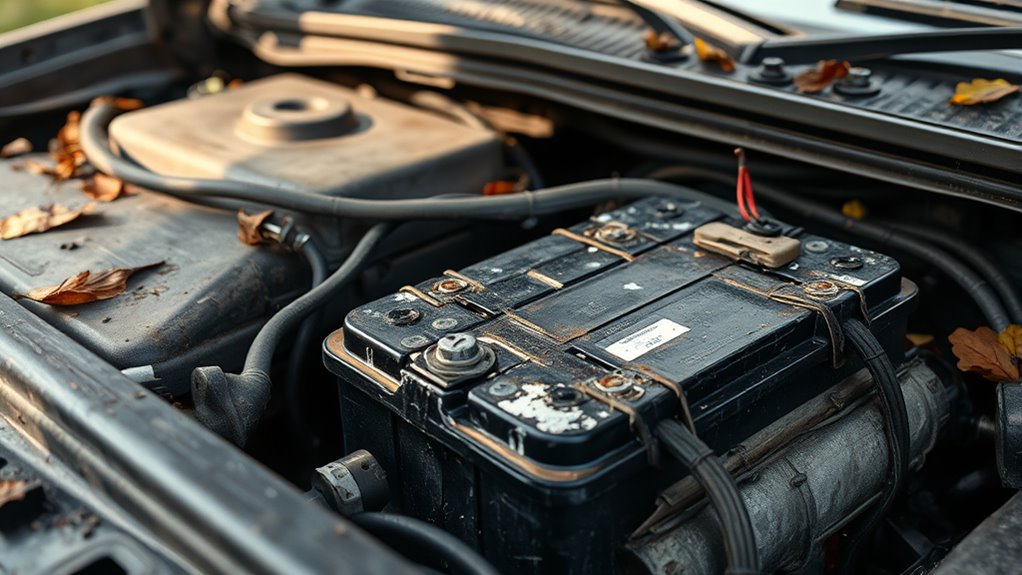
If your car battery keeps dying, it’s often due to early signs like slow starting, corrosion, or dim lights, or mechanical issues like a failing alternator or parasitic drain. Poor wiring or loose connections can also cause quick battery losses. To fix this, regularly check and clean terminals, avoid short trips, and keep electrical parts maintained. Want to discover more about preventing these issues and extending your battery’s life? Keep exploring.

Get business pricing on garage and car supplies
- Business-only prices and quantity discounts
- Tax-exempt purchasing
- Multiple users, one account, clear invoices
Key Takeaways
- Parasitic electrical drain from active components can deplete the battery even when the car is off.
- Corrosion or loose connections on terminals hinder proper charging and cause battery failure.
- A failing alternator prevents the battery from recharging during engine operation.
- Frequent short trips prevent the battery from fully recharging, accelerating wear.
- An aging or damaged battery is more prone to dying prematurely despite proper maintenance.
Signs of a Failing Battery and Early Indicators

Your car’s battery may be failing if you notice slow engine cranking or difficulty starting the vehicle. One early sign is battery corrosion on the terminals, which can hinder proper power flow. You might see a white, green, or bluish crust around the battery posts, indicating corrosion buildup. Additionally, alternator issues can cause your battery to drain prematurely, leading to starting problems. If your headlights dim or interior lights flicker when you turn the engine on, it’s a sign that the charging system isn’t functioning properly. Proper battery maintenance can help extend its lifespan and prevent sudden failures. Regular inspections for corrosion buildup can help you catch problems before they cause complete failure. Maintaining the integrity of your electrical system is crucial for preventing battery issues. These symptoms often appear before the battery completely dies, giving you a chance to address the problems early. Paying attention to these signs can help you prevent unexpected breakdowns and costly repairs.
Common Mechanical and Electrical Causes of Battery Drain
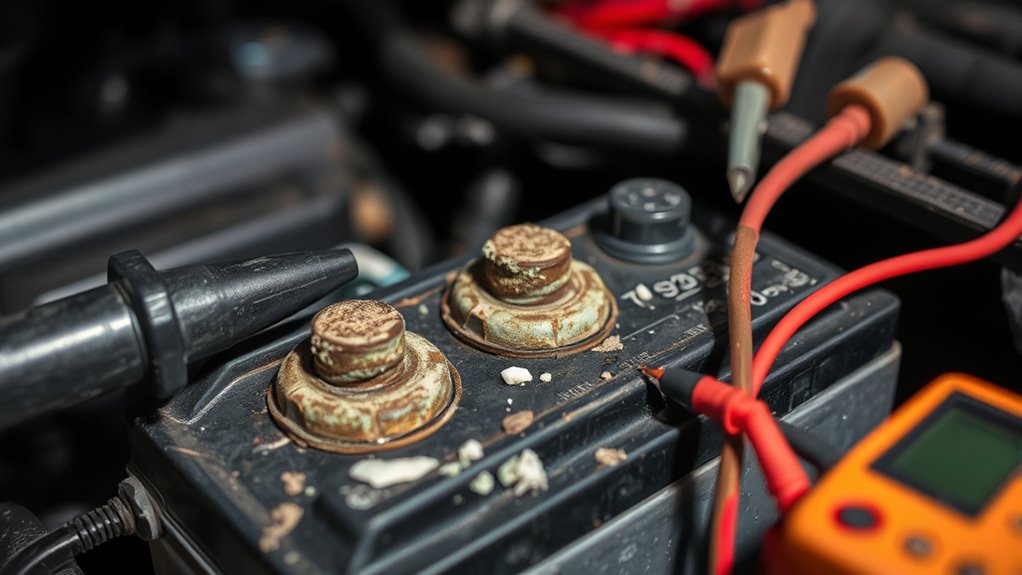
Mechanical and electrical issues are common culprits behind unexplained battery drain. One major cause is alternator issues, which prevent your battery from charging properly, leading to gradual power loss. Next, parasitic drain occurs when electrical components, like lights or modules, stay active even after you turn off the car, draining the battery over time. Additionally, faulty wiring or corroded connections can create unintended electrical paths, causing continuous drain. These problems can happen without obvious signs, but if you notice your battery dying sooner than expected, it’s worth inspecting these areas. Addressing alternator problems, reducing parasitic drain, and fixing wiring issues can considerably extend your battery’s life and prevent unexpected breakdowns. Regular maintenance helps catch these issues early before they become costly repairs. Additionally, understanding modern electrical systems can help identify complex causes of battery drain more effectively. Recognizing signs like corrosion or loose connections can also be crucial in diagnosing persistent battery issues. Furthermore, using diagnostic tools can help pinpoint specific electrical faults quickly. It’s also beneficial to stay aware of battery age since older batteries are more prone to drain and failure.
Effective Strategies to Prevent Future Battery Failures
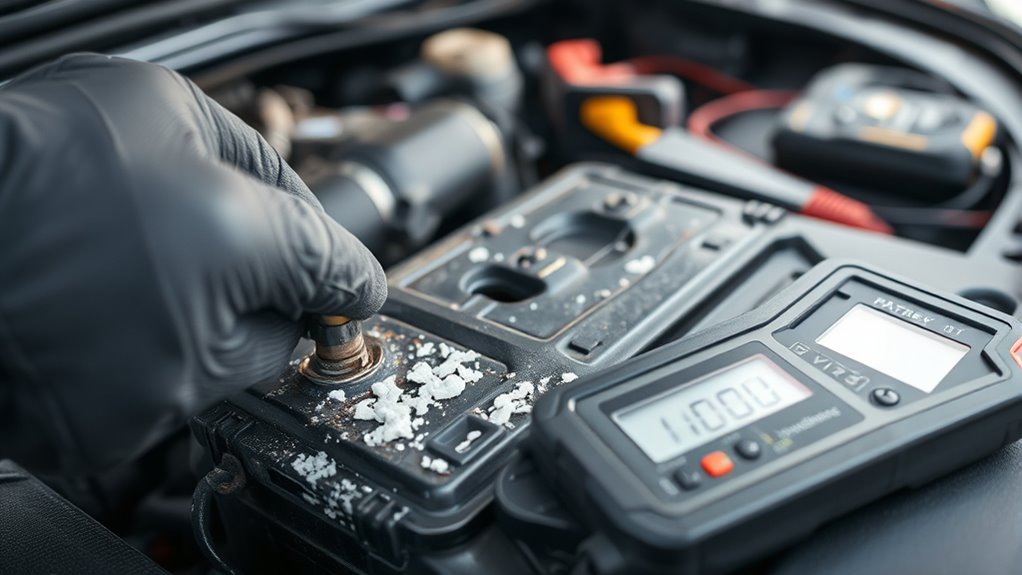
To prevent future battery failures, adopting simple yet effective maintenance habits can make a significant difference. Regular battery maintenance involves checking for corrosion, ensuring terminals are clean and tight, and inspecting the battery for any signs of damage. Follow charging tips such as avoiding frequent short trips that don’t fully recharge the battery, and keep your vehicle’s electrical system in good condition. If you notice the battery is aging or performance drops, replace it promptly. Keep an eye on warning lights and monitor the voltage regularly. Using a trickle charger or maintaining a proper charging routine helps prevent deep discharges that strain the battery. Additionally, air purifier maintenance dos and don’ts for your vehicle’s cabin air system can help reduce contaminants that may affect battery performance. Being aware of battery lifespan and understanding how environmental factors impact it can further extend your battery’s longevity. Maintaining proper electrical system health is essential for preventing unexpected battery issues. Regularly inspecting your vehicle’s charging system components can also help identify potential problems before they cause a failure. These proactive steps can extend your battery’s lifespan and keep your car running smoothly.
Frequently Asked Questions
How Long Should a Typical Car Battery Last Before Replacement?
A typical car battery lasts about 3 to 5 years. To guarantee it stays reliable, you should regularly perform battery maintenance and schedule battery testing, especially as it nears the 3-year mark. Keep an eye on signs of aging like slow engine starts or dim lights. Proper maintenance and timely testing help prevent unexpected failures and extend your battery’s lifespan, saving you from inconvenient breakdowns.
Can Using Electronic Devices While the Engine Is off Drain the Battery?
Using electronic devices while your engine’s off can cause a considerable, consistent, and cumulative electronic drain on your battery. This practice interrupts proper battery maintenance, slowly depleting the stored power and risking a dead battery. To prevent this, avoid leaving devices plugged in when the engine isn’t running. Regularly checking your battery’s charge helps identify potential problems early, ensuring your battery remains healthy and reliable for longer-lasting performance.
Does Climate Affect the Lifespan of My Car Battery?
Yes, climate impact and temperature effects can shorten your car battery’s lifespan. Extreme heat causes the battery fluid to evaporate faster, leading to damage, while cold weather reduces your battery’s efficiency, making it harder to start your car. To safeguard your battery, park in shaded areas during hot months and keep your vehicle warm in winter. Regular maintenance and checks help guarantee your battery stays healthy regardless of climate conditions.
Are There Specific Driving Habits That Extend Battery Life?
Sure, you can extend your battery’s life with some stellar driving habits. Avoid aggressive driving styles that drain power fast, and don’t forget to stick to a solid maintenance routine—like checking terminals and fluid levels. Regularly taking short trips can kill your battery, so aim for longer drives occasionally. Basically, treat your car kindly with smooth driving and routine care, and your battery will thank you with longer, happier service.
Is It Safe to Jump-Start a Car With a Dead Battery?
Jump-starting a car with a dead battery can be safe if you follow proper jump start safety procedures. Make sure the vehicles are off, connect the cables correctly, and avoid sparks. However, if done incorrectly, you risk battery damage or damaging your vehicle’s electrical system. Always consult your owner’s manual or a professional if you’re unsure, and never skip safety steps to avoid potential hazards.
Conclusion
Knowing the signs of a failing battery and understanding the common causes can save you time and money. By staying proactive and addressing issues early, you prevent small problems from snowballing into big headaches. Regular maintenance and mindful driving habits are your best tools to keep your battery healthy. Remember, an ounce of prevention is worth a pound of cure—don’t wait until you’re left stranded to take action. Stay vigilant, and your car will thank you.
Fall Picks
fall essentials
As an affiliate, we earn on qualifying purchases.