Your serpentine belt should be replaced every 60,000 to 100,000 miles or if you notice signs like squeaking noises, fraying, or cracks. If it breaks, your engine’s essential systems—like the alternator, power steering, and AC—will stop working, risking breakdowns and costly repair. Keeping an eye on its condition and replacing it on time prevents surprises. Stay tuned to discover more about how proper maintenance keeps your vehicle running smoothly.
Key Takeaways
- Replace the serpentine belt every 60,000 to 100,000 miles or as recommended by the manufacturer.
- Signs like squeaking, fraying, or cracks indicate it’s time for replacement.
- A broken belt causes loss of critical systems like alternator, power steering, and AC.
- Belt failure can lead to engine overheating and potential engine damage.
- Regular inspections and proper tension prevent premature belt failure and ensure vehicle reliability.
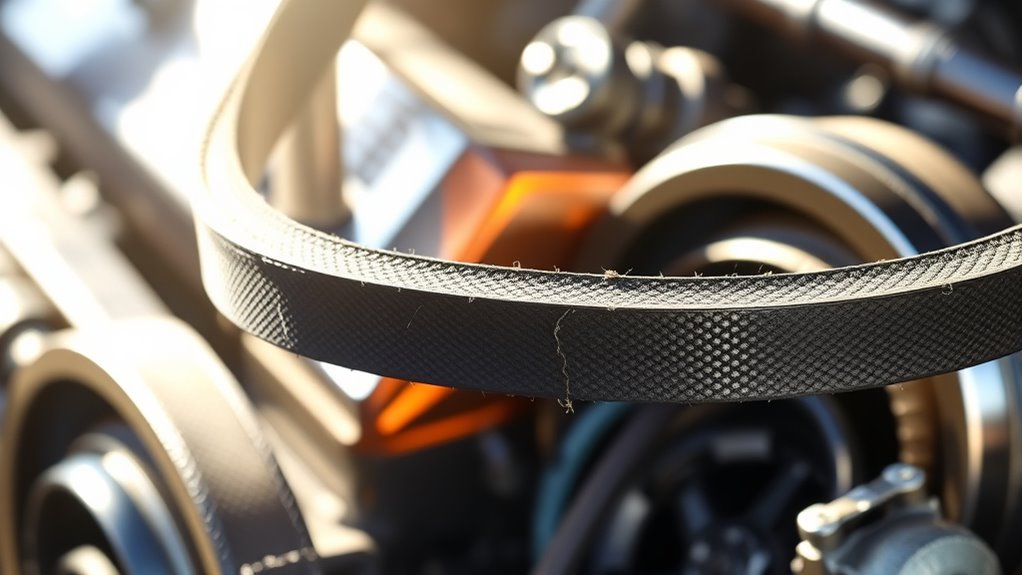
Have you ever wondered how your car keeps all its essential systems running smoothly? The answer lies in the serpentine belt, a pivotal component that powers everything from your alternator to the air conditioning. To keep this belt functioning properly, regular maintenance is key. One of the most important aspects to monitor is belt tension. If the belt is too loose, it’ll slip on the pulleys, causing poor performance and potential system failures. On the other hand, if it’s too tight, it can strain the pulleys and bearings, leading to premature wear. A proper belt tension ensures that the serpentine belt maintains ideal contact with the pulleys, allowing power to transfer efficiently without unnecessary stress on the components.
Pulley alignment is equally critical. Misaligned pulleys cause uneven wear on the belt, increasing the risk of slipping or fraying over time. When pulleys aren’t aligned correctly, the belt doesn’t sit flat against the pulleys’ surfaces, which can result in uneven tension distribution. This misalignment not only shortens the lifespan of your serpentine belt but can also lead to other issues like squeaking noises or sudden belt failure. To prevent this, you should periodically check the pulley alignment during routine maintenance. If you notice any wobbling or shifting, it’s essential to have a mechanic realign the pulleys promptly. Proper pulley alignment and belt tension adjustment are essential for optimal performance.
Maintaining proper belt tension and pulley alignment isn’t just about avoiding breakdowns; it also helps your vehicle run more efficiently. A well-tensioned, correctly aligned serpentine belt minimizes energy loss and reduces strain on your engine components. When these factors are overlooked, the belt can slip or break unexpectedly, potentially leaving you stranded or causing severe damage to other engine parts. Replacing the belt at recommended intervals—usually every 60,000 to 100,000 miles—and inspecting the pulleys regularly can save you money and prevent inconvenient breakdowns.
In essence, keeping your serpentine belt in good shape hinges on paying attention to belt tension and pulley alignment. These small but critical adjustments ensure your vehicle’s systems operate smoothly and reliably. By staying proactive with maintenance and recognizing signs of wear early, you can avoid costly repairs and enjoy a safer, more efficient drive. Remember, your car’s health depends on these simple checks—so don’t ignore the importance of proper belt tension and pulley alignment.
Frequently Asked Questions
Can a Serpentine Belt Be Repaired Instead of Replaced?
You can’t really repair a serpentine belt because it’s made of durable rubber and reinforced with fibers; damage like cracks or fraying usually means it needs replacement. Repair options are limited since patching or fixing the belt isn’t reliable or safe. If you notice wear or damage, it’s best to replace the belt promptly to avoid breakdowns and ensure your vehicle runs smoothly.
How Can I Tell if My Serpentine Belt Is Slipping?
Your serpentine belt might be slipping if you hear squealing noises that sound like a rock concert in your engine! Check for loose belt tension and misaligned pulleys—these are common signs of slipping. When the belt isn’t tight enough or pulleys are off, it can’t grip properly, causing it to slip. Regularly inspect your belt tension and pulley alignment to prevent unexpected slips and keep your engine running smoothly.
Does a New Serpentine Belt Improve Engine Performance?
A new serpentine belt can improve engine performance since it’s made from quality belt material that offers better flexibility and durability. When the belt tension is properly adjusted, it ensures efficient power transfer to engine accessories, reducing slipping and noise. If your belt is old or worn, replacing it with a fresh one helps maintain smooth operation, boost fuel efficiency, and prevent unexpected breakdowns.
Are There Specific Driving Conditions That Wear Out Belts Faster?
Yes, certain driving conditions can cause your serpentine belt to wear out faster. Weather effects like extreme heat, cold, or humidity can weaken the belt material. Additionally, aggressive driving habits such as rapid acceleration, hard braking, or frequent short trips put extra strain on the belt. These factors accelerate wear, increasing the likelihood of belt failure. Regular inspections and adapting your driving in harsh conditions can help prolong your belt’s lifespan.
What Are the Environmental Factors Affecting Serpentine Belt Lifespan?
Did you know that extreme weather can cut your serpentine belt’s life by up to 20%? Weather impact, like intense heat or freezing cold, causes material fatigue, leading to cracks and tears. Pollution effects, such as airborne chemicals and grime, accelerate belt wear by degrading its rubber. Regular inspections help you catch signs of deterioration early, ensuring your belt keeps running smoothly despite environmental challenges.
Conclusion
Your serpentine belt is the heartbeat of your engine, keeping everything running smoothly. When it’s time to replace it, don’t wait for a breakdown to remind you—think of it as giving your car a essential boost. Regular inspections and timely replacements are your best defense against unexpected failures. Stay ahead of the game, and your car will thank you with reliable performance, like a well-oiled machine ready to conquer the road ahead.