To check and inflate your tires properly, start by locating your vehicle’s recommended tire pressure on the door placard or manual. Use a reliable gauge to measure cold tires, and add air gradually if needed, checking the pressure often. Make sure to replace valve caps and avoid overinflation. If you want to keep your tires in top shape and safe, there’s more to learn about maintaining perfect pressure.

Get business pricing on garage and car supplies
- Business-only prices and quantity discounts
- Tax-exempt purchasing
- Multiple users, one account, clear invoices
Key Takeaways
- Check tire pressure when tires are cold, ideally after the vehicle has been stationary for at least 3 hours.
- Locate the recommended PSI on the vehicle’s placard or owner’s manual for accurate inflation.
- Use a reliable tire gauge to measure pressure and ensure gauge calibration for accurate readings.
- Add air gradually using an air compressor, checking pressure frequently to reach the recommended PSI.
- Replace valve caps after inflating and check tire pressure monthly to maintain safety and optimal performance.
Why Proper Tire Pressure Matters

Proper tire pressure is essential for safe and efficient driving. When your tires are underinflated, they experience uneven tire wear, which shortens their lifespan and can lead to dangerous blowouts. Overinflated tires, on the other hand, cause uneven contact with the road, reducing grip and increasing the risk of accidents. Maintaining the correct tire pressure also improves fuel efficiency by reducing rolling resistance, helping you save money at the pump. Properly inflated tires ensure ideal traction, handling, and comfort while driving. Regularly checking and adjusting tire pressure prevents premature tire wear and keeps your vehicle running smoothly. Additionally, understanding the importance of contrast ratio can help you appreciate how proper inflation enhances your driving experience. Connected technology like tire pressure monitoring systems can make it easier to stay on top of your tire health. By staying on top of your tire pressure, you not only extend tire life but also enhance your safety and save fuel over time. Ensuring accurate tire pressure readings is made easier with digital gauges, which provide precise measurements compared to traditional analog tools. Using professional recommendations can help you determine the ideal pressure specific to your vehicle model and driving conditions. Regularly calibrating your tire pressure gauges ensures consistent and reliable readings for optimal maintenance.
Gathering the Right Tools

Before you can accurately check or adjust your tire pressure, you need to gather the right tools. Having these essentials ready makes the process quick and effective. First, you’ll need a reliable tire gauge to measure the current pressure accurately. Next, an air compressor will help you add air if your tires are underinflated. Finally, keep a valve stem tool or small wrench handy to remove the valve cap and ensure a proper seal during inflation. These tools ensure you can check your tires precisely and add air efficiently. Properly maintaining tire pressure involves understanding wave and wind influences that can affect your tires’ performance and longevity. Using a good tire gauge prevents over- or under-inflation, while the air compressor saves time when adding air. Being aware of environmental factors like temperature fluctuations can help you maintain optimal tire pressure and extend tire life. Additionally, understanding air pressure recommendations provided by your vehicle manufacturer can guide your adjustments. With the right tools, you’re prepared to maintain your tires and keep your vehicle running smoothly, especially considering weather-related changes that impact inflation needs. Recognizing the impact of weather on tire pressure can help you make more accurate adjustments during different seasons.
Locating Your Vehicle’s Recommended Tire Pressure
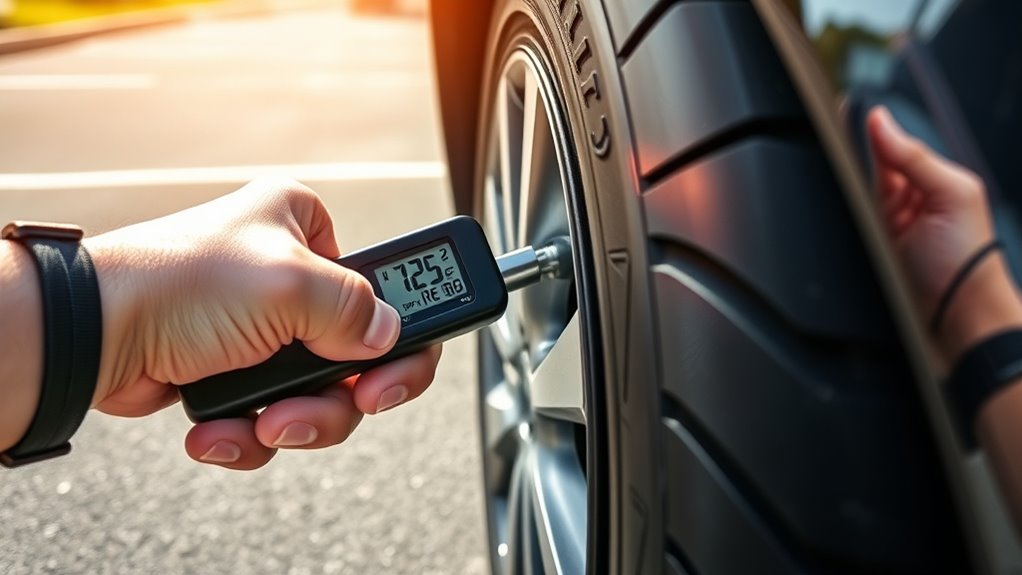
To find your vehicle’s recommended tire pressure, start by checking the vehicle placard usually located on the driver’s side door frame. You can also look in the owner’s manual if the placard isn’t visible. Additionally, the tire sidewall displays maximum pressure, but always follow the manufacturer’s recommended levels for peak performance. Ensuring proper tire maintenance can prevent blowouts and improve fuel efficiency, especially since consistent support breakfast can contribute to overall vehicle care by providing the energy needed for routine tasks.
Find the Vehicle Placard
Your vehicle’s recommended tire pressure is usually listed on a placard located on the driver’s side door frame or door edge. This tire placard provides essential information based on your vehicle’s specifications, ensuring you inflate your tires correctly. It’s important to find and read this placard before checking or adjusting your tire pressure. The placard will specify the ideal PSI for both the front and rear tires, which helps maintain supreme handling, safety, and fuel efficiency. Keep in mind that these numbers are tailored to your vehicle’s design and load capacity. Always consult the tire placard as your primary reference, rather than guesswork or assumptions, to keep your tires inflated properly and your driving safe. European cloud innovation can also serve as an example of how precise specifications and guidelines are essential for optimal performance and safety.
Check Owner’s Manual
The owner’s manual provides detailed information about your vehicle’s recommended tire pressure, which may not always be listed on the placard. It’s especially helpful if your car has advanced features like tire pressure sensors, as these can influence ideal pressures for accuracy. The manual also guides you on seasonal tire adjustments, reminding you to check and adjust tire pressure when temperatures change dramatically. By referencing the manual, you guarantee you’re inflating your tires to the manufacturer’s specifications, which promotes safety and efficiency. Remember, your vehicle’s perfect pressure might vary depending on load and conditions, so consulting the manual helps you maintain proper inflation year-round. This step ensures you’re using the most accurate info for your specific make and model.
Locate Tire Sidewall
Locating your vehicle’s recommended tire pressure starts with inspecting the tire sidewall. Your tire sidewall contains crucial tire markings that indicate the correct pressure for your vehicle. Look closely at the sidewall for a series of numbers and letters, which specify the manufacturer’s recommended PSI. These markings are essential because they guide you on inflating your tires safely and efficiently. Keep in mind that the tire sidewall may also display load ratings and tire size, but the pressure info is key. To find the right pressure, identify the specific tire markings that list the PSI. Always follow these recommendations to guarantee ideal tire performance and safety. Properly locating and understanding these markings is a vital step in maintaining your tires.
How to Check Your Tire Pressure Correctly

To get an accurate reading, use a reliable tire pressure gauge and check your tires when they’re cold. Make sure to follow your vehicle’s recommended pressure, which is usually found in the owner’s manual or on the door frame. Taking these steps guarantees you maintain proper tire pressure for safe and efficient driving.
Use a Reliable Gauge
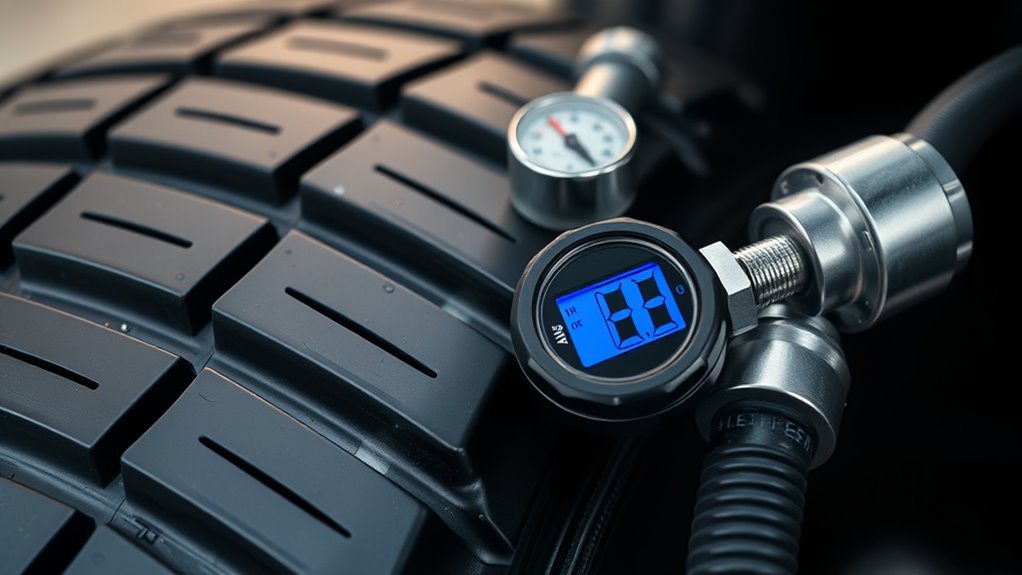
Using a reliable gauge is essential for accurately checking your tire pressure. A good tire gauge assures you get correct readings, preventing under- or over-inflation. When selecting a tire gauge, consider your preferences: digital gauges provide quick, easy-to-read displays, while analog gauges offer durability and simplicity. Here’s what to keep in mind:
- Tire gauge selection: Choose one that’s easy to handle and provides consistent readings.
- Digital vs. analog: Digital gauges are more precise and user-friendly; analog gauges are more rugged and often less expensive.
- Calibration: Regularly check your gauge’s accuracy to ensure precise measurements.
- Proper maintenance: Keep your air purifier filters clean and replace them as needed to maintain optimal performance.
- Additionally, it’s beneficial to familiarize yourself with tire pressure standards for your vehicle to ensure accurate inflation.
Investing in a quality gauge makes maintaining proper tire pressure straightforward and reliable, keeping your tires safe and efficient.
Check When Tires Cold
Checking your tire pressure when the tires are cold is essential for accurate readings. Tire temperature can notably affect pressure, as heat from driving increases it, leading to false readings. To guarantee precision, measure pressure before driving or after your vehicle has been parked in a cool environment for at least three hours. Seasonal adjustments are important too; colder weather causes tire pressure to drop, so you may need to check more frequently during winter. Always use a reliable gauge and avoid checking immediately after driving, as heat from the road and friction can give inflated readings. By checking when tires are cold, you get the most accurate measurement, helping you maintain proper inflation and extend tire life.
Follow Vehicle Specs
Always refer to your vehicle’s owner’s manual or the placard inside the driver’s door frame to find the recommended tire pressure. This guarantees you’re inflating your tires correctly, which promotes safety and maximizes tire lifespan. To check pressure accurately, do so when your tires are cold, ideally before driving or after a few hours of rest. Keep in mind that improper tire pressure can affect tire rotation and wheel alignment, leading to uneven wear. Regularly inspecting your tires helps you spot issues early. Remember, correct pressure supports ideal performance, fuel efficiency, and safety. If you notice uneven wear patterns, it might be time for a wheel alignment or tire rotation to maintain proper pressure levels and extend your tires’ life. Incorporating proper maintenance with the use of recommended tools, like vetted tire pressure gauges and inflators, ensures precise and safe inflation. Additionally, understanding how tire pressure impacts your vehicle’s overall handling can help you make informed adjustments for optimal driving conditions. Being aware of the effects of improper pressure can also prevent costly repairs and enhance your vehicle’s safety. Maintaining correct tire pressure also involves understanding how to interpret a pressure gauge, which is essential for accurate checks.
Step-by-Step Guide to Inflating Your Tires

Inflating your tires correctly is essential for safety and ideal vehicle performance. First, locate your recommended tire pressure, usually found on the driver’s side door frame or owner’s manual. Remove the valve cap and attach your air compressor or pump securely to the valve stem. Fill the tire gradually, checking the pressure frequently with a gauge to avoid over-inflation. After reaching the correct PSI, replace the valve cap tightly. Remember, proper tire pressure supports even tire wear, which is important for tire rotation and wheel balancing. Proper tire pressure can prevent premature tire failure and improve overall vehicle safety. If you notice uneven wear or vibrations, it might be time to have your tires inspected by a professional. Additionally, maintaining proper pressure maintenance is a simple yet critical step in ensuring your vehicle’s optimal performance and safety. Regularly checking your tire tire health and monitoring for any signs of damage can help avoid accidents caused by tire failure. Just as appliances benefit from regular preventive maintenance, tires also need consistent care to function safely and efficiently. Regularly checking your tire pressure can also be compared to the consistent effort needed in electric bike maintenance, which ensures peak performance and safety.
Tips for Maintaining Optimal Tire Pressure
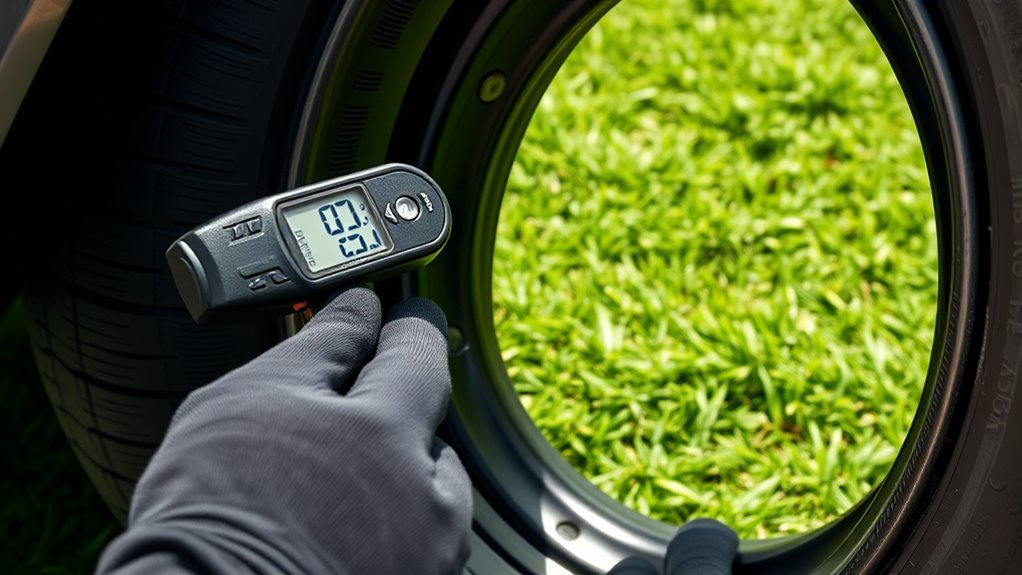
Maintaining ideal tire pressure requires regular attention, even when your tires appear fine. Proper tire pressure monitoring helps prevent uneven wear, improve fuel efficiency, and ensure safety. To keep your tires in top shape, consider seasonal tire care, adjusting pressure as temperatures change. Cold weather can cause pressure drops, so check and inflate your tires more frequently during winter. Similarly, hot weather can increase pressure, risking over-inflation. Here are some tips to stay on top of it:
- Regularly check tire pressure, ideally once a month
- Adjust pressure according to seasonal temperature changes
- Use a quality gauge for accurate readings and follow your vehicle’s recommended PSI
- Be aware that tire pressure fluctuations can occur due to changes in temperature, so monitoring regularly is essential. Understanding energetic alignment can also enhance your awareness of overall vehicle maintenance and safety.
Common Mistakes to Avoid When Checking and Inflating Tires
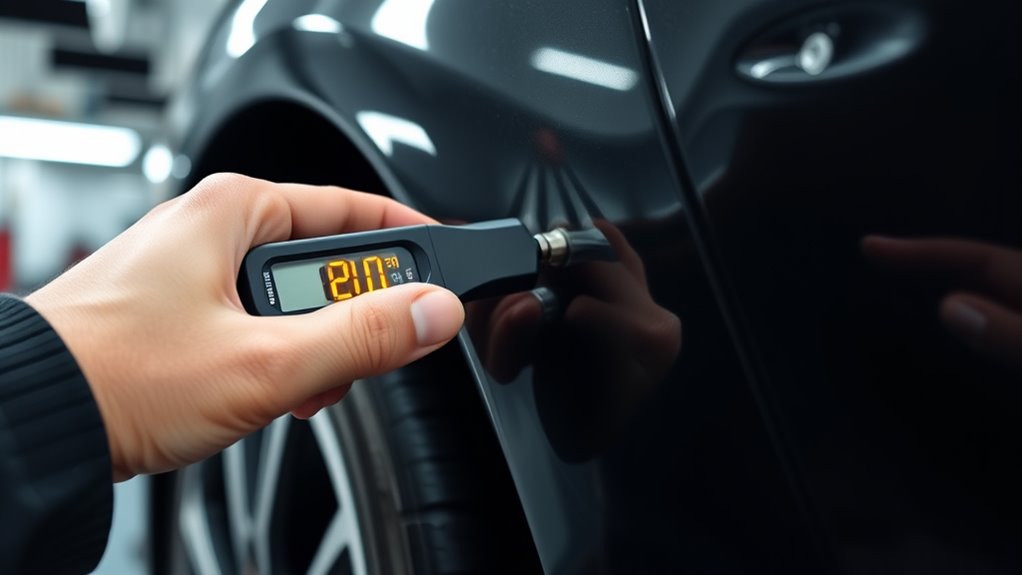
Many people make common mistakes when checking and inflating their tires, which can lead to uneven wear, decreased safety, and reduced fuel efficiency. One mistake is ignoring overinflation risks, which can cause a harsh ride and tire blowouts. Another is failing to check tire pressure when tires are cold, resulting in inaccurate readings. Overinflation can lead to uneven tire wear, decreasing tire lifespan and safety. Additionally, using the wrong pressure gauge or not inspecting valve stems can cause inaccurate readings or leaks.
| Mistake | Consequence |
|---|---|
| Overinflating tires | Increased risk of blowouts |
| Ignoring proper pressure | Uneven tire wear |
| Not checking when cold | Inaccurate readings |
Frequently Asked Questions
How Often Should I Check My Tire Pressure?
You should check your tire pressure at least once a month to keep your tires in top shape. Don’t forget to also monitor your tire rotation and tread depth regularly, as uneven wear can affect pressure and safety. Properly inflated tires improve fuel efficiency and extend tire lifespan. Make it a habit to inspect your tires often, especially before long trips, to guarantee peak performance and safety on the road.
Can Temperature Changes Affect Tire Pressure?
Did you know that a 10-degree temperature change can cause about a 1-2 PSI fluctuation in your tire pressure? Seasonal temperature effects directly influence tire pressure fluctuations, so colder weather can lower your pressure, while warmer temps can increase it. You should check your tire pressure more often during seasonal shifts to ensure safe driving, as temperature swings can compromise tire performance and fuel efficiency.
What Are Signs of Underinflated Tires?
You’ll notice underinflated tires through uneven tire wear patterns, especially on the edges, and reduced fuel efficiency. They may feel less responsive or make thumping noises when driving. Road hazard impacts can worsen this issue, causing bulges or cuts. Regularly checking your tire pressure helps prevent these signs, ensuring safer driving, better handling, and longer-lasting tires. Stay vigilant and maintain proper inflation to avoid costly repairs and accidents.
Is It Better to Check Tires When Cold or Hot?
You should check your tire pressure when the tires are cold, ideally before driving or after at least three hours of rest, because hot tires can give false readings due to heat expansion. Rely on your tire pressure sensors for accurate info, especially during seasonal tire adjustments, as temperature changes influence pressure. Checking cold guarantees you get the right pressure, helping your tires perform safely and efficiently.
How Do I Know if My Valve Stem Is Leaking?
You can tell if your valve stem is leaking by inspecting it closely for cracks, damage, or corrosion during a valve stem inspection. Use leak detection methods like applying a soapy water solution around the stem—bubbles indicate a leak. Also, listen for hissing sounds or check for a sudden drop in tire pressure over a few days. Address leaks promptly to maintain proper tire pressure and safety.
Conclusion
By mastering tire pressure, you’re opening the secret to safer, smoother drives that could outlast a lifetime. Checking and inflating your tires properly isn’t just routine—it’s essential to avoid surprises on the road and save money in the long run. With these simple steps, you’ll keep your tires in top shape, ensuring every trip is as reliable as the sunrise. Don’t let underinflation be the villain—take control and drive with confidence!
Evergreen bestsellers Picks
bestsellers
As an affiliate, we earn on qualifying purchases.