To prepare your vehicle for deep water crossings, start by inspecting it thoroughly—check seals on doors, windows, engine, and other vulnerable areas for water tightness. Guarantee your tires have enough tread and brakes are responsive. Equip yourself with safety gear like a life jacket, gloves, and a flashlight. Review water conditions and plan your route carefully. Approach slowly using 4WD, stay steady, and monitor your vehicle constantly. If you’re ready to learn more about safe water fording, keep going.
Key Takeaways
- Inspect and seal doors, windows, engine compartment, and air intake to prevent water intrusion.
- Ensure tires have sufficient tread and brakes are responsive for safe crossing.
- Equip vehicle with safety gear like a life jacket, gloves, flashlight, and communication devices.
- Review water depth and current beforehand; avoid crossing if conditions are unsafe.
- Use steady, low-speed approach with 4WD or traction control, maintaining awareness during the crossing.
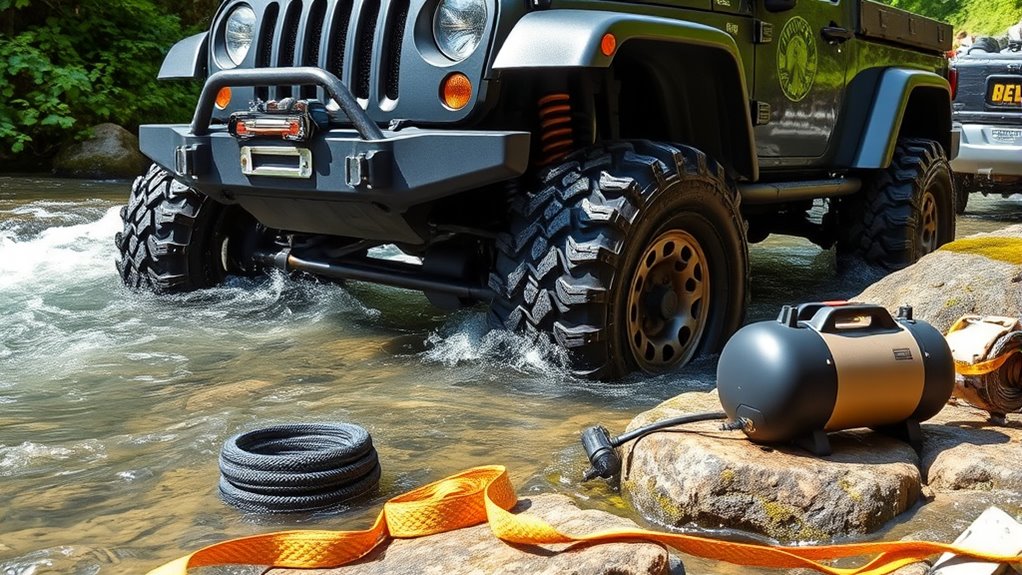
Water Fording involves crossing bodies of water such as rivers, streams, or flooded areas with vehicles or equipment. When you’re preparing for these crossings, the key is to verify your vehicle is in peak condition and equipped to handle the challenge. Proper vehicle maintenance is essential; you need to inspect your vehicle thoroughly before attempting a water fording. Check the seals around doors, windows, and the engine compartment to prevent water intrusion. Make sure the air intake, transmission, and differentials are properly sealed and protected, as water entering these components can cause serious damage. Additionally, confirm that your vehicle’s battery is secure and that all fluids are at recommended levels—water can cause contamination or damage if it gets into the wrong places. Don’t forget to examine your tires, ensuring they have sufficient tread for traction on slippery or uneven surfaces, and verify that your brakes are responsive. If your vehicle has a snorkel, ensure it is properly installed and free of obstructions, as this allows for safer deep water crossings by raising the air intake above water level. Regularly monitor vehicle systems and be prepared to respond quickly if issues arise during the crossing.
Equipping yourself with the right safety gear is equally critical. Always wear a life jacket or personal flotation device if there’s any risk of water entering the vehicle or if you’re unsure of the depth. Safety gear like gloves, a flashlight, and a first aid kit should be within reach to handle emergencies or visibility issues. Consider carrying a tow strap or winch cable in case your vehicle gets stuck or needs assistance. It’s also wise to have a communication device such as a fully charged cell phone or a two-way radio, especially if you’re venturing into remote areas. Before crossing, review the water’s depth and current. If you’re uncertain about the water’s depth or flow, it’s best to wait or find an alternative route—water can be deceptive, and underestimating its force can be dangerous.
Once you’re ready, approach the water slowly and steadily, maintaining a consistent speed to prevent the vehicle from stalling or flooding. Keep a safe distance from other vehicles to avoid collision or turbulence. Use your vehicle’s 4WD or traction control features if available, and don’t accelerate too quickly, which can cause water to splash into the engine bay or overwhelm the vehicle’s systems. As you cross, stay alert to changing conditions, and if at any point you feel unsure, stop and reassess. Remember, thorough vehicle maintenance and the right safety gear aren’t just precautions—they’re your best tools for a successful and safe water fording experience.

ECCPP Air Intake Snorkel Kit Fit For SUZUKI FOR JIMNY JB64 JB74 2018 2019 2020 2021 2022
- Compatible Models: Fits Suzuki Jimny JB64 JB74 2018-2022
- Enhanced Safety: Raises intake height for water safety
- Improved Performance: Provides cool, clean, dry air to engine
As an affiliate, we earn on qualifying purchases.
As an affiliate, we earn on qualifying purchases.
Frequently Asked Questions
What Are the Signs of Water Damage After Fording?
After fording, watch for signs of water damage like waterlogged components, which may feel soft or loose, and electrical corrosion, such as rust or sparks when you turn on the vehicle. You might also notice strange smells, foggy headlights, or difficulty starting your engine. If you see any of these signs, get your vehicle inspected promptly to prevent further damage. Acting quickly helps protect your vehicle’s performance and longevity.
How Often Should I Inspect My Vehicle After Water Crossings?
You should inspect your vehicle after water crossings at least every 100 miles or immediately if you notice any issues. Follow your maintenance schedule diligently, including thorough water intrusion tests, to prevent long-term damage. Don’t ignore even minor signs—water can sneak into hidden places, causing chaos. Regular inspections ensure your vehicle stays resilient against water’s relentless assault, saving you from catastrophic breakdowns and costly repairs down the road.
Can Modifying My Vehicle Improve Water Fording Capabilities?
Modifying your vehicle can greatly improve water fording capabilities. Installing a vehicle snorkel raises your air intake, preventing water from entering the engine, while a raised suspension increases ground clearance, reducing the risk of water damage and getting stuck. These modifications make deep water crossings safer and easier. Just make certain you also check the seals and waterproof your electrical components for peak performance during water fording.
What Insurance Coverage Is Available for Water Damage Repairs?
You can file insurance claims for water damage repairs, but coverage limits vary widely depending on your policy. Review your insurance policy to see if water damage is included and understand any deductibles. Keep in mind, some policies exclude flood or water damage caused by deep water crossings. To avoid surprises, consult with your insurer beforehand, and consider additional coverage if you frequently encounter water fording situations.
Are There Specific Techniques for Driving Through Fast-Moving Water?
When driving through fast-moving water, you should use hydrodynamic techniques by maintaining a steady, slow speed to reduce water disturbance. Stay aware of water flow by observing how it moves around your vehicle, and avoid crossing if the water appears to be too swift or deep. Keep a firm grip on the steering wheel, drive straight, and don’t attempt to turn or stop in the water to prevent loss of control.

Car Snorkel Kit Fit for Jeep for Wrangler 2018-2021, 18-23 for Jeep for Wrangler JL New Cold Air Ram Intake Snorkel Kit OffRoad 2.0L 3.6L, for Jeep for Gladiator 2020-2023
- Compatibility: Fits Jeep Wrangler and Gladiator (2018-2023)
- Water-Sealed Components: Reduces engine damage during water crossings
- Engine Protection: Filters particles and boosts cool air intake
As an affiliate, we earn on qualifying purchases.
As an affiliate, we earn on qualifying purchases.
Conclusion
Now that you know how to prepare your vehicle for water fording, you’re practically invincible against raging rivers and floodwaters. With the right gear and techniques, you could cross a tsunami without a splash! Just imagine yourself confidently driving through water so deep it’s like tackling an ocean in your backyard. Stay prepared, stay safe, and remember: you’re not just crossing water—you’re conquering it like a true off-road legend!

Sandfren Car Door Seal Strip, 52.49ft Rubber Double Layer Self Adhesive Automotive Weather Stripping for Windows Hood Trunk, Soundproofing Vehicle Sealing Strip Accessories, Universal Fit
- High-Quality Rubber Material: Durable, flexible, and weather-resistant rubber
- Effective Waterproof and Dustproof Seal: Prevents rain and dust ingress
- Universal Fit for Vehicles: Suitable for cars, trucks, SUVs, RVs
As an affiliate, we earn on qualifying purchases.
As an affiliate, we earn on qualifying purchases.

StarknightMT 3-10 Kids Dirt Bike Gear Motocross Chest Protector Adjustable
- Impact Protection: PE shell shields against shocks
- Breathable Design: Ventilated mesh and EVA foam
- Easy to Wear: Hook and loop fasteners with elastic straps
As an affiliate, we earn on qualifying purchases.
As an affiliate, we earn on qualifying purchases.