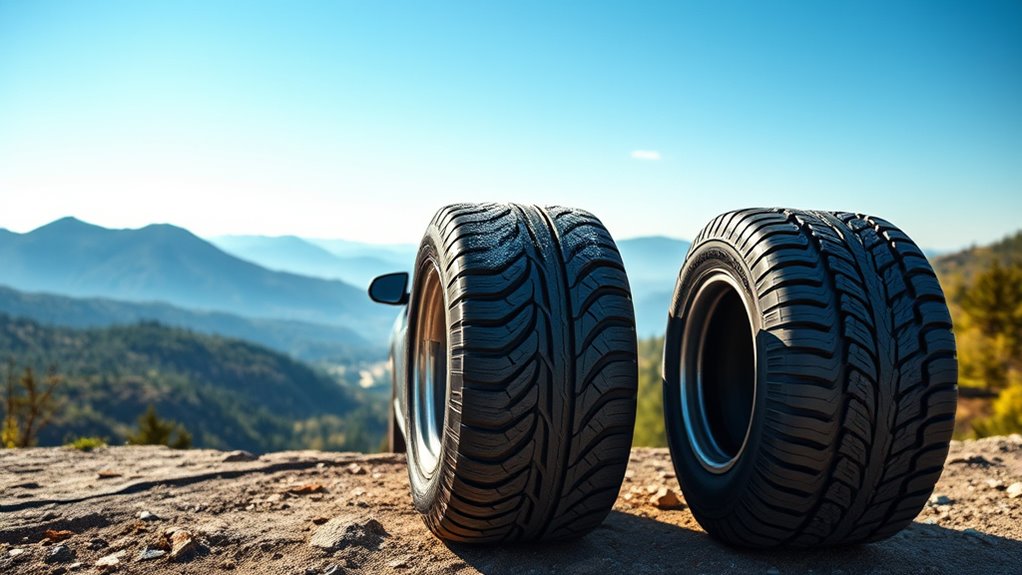

Choosing the right tires depends on your climate and driving needs. Summer tires excel in warm, dry, and wet conditions with better traction and handling, but they wear faster if used year-round. Winter tires are best for cold, snowy, and icy weather, providing superior grip but wearing quickly in warm conditions. All-season tires offer a balanced option for moderate climates, but they may sacrifice some performance. For tailored advice, continue exploring the key differences that can help you make the best choice.
Key Takeaways
- Use summer tires in warm, dry, or wet conditions for optimal grip and handling; avoid them in cold weather or snow.
- Winter tires are best in snow and icy conditions, providing superior traction but wear faster if used in warm temperatures.
- All-season tires offer balanced performance for moderate climates but may underperform in extreme weather conditions.
- Consider your local climate, driving habits, and safety needs when choosing between the three tire types.
- Proper maintenance and seasonal tire switching extend lifespan and ensure safety across varying weather conditions.

USANOOKS Microfiber Cleaning Cloth Grey - 12 Pcs (12.5"x12.5") - High Performance - 1200 Washes, Ultra Absorbent Microfiber Towel Weave Grime & Liquid for Streak-Free Mirror Shine - Car Washing Cloth
- High Absorbency Microfiber: Locks in 8-10x its weight in liquids
- Durable 2.5mm Thickness: Resists lint, scratches, and shedding
- Long-Lasting Use: Over 1200 washes for extended durability
As an affiliate, we earn on qualifying purchases.
Key Differences and Performance Factors

Understanding the key differences and performance factors of summer, winter, and all-season tires helps you choose the right one for your driving needs. Tire durability varies among them; summer tires typically wear faster but provide superior traction performance in warm conditions. Winter tires are built with softer rubber compounds that excel in cold weather but tend to wear more quickly if used in warmer temperatures. All-season tires aim for a balanced approach, offering moderate durability and traction performance across different conditions. While durability impacts how long your tires last, traction performance determines how well they grip the road, especially in challenging weather. Recognizing these differences helps you select tires that match your driving environment, ensuring safety and excellent performance year-round. Additionally, understanding tire durability and performance factors can help extend the lifespan of your tires and improve overall driving safety. For example, tire composition directly influences both durability and traction, making it an important aspect of your decision-making process.

HOMEXCEL Microfiber Cleaning Cloth 12 Pack, 12.5 x 12.5 inch Microfiber Towels for Cars, Ultra Absorbent Washing Cloth, Lint Free Streak Free Cleaning Rags for Car, Kitchen, and Window (Grey)
- High Water Absorption: Excellent at absorbing dirt and liquids
- Gentle on Surfaces: Soft fabric prevents scratches and damage
- Fast Drying: Quickly absorbs water for streak-free drying
As an affiliate, we earn on qualifying purchases.
Advantages and Disadvantages of Each Type

Each type of tire offers distinct advantages and disadvantages that can influence your driving experience. Summer tires excel in grip and handling on dry and wet roads, providing better tire durability during warm months. However, they perform poorly in cold conditions and can wear quickly if used year-round, affecting cost considerations. Winter tires are designed for cold, snowy, and icy conditions, offering superior traction and safety. Still, they tend to wear faster and are less effective in warmer weather, which can increase your overall expenses. All-season tires aim to balance performance across seasons, providing convenience and moderate tire durability. Yet, they often compromise on ideal grip compared to specialized tires, and their lifespan may be shorter if used in extreme conditions, impacting long-term costs. Additionally, European cloud innovation emphasizes the importance of sustainable and secure solutions that can also be applied to the manufacturing and development of advanced tire technologies.

AIDEA Microfiber Cleaning Cloth-50PK, Microfiber Towels for Cars, 12×12"
- Super Absorbent Material: Quickly wicks away water and dirt
- Soft and Lint-Free: Scratch-free cleaning on various surfaces
- Reusable and Durable: Washable for hundreds of uses
As an affiliate, we earn on qualifying purchases.
Choosing the Right Tires for Your Climate and Driving Habits
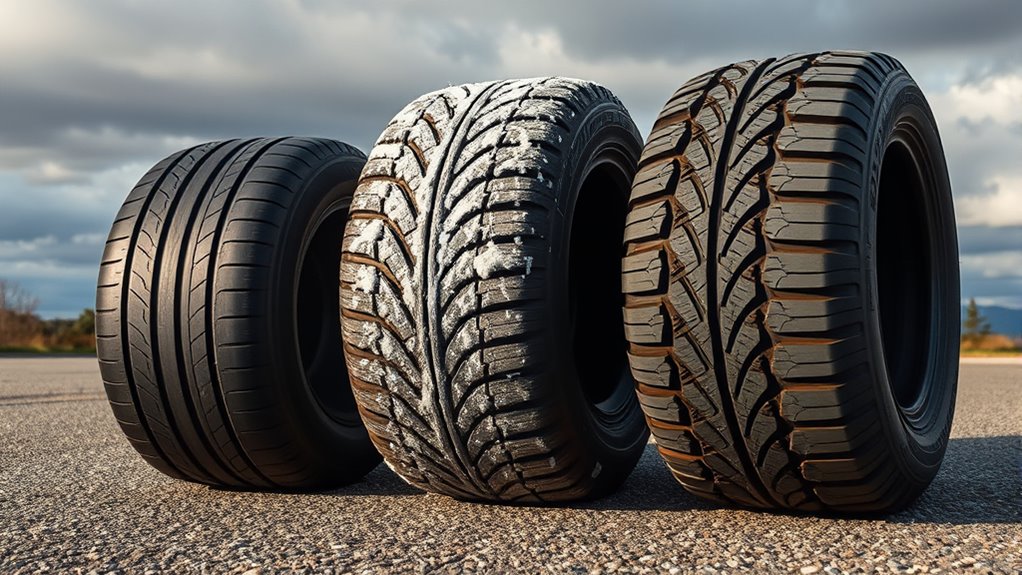
Choosing the right tires depends heavily on your local climate and how you typically drive. If you face harsh winters, winter tires provide better traction and safety, but they may wear faster if used year-round, affecting tire lifespan. Conversely, summer tires excel in warm conditions but are unsafe in snow or ice. All-season tires offer versatility but might not perform *ideal* in extreme weather. Consider your driving habits—frequent long trips or stop-and-go city driving—and how they impact tire wear. The tire composition and tread pattern significantly influence performance across different seasons. Cost considerations are also important; high-quality tires may cost more upfront but can be more durable and cost-effective over time. Additionally, understanding Free Floating concepts can help inform your decision, especially regarding tire maintenance and longevity. Ultimately, selecting tires aligned with your climate and driving style helps maximize safety, performance, and tire lifespan while balancing your budget.

Armor All Ultimate Premier Car Care Kit, 8 Pieces, Includes Tire and Wheel Cleaners, Exterior and Interior Car Cleaning Supplies
- Complete 8-Piece Car Care Kit: Includes cleaning, shining, and protection products
- All-in-One Detailing Supplies: Suitable for daily drivers and enthusiasts
- Car Wash and Wax Formula: Provides mirror-like shine with carnauba wax
As an affiliate, we earn on qualifying purchases.
Frequently Asked Questions
How Often Should I Rotate All-Season Tires Compared to Seasonal Tires?
You should rotate all-season tires every 5,000 to 7,500 miles to maintain even tire wear and guarantee ideal tire maintenance. Seasonal tires, however, often require more frequent rotation, about every 3,000 to 5,000 miles, especially if used regularly. Regular rotations are vital for road safety, as they help prevent uneven wear, improve traction, and extend tire lifespan. Always check your vehicle’s manual for specific recommendations.
Can All-Season Tires Be Used Safely in Extreme Winter Conditions?
All-season tires aren’t ideal for extreme winter conditions because they don’t provide *best* snow traction and can compromise road safety. While they handle light winter weather, heavy snow or icy roads demand winter tires designed for better grip and safety. If you frequently face severe winter conditions, switching to dedicated winter tires is the safest choice to *guarantee* better traction and protect yourself on treacherous roads.
What Is the Typical Lifespan of Summer, Winter, and All-Season Tires?
On average, summer tires last around 40,000 miles, winter tires about 20,000 miles, and all-season tires roughly 50,000 miles. Proper tire maintenance and seasonal storage can prolong their lifespan. You should inspect your tires regularly, rotate them as recommended, and store them in a cool, dry place when not in use. This way, you maximize their longevity and ensure safe, reliable driving year-round.
Are There Any Legal Regulations Regarding Tire Types in Different Regions?
You should verify your region’s legal regulations and regional restrictions regarding tire types. Some areas mandate winter tires during specific months or require snowflake symbols on tires, while others have no such rules. Ignoring these laws can lead to fines or insurance issues. Always stay informed about your local laws to ensure compliance, safety, and avoid penalties when switching between tire types or driving in different seasons.
How Do Tire Prices Vary Across Summer, Winter, and All-Season Options?
Tire prices vary based on tire tread design and rubber compound composition. Summer tires, with their specialized tread and softer rubber, tend to be more expensive due to performance needs. Winter tires, designed for cold and snow, often cost more because of their unique compounds and tread patterns. All-season tires balance cost and versatility, usually offering lower prices. Ultimately, your choice depends on your driving conditions and budget.
Conclusion
Choosing the right tires is like finding a trusted partner for every season. Summer, winter, and all-season tires each have their own strengths and quirks, so pick what aligns with your climate and driving style. When you make the right choice, your vehicle becomes an extension of your confidence—ready to conquer the road no matter what weather throws your way. Don’t let your tires be a gamble; choose wisely and enjoy the ride with peace of mind.