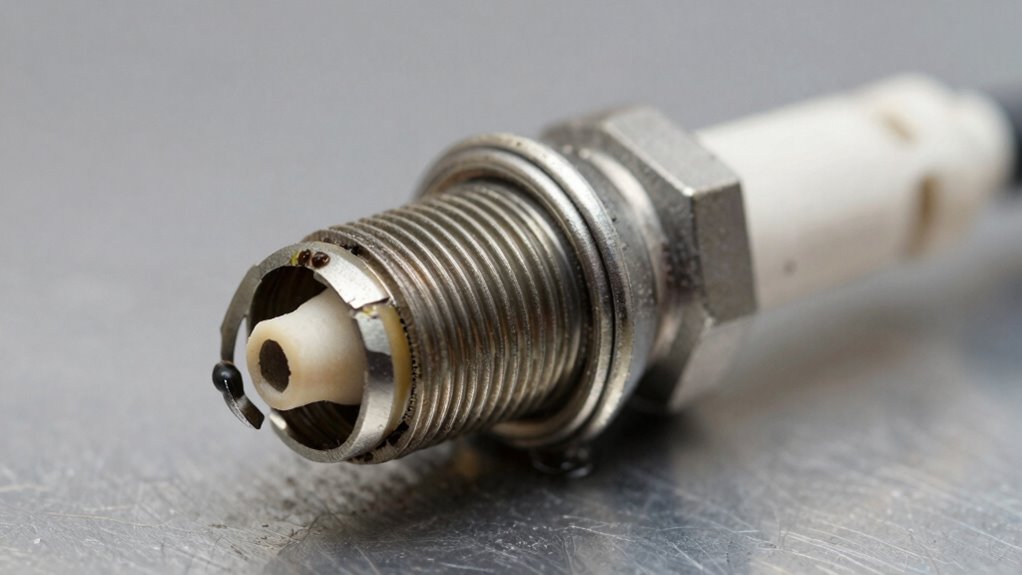

To understand your spark plug condition, look at its color, deposits, and electrode wear. A light tan or gray indicates proper fuel mixture and good engine health. Black or oily deposits suggest rich fuel or oil leaks, while a white, blistered tip points to a lean mixture. Worn electrodes mean reduced spark efficiency. Regularly checking these signs helps you catch issues early. Keep exploring, and you’ll gain the confidence to keep your engine running smoothly.
Key Takeaways
- Examine spark plug color: tan indicates proper mixture; black suggests rich; white indicates lean.
- Check electrode wear: rounded or worn tips reduce spark efficiency and signal replacement needs.
- Look for deposits: light brown are normal; excessive buildup signals incomplete combustion or oil leaks.
- Assess surface condition: blistered or white surfaces point to improper fuel mixture or overheating.
- Regularly inspect and replace spark plugs to maintain engine performance and prevent damage.
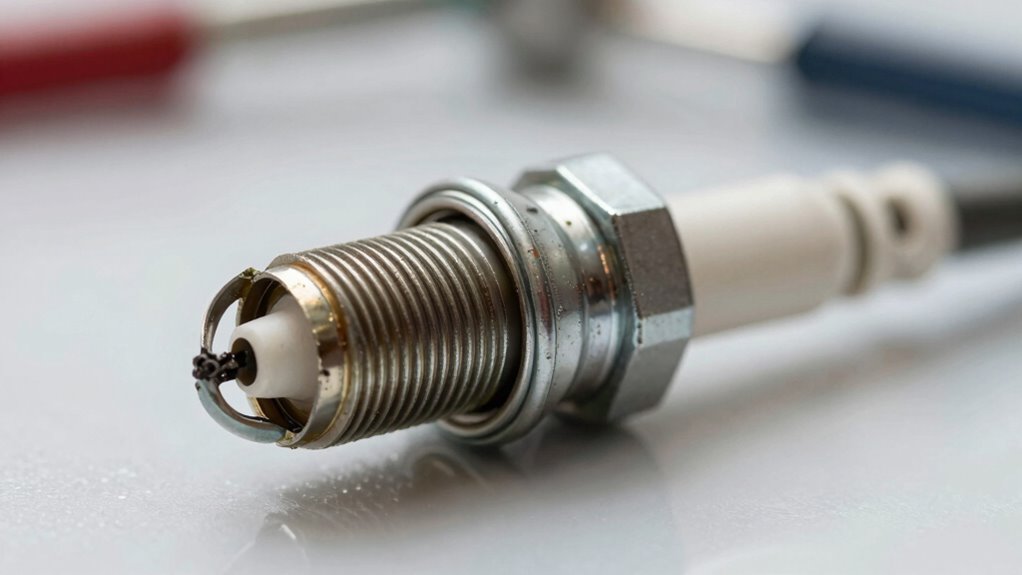
Understanding the condition of your spark plug is crucial for maintaining ideal engine performance. When you check your spark plug, you’re fundamentally looking at a snapshot of what’s happening inside your engine. One of the key things to observe is the color and appearance of the insulator and electrode. The condition of the electrode, in particular, reveals a lot about the fuel mixture your engine is running on. If the electrode looks clean and light tan or gray, it indicates a proper fuel mixture—neither too rich nor too lean. However, if it appears black, sooty, or oily, it suggests the mixture is too rich, meaning there’s excess fuel. Conversely, a very white or blistered electrode points to a lean mixture, where there’s too little fuel. Adjusting your fuel mixture accordingly can improve performance and efficiency, preventing problems like misfiring or poor acceleration.
A light tan or gray spark plug indicates proper fuel mixture; black suggests excess fuel, white signals too little fuel.
Electrode wear is another critical aspect you need to assess. Over time, the spark plug’s electrode erodes due to constant sparking and high temperatures. When you inspect it, look for signs of rounded edges, thinning, or a worn-down tip. Excessive wear reduces the spark’s effectiveness, leading to incomplete combustion, which can cause engine misfires, increased emissions, and even decreased fuel economy. If the electrode shows significant wear or has become rounded, it’s time to replace the spark plug to restore peak ignition performance. Keep in mind that electrode wear is influenced by factors like engine age, driving habits, and the type of spark plug you use. Recognizing electrode wear can help you determine the right time for maintenance and prevent future issues. Additionally, understanding deposit formation can help you identify underlying engine problems early.
Pay close attention to deposits on the electrode and insulator. Light brown or tan deposits usually indicate normal combustion, but thick, greasy, or carbon deposits suggest incomplete combustion or oil leaks. These deposits can also interfere with the spark, reducing ignition efficiency. If you notice heavy deposits, it’s worth investigating underlying issues that could be causing abnormal fuel mixture or oil consumption. Regular inspections can help you spot these signs before they lead to more serious engine damage.

SINGARO Inline Spark Plug Tester, Plug-in Engine Ignition Tester, Car Exterior Accessories, Automobile, Lawn Mower,Engine Verification-Armature Diagnostic Test Tool
Scope of application: The spark plug tester is universal and suitable for testing and troubleshooting small or large…
As an affiliate, we earn on qualifying purchases.
As an affiliate, we earn on qualifying purchases.
Frequently Asked Questions
How Often Should I Inspect My Spark Plugs?
You should inspect your spark plugs every 30,000 miles or as recommended by your vehicle’s manufacturer. Regular spark plug maintenance helps guarantee peak engine performance and prevents misfires. Keep an eye out for signs like worn electrodes or deposits, which can affect how well your engine runs. By inspecting your spark plugs regularly, you catch potential issues early, maintaining efficiency and extending the life of your engine.
Can Spark Plug Color Indicate Engine Problems?
Yes, spark plug color can indicate engine problems. A white or blistered tip might signal overheating, while a black, oily deposit suggests oil leaks or rich fuel mixture. Spark plug materials, like platinum or iridium, can affect color and durability. Ignition timing issues often cause abnormal color changes, such as a tan or gray hue. Regularly inspecting your spark plugs helps you spot these signs early and maintain best engine performance.
What Tools Are Best for Reading Spark Plugs?
Think of your tools as a detective’s kit when reading spark plugs. A good set of inspection mirrors and a flashlight helps you see inside for signs of wear or deposits. For cleaning, wire brushes and spark plug cleaners are essential. Use these tools regularly, especially around replacement intervals, to keep your engine running smoothly. Properly reading and maintaining your spark plugs guarantees peak performance and extends their lifespan.
Do Different Engines Require Different Spark Plug Inspections?
Yes, different engines require unique spark plug inspections because of variations in ignition systems and fuel mixtures. For instance, high-performance engines with advanced ignition systems may need more detailed checks, while engines running on different fuel blends might show distinct spark plug wear. You should consider these factors to accurately assess spark plug condition, ensuring peak engine performance and preventing issues related to improper ignition or fuel mixture imbalances.
How Do I Prevent Spark Plug Fouling?
To prevent spark plug fouling, you should regularly maintain your ignition system to guarantee it fires correctly, which reduces incomplete combustion. Use high-quality fuel to minimize carbon deposits and prevent fouling. Keep your engine properly tuned, avoid short trips that don’t let the engine warm up fully, and check for oil leaks or rich fuel mixtures. Consistent maintenance helps keep spark plugs clean and functioning efficiently.

TecoTek 11-Piece Spark Plug Socket Set with 3/8" Drive Ratchet Handle, Spark Plug Gapper, Universal Joint and Extension Bar, 5/8", 3/4", 13/16", 14mm, 18mm, CR-V Sockets with Rubber Retaining Rings
✅【Size Include】6pt spark plug socket 5/8-Inch, 3/4-Inch, 13/16-Inch, 14mm, 18mm, 3/8 Inch drive ratchet handle, spark plug gapper,…
As an affiliate, we earn on qualifying purchases.
As an affiliate, we earn on qualifying purchases.
Conclusion
By regularly inspecting your spark plugs, you can catch early signs of engine issues and keep your vehicle running smoothly. For instance, if you notice a tan-colored insulator, it indicates normal operation, but a black, sooty plug might suggest a rich fuel mixture. Staying proactive with spark plug checks helps prevent costly repairs down the line. So, make it a habit—your engine will thank you for it!
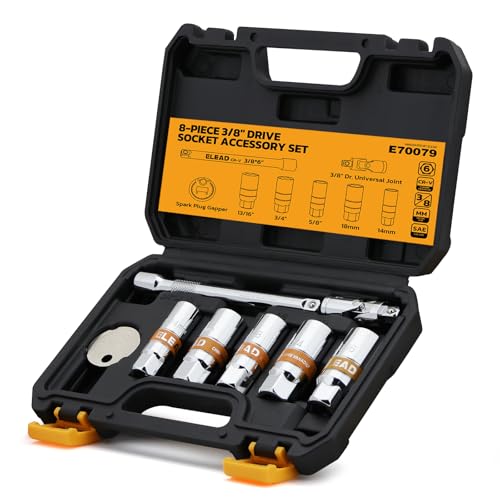
ELEAD 8-Piece 3/8" Drive Spark Plug Socket Set with Universal Joint, Spark Plug Gapper and 6" Extension Bar, SAE & Metric, 5/8", 3/4", 13/16", 14mm, 18mm, CR-V Sockets with Rubber Holding Rings
PREMIUM CR-V – Built from heat-treated chrome vanadium steel, this spark plug socket set offers exceptional durability and…
As an affiliate, we earn on qualifying purchases.
As an affiliate, we earn on qualifying purchases.

UNLRAE Spark Plug Cleaner,Car Accessories Pneumatic Spark Plug Cleaner Sandblaster,Automotive Tools,High-Efficiency Air Sandblaster with Brasive Material,Suitable for Most Motorcycle,Lawn Mower,Cars
[High-Quality Materials]: The pneumatic spark plug cleaner is made of high-quality plastic, brass, and steel clip materials, making…
As an affiliate, we earn on qualifying purchases.
As an affiliate, we earn on qualifying purchases.