

If your car’s AC blows warm air, it’s often due to a clogged or dirty air filter or refrigerant leaks that limit cooling. Replacing the air filter can restore proper airflow, while addressing refrigerant leaks requires professional inspection and repair to restore proper refrigerant levels. Other issues like a faulty compressor or blend door actuator can also cause warm air. To get your system back to the best, understanding these common causes is essential—continue to discover how to fix them.

Get business pricing on garage and car supplies
- Business-only prices and quantity discounts
- Tax-exempt purchasing
- Multiple users, one account, clear invoices
Key Takeaways
- Check and replace dirty or clogged air filters to restore proper airflow and cooling efficiency.
- Inspect for refrigerant leaks, as low refrigerant levels reduce cooling capacity and cause warm air.
- Ensure the AC compressor is functioning correctly and look for signs of malfunction or damage.
- Verify that the blend door actuator operates properly to regulate interior temperature.
- Schedule professional maintenance for system diagnostics, leak repairs, and refrigerant recharging if issues persist.
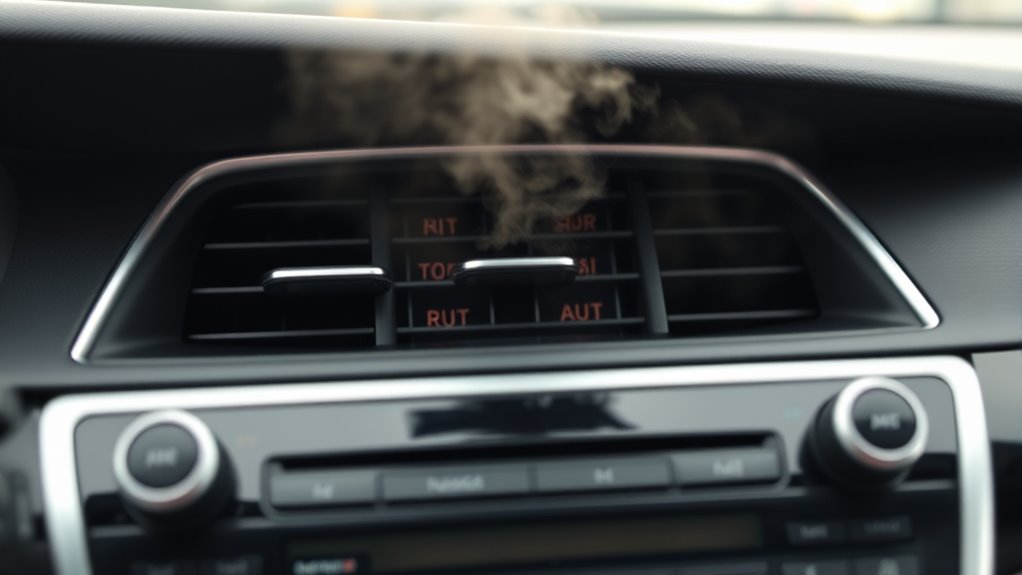
Noticing your car’s AC isn’t cooling as it should? One of the first things you should check is the air filter. A clogged or dirty air filter can restrict airflow, making it harder for your AC to cool the cabin effectively. When the air filter gets dirty, it reduces the amount of conditioned air flowing into the vents, which can lead to warm air blowing out instead of cool. Removing and inspecting the filter is simple; if it’s covered in dirt and debris, replacing it can restore proper airflow and improve cooling performance. Regularly replacing your air filter is essential for maintaining the efficiency of your AC system and guaranteeing you get cool air when needed. Additionally, understanding modern cooling systems can help you better grasp how these components work together to keep your vehicle comfortable. Another common cause of warm air from your AC is a refrigerant leak. Refrigerant is the substance responsible for absorbing heat and cooling the air inside your vehicle. When there’s a leak, your system loses refrigerant, which diminishes its ability to produce cold air. You might notice that your AC blows cool for a short time but then gradually becomes warm. You may also hear hissing sounds or see oily spots around AC components, indicating a leak. Fixing a refrigerant leak requires a professional inspection, as it involves locating the leak, repairing or replacing damaged parts, and recharging the system with the correct amount of refrigerant. Ignoring refrigerant leaks can lead to more severe damage to your AC compressor and other components, so timely repair is essential. Aside from the air filter and refrigerant issues, there are other potential causes for warm air, such as a malfunctioning compressor or a faulty blend door actuator. However, starting with the air filter and refrigerant inspection is a practical first step. Regular maintenance, including replacing the air filter and checking refrigerant levels, can help prevent these common issues from occurring in the first place. If you notice persistent warm air despite changing the filter, it’s best to have a professional diagnose the problem. They can perform a thorough system check, identify leaks, and guarantee all components are functioning properly. Addressing these issues promptly not only restores your comfort but also extends the lifespan of your vehicle’s AC system.
car cabin air filter replacement
As an affiliate, we earn on qualifying purchases.
As an affiliate, we earn on qualifying purchases.
Frequently Asked Questions
How Often Should I Service My Car’s AC System?
You should service your car’s AC system at least once a year, following your recommended ac maintenance schedule. Regular checks ensure refrigerant levels are ideal, preventing warm air from blowing. During maintenance, a technician will inspect for leaks, recharge refrigerant if needed, and clean components. Staying consistent with annual servicing keeps your AC running efficiently, avoids costly repairs, and guarantees cool comfort whenever you need it most.
Can Low Refrigerant Cause Warm Air to Blow?
Imagine your car’s AC system as a delicate dance, where refrigerant keeps everything cool. When refrigerant leaks or the compressor fails, it’s like losing the rhythm—warm air takes over. Low refrigerant levels can’t cool the air effectively, causing it to blow warm. To restore the cool dance, you’ll need to check for refrigerant leaks and make certain the compressor’s functioning properly, so the breeze stays invigoratingly cold.
Is a Faulty Blend Door Responsible for Warm Air?
Yes, a faulty blend door can cause warm air to blow in your car. When the blend door gets stuck or breaks, it can’t properly regulate the mix of hot and cold air, leading to warm air blowing even when you want cool air. This issue often relates to the heater core or the blend door actuator, which controls the door’s position, affecting your climate control system’s performance.
Will Driving With a Broken AC System Damage My Car?
Driving with a broken AC system generally won’t damage your car directly, but it can cause your vehicle to overheat if the cooling system isn’t working properly. This puts engine strain on your engine, which might lead to overheating or other issues over time. To avoid potential damage, it’s best to get your AC fixed promptly and keep an eye on your temperature gauge during drives.
How Long Does It Typically Take to Fix AC Issues?
On average, fixing your car’s AC takes about 1 to 3 hours, but this varies based on the repair complexity. Studies show that technician wait times can add to the overall timeline, so it’s smart to schedule ahead. Minor repairs, like recharging refrigerant, are quicker, while more extensive issues, such as compressor replacements, may take longer. Planning for these factors helps make certain your cooling is restored promptly.
refrigerant leak repair kit for cars
As an affiliate, we earn on qualifying purchases.
As an affiliate, we earn on qualifying purchases.
Conclusion
When your car AC blows warm air, it’s like a sudden summer storm—disappointing and frustrating. But don’t worry, most issues are fixable with a little troubleshooting and maintenance. By checking refrigerant levels, inspecting the compressor, and ensuring proper airflow, you can bring back that invigorating coolness. Think of it as calming a restless sea—patience and a little know-how can restore your comfort on the road. Stay proactive, and your AC will be a cool breeze again.
As an affiliate, we earn on qualifying purchases.
As an affiliate, we earn on qualifying purchases.
Fall Picks
fall essentials
As an affiliate, we earn on qualifying purchases.