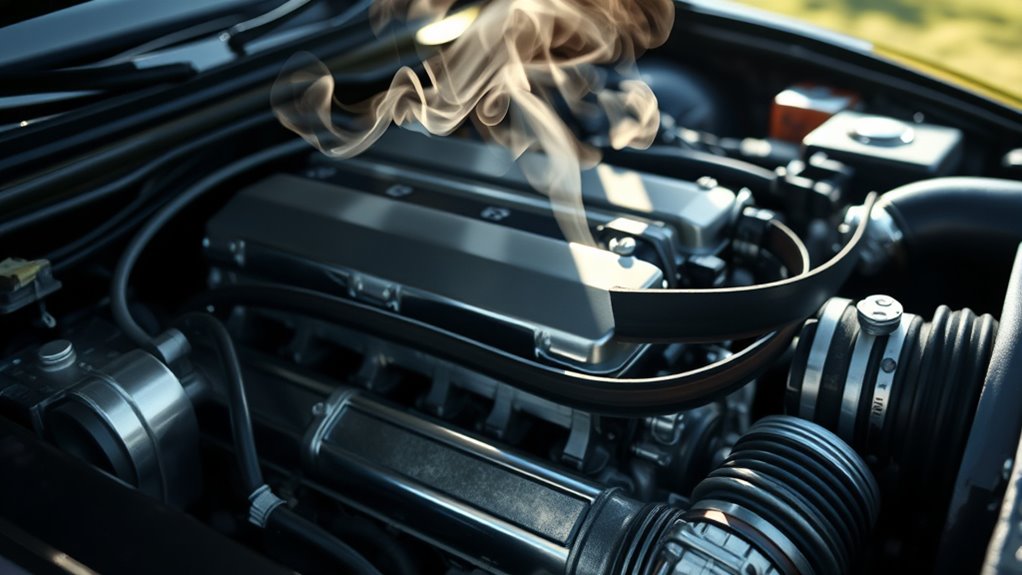

A burning smell from your car often signals serious issues like overheated brake pads, rotors, or electrical wiring problems. If you notice it after heavy braking or see smoke, stop immediately and check for burnt components or melted wiring. Electrical issues can produce a distinct acrid odor and pose fire risks. Ignoring these signs can lead to costly repairs or dangerous situations. Continue exploring to understand how to identify the exact cause and stay safe.
Key Takeaways
- Burning smells often stem from overheated brake components or electrical wiring issues needing prompt inspection.
- Signs include smoke, squealing brakes, or melting insulation, indicating potential safety hazards.
- Electrical wiring problems emit a strong, acrid odor and may be linked to flickering lights or blown fuses.
- Overheating brakes produce a distinct smell after heavy braking or downhill driving, risking rotor damage.
- Immediate professional diagnosis is essential if the smell persists or is accompanied by smoke or unusual noises.

If you notice a burning smell coming from your car, it’s important to address it promptly, as it could signal a serious issue. Burning odors can stem from various sources, but two common culprits are brake system issues and electrical wiring problems. Recognizing the signs early can prevent costly repairs and guarantee your safety on the road.
One of the first things to check is your brake system. Overheated brake pads or rotors often produce a distinct burning smell, especially after you’ve been braking heavily or driving downhill for a while. When brake components overheat, they can emit a burnt odor, which is usually accompanied by a feeling of squealing or grinding when you apply the brakes. If your brakes are overheating, you might notice the smell more pronounced during or immediately after braking. Ignoring this can lead to warped rotors or damaged brake pads, which compromise your vehicle’s stopping power. To avoid further damage, get your brake system inspected as soon as you notice the smell, and consider having the brake pads replaced or the rotors resurfaced.
If your brakes overheat, you’ll notice a burning smell and squealing or grinding sounds.
Electrical wiring problems are another common cause of burning smells. If wiring insulation begins to melt due to an electrical short or faulty connection, it can emit a strong, acrid odor. This issue is often accompanied by other symptoms like flickering lights, blown fuses, or electrical malfunctions. The burning smell from wiring is dangerous because it can lead to electrical fires if left unaddressed. To identify this problem, listen for any unusual electrical noises, such as buzzing or crackling, and check for visible signs of damaged or frayed wires under the dashboard or in the engine bay. If you suspect wiring issues, it’s vital to have a professional technician diagnose and repair the problem promptly.
Additionally, high-performance projectors with advanced cooling systems are designed to handle heat better, reducing the risk of overheating and associated smells, which is a good consideration for those seeking reliable equipment. Aside from these two issues, other causes like oil leaks, clutch problems, or even external factors like a nearby fire can produce similar smells, but brake and electrical issues are the most common and urgent to address. Always trust your instincts—if the smell persists, or if you notice other symptoms like smoke or smoke-like odors, stop driving immediately and seek professional help. Staying vigilant about unusual smells and acting quickly can save you from more extensive repairs and keep you safe while on the road. Remember, early detection and maintenance are key to preventing a minor issue from turning into a major hazard.
Top picks for "burn smell common"
Open Amazon search results for this keyword.
As an affiliate, we earn on qualifying purchases.
Frequently Asked Questions
Can Burning Smell Indicate an Imminent Engine Failure?
Yes, a burning smell can indicate imminent engine failure. If you notice it, check for engine overheating or oil leaks, which often cause the smell. Overheating can damage engine parts, while oil leaks might lead to low oil levels and engine damage. Don’t ignore this warning—address these issues promptly to prevent severe damage, costly repairs, or complete engine failure. Regular maintenance helps catch problems early.
Is It Safe to Drive My Car With a Burning Odor?
It’s not safe to drive your car if you notice a burning odor. This odor safety warning signals potential issues like overheated components or electrical problems, which are warning signs of possible damage or fire risk. Ignoring these signs can lead to more serious damage or accidents. If you detect a burning smell, stop driving immediately, check for visible issues, and have a mechanic inspect your vehicle before resuming use.
How Long Can I Drive With a Burning Smell Before Repairs Are Needed?
Think of that burning smell as a warning signal flashing on your dashboard. You shouldn’t drive long with it—just a few miles at most—before you risk serious damage. If it’s caused by oil leaks or brake issues, driving too far could turn small problems into costly repairs. Pull over, check for leaks or brake fade, and get it to a mechanic ASAP. Better safe than sorry!
Could a Burning Smell Be Caused by Something Outside the Engine?
Yes, a burning smell can come from outside your engine, often caused by external sources like overheated brakes, oil leaks, or debris on the exhaust. These odors might also be mistaken for interior odors, especially if trapped inside the vehicle. Keep an eye on external components and listen for unusual noises. If you notice persistent smells, it’s best to have a mechanic check both the outside and inside of your car to stay safe.
What Are the Costs Associated With Fixing the Causes of Burning Smells?
You’re looking at repair expenses that can vary widely, depending on the cause. Cost estimates for fixing burning smells range from a few hundred dollars for simple issues like replacing a belt to over a thousand for more complex repairs like fixing electrical problems or replacing hoses. Think of it as putting out a small fire before it spreads—investing now helps avoid more costly damage later.
Conclusion
When you catch that burning smell wafting from your car, imagine the stress it causes, like a faint smoke trail behind a restless engine. Don’t ignore it—think of it as a warning sign, like a whisper in the wind. Addressing it swiftly can keep your journey smooth and safe, letting you enjoy the open road without the worry of hidden trouble. Trust your senses; your car’s subtle signals are there to protect you.