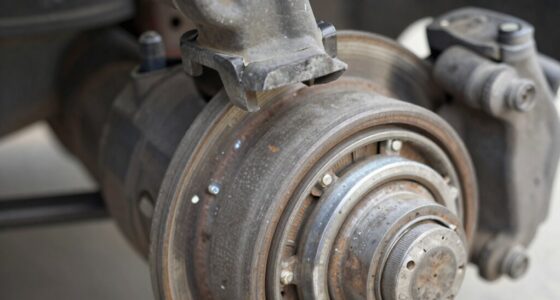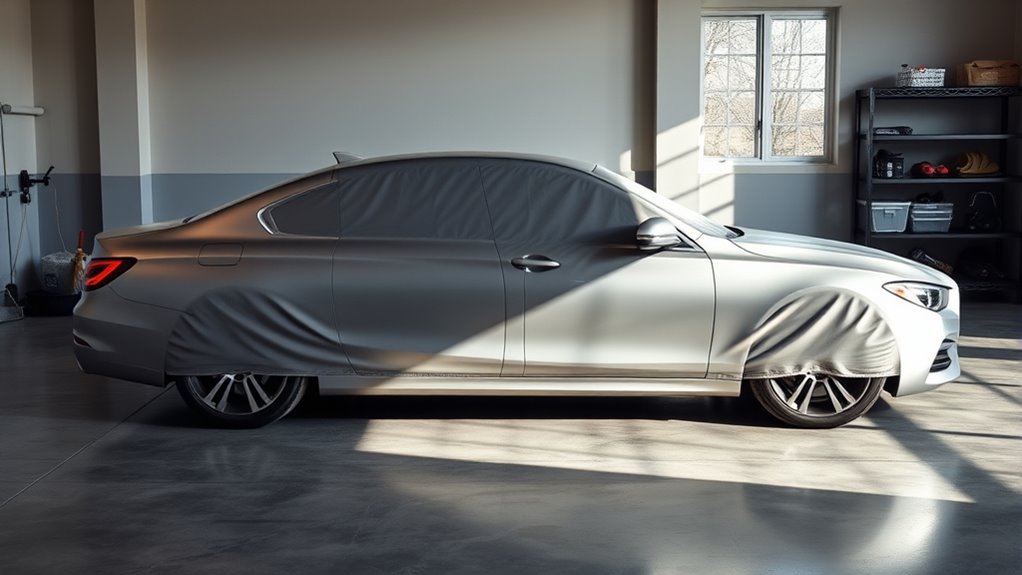

To prep your car for long-term storage, start by cleaning and waxing it to protect the paint. Disconnect the battery or use a maintainer to prevent dead cells, and inflate the tires to the recommended pressure, elevating the vehicle if possible. Store it in a cool, dry place, cover with a breathable cover, and check on it every few weeks to guarantee everything remains in good shape. Continue exploring for more detailed tips to keep your car in top condition.
Key Takeaways
- Disconnect the negative battery terminal or use a trickle charger to keep the battery healthy during storage.
- Inflate tires to recommended pressure, elevate the vehicle on jack stands, and move it periodically to prevent flat spots.
- Wash and wax the vehicle thoroughly, then cover with a breathable car cover in a cool, dry, shaded location.
- Choose a protected storage environment, preferably a garage or climate-controlled space, away from direct sunlight and harsh weather.
- Regularly inspect tire pressure, battery health, and start or drive the vehicle briefly every few weeks to maintain condition.

Storing your car for the long term requires careful planning to keep it in good condition. One of the most critical aspects is taking steps to preserve the battery and tires. When a vehicle sits unused for months, the battery can drain completely, leading to a dead cell that’s difficult to jump-start later. To prevent this, consider disconnecting the negative terminal of the battery or using a trickle charger or battery maintainer. These devices keep the battery topped off and healthy, ensuring you won’t face starting issues when you’re ready to use the car again. Regularly checking the battery’s voltage during storage can also help catch any issues early.
To prevent battery drain during long-term storage, disconnect the negative terminal or use a trickle charger to keep it healthy.
Tire preservation is equally essential. When your car remains stationary for an extended period, tires can develop flat spots where they contact the ground. To combat this, inflate your tires to the manufacturer’s recommended pressure before storing. Proper inflation helps maintain their shape and prevents flat spots from forming. If possible, elevate the vehicle on jack stands, so the tires don’t bear the full weight of the car. This reduces stress on the tires and suspension components, further preventing deformities. If you can’t lift the vehicle, regularly check and adjust tire pressure to guarantee it stays at ideal levels. Additionally, moving the car slightly every few weeks can help shift the tire contact patches, reducing the risk of flat spots.
Aside from battery and tire care, cleanliness plays a role in long-term storage. Wash your car thoroughly to remove dirt and debris, which can cause corrosion or paint damage over time. Applying a coat of wax creates a protective barrier against moisture and dust. Covering your vehicle with a breathable car cover is recommended; it keeps dust, dirt, and pests away while allowing moisture to escape. Avoid plastic covers that trap humidity, which can lead to rust. Store the vehicle in a cool, dry, and shaded location whenever possible. Garages or covered parking areas are ideal, but if you’re parking outdoors, ensure the spot is sheltered from direct sunlight and harsh weather. Implementing modern storage solutions such as climate-controlled environments can further help protect your vehicle from environmental damage.
Regular inspections during storage are essential. Check on the vehicle every few weeks to verify tire pressure, battery health, and overall condition. Starting the engine briefly or taking the car for a short drive every month helps circulate fluids, keep parts lubricated, and prevent seals from drying out. These simple steps, combined with proper battery maintenance and tire preservation, will help your vehicle stay in top shape, ready to hit the road again when you need it. Proper preparation now guarantees your long-term storage doesn’t lead to costly repairs later.

Schumacher Electric 1.5A Car Battery Charger and Maintainer, 3-in-1 Solution, for 6V/12V Power Sport, Automotive, and Marine Batteries, SC1355
Prevent Battery Failure: Ensure reliable starts after storage with this 3-in-1 device that charges, maintains, and reconditions batteries…
As an affiliate, we earn on qualifying purchases.
As an affiliate, we earn on qualifying purchases.
Frequently Asked Questions
Can I Leave My Car in Storage Longer Than a Year?
Yes, you can leave your car in storage for longer than a year, but you need to take into account extended storage considerations. Create a maintenance schedule that includes regular checks on the battery, tire pressure, and fluid levels. To prevent issues, start the car periodically, keep it covered, and think about disconnecting the battery if you’re not planning to start it often. Proper planning ensures your vehicle stays in good condition over the long term.
How Do I Prevent Pests From Damaging My Stored Vehicle?
To prevent pests from damaging your stored vehicle, start with pest prevention measures like sealing all entry points and cleaning the car thoroughly. Choose a secure storage container that’s airtight and pest-proof, and consider adding pest repellent inside. Regularly inspect the storage area for signs of pests, and keep the surroundings clean. These steps help protect your car from unwanted critters during long-term storage.
What Should I Do if My Car Develops a Leak During Storage?
Sure, a leak during storage is just what you wanted, right? Don’t ignore it—perform leak repair promptly to prevent further damage. Start by identifying the source, then top off fluids as needed, especially if fluid levels have dropped. You might need to drain and replace contaminated fluids later. Addressing leaks early keeps your vehicle safe and avoids costly repairs when you finally take it out of storage.
Is It Necessary to Disconnect the Car’s Battery for Long-Term Storage?
Yes, you should disconnect the car’s battery for long-term storage. This helps with battery maintenance and prevents the electrical system from draining or developing a dead battery over time. By disconnecting the battery, you reduce the risk of electrical issues and prolong its lifespan. Just remember to clean the terminals and store the battery in a cool, dry place if you choose to remove it.
How Can I Protect My Car From Theft While Stored?
To protect your car from theft while stored, you should implement strong security measures. Install an alarm system that triggers if someone tries to break in, and consider using a steering wheel lock for added protection. Keep your vehicle in a secure, well-lit area or a locked garage. Removing valuables and not leaving easily accessible keys nearby also deters theft, giving you peace of mind during long-term storage.

AltoCover 6 Layer Heavy Duty Car Cover Waterproof All Weather Protection with Cotton Liner, Full Exterior Outdoor Cover for Sun Rain Snow UV Protection, Fits Sedan 186-193 inchs
【All-Weather Protection for Year-Round Use】Built for reliable protection in any season, this outdoor car cover handles changing weather…
As an affiliate, we earn on qualifying purchases.
As an affiliate, we earn on qualifying purchases.
Conclusion
Now that you know how to prep your car for long-term storage, you’ll be better equipped to avoid surprises down the road. Proper planning and maintenance are key to keeping your vehicle in top shape, even when it’s parked for a while. Remember, a stitch in time saves nine—taking these steps now will save you headaches later. With a little effort, your car will be ready to hit the road whenever you are, just like new.

CZC AUTO Tire Inflator Deflator Air Pressure Gauge with Rubber Hose, 2-1/2" Dial Wheel Inflator Gage with Straight Brass Lock-on Chuck Compatible with Air Pump Compressor for RV Car Motorcycle Bike
WHAT YOU CAN GET: This tire inflator gauge includes aluminium tire inflator and deflator, 0-220PSI 0-16kg/CM2 2-1/2" large…
As an affiliate, we earn on qualifying purchases.
As an affiliate, we earn on qualifying purchases.

Amazon Basics Steel Jack Auto Stands, 3 Ton (2.7 metric Ton) Capacity, Easy to Use, Adjustable Height, 6,000 lb, 1 Pair, Black and Red(For Sedans and Urban SUVs)
Pair of 3 Ton (2.7 metric Ton) jack stands with 6,000-pound capacity
As an affiliate, we earn on qualifying purchases.
As an affiliate, we earn on qualifying purchases.