
If your wheel bearing is starting to fail, you’ll notice grinding or humming noises coming from the wheel area, especially when turning or accelerating. You might also feel vibrations or wobbling through the steering wheel at higher speeds and see uneven tire wear. Soft or vibrating brake pedals and your vehicle pulling to one side are additional signs. Keep an eye on these symptoms; understanding more can help you catch issues early and stay safe behind the wheel.
Key Takeaways
- Listen for grinding or humming noises that increase with speed or when turning toward the suspect wheel.
- Check for vibrations or wobbling felt through the steering wheel at higher speeds.
- Observe uneven tire wear or visible damage around the wheel hub area.
- Notice if the vehicle pulls to one side during driving or braking.
- Inspect for looseness or play in suspension components and wheel hub area.
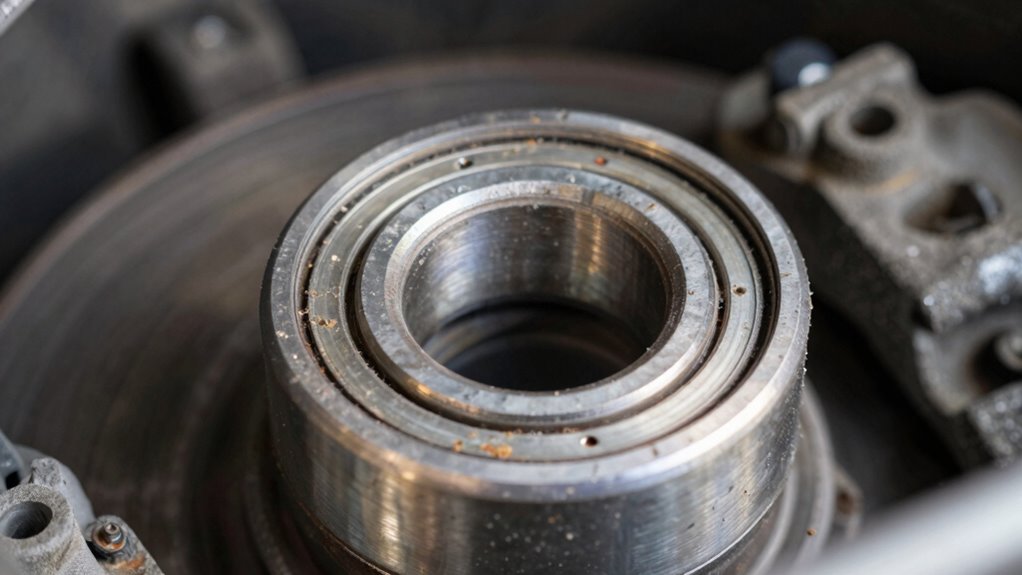
Ever wondered how to spot the early signs of a failing wheel bearing? Recognizing the symptoms early can save you from costly repairs and dangerous driving situations. Your wheel bearing is essential for smooth rotation and proper handling, but it doesn’t work alone. It’s interconnected with your brake system and suspension components, so issues in one area can often signal problems in another. Being attentive to these signs guarantees you catch trouble early before it worsens.
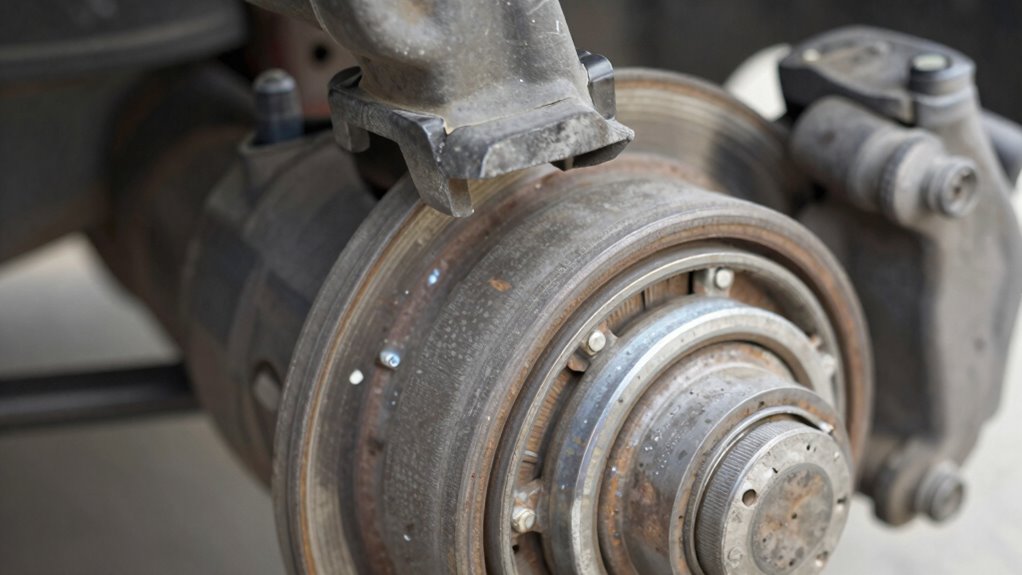
One of the first indicators is a grinding or humming noise coming from your wheel area. When a wheel bearing starts to fail, it often produces a distinct grinding sound that gets louder as you accelerate or turn. This noise is usually most noticeable during turns, especially when steering toward the side with the bad bearing. Pay close attention to how your brake system feels, too. If your brake pedal feels softer or vibrates when you brake, it might be linked to a worn wheel bearing that’s affecting the stability of your braking force. Since your suspension components work in tandem with the wheel bearing, any looseness or excessive play in the suspension can also hint at underlying issues. You might notice your vehicle pulling to one side or experiencing a rougher ride, which indicates that the wheel bearing or suspension isn’t functioning properly. Additionally, understanding vehicle maintenance can help you identify early warning signs and prevent further damage.
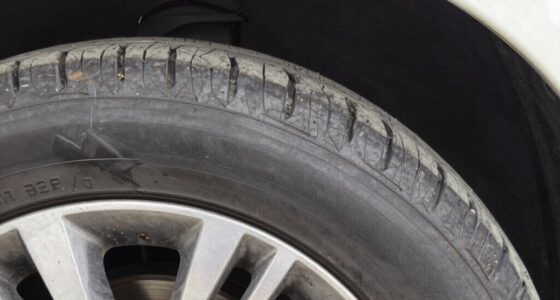
Another sign to watch for is uneven tire wear. When a wheel bearing begins to fail, it can cause misalignment or wobbling, which in turn leads to uneven tire tread. This uneven wear not only affects your traction but also signals that your suspension components might be compromised. You could also feel a vibration through the steering wheel, especially at higher speeds. This vibration often results from the wheel not rotating smoothly due to a worn or damaged bearing. When inspecting your vehicle, look for any visible damage or looseness around the wheel hub area—this can be a sign that the bearing is deteriorating. Regular inspection techniques are crucial for early detection, especially since a worn wheel bearing can cause additional damage if left unchecked. Proper inspection techniques can help identify early issues before they lead to more serious damage, just as a well-maintained wheel bearing ensures smooth vehicle operation.
Lastly, don’t ignore the sensation of your steering feeling less responsive or more jerky than usual. Since the wheel bearing supports the wheel’s movement, its failure can cause steering to become unpredictable. If you notice any of these symptoms, it’s wise to have a mechanic inspect your wheel bearings sooner rather than later. Addressing problems early can prevent further damage to your brake system and suspension components, guaranteeing your vehicle stays safe and reliable on the road.
As an affiliate, we earn on qualifying purchases.
Frequently Asked Questions
Can a Bad Wheel Bearing Cause Uneven Tire Wear?
Yes, a bad wheel bearing can cause uneven tire wear because it affects wheel alignment and stability. When you notice uneven tire wear, it’s a good idea to perform regular tire rotations and a suspension check to spot potential issues early. Ignoring a failing wheel bearing can worsen tire damage, so addressing it promptly helps maintain your vehicle’s safety and prolongs tire life.
How Long Do Wheel Bearings Typically Last?
A wheel bearing usually lasts between 85,000 and 100,000 miles, like a marathon runner nearing the finish. Proper bearing lubrication extends its life, preventing overheating and wear. If you notice increased road noise or a grinding sensation, your bearing might be nearing the end. Regular inspections help catch issues early, ensuring your journey stays smooth and safe. Proper maintenance keeps your wheel bearings running longer and performing better.
Is It Safe to Drive With a Failing Wheel Bearing?
Driving with a failing wheel bearing isn’t safe because it can affect your brake performance and suspension alignment, increasing the risk of accidents. You might notice unusual noises, vibrations, or wobbling. It’s best to get it checked and replaced promptly. Continuing to drive could cause further damage to your vehicle, leading to costly repairs and compromised safety. Always prioritize safety by addressing wheel bearing issues early.
Can I Replace a Wheel Bearing Myself?
Think of replacing a wheel bearing as opening a puzzle. You can attempt a DIY repair if you have the right tools, like a jack, socket set, and bearing puller. However, it’s complex and requires precision. If you’re confident in your mechanical skills, follow detailed guides, but remember, a mistake could lead to further damage or safety issues. When in doubt, consult a professional to guarantee a safe, proper repair.
What Are the Costs Involved in Replacing a Wheel Bearing?
Replacing a wheel bearing typically costs between $300 and $1,000, depending on your vehicle and labor rates. You should compare costs across shops for a good cost comparison, and consider parts with a warranty for added peace of mind. Labor costs can be a significant part of the total, especially if the bearing is difficult to access. Always ask if the part includes a warranty to avoid future expenses.
As an affiliate, we earn on qualifying purchases.
Conclusion
Keep an ear out for unusual noises and feel for any looseness or vibration while driving. Addressing wheel bearing issues early can save you from costly repairs and dangerous breakdowns. Remember, a stitch in time saves nine—don’t ignore the signs of a failing wheel bearing. Regular maintenance and prompt inspections keep your ride smooth and safe. Stay attentive, and you’ll steer clear of bigger problems down the road.
wheel bearing noise diagnostic tool
As an affiliate, we earn on qualifying purchases.
As an affiliate, we earn on qualifying purchases.
As an affiliate, we earn on qualifying purchases.