
Lowering your car improves handling by lowering the center of gravity, making turns feel more stable and responsive. However, it can also negatively impact ride quality, as stiffer suspension and altered geometry can lead to a bumpier, less comfortable ride over rough surfaces. If you don’t maintain proper alignment, tire wear and safety issues may arise. Keep exploring to learn how to optimize your lowered suspension for the best mix of performance and comfort.
Key Takeaways
- Lowering improves handling by lowering the vehicle’s center of gravity, reducing body roll during turns.
- It enhances stability and responsiveness, providing a more connected and confident driving experience.
- Suspension geometry changes from lowering can cause misalignment, leading to uneven tire wear and compromised handling.
- Ride quality may decrease, resulting in a stiffer, bumpier ride due to increased suspension stiffness.
- Proper tuning and alignment are essential to balance improved handling with ride comfort and safety.

Have you ever wondered how lowering your car can enhance both its appearance and performance? When you decide to lower your vehicle, you’re making a bold statement that it’s more than just a daily driver—it’s a customized machine designed for style and agility. But beyond the looks, lowering your car considerably impacts how it handles on the road. One of the key factors affected by this modification is wheel alignment. Lowering alters the suspension geometry, which can cause your wheels to become misaligned if not adjusted correctly afterward. Proper wheel alignment is essential because it ensures your tires make the best contact with the road surface, improving steering precision and stability. Without it, you might notice your car pulling to one side or uneven tire wear, which can shorten your tires’ lifespan and compromise safety.
Speaking of tire wear, lowering your car can affect how your tires wear over time. When the suspension is altered, the camber, caster, and toe angles shift, often leading to uneven tire contact patches. This misalignment results in accelerated and uneven tire wear, especially on the inner or outer edges of the tires. If you ignore these changes, you might find yourself replacing tires more frequently and spending more on maintenance. Regular wheel alignment checks become critical after lowering your vehicle to prevent premature tire wear and to ensure your car handles as intended. Proper alignment not only preserves your tires but also maintains the overall balance and responsiveness of your car.
Lowering your car can improve handling by lowering the center of gravity, which reduces body roll during turns. This gives you a more planted and responsive feel, especially in sporty driving situations. The car feels more connected to the road, allowing for sharper steering and quicker responses to your inputs. However, this also means that ride quality might change; a lowered suspension tends to be stiffer, which can translate into a bumpier ride over rough surfaces. You might notice more road imperfections transmitted through the chassis, especially if your suspension isn’t tuned for comfort. Additionally, suspension geometry can be affected, which influences how your vehicle responds during maneuvers. While this stiffer setup enhances cornering and stability, it can make daily driving less smooth, so it’s a trade-off you need to take into account.
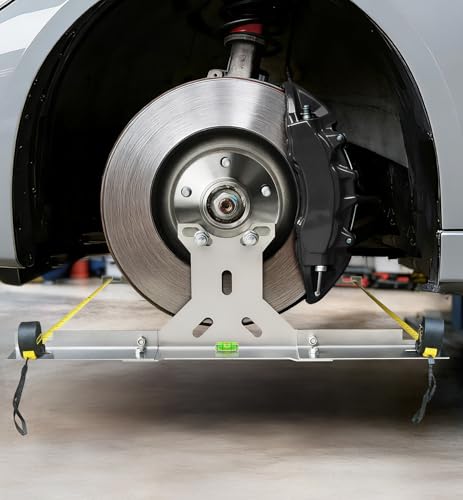
Toplamper Wheel Toe Alignment Tool Kit for at Home DIY Garage Use, Stainless Steel Toe Plates with Dual Tape Measures, Quick Front-End Toe Check for Automotive Cars Trucks SUVs (Patent Design)
- DIY Front-End Toe Adjustment: Ideal for home garage use
- Toe Reference and Adjustment Tool: Helps correct toe-in and toe-out
- Heavy-Duty Stainless Steel Plates: Resists bending and corrosion for durability
As an affiliate, we earn on qualifying purchases.
As an affiliate, we earn on qualifying purchases.
Frequently Asked Questions
Does Lowering My Car Improve Fuel Efficiency?
Lowering your car can improve fuel efficiency slightly by reducing aerodynamic drag and enhancing stability at higher speeds. When you lower your vehicle, you may see some fuel savings due to improved aerodynamics gains, especially on the highway. However, the overall impact is usually modest, and other factors like driving habits and engine condition play a bigger role in fuel economy. Keep in mind that extreme lowering might negatively affect ride comfort.
How Does Lowering Affect Tire Wear Over Time?
Lowering your car can lead to uneven tire contact with the road, which accelerates tire wear over time. Because the suspension angles change, you might notice more rapid tread wear on certain edges. To minimize this, you should regularly check your tire alignment and verify proper suspension setup. Proper maintenance helps reduce uneven wear and extends your tires’ lifespan, even if your car is lowered.
Can Lowering Cause Alignment Issues?
Lowering your car can cause alignment concerns because it often alters suspension geometry, leading to uneven tire wear and handling issues. When you lower your vehicle, you change the angles of your suspension components, which can shift your alignment out of spec. To prevent these problems, you should get a professional alignment after lowering, ensuring your suspension geometry stays correct and your ride remains safe and smooth.
Is Lowering Safe for Everyday Driving?
Lowering your car can be safe for daily driving if done properly, but it impacts stance stability and aesthetic appeal. You need to guarantee the suspension is correctly installed and aligned to maintain handling. When done right, it improves your car’s look and can enhance cornering. However, avoid excessively lowering, as it may cause ride discomfort and reduce clearance, affecting your safety and ride quality over everyday bumps and potholes.
How Does Lowering Impact Aftermarket Suspension Options?
Did you know that 65% of car enthusiasts prefer aftermarket suspension options for better performance? Lowering your car impacts aftermarket suspension options by requiring adjustments to suspension geometry to maintain stability. You’ll want to select aftermarket shock absorbers specifically designed for lowered vehicles to optimize handling. Properly choosing these components guarantees you enjoy improved cornering and reduced body roll, without sacrificing ride comfort or safety.
![Detroit Axle - Front End 14pc Suspension Kit for 2007-2011 Toyota Camry, 2 Lower Control Arms Ball Joints 4 Inner & Outer Tie Rods Boots Rear Sway Bars Replacement [USA Built]](https://m.media-amazon.com/images/I/41bgdNRMnfL._SL500_.jpg)
Detroit Axle – Front End 14pc Suspension Kit for 2007-2011 Toyota Camry, 2 Lower Control Arms Ball Joints 4 Inner & Outer Tie Rods Boots Rear Sway Bars Replacement [USA Built]
- Compatible Models: For 2007-2011 Toyota Camry
- Complete Front Suspension Kit: Includes control arms, ball joints, tie rods, sway bars, and boots
- Durable Automotive Components: Designed for demanding passenger vehicles, trucks, and SUVs
As an affiliate, we earn on qualifying purchases.
As an affiliate, we earn on qualifying purchases.
Conclusion
Lowering your car might seem like just a simple tweak, but it’s like releasing a roller coaster on wheels—your handling becomes razor-sharp, and ride quality transforms into a symphony of precision. Every bump feels like a minor tremor, and your car hugs the road like a boa constrictor. Just remember, this tiny change can turn your daily drive into an adrenaline-fueled adventure, where every corner is conquered with the grace of a ballet dancer and the power of a thunderstorm.
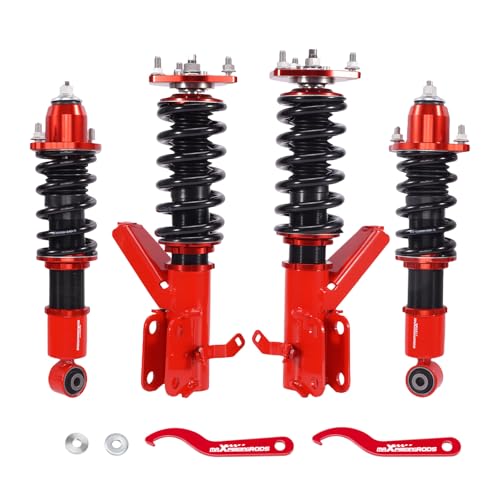
maXpeedingrods Coilovers for Honda Civic 2001-2005 DX/EX/GX/HX/LX/Si, Height Adjustable Coilovers Suspension Kit, Preset Damping Shock Absorber Struts, Lowering Kit Red
- Perfect Fit for Honda Civic 2001-2005: Compatible with various Civic models
- High Tensile Springs: Durable springs with low distortion
- Adjustable Ride Height: Lowering range of 1-3 inches
As an affiliate, we earn on qualifying purchases.
As an affiliate, we earn on qualifying purchases.

Tire Tread Depth Gauge,Tire Tread Gauge Color Coded,Tread Depth Gauge in 1/32 inch(Pack of 2)
- Color Coded Tread Depths: Different colors indicate different tread ranges
- Accurate and Easy to Read: Clear calibration for quick readings
- Reusable and Durable: Made of sturdy, long-lasting material
As an affiliate, we earn on qualifying purchases.
As an affiliate, we earn on qualifying purchases.