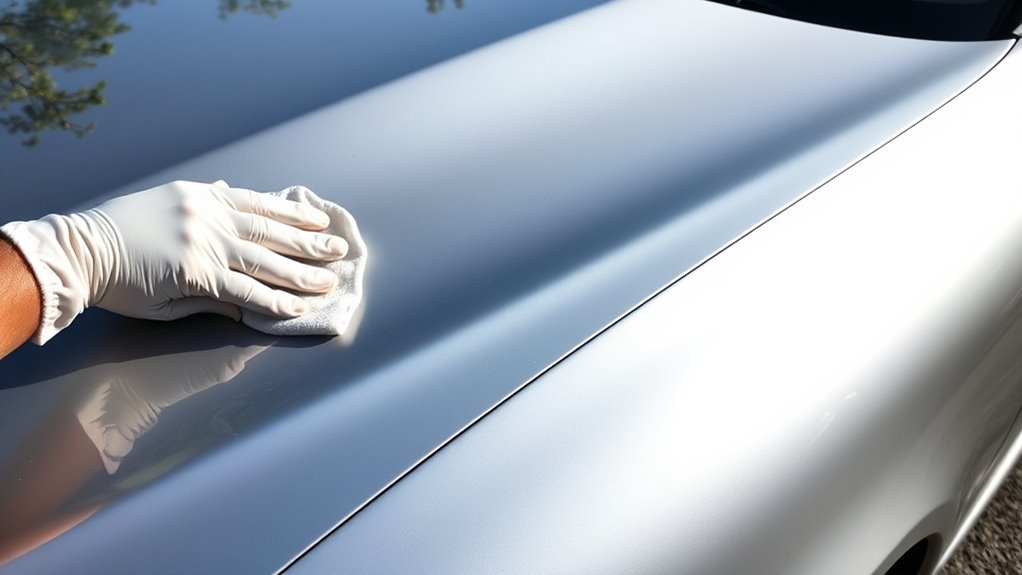

To achieve a lasting, mirror-like shine, start by thoroughly washing and drying your car to remove dirt and contaminants. Inspect the paint for scratches, and use a clay bar or polish if needed for extra smoothness. Apply your wax in small sections using a soft applicator, working in circular motions, and allow it to cure. Once hazed, buff with a microfiber cloth until glossy. Continuing these steps will help your car stay protected and radiant longer.

Get business pricing on garage and car supplies
- Business-only prices and quantity discounts
- Tax-exempt purchasing
- Multiple users, one account, clear invoices
Key Takeaways
- Thoroughly wash and dry the vehicle to remove dirt and contaminants before applying wax.
- Apply wax in small sections using a soft applicator in circular motions for even coverage.
- Allow the wax to cure following the manufacturer’s recommended time for optimal bonding.
- Buff the wax haze off with a clean microfiber cloth using light circular motions for shine and protection.
- Consider applying a second coat after curing to enhance durability and achieve a longer-lasting shine.
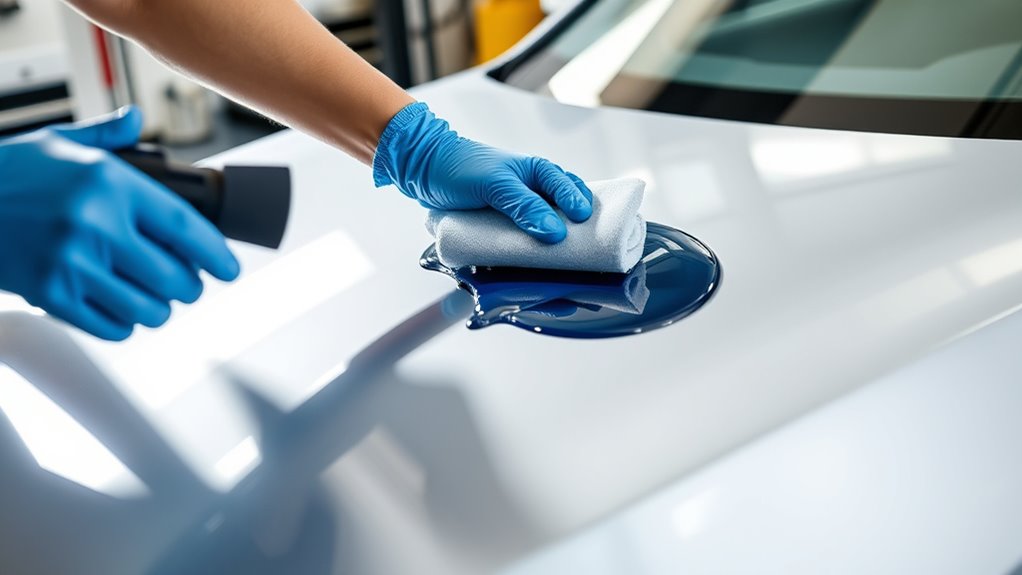
Waxing your car is an excellent way to protect its paint and keep it looking shiny. When you apply wax properly, you create a protective barrier that shields your vehicle from environmental damage, such as UV rays, dirt, and pollutants. To do this effectively, you need to focus on good paint protection and proper detailing techniques. These steps guarantee your car’s surface remains smooth and glossy for a longer period.
Start by washing your car thoroughly to remove any dirt, grime, or debris. Use a high-quality car shampoo and a soft sponge or microfiber cloth to avoid scratching the paint. Dry the vehicle completely with a clean microfiber towel. This prep work is vital because any dirt left on the surface can mar the finish once you start waxing.
Before you begin applying wax, inspect the paint for any imperfections like scratches or swirl marks. If needed, use a clay bar or polish to remove contaminants and smooth the surface. These detailing techniques enhance the paint protection your wax will provide, ensuring an even, mirror-like shine. Always work in a shaded area to prevent the wax from drying too quickly, which can make buffing more difficult.
Choose a wax that complements your car’s paint type—whether it’s a paste, liquid, or spray wax. When applying, use a clean, soft applicator pad and work in small sections. Apply the wax in circular motions, ensuring you cover every inch of the paint evenly. Don’t press too hard; gentle, consistent pressure allows the wax to bond properly without risking scratches. Let the wax sit for the time recommended by the manufacturer—usually a few minutes—so it can cure and form a protective layer.
Once the wax has hazed over, grab a clean microfiber cloth to buff it off. Use light, circular motions to remove any residue and bring out the shine. This step not only enhances the look but also deepens the paint protection, making your car more resistant to future contaminants. For a more durable finish, consider applying a second coat after the first has cured.
Regular waxing, combined with good detailing techniques, preserves your car’s paint and keeps it looking freshly detailed. It’s a simple maintenance task that remarkably extends the life and appearance of your vehicle’s finish. With a little effort and attention to detail, you’ll enjoy a glossy, protected surface that turns heads wherever you go.
As an affiliate, we earn on qualifying purchases.
Frequently Asked Questions
Can I Wax My Car in Direct Sunlight?
Waxing your car in direct sunlight isn’t ideal because sunlight impact can cause the wax to dry too quickly, making it harder to work with. The waxing temperature rises under direct sun, leading to streaks or uneven coverage. To get the best results and a lasting shine, it’s better to wax your car in a shaded area or during cooler parts of the day. This guarantees proper application and a smoother, more durable finish.
How Often Should I Wax My Vehicle?
Wondering how often you should wax your vehicle? Generally, you’ll want to do it every 3 to 4 months to maintain that glossy shine. Different car wax types and waxing techniques impact longevity—premium waxes last longer, while quicker, simpler methods suit busy schedules. Keep an eye on your car’s appearance; if the shine dims or water no longer beads, it’s time for a fresh coat.
What Type of Wax Is Best for My Car?
You should choose a synthetic or polymer wax for better application techniques and enhanced durability. Synthetic waxes tend to last longer and provide a deeper shine, making them ideal if you want lasting protection. When applying, use a soft cloth and apply in circular motions, ensuring even coverage. This approach maximizes wax durability and results in a smooth, glossy finish that lasts longer between waxes.
Is It Necessary to Clay Bar Before Waxing?
Did you know that 78% of detailers recommend using a clay bar before waxing? It’s not always necessary, but clay bar benefits include removing embedded contaminants, creating a smoother surface that enhances wax durability. While waxing vs polishing focuses on protection and shine, clay bars prepare your car for a longer-lasting finish. If your car feels rough or dirty, using a clay bar first substantially improves the final look and protection.
Can I Use Car Wax on Plastic Trim?
Yes, you can use car wax on plastic trim, but choose a wax that’s compatible with plastic. Look for products that offer plastic protection, as some waxes can cause discoloration or damage. Always check the wax compatibility label before applying. Applying a suitable wax helps protect your plastic trim from UV damage and keeps it looking new, ensuring your car maintains a sleek, polished appearance.
As an affiliate, we earn on qualifying purchases.
Conclusion
Now that you’ve learned how to wax your car for a lasting shine, you’re all set to keep it looking pristine, just like a freshly polished chariot. Remember, regular waxing not only boosts your ride’s appearance but also protects it from the elements. So, don’t forget to give your car some TLC, even if it means channeling your inner knight from a bygone era. With these tips, your car will gleam brighter than a disco ball at Studio 54!
As an affiliate, we earn on qualifying purchases.
As an affiliate, we earn on qualifying purchases.
Fall Picks
fall essentials
As an affiliate, we earn on qualifying purchases.