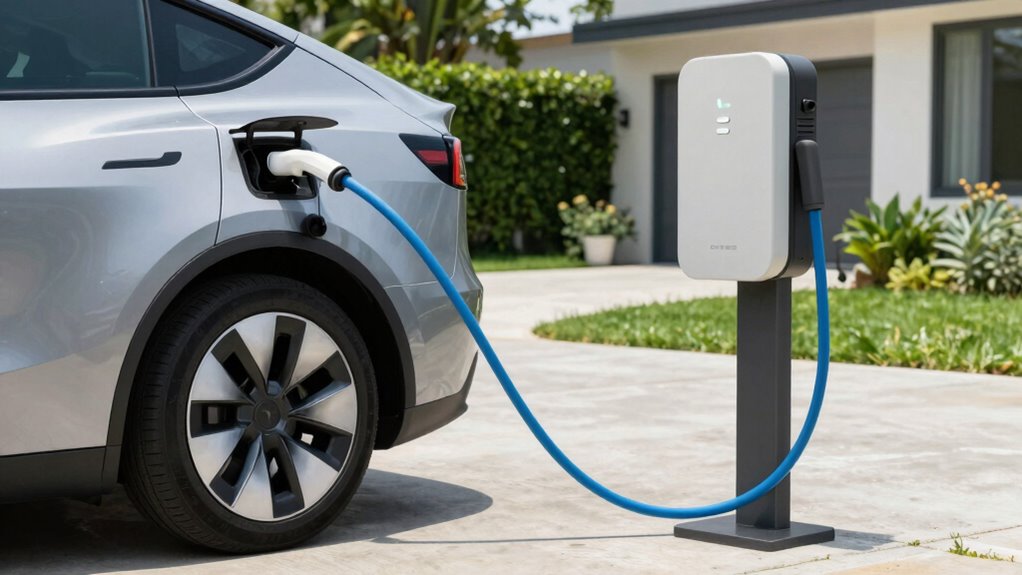

EV charger extension cables can help an existing charging cord reach a parking spot, but the right pick depends on connector compatibility, current rating, and the extra distance you need. My best overall choice is the VEVOR 48A 21-foot J1772 cable, which pairs a useful reach with a higher stated current rating than the 40A VEVOR alternatives. For a longer run, the EVDANCE 50A 40-foot cable stands out, while the VEVOR 40A 40-foot cable offers a heavy-duty long-cable option with a carrying bag. The main tradeoff is between reach and handling: longer cables can solve parking-distance problems but take more space and need careful routing. Read on for the full breakdown, including what to check before connecting an extension to your charger.

Get business pricing on garage and car supplies
- Business-only prices and quantity discounts
- Tax-exempt purchasing
- Multiple users, one account, clear invoices
Complete the kit


Key Takeaways
- The 21-foot, 48A VEVOR J1772 cable earns the overall lead by combining a practical mid-length reach with a higher stated current rating than the 40A VEVOR models.
- The two 40-foot options serve different priorities: EVDANCE lists a 50A rating, while VEVOR lists 40A and includes a carrying bag.
- Several 21-foot cables are close substitutes, not identical picks: SEGUMA offers both 40A and 50A versions, and VEVOR lists 32A, 40A, and 48A variants.
- The 17-foot, 50A options favor shorter extensions and list IP67 protection; the separate 16A 17-foot cable is aimed at a lower-current setup, not a high-amperage one.
- Two products use NEMA 14-50 connections rather than J1772 vehicle connectors. The POWGRN and RVGUARD cords are a different kind of extension and should not be treated as direct J1772 charging-cable replacements.


| ev charger extension cable | Length | Water resistance | Voltage |
|---|---|---|---|
| EV Charger Extension Cable | 17 feet | IP67 | 110V–240V |
| EVDANCE EV Charger Extension C | 40 feet | Water resistant | 240V listed; product description also states 110V–240V |
| VEVOR EV Charger Extension Cab | 40 feet (480 inches) | Waterproof | 120V–240V |
| EVDANCE EV Charger Extension C | 21 feet | Water resistant | 110V and 240V |
| POWGRN NEMA 14-50P to 14-50R 2 | 25 feet | Waterproof | — |
| SEGUMA J1772 EV Charger Extens | 21 feet | IP66 | 240 volts |
| SEGUMA EV Charger Extension Ca | 21 feet | IP66 | 240 volts |
| 50A 17ft EV Charger Extension | 17 feet | IP67 | — |
| VEVOR EV Charger Extension Cab | 21 feet | IP66 | — |
| Seguma EV Charger Extension Ca | 20 feet | IP66 | 240 volts |
| VEVOR EV Charger Extension Cab | 21 ft | IP66 | — |
| 16Amp J1772 EV Charger Extensi | 17 ft | IP67 | — |
| VEVOR EV Charger Extension Cab | 21 ft | Waterproof; IP rating not specified | 240 V |
| RVGUARD 50 Amp 25 Foot RV/EV E | 25 ft | Water resistant | 250 V |
| J1772 EV Extension Cable 50A 2 | 21 ft | Water resistant | 240 V |
More Details on Our Top Picks
EV Charger Extension Cable, 50A 17ft SAE J1772 Extension Cord Compatible with 110V-240V Level 1/Level 2 EV Chargers for J1772 EVs/PHEVs, IP67 Waterproof
For a J1772 driver who needs a shorter reach without giving up a high current rating, this 17-foot, 50A cable is the most focused fit in this group. Its IP67 rating and weather-resistant TPE jacket suit outdoor charging, while pure copper wiring and silver-plated contacts are intended to resist corrosion. Compared with the 21-foot EVDANCE 40A cable, this one gives up four feet of reach but supports a higher stated amperage; that can matter when the charger and vehicle are rated for it. The shorter length is also easier to position and store than the 40-foot EVDANCE or VEVOR options. The tradeoff is a limited parking radius, and it is not for NACS ports. Keep it fully uncoiled during charging to reduce overheating risk.
Pros:- 17-foot length adds reach without the bulk of a 40-foot cable
- Rated for up to 50A and 110V–240V use
- IP67 waterproof rating suits exposed charging locations
- TPE coating, copper wiring, and corrosion-resistant contacts
Cons:- Not compatible with NACS charging ports
- Must be fully uncoiled during use to reduce overheating risk
- Shorter reach than the 21-foot EVDANCE and 40-foot alternatives
Best for: J1772 EV or PHEV owners who need a compact outdoor extension and want a stated capacity up to 50A.
Not ideal for: Tesla/NACS drivers or households where the outlet and charging spot are separated by more than 17 feet.
- Length:17 feet
- Amperage:Up to 50A
- Voltage:110V–240V
- Compatibility:SAE J1772 EVs and PHEVs
- Water resistance:IP67
- Cable material:TPE coating, pure copper wiring
- Certifications:UL, ETL
Our verdict“Choose this for a weather-resistant, shorter J1772 extension when 50A capacity matters more than extra parking reach.”
EVDANCE EV Charger Extension Cable, J1772 Extension Cable 50A 40FT Charging Cord for Electric Vehicle
When the main problem is distance between a J1772 charger and a vehicle, this 40-foot EVDANCE cable offers the longest reach among these five picks. It is rated up to 50A, matching the compact 17-foot cable’s stated current capacity while allowing more flexible parking around a home, workplace, or charging point. That extra length is the reason to choose it—not a reason to treat it as an everyday carry cable. Compared with the 40-foot VEVOR, it has a higher stated amperage, while the VEVOR includes a carrying bag and accessories and is rated at 40A. The tradeoff is bulk: a 40-foot cord can be awkward to route, coil, and store. Its water resistance is described generally, and supplied data notes possible variability in durability.
Pros:- 40-foot length gives the broadest parking flexibility in this selection
- Rated up to 50A for compatible charging setups
- Male-to-female J1772 extension connection
- One-year warranty is specified
Cons:- Long cord can be heavy and cumbersome to route or store
- Water resistance is listed without a specific IP rating
- Stated 50A limit excludes charging setups requiring higher current
Best for: J1772 drivers who regularly need to reach a vehicle parked far from a home, workplace, or public charger.
Not ideal for: Drivers seeking a light, easy-to-store cable for short daily extensions, or setups requiring more than 50A.
- Length:40 feet
- Amperage:Up to 50A
- Voltage:240V listed; product description also states 110V–240V
- Connector gender:Male-to-female
- Compatibility:SAE J1772 chargers
- Water resistance:Water resistant
- Warranty:1 year
Our verdict“Pick this when 40 feet of J1772 reach is the priority and you can manage the added bulk.”
VEVOR EV Charger Extension Cable, 40Amp, 40 ft, J1772, Compatible with 120V-240V, Level 1/Level 2, Heavy Duty, Waterproof, with Carrying Bag
The VEVOR stands out for pairing 40 feet of reach with a carrying bag and small cable-care accessories, making it a more organized long-cord package than the EVDANCE 40-foot option. Its stated 40A rating is the key compromise: it offers the same nominal reach as that EVDANCE, but not the same listed current capacity. For buyers whose charger and vehicle stay within 40A, the waterproof construction and 120V–240V compatibility support varied charging locations. At 10.6 pounds, though, this is not a light travel cord, and a full 40 feet still takes space to coil and store. I would favor the EVDANCE for setups needing its stated 50A rating; this VEVOR makes more sense when the included storage accessories and waterproof description matter more than that higher capacity.
Pros:- 40-foot length provides substantial charging reach
- Waterproof construction is specified for outdoor use
- Works with 120V and 240V charging sources
- Includes carrying bag, cleaning cloth, and cable tie
Cons:- 10.6-pound weight makes frequent carrying less convenient
- 40A limit is below the EVDANCE 40-foot cable’s stated 50A
- Long cable still requires careful coiling and connector handling
Best for: J1772 owners who need a long outdoor extension, charge at up to 40A, and value included storage and cable-management accessories.
Not ideal for: Drivers with charging equipment rated above 40A or anyone who needs a lightweight cable for frequent transport.
- Length:40 feet (480 inches)
- Amperage:40A
- Voltage:120V–240V
- Maximum listed wattage:9,600 watts
- Connector:Type 1, male-to-female
- Water resistance:Waterproof
- Weight:10.6 pounds
- Included accessories:Carrying bag, cleaning cloth, cable tie
Our verdict“Choose this long-reach option if your setup stays within 40A and the included storage accessories are useful to you.”
EVDANCE EV Charger Extension Cable, 21FT, 40A, J1772 Compatible
This EVDANCE is the balanced choice for drivers who need more than a short extension but do not want to handle a 40-foot cord. Its 21-foot length and 40A rating suit many home and work charging layouts, while the weather-resistant construction supports outdoor placement. Compared with the 17-foot, 50A option, it gives four extra feet but has a lower stated current limit; compared with either 40-foot cable, it is easier to position and store but cannot bridge as much distance. That middle ground is its clearest advantage. The tradeoffs are straightforward: it is not rated above 40A, and no carrying case or storage solution is included. For a typical J1772 extension need where reach is moderate, I would favor this over a long cord that adds bulk without solving a real distance problem.
Pros:- 21-foot length balances added reach with easier handling than 40-foot cords
- Rated up to 40A for compatible charging equipment
- Designed for 110V and 240V sources
- Weather-resistant construction and one-year warranty
Cons:- 40A limit is lower than the 50A options in this group
- May not reach across large parking areas
- No carrying case or included storage accessory
Best for: J1772 EV owners who need a moderate extension for home or workplace parking and charge at no more than 40A.
Not ideal for: Drivers needing 50A capacity or enough cable to connect across a large driveway or parking area.
- Length:21 feet
- Amperage:40A
- Voltage:110V and 240V
- Connector:SAE J1772, male-to-female
- Water resistance:Water resistant
- Input current:40A
- Warranty:1 year
Our verdict“Choose this for a manageable 21-foot J1772 extension when your charging setup does not require more than 40A.”
POWGRN NEMA 14-50P to 14-50R 25 FT 50 Amp RV/EV Extension Cord Outdoor
This POWGRN serves a different job from the J1772 extension cables: it connects a NEMA 14-50 outlet to a NEMA 14-50 plug, extending power to compatible equipment rather than extending a J1772 vehicle connector. That makes it a candidate for an EV charging setup using a matching 14-50 connection, as well as RV use, but the plug and outlet must match the equipment exactly. Its 25-foot, 50A cord falls between the 21-foot EVDANCE and the 40-foot options for reach, with a waterproof rating and flexible, heat-resistant copper construction described for outdoor conditions. Unlike the J1772 cables, it is not a universal fit for chargers with other connections. I would choose it for a known 14-50 layout, not as a substitute for a J1772 extension.
Pros:- 25-foot length offers more reach than the 21-foot EVDANCE cable
- Rated for 50A and listed at 12,500 watts
- Waterproof design and ETL listing
- Flexible, heat-resistant copper construction with a cable organizer
Cons:- NEMA 14-50 compatibility is required at both ends
- Does not provide a J1772 male-to-female vehicle connector extension
- Shorter than the 40-foot J1772 options
Best for: EV or RV owners whose equipment uses matching NEMA 14-50 connections and who need an outdoor 25-foot power extension.
Not ideal for: Drivers looking to extend a J1772 vehicle connector directly, or anyone whose charger, plug, or outlet is not NEMA 14-50 compatible.
- Length:25 feet
- Connector:NEMA 14-50P to NEMA 14-50R
- Amperage:50A
- Listed voltage:125V
- Power:12,500 watts
- Conductors:4
- Water resistance:Waterproof
- Certification:ETL listed
Our verdict“Choose this only when your EV charging equipment uses matching NEMA 14-50 connections and needs a 25-foot outdoor extension.”
SEGUMA J1772 EV Charger Extension Cable, 40A, 21FT Level 1/2 Extension Cord
I’d choose this SEGUMA when 21 feet of reach and an IP66-rated jacket matter more than maximum amperage. Its 40A capacity suits compatible Level 1 and Level 2 setups, while the copper TPE construction and silver-plated inlets are aimed at durable, conductive connections. Compared with the 50A SEGUMA 21-foot model, this cable has less headroom for higher-current charging, but its stated capacity may be a better match for buyers whose equipment is rated at 40A or below. The tradeoff is physical: at over eight pounds, it is a substantial cord to move and store, not a lightweight travel accessory. Tesla owners also need a J1772 adapter, and the cable is limited to J1772 vehicles.
Pros:- 21-foot length adds useful placement flexibility
- 40A capacity suits compatible Level 1 and Level 2 setups
- IP66 waterproof rating supports outdoor use
- Copper TPE cable and silver-plated inlets are specified
Cons:- Lower capacity than SEGUMA’s 50A 21-foot model
- Weight exceeds eight pounds, making transport less convenient
- Tesla vehicles require a J1772 adapter
Best for: J1772 EV or PHEV owners with a 40A-or-lower charging setup who need a weather-resistant 21-foot extension for a driveway or garage.
Not ideal for: Drivers with charging equipment that needs more than 40A, Tesla owners without a J1772 adapter, or anyone prioritizing a light, frequently carried cable.
- Length:21 feet
- Maximum amperage:40 A
- Voltage:240 volts
- Wattage:9,600 watts
- Material:Copper TPE
- Compatibility:J1772 EVs and PHEVs
- Water resistance:IP66
Our verdict“Pick this SEGUMA for a weather-ready 21-foot extension when 40A is enough and extra portability is not a priority.”
SEGUMA EV Charger Extension Cable, 50A, 21FT UL Listed J1772 Extension Cord
This is the stronger match than SEGUMA’s 40A, 21-foot cable when a compatible charger calls for higher capacity: it supports up to 50A while keeping the same 21-foot reach. The stated UL listing, IP66 weather protection, copper TPE build, and silver-plated connectors make it a feature-rich option for J1772 charging at home or on the road. That extra capacity does not make it suitable for every setup; the charger and vehicle still determine the actual charging rate, and the cable is not for systems above its 50A limit. It also needs to be fully uncoiled during use to reduce overheating risk. Compared with the 17-foot 50A option in this roundup, SEGUMA offers four more feet, but takes more room to handle and store.
Pros:- Supports up to 50A
- 21-foot length offers more reach than the 17-foot 50A cable
- UL listed and rated IP66 for water resistance
- Copper TPE construction and silver-plated connectors
Cons:- Must be fully uncoiled during use to help prevent overheating
- J1772 compatibility limits vehicle fit without an adapter
- Long cord requires more storage and handling space than a 17-foot model
Best for: J1772 EV and PHEV owners with a compatible setup up to 50A who need a 21-foot outdoor extension and want a UL-listed option.
Not ideal for: Buyers with 40A-or-lower setups who do not need the extra capacity, drivers who need a shorter or compact cord, or Tesla owners without an adapter.
- Length:21 feet
- Maximum amperage:50 A
- Voltage:240 volts
- Wattage:12,000 watts
- Material:Copper TPE
- Compatibility:J1772 EVs and PHEVs
- Certification:UL listed
- Water resistance:IP66
Our verdict“Choose this SEGUMA over the 40A version if your compatible charging setup benefits from a 50A-rated, UL-listed extension with 21 feet of reach.”
50A 17ft EV Charger Extension Cable, SAE J1772 Compatible, IP67 Waterproof, for Level 2 Fast Chargers
For buyers who want 50A capacity without a 21-foot cord, this 17-foot cable is the more compact choice in this group. Its IP67 rating and UL and ETL certifications give it a stronger stated weather-resistance and certification profile than the IP66 SEGUMA 50A cables. The 100% pure copper wiring and TPE coating are also specified, making the construction details clear. The shorter reach is the main compromise: compared with SEGUMA’s 50A, 21-foot model, this one may not bridge a more distant outlet or awkward parking position. It is still a substantial extension cable, and its instructions call for uncoiling before use. Its 50A ceiling also rules it out for charging equipment that requires a higher-rated cable.
Pros:- 50A capacity for compatible charging equipment
- 17-foot length is shorter than the 21-foot alternatives
- IP67 waterproof rating
- UL and ETL safety certifications are specified
Cons:- Four feet shorter than the SEGUMA 50A 21-foot cable
- Must be uncoiled before use to reduce overheating risk
- Not intended for equipment requiring more than 50A
Best for: J1772 drivers with a compatible setup up to 50A who want certified, outdoor-capable reach but prefer 17 feet over a longer cable.
Not ideal for: Owners whose parking layout needs more than 17 feet, or those with charging equipment rated above 50A.
- Length:17 feet
- Maximum amperage:50 A
- Connector type:SAE J1772
- Wiring:100% pure copper
- Coating:TPE
- Water resistance:IP67
- Certifications:UL and ETL
Our verdict“Choose this model if 17 feet covers your parking layout and you want a certified 50A extension with an IP67 rating.”
VEVOR EV Charger Extension Cable, 48Amp 21 ft J1772 Extension Cord Compatible with 120V-240V SAE J1772 Electric Vehicle Chargers, Level 1/Level 2 IP66 Heavy Duty Car Charging Cable with Carrying Bag
VEVOR’s 48A, 21-foot cable stands apart from the SEGUMA 50A 21-foot model by trading two amps of rated capacity for a more travel-oriented bundle: a carrying bag, cable tie, and connector-cleaning cloth are included. It is specified for both 120V and 240V J1772 charging, a useful fit for owners moving between Level 1 and Level 2 setups. IP66 protection and a stated operating range from -22°F to 122°F suit outdoor use, though the product details do not list the UL certification shown for some competing options. At 7.5 pounds, it is still a weighty cable, and the 48A rating makes it a poor choice for setups requiring a 50A-rated extension. Tesla drivers need an adapter.
Pros:- 21-foot reach for flexible vehicle positioning
- Compatible with 120V and 240V J1772 chargers
- Includes a carrying bag, cable tie, and cleaning cloth
- IP66 protection and a stated -22°F to 122°F operating range
Cons:- 48A rating is below the 50A SEGUMA and 17-foot alternatives
- Weighs 7.5 pounds, limiting portability
- Product details do not specify UL or ETL certification
Best for: J1772 EV or PHEV owners who want a 21-foot extension for 120V or 240V charging and value included storage and cable-care accessories.
Not ideal for: Drivers whose setup requires a 50A cable, buyers who need a stated UL or ETL certification, or anyone seeking a lightweight carry-on extension.
- Length:21 feet
- Maximum amperage:48 A
- Voltage compatibility:120V–240V
- Connector type:Type 1 / SAE J1772
- Water resistance:IP66
- Weight:7.5 pounds
- Operating temperature:-22°F to 122°F
- Included accessories:Carrying bag, cable tie, cleaning cloth
Our verdict“Pick the VEVOR if you want a 21-foot, 48A J1772 extension with practical storage accessories and do not need a 50A rating.”
Seguma EV Charger Extension Cable, 50A, 20FT, UL Listed J1772 Extension Cord
At 20 feet and 50A, this SEGUMA lands between the 17-foot 50A cable and the 21-foot versions, giving buyers a useful middle ground rather than maximum reach. Its UL listing, copper TPE construction, and IP66 rating match the core safety and outdoor-use details of the SEGUMA 50A 21-foot option. The shorter length can mean a little less cord to arrange when 21 feet is unnecessary, though the difference is only one foot; this is not a compact cable. It weighs 8.18 pounds, so storage and repositioning remain a consideration. Compared with the 17-foot model, it adds three feet of reach; compared with the 21-foot SEGUMA, it gives up one foot while retaining the same stated 50A capacity.
Pros:- 50A rating suits compatible higher-current setups
- 20-foot length sits between the 17-foot and 21-foot options
- UL listed
- IP66-rated copper TPE construction
Cons:- Weighs 8.18 pounds and may be cumbersome to reposition
- Only one foot shorter than SEGUMA’s 21-foot version
- J1772 connector limits compatibility without an adapter
Best for: J1772 EV and PHEV owners with a compatible setup up to 50A who need around 20 feet of outdoor charging reach and want a UL-listed cable.
Not ideal for: Drivers who can manage with 17 feet and want less cable to handle, or those who need longer reach than 20 feet or a lightweight extension.
- Length:20 feet
- Maximum amperage:50 A
- Voltage:240 volts
- Wattage:12,000 watts
- Material:Copper TPE
- Connector type:J1772
- Certification:UL listed
- Water resistance:IP66
Our verdict“Choose this SEGUMA when 17 feet is too short but you would rather not manage a full 21-foot, 50A cable.”
VEVOR EV Charger Extension Cable, 40Amp 21 ft J1772 Extension Cord
I’d pick this VEVOR when a 21-foot reach and ready-to-store kit matter more than minimizing cable weight. Its 40A rating gives it more headroom than the 32A VEVOR 21-foot model, while the IP66 protection and stated operating range suit outdoor parking in varied weather. The included bag, tie, and cleaning cloth also make it a more complete package than the 16A 17-foot cable, which is better suited to lower-current setups and emphasizes its IP67 rating and warranty instead.
The tradeoff is that this cable weighs 6.8 pounds, so frequent packing and repositioning may feel cumbersome. The listing describes compatibility with J1772 chargers, but buyers should confirm their charger and vehicle manufacturer permit an extension cable; connector fit alone does not establish suitability. Its 40A capacity also sits below the 50A choices for higher-current setups.
Pros:- 21-foot length helps reach vehicles parked at an awkward angle or farther from the charger.
- 40A rating offers more current capacity than the 32A VEVOR alternative.
- IP66 protection and stated operating range support outdoor use in varied conditions.
- Includes a carrying bag, cable tie, and cleaning cloth.
Cons:- At 6.8 pounds, it is relatively heavy to move and store regularly.
- Its 40A rating is below the 50A options for higher-current charging setups.
- The listing does not provide a named safety certification for this model.
Best for: J1772 EV or PHEV owners who need 21 feet of outdoor reach, up to 40A capacity, and accessories for keeping the cable organized.
Not ideal for: Drivers with 50A charging equipment, or anyone who needs a lighter cable for frequent daily packing and carrying.
- Connector:SAE J1772, male-to-female
- Voltage compatibility:120V–240V
- Length:21 ft
- Water resistance:IP66
- Operating temperature:-22°F to 122°F (-30°C to 50°C)
- Weight:6.8 lb
- Included accessories:Carrying bag, cleaning cloth, cable tie
Our verdict“Choose this VEVOR if you want a well-equipped 21-foot, 40A J1772 extension for outdoor use and can accept its heavier build.”
16Amp J1772 EV Charger Extension Cable, 17ft SAE J1772 Extension Cord
This cable makes the most sense when a charger is limited to 16 amps and a shorter extension is enough. Its 17-foot length is easier to manage than the 21-foot VEVOR cables, while the IP67 rating is a higher stated ingress-protection level than those models’ IP66 rating. The listing also identifies UL and ETL certification, silver-plated terminals, and a 36-month warranty—useful points of distinction beside the simpler accessory bundle on the 40A VEVOR.
The defining compromise is capacity: 16A is not a substitute for a higher-rated extension, so this is a poor match for buyers trying to support a 32A, 40A, or 50A setup. The instructions also say to fully uncoil it during use to limit heat buildup. I’d check charger and vehicle guidance before adding any extension, even when the connectors fit.
Pros:- IP67 rating is the highest stated ingress-protection level among the J1772 options reviewed here.
- UL and ETL certifications are identified in the product description.
- Silver-plated terminals and pure copper wiring are specified.
- 36-month manufacturer warranty and storage bag are included.
Cons:- 16A rating rules it out for higher-current charging setups.
- At 17 feet, it provides less reach than the 21-foot alternatives.
- Must be fully uncoiled during use, which takes extra space and handling.
Best for: J1772 EV and PHEV owners using a compatible charger rated up to 16A who want a weather-resistant 17-foot extension and stated certification details.
Not ideal for: Owners of 32A-or-higher charging equipment, or drivers who need more than 17 feet of added reach.
- Connector:SAE J1772
- Voltage compatibility:110V–240V
- Length:17 ft
- Water resistance:IP67
- Conductor material:100% pure copper
- Cable coating:TPE
- Certifications stated:UL and ETL
- Warranty:36 months
Our verdict“Pick this cable for a compatible 16A setup when its IP67 rating and certification details matter more than extra length or current capacity.”
VEVOR EV Charger Extension Cable, 32Amp 21 ft J1772 Extension Cord
The 32A rating and 21-foot reach put this VEVOR in the middle of the lineup: more current capacity than the 16A 17-foot cable, without making the jump to a 40A or 50A extension. That makes it a practical fit for buyers whose compatible charger is rated within its limit and who need added reach outdoors. Like the 40A VEVOR, it is described as weatherproof and fire-resistant and comes with a bag, cloth, and tie.
Its main advantage over the 40A VEVOR is a lower listed weight of 5.7 pounds; its main disadvantage is the lower current ceiling. That ceiling matters more than small differences in included accessories: this cable is not the pick for a 40A or 50A setup. The product information also does not name a specific IP rating or certification, unlike the 16A cable’s stated IP67 and UL/ETL details. Confirm extension use is allowed by your charger and vehicle makers.
Pros:- 21-foot cable adds useful reach for awkward parking positions.
- 32A rating exceeds the capacity of the 16A 17-foot option.
- Listed weight of 5.7 pounds is lower than the 40A VEVOR 21-foot model.
- Includes a carrying bag, cleaning cloth, and cable tie.
Cons:- 32A maximum makes it unsuitable for higher-current 40A and 50A setups.
- Product details do not specify an IP code or named safety certification.
- Still weighs 5.7 pounds, which may be cumbersome for frequent transport.
Best for: J1772 owners with a compatible charging setup rated at 32A or less who need 21 feet of outdoor reach without choosing a 40A model.
Not ideal for: Drivers with 40A or 50A equipment, or buyers who require a clearly stated IP rating or safety certification.
- Connector:SAE J1772, male-to-female
- Voltage:240 V
- Length:21 ft
- Water resistance:Waterproof; IP rating not specified
- Weight:5.7 lb
- Case material:ABS + PA66
- Stated use:Indoor and outdoor
Our verdict“Choose this VEVOR if your compatible setup needs no more than 32A and you want 21 feet of reach without the 40A model’s listed weight.”
RVGUARD 50 Amp 25 Foot RV/EV Extension Cord
This RVGUARD cord fills a different role from the J1772 extension cables: it connects through NEMA 14-50P/R plugs, making it relevant when the charging arrangement uses a compatible 14-50 outlet and EVSE. At 25 feet, it offers more length than the 21-foot J1772 options, and its 50A rating suits compatible equipment with that connection. The power indicator light, storage bag, and strap add practical details that the J1772 cables do not share.
That connector difference is also the main limitation. It is not a J1772 vehicle-side extension, so it will not directly extend a J1772 charging connector; buyers need to match it to the supply side of their setup and follow EVSE requirements. Compared with the 21-foot 50A J1772 cable, this is more useful for an appropriate NEMA 14-50 connection, but less direct for extending a J1772 lead. The listing specifies water resistance, not an IP rating.
Pros:- 25-foot length exceeds the 21-foot J1772 options in this group.
- 50A rating and NEMA 14-50P/R connectors suit compatible RV and EV setups.
- ETL listing is specified.
- Power indicator light, storage bag, and strap are included.
Cons:- NEMA 14-50 connectors do not directly extend a J1772 vehicle-side cable.
- Only applies to setups with compatible 50A connections and equipment.
- Water resistance is stated without a specific IP rating.
Best for: RV owners and EV drivers whose compatible charging equipment uses a NEMA 14-50 connection and who need a 25-foot, 50A supply-side extension.
Not ideal for: Drivers seeking a direct SAE J1772 male-to-female extension between an EV charger and vehicle.
- Connector type:NEMA 14-50P to NEMA 14-50R
- Voltage:250 V
- Length:25 ft
- Wattage:12,500 W
- Wire gauge:6/3 + 8/1 AWG
- Water resistance:Water resistant
- Certification:ETL listed
Our verdict“Choose the RVGUARD only if your setup needs a 25-foot NEMA 14-50 extension rather than a direct J1772 cable extension.”
J1772 EV Extension Cable 50A 21FT, Level 2
For a compatible Level 2 setup that needs more current headroom, this 50A, 21-foot J1772 cable stands above the 32A and 40A VEVOR options on stated amperage. Its male-to-female connector format is designed to extend a J1772 lead, and the listing gives a 240V rating and 12kW wattage figure. The 21-foot length matches the VEVOR cables, so the choice is about current capacity and compatibility rather than extra reach.
The tradeoff is a heavier, less portable cable at 6 pounds, and its water-resistance description is less specific than the IP66 and IP67 ratings supplied for some alternatives. The product data cites ETL, UL, and SAE J1772 compliance, but buyers should verify those details for the exact item and confirm that both the charger and vehicle makers permit an extension. It is not the right upgrade if the connected equipment is limited to a lower rating.
Pros:- 50A rating is higher than the 32A and 40A J1772 options in this group.
- 21-foot length provides the same reach as the VEVOR J1772 extensions.
- Male-to-female J1772 format is intended for extending a compatible charger lead.
- Product information states ETL, UL, and SAE J1772 compliance.
Cons:- Six-pound weight may make carrying and repositioning less convenient.
- Water resistance is described without a specific IP rating.
- Its 50A capacity is unnecessary for lower-rated equipment and does not override charger or vehicle limits.
Best for: J1772 EV owners with compatible Level 2 equipment rated up to 50A who need a 21-foot extension and want stated certification details.
Not ideal for: Drivers using 16A–40A equipment who do not need a 50A-rated cable, or anyone prioritizing a lighter cable or a stated IP code.
- Connector:SAE J1772, male-to-female
- Voltage:240 V
- Length:21 ft
- Wattage:12 kW
- Water resistance:Water resistant
- Weight:6 lb
- Stated compliance:ETL, UL, and SAE J1772
Our verdict“Pick this cable for a compatible 50A J1772 Level 2 setup when 21 feet of reach and higher current capacity outweigh portability.”

How We Picked
I compared the listed products by the details that shape a real extension-cable purchase: connector format, stated amperage, cable length, environmental protection claims, and included carrying accessories. I gave more weight to a clear match between the product’s connector and a typical J1772 charging setup than to length or current rating alone. A cable that does not match the charger-and-vehicle connection chain is not a useful upgrade, regardless of its other specifications.
The order favors products with a practical balance of reach and stated capacity, then separates longer-run, shorter-run, and lower-current choices by their intended use. The VEVOR 48A 21-foot cable leads for that balance; the 50A 40-foot EVDANCE is a better fit when distance matters more. I also kept the NEMA 14-50 cords distinct from J1772 extensions, since their plug format serves a different connection point. Product details here are based on the supplied specifications; buyers should check manufacturer instructions and confirm charger compatibility before use.
| ev charger extension cable | Water resistance |
|---|---|
| EV Charger Extension Cable | IP67 |
| EVDANCE EV Charger Extension C | Water resistant |
| VEVOR EV Charger Extension Cab | Waterproof |
| EVDANCE EV Charger Extension C | Water resistant |
| POWGRN NEMA 14-50P to 14-50R 2 | Waterproof |
| SEGUMA J1772 EV Charger Extens | IP66 |
| SEGUMA EV Charger Extension Ca | IP66 |
| 50A 17ft EV Charger Extension | IP67 |
| VEVOR EV Charger Extension Cab | IP66 |
| Seguma EV Charger Extension Ca | IP66 |
| VEVOR EV Charger Extension Cab | IP66 |
| 16Amp J1772 EV Charger Extensi | IP67 |
| VEVOR EV Charger Extension Cab | Waterproof; IP rating not specified |
| RVGUARD 50 Amp 25 Foot RV/EV E | Water resistant |
| J1772 EV Extension Cable 50A 2 | Water resistant |
Factors to Consider When Choosing Ev Charger Extension Cables
Before choosing an EV charger extension cable, map the full connection from the power source to the vehicle. A cable’s headline amperage or length cannot compensate for an incompatible connector or a charger maker that prohibits extensions. These checks can help you avoid buying a cord that reaches the car but does not fit your setup.
Match the Connector at Both Ends
Start by identifying the connector on your charging cable and the inlet on your vehicle, then check what each end of the extension accepts. Most products in this lineup are J1772 extensions, while the POWGRN and RVGUARD products are NEMA 14-50 extension cords. Those formats serve different points in the charging setup and are not interchangeable. A NEMA cord may extend a compatible power connection, but it does not directly extend a J1772 vehicle plug. Avoid relying on a product title alone: compare connector images, model details, and your charger manual. If either connection remains unclear, confirm it with the manufacturer before ordering.
Treat the Amperage Rating as a Compatibility Limit
The extension’s stated current capacity should be at least appropriate for the current your charging setup can draw, but the full system is limited by its lowest-rated component. For example, a 50A extension does not raise a charger’s output, and it cannot make an underspecified charging cord suitable for a higher current. This roundup includes ratings from 16A through 50A, so the products are not interchangeable just because their connectors look alike. Check the charger label and manual for its maximum current, and follow any extension-cable limits set by the charger maker. Avoid choosing the highest rating by default if it adds bulk without serving your setup.
Measure the Route, Not Just the Parking Gap
Measure the path the cable must follow from the charger lead to the vehicle inlet, including turns and the need to keep the cord clear of doors, wheels, and walking routes. A straight-line estimate can leave too little slack, while excessive extra length creates more cable to store and route safely. The listed choices range from 17-foot and 21-foot cords to 40-foot versions, making reach a major point of difference. Longer options can help when a charger is fixed far from the parking position; shorter ones may be easier to manage when the gap is modest. Do not stretch a cable taut or leave it where a vehicle can run over it.
Check Weather Claims and Use Instructions
Some listed J1772 cables specify IP66 or IP67 protection, while others describe themselves as waterproof or outdoor-rated. These claims can help distinguish products for exposed charging areas, but they are not permission to leave connectors in standing water or use damaged equipment. Read the product documentation to learn what the protection rating covers and how the manufacturer expects the cable to be stored. Keep connector ends clean and dry when not connected, and inspect the jacket and plugs for wear. If your charging location is exposed to rain, prioritize clear, verifiable protection details over vague outdoor wording.
Confirm Your Charger Allows an Extension
Compatibility is not only a matter of matching plugs: some EVSE manufacturers may restrict or advise against extension cables. An added connection can introduce another point that must be fully seated, protected, and checked for damage. Review the charger manual and any vehicle guidance before buying, particularly if you plan to charge at the upper end of the cable’s current rating. Do not use adapters or improvised combinations to make mismatched connectors fit. If the manufacturer does not approve the arrangement, a longer compatible charging cable or a professionally relocated charger may be the safer route.
Balance Reach Against Storage and Handling
A longer cord solves distance problems, but it also takes more room to coil and can be less convenient to move between locations. The 40-foot options suit unusually long routes better than a 17-foot extension, while the 21-foot group offers a middle ground for many parking layouts. Carrying bags are listed with some VEVOR products and may help keep a cable contained during storage or transport. Think about where the extension will live between charges and whether you will need to carry it often. Buying extra length “just in case” can add handling burden without improving a setup that already reaches comfortably.
Frequently Asked Questions
Can I use a J1772 extension cable with any home EV charger?
No. The charger’s connector, the vehicle inlet, the extension’s ends, and the charger maker’s instructions all need to match. Some EVSE manufacturers may prohibit extension cables, even when the plugs appear compatible. Check the manual for your specific charger and confirm the cable’s current rating meets the setup’s requirements. If the documentation is unclear, ask the manufacturer before charging through an extension.
Should I choose a 40A or 50A extension if my charger is rated below 40A?
A higher-rated cable does not increase charging speed; the charger and vehicle still set the available charging current. A 50A model may provide more capacity headroom, but it may also be bulkier than you need. The key is to confirm that every part of the connection is suitable for the current your setup can draw. Do not use the extension rating as a reason to exceed the limits in your charger or vehicle documentation.
Are the NEMA 14-50 cords in this roundup substitutes for J1772 extensions?
No, they use a different connector format and serve a different point in a charging setup. The POWGRN and RVGUARD cords are NEMA 14-50 extensions, while most other products listed are J1772 extensions. Whether a NEMA cord works depends on the power connection and equipment you have; it does not directly extend a J1772 vehicle connector. Check both ends of your existing cable and the manufacturer’s instructions before choosing between these types.
Is a 40-foot extension a better choice if I want more flexibility?
Only if your charging route actually needs that extra reach. A 40-foot cable can accommodate a charger placed farther from the parking spot, but its extra length can take more storage space and require more careful routing. Measure the path the cable will follow rather than selecting by maximum length alone. If a 17-foot or 21-foot option reaches with safe slack, a shorter cord may be easier to handle.
Can I leave an IP66- or IP67-rated cable outside between charging sessions?
A stated ingress-protection rating is useful information, but it does not mean every connector or storage condition is safe in all weather. Check the product documentation for the conditions covered, and follow its guidance on connected and disconnected use. Keep plugs protected from standing water and inspect the cable for damage before each use. If the cord will remain outdoors, choose a product with clear protection specifications and store its connector ends as directed.
Conclusion
For most J1772 owners who need a moderate extension, my best overall pick is the VEVOR 48A 21-foot cable: its listed capacity and middle-ground length make it the most balanced option here. For a long route, choose the EVDANCE 50A 40-foot cable; the VEVOR 40A 40-foot model is another long-reach choice if its stated rating suits your setup and you value the included bag. My best value-style fit is a 21-foot SEGUMA or VEVOR option selected to match your required amperage, rather than paying for unused reach or capacity. Beginners should start with the 17-foot 50A J1772 cable if that length and rating fit their charger, while the 16A model is only for a confirmed lower-current setup. For a power-side NEMA 14-50 connection, compare the POWGRN and RVGUARD cords separately from J1772 extensions. Before buying any of them, confirm connector fit and check that your charger maker permits an extension.
Fall Picks
fall essentials
As an affiliate, we earn on qualifying purchases.