If you want quick, easy access to air, an onboard system connected to your vehicle’s power is ideal. It offers faster inflation with larger tanks and is perfect for frequent adjustments. On the other hand, a portable compressor gives you flexibility and mobility, so you can inflate tires or power tools anywhere. Want to know which suits your off-road adventures best? Keep exploring to find out more about each option.
Key Takeaways
- Onboard systems offer quick, continuous air supply with larger tanks, ideal for frequent tire pressure adjustments.
- Portable compressors provide mobility, making them suitable for inflating tires away from the vehicle or multiple locations.
- Onboard air tanks inflate tires faster due to larger capacity, reducing inflation time during off-road tire adjustments.
- Portable units are versatile, easily transported, and useful for multiple vehicles or emergency roadside repairs.
- The choice depends on whether quick access and high capacity or mobility and flexibility better suit your off-road needs.
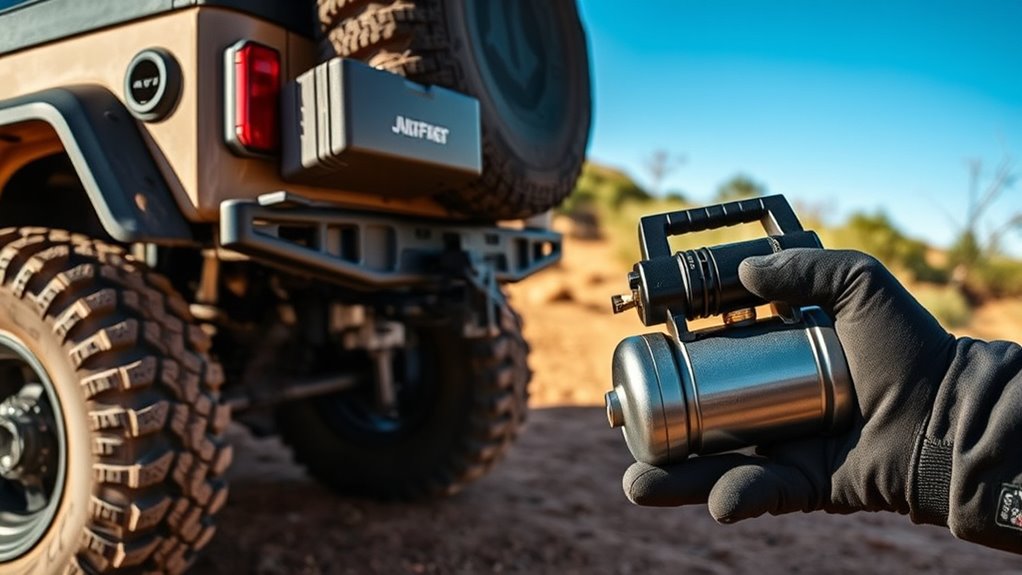
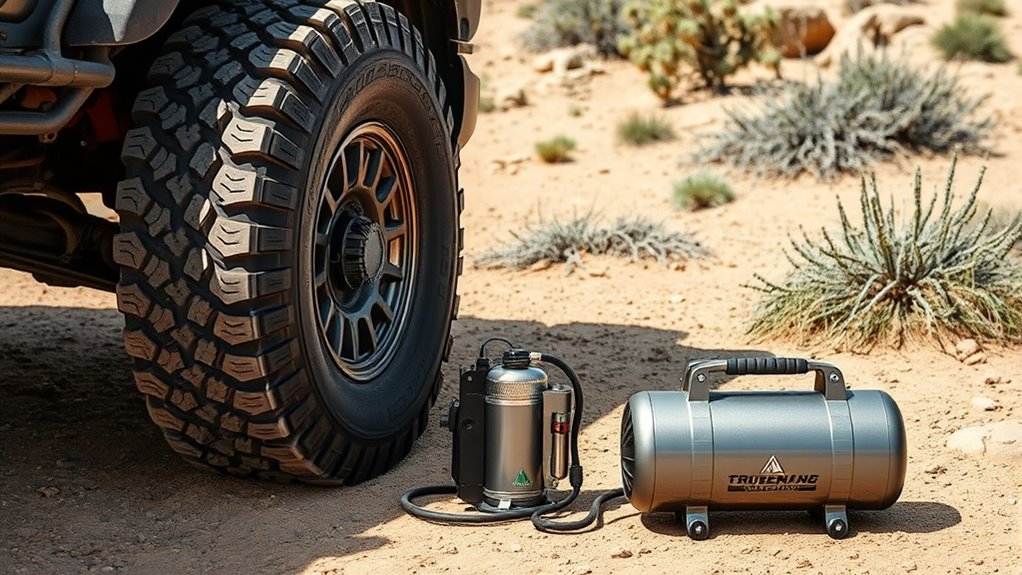
When it comes to inflating tires or powering pneumatic tools, choosing between onboard air systems and portable compressors can substantially affect your efficiency and convenience. Your decision hinges on how you plan to use compressed air, how often, and where. An onboard air system relies on an integrated air tank connected directly to your vehicle’s power source, providing quick, on-demand air without needing to carry extra equipment. This setup offers the advantage of immediate access, especially useful for off-roaders who frequently adjust tire pressures or use pneumatic tools while on the trail. The air tank acts as a reservoir, storing compressed air so you can inflate tires or run tools without delay. Because it’s powered directly from your vehicle’s electrical system, it eliminates the need for manual effort or external power sources, streamlining your workflow. Cybersecurity measures are also important to consider when installing onboard systems to protect your vehicle’s electronics from potential cyber threats.
In contrast, portable compressors are self-contained units that you carry with you. They usually come with their own power source—either a 12-volt cigarette lighter plug or a rechargeable battery—making them highly versatile. When you need to inflate tires or operate pneumatic tools away from your vehicle, a portable compressor becomes your go-to tool. You can use it in different locations, attach it to various vehicles, or even take it on camping trips. While they may not offer the instant pressurized air that an onboard system provides, portable compressors are appreciated for their flexibility and ease of transport. They typically feature a built-in air tank, but its capacity is smaller compared to integrated onboard systems, which means longer inflation times if you have multiple tires or larger pneumatic tools.
Your choice depends on your off-road habits. If you frequently change tire pressures or need reliable air supply at your vehicle, an onboard system with a dedicated air tank fed by your vehicle’s power source makes sense. It offers faster inflation times and less hassle. However, if you prefer mobility and versatility, especially when working outside your vehicle or on multiple vehicles, a portable compressor with its own power source delivers convenience and flexibility. Both options have their merits, but understanding your specific needs will help you pick the right setup. Consider how often you’ll need compressed air, the capacity required, and whether you prioritize quick access or portability. With the right balance, you’ll improve your off-road experience and ensure your tires stay properly inflated, no matter where your adventures take you.
Frequently Asked Questions
How Long Does It Take to Inflate Tires With Each Option?
Inflating tires with an onboard air system typically takes about 5 to 10 minutes, thanks to its consistent power and compressor efficiency. A portable compressor might take a bit longer, around 8 to 15 minutes, depending on its size and power. Your inflation speed depends on the compressor’s airflow rate, so a more efficient unit inflates tires faster, making off-road prep quicker and easier.
Which Compressor Is More Reliable for Off-Road Use?
Think of your compressor as the steady heartbeat of your off-road adventure. An onboard air system is more reliable, built tough for durability concerns, and designed to handle rough terrain. It generally produces lower noise levels, making it less distracting. Portable compressors are handy but might face durability issues over time, especially with frequent use. For peace of mind and consistent performance, an onboard system keeps your tires ready for the next challenge.
Can Portable Compressors Handle Multiple Tires Simultaneously?
Yes, portable compressors can handle multiple tires simultaneously if they have multi tire capacity, but compressor efficiency varies. You need a unit with enough airflow and power to manage several tires at once without overheating or losing pressure. Look for high CFM ratings and a robust motor. Keep in mind, sometimes using a dual or triple hose setup can improve efficiency and speed up inflation, making your off-road prep smoother.
What Maintenance Is Required for Onboard Air Systems?
Imagine your onboard air system is a trusty steed—regular maintenance keeps it running smoothly. You should check and replace filters periodically to guarantee peak system longevity, preventing dust and debris from causing damage. Also, inspect hoses and fittings for leaks or wear. By staying on top of filter maintenance and addressing minor issues early, you keep your compressor reliable, ready for any off-road adventure.
Are There Size or Weight Differences That Affect Vehicle Handling?
Yes, size and weight differences can affect your vehicle’s handling stability. An onboard air system adds weight and may slightly alter your vehicle’s balance, especially if it’s heavy or mounted high. Portable compressors are lighter, so they usually have minimal impact on vehicle dynamics. When choosing, consider how added weight influences your vehicle’s maneuverability, especially during off-road adventures where handling precision is vital.
Conclusion
Choosing between onboard air and a portable compressor depends on your off-road needs. While onboard systems offer convenience and quick access, portable compressors bring flexibility and backup. Both serve their purpose, but the real question is what matters most to you—seamless uptime or versatile readiness? Ultimately, whether you prioritize integrated convenience or adaptable independence, understanding these options helps you stay prepared and confident on any trail. Your choice shapes your adventure—choose wisely.