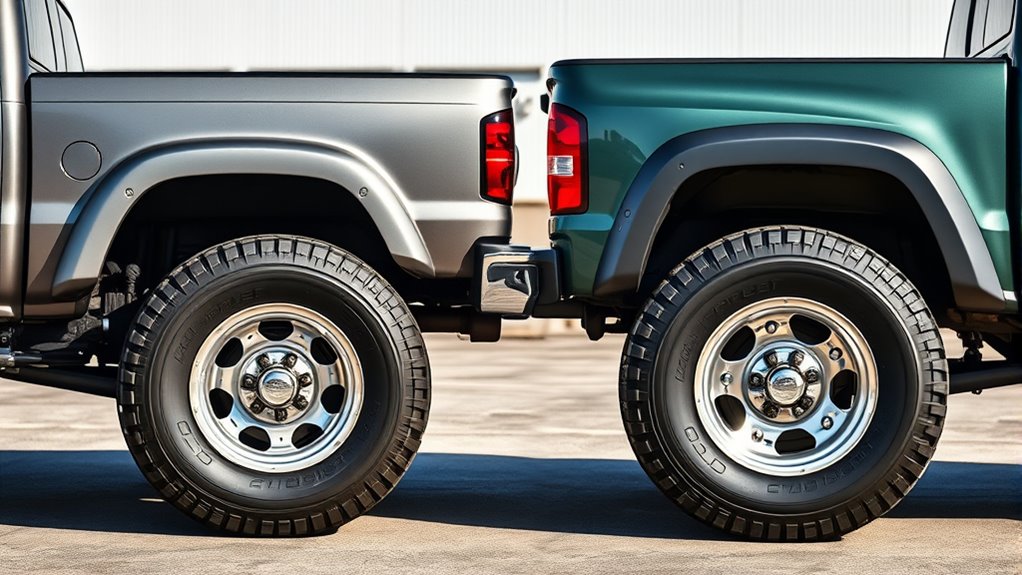

If you’re comparing dually and single rear wheel trucks for towing, duallys offer greater stability, higher towing capacity, and better safety with heavy loads, but they cost more in fuel and maintenance and are less maneuverable. Singles are more fuel-efficient, easier to handle in urban areas, and suited for lighter or occasional towing. Both options have trade-offs. Keep exploring to discover which setup best matches your towing needs and preferences.
Key Takeaways
- Dually trucks offer higher towing capacity and enhanced stability for heavy loads compared to single rear wheel setups.
- Single rear wheel trucks are more fuel-efficient and easier to maneuver, making them suitable for lighter or occasional towing.
- Duallys provide better load distribution and safety during long-distance heavy hauling.
- Single rear wheel trucks have lower operating costs and are more practical for urban driving and parking.
- The choice depends on towing frequency, load weight, and balancing performance with fuel economy.
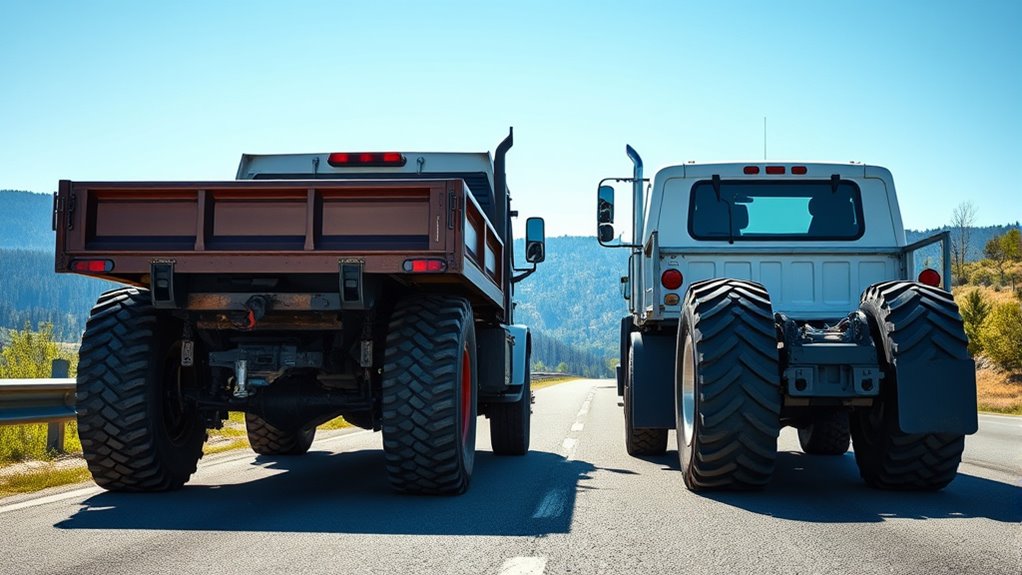
When choosing between dually and single rear wheel setups, understanding their differences is essential for making the right decision. Your choice impacts not just how much you can tow but also how efficiently your vehicle performs during those tasks. Duallys, with two wheels on each side of the rear axle, typically offer increased towing capacity because they distribute the weight more evenly and provide greater stability. This extra support allows you to pull heavier loads safely, making dually trucks popular among those who frequently tow large trailers, RVs, or heavy equipment. However, this added capacity often comes with a trade-off in fuel efficiency. Because dually setups have more tires and increased rolling resistance, your vehicle tends to consume more fuel, especially on longer trips or when carrying lighter loads that don’t fully utilize the dually’s capacity.
Dually trucks offer greater towing capacity and stability but tend to consume more fuel than single rear wheel setups.
On the other hand, single rear wheel trucks are generally more fuel-efficient because they have fewer tires and less rolling resistance. If your towing needs are moderate—say, occasional boat or small trailer hauling—you might find a single rear wheel setup more practical. It offers better fuel economy, saving you money at the pump, and tends to be easier to maneuver, especially in tight spaces or urban environments. The downside is that single rear wheel trucks usually have a lower towing capacity compared to duals. If you often find yourself hauling heavy loads, a single setup might limit your options or require you to upgrade to a larger truck later.
Another consideration is the stability and handling of your vehicle. Dually trucks excel in stability when towing heavy loads, as the wider stance and extra tires help prevent sway and improve control on the road. This makes them safer for large hauls and long-distance travel with substantial weights. Conversely, single rear wheel trucks might feel less stable under heavy loads, but they’re more agile and easier to park, which benefits everyday driving and short-distance hauls. Additionally, tire maintenance and replacement costs tend to be higher for dually setups because of the increased number of tires needing regular upkeep.
Ultimately, your decision comes down to your specific towing needs, fuel efficiency preferences, and how often you’ll be hauling heavy loads. If maximum towing capacity and stability are your priorities and you’re willing to accept higher fuel costs, dually setups are the way to go. If you prefer better fuel economy, easier handling, and your towing requirements are lighter, a single rear wheel configuration should suffice. Knowing these differences helps you choose the right setup to match your lifestyle and hauling demands.

AR-PRO (2-Pack) 10" x 2.5" Flat Free Solid Rubber Replacement Tires – Flat-Free Tire and Wheel for Hand Trucks and Wheelbarrows with 5/8" Axles
- Flat-Free Solid Rubber Tires: Eliminate flats with durable rubber tires
- Universal Compatibility: Fits hand trucks, wheelbarrows, and more
- Heavy-Duty Construction: Made from high-quality, weather-resistant materials
As an affiliate, we earn on qualifying purchases.
As an affiliate, we earn on qualifying purchases.
Frequently Asked Questions
How Does Tire Maintenance Differ Between Dual and Single Rear Wheels?
You’ll need to pay closer attention to tire maintenance with dual rear wheels. Regular tire rotation is essential to prevent uneven wear since duals can cause more complex wear patterns. Also, pressure monitoring becomes more important, as maintaining proper pressure in all tires guarantees safety and peak performance. Check and adjust the pressure regularly, and inspect for any damage or uneven wear on both dual and single tires to keep them in top shape.
Are There Specific Safety Concerns With Dually Versus Single Rear Wheel Setups?
You should be aware that dually setups pose a slightly higher risk of tire blowouts if you hit road debris or neglect maintenance, due to the added weight and complexity. While they offer stability, their wider stance requires extra vigilance to prevent uneven wear. Single rear wheels are simpler, but you still need to regularly check tires for damage. Always stay attentive to tire condition to make certain of safety on the road.
Which Type Offers Better Fuel Economy During Towing?
Single rear wheel setups generally offer better fuel efficiency during towing because they have less rolling resistance and weight compared to duallys. With fewer tires to power and lower aerodynamic drag, your towing economy improves. If fuel efficiency is a priority, opting for a single rear wheel vehicle can save you money on fuel, especially over long distances. Keep in mind, though, that duallys provide better stability for heavy loads.
Do Insurance Premiums Vary Between Dually and Single Rear Wheel Trucks?
Insurance premiums often differ like night and day between dually and single rear wheel trucks. You’ll generally find that premium differences are minimal, but some insurers see duallys as higher risk due to increased size and complexity. Insurance costs may be slightly higher for dually trucks, reflecting their towing capacity and potential repair costs. It’s wise to shop around, as premiums can vary based on your driving history and coverage options.
How Does Parking and Maneuverability Compare for Each Setup?
You’ll find that parking ease is generally better with a single rear wheel truck because it’s narrower and more maneuverable. Dually trucks, with their wider stance, can cause maneuverability issues, making tight turns and parking more challenging. If you often navigate crowded areas or tight spaces, a single rear wheel setup offers better control. However, if stability during towing is a priority, a dually might be worth the trade-off.
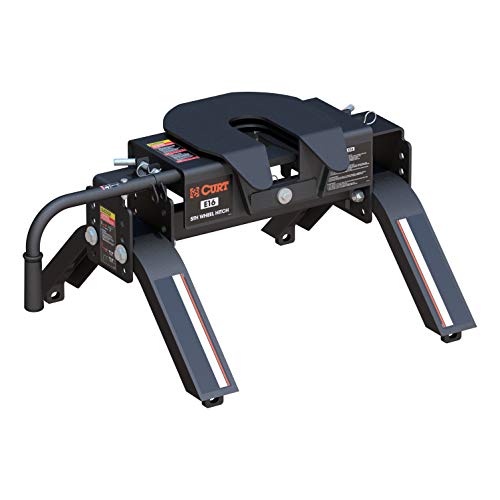
CURT 16115 E16 5th Wheel Hitch, 16,000 lbs
- Dual-axis pivot for lateral movement: Allows 10° of lateral pivoting
- Automatic locking mechanism: Ensures secure, easy coupling
- Single-handle operation: Simplifies hitch operation
As an affiliate, we earn on qualifying purchases.
As an affiliate, we earn on qualifying purchases.
Conclusion
Ultimately, choosing between dually and single rear wheels depends on your towing needs, your driving style, and your budget. Dually offers more stability, greater payload capacity, and better control, while single wheels provide better fuel efficiency, easier maneuverability, and lower upfront costs. Consider what matters most—power or convenience, stability or simplicity—and make the choice that best fits your lifestyle. Whichever you pick, make sure it aligns with your towing demands and keeps your drives safe and smooth.

2pc 17" 5 Hole Front Wheel Simulators for Dodge Ram 3500 03-18 – Chrome
- Vehicle Compatibility: Fits Dual Rear Wheel Vehicles
- Easy Installation: Mounts securely to factory steel wheels
- Quick Setup: Push-on installation for instant style
As an affiliate, we earn on qualifying purchases.
As an affiliate, we earn on qualifying purchases.

AUTOBOTS Shackle Hitch Receiver 2", Heavy Duty Recovery Hitch Red Black
- High-Strength Forged Steel: Break strength of 45,000 lbs
- Corrosion-Resistant Coating: Electro-galvanized steel with black powder coating
- Versatile Multi-Mount Design: Dual hitch pin holes for horizontal or vertical use
As an affiliate, we earn on qualifying purchases.
As an affiliate, we earn on qualifying purchases.