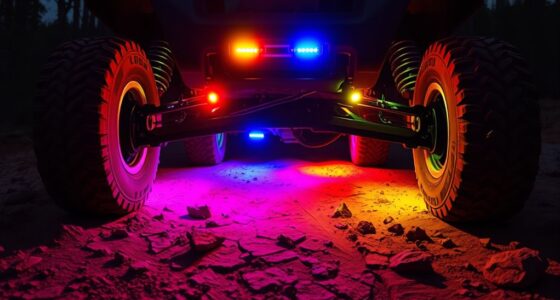
When choosing off-road lighting, light bars provide broad, high-intensity beams perfect for illuminating wide areas at high speed, while spotlights offer narrow, focused beams for long-distance visibility and obstacle spotting. Floodlights flood large surroundings with diffuse light for campsite setups, repairs, or nearby tasks. LEDs make all options efficient, long-lasting, and energy-friendly. Knowing when and where to use each type can dramatically improve your off-road experience—continue exploring to find the best setup for your adventures.
Key Takeaways
- Light bars provide wide, high-intensity illumination for broad visibility, ideal for high-speed off-road driving.
- Spotlights offer narrow, focused beams for long-distance spotting and obstacle detection.
- Floodlights deliver diffuse, large-area lighting suitable for campsite setup, repairs, or immediate surroundings.
- LED technology enhances all lighting types with energy efficiency, brightness, and durability.
- Proper mounting and adjustment maximize each light’s effectiveness based on specific off-road needs.

Off-road lighting is essential for safely traversing challenging terrains after dark or in low-visibility conditions. When choosing your lighting, understanding the differences between light bars, spotlights, and floodlights can make a significant impact on your off-road experience. Each type has unique advantages, and your choice depends on your specific needs and driving conditions.
Light bars are a popular choice among off-road enthusiasts because they provide a broad, high-intensity beam that illuminates a wide area ahead. They’re mounted on the roof or front bumper, offering maximum visibility without requiring much adjustment. Modern light bars often utilize LED technology, which is highly energy-efficient and offers bright, long-lasting illumination. LED lights consume less power compared to traditional halogen or HID lights, which means they draw less from your vehicle’s electrical system and help conserve battery life during long trips. This reduced power consumption is especially beneficial when you’re running multiple accessories or in remote areas where power sources are limited. Additionally, energy-efficient lighting can contribute to overall vehicle performance by reducing electrical load.
Spotlights are designed to cast a narrow, focused beam that penetrates darkness with incredible clarity. They’re perfect when you need to see farther down a trail or spot obstacles at a distance. Because of their concentrated beam, spotlights often have adjustable mounts, allowing you to direct the light precisely where you need it most. The LED technology used in most modern spotlights enhances their efficiency, giving you bright, intense illumination while keeping power consumption low. This means you can run these lights for extended periods without draining your vehicle’s battery or overtaxing the alternator, making them reliable tools for night navigation and spotting hazards on the trail.
Floodlights, on the other hand, provide a wide, diffuse beam that illuminates a large area around your vehicle. This makes them ideal for campsite setup, working on repairs, or illuminating the surroundings when you’re stopped. They’re especially useful when you need to see your immediate environment clearly. Like other LED-based lighting options, floodlights benefit from lower power consumption, ensuring you get maximum brightness without excessive energy drain. Their energy efficiency also means they generate less heat, which extends the lifespan of the LEDs and reduces the risk of damage during prolonged use.
Frequently Asked Questions
How Do I Choose the Best Off-Road Lighting for My Vehicle?
To select the best off-road lighting, consider lighting intensity and power consumption. If you need broad visibility, go for floodlights with high lighting intensity; for focused beams, spotlights work well. Light bars provide a balance of intensity and coverage. Verify your choice matches your vehicle’s power capacity, avoiding excessive power consumption. It’s also wise to pick durable, weather-resistant options suitable for rough terrains, ensuring safety and efficiency during your adventures.
What Is the Typical Lifespan of Off-Road LED Lights?
You can typically expect off-road LED lights to last between 30,000 and 50,000 hours, thanks to their high LED durability. Factors like exposure to harsh weather, vibrations, and proper maintenance influence their lifespan. To maximize longevity, choose high-quality LEDs, guarantee correct installation, and keep them clean. Regularly inspecting wiring and seals helps prevent damage, so your lights stay bright and functional for many off-road adventures.
Are Off-Road Lights Legal to Use on Public Roads?
Imagine your vehicle as a beacon, guiding the way through darkness. Off-road lights are often a double-edged sword—while they boost visibility improvements, legal regulations can diminish their use on public roads. Many regions restrict their use to off-road settings, so check local laws before illuminating the streets. Using them legally ensures you stay visible without risking fines, helping you navigate safely without blinding other drivers.
How Do I Install Off-Road Lighting Safely?
To install off-road lighting safely, start by securing mounting brackets firmly to guarantee stability. Use wiring harnesses designed for your lights to connect them properly, avoiding exposed wires or loose connections. Follow the manufacturer’s instructions carefully, and consider consulting a professional if you’re unsure. Test your lights after installation to confirm they work correctly and won’t distract or blind other drivers, ensuring safe and compliant use on and off-road.
Can Off-Road Lights Be Used in Adverse Weather Conditions?
Imagine your off-road lights piercing through a thick fog or a torrential downpour, their weatherproof durability keeping them shining bright. Yes, you can use them in adverse weather conditions; they’re designed for visibility enhancement even in storms. Just make certain they’re properly sealed and rated for such conditions. When you do, they’ll cut through darkness and weather alike, helping you navigate safely and confidently no matter what nature throws your way.
Conclusion
When choosing between light bars, spotlights, and floods, think of each as a tool in your off-road arsenal, like a trusty Swiss Army knife. Light bars illuminate the entire trail like a lighthouse guiding your way, spotlights focus sharply on distant objects, and floods bathe your surroundings in wide, even light. Pick what’s best for your adventure, and you’ll navigate the dark like a fearless explorer, ready to conquer any terrain that comes your way.