Use 4-high when you need extra traction at normal speeds, like on snowy, muddy, or gravel roads. Switch to 4-low for maximum power and control in tough off-road situations, such as steep inclines or deep mud, where low speed is essential. Avoid using these modes on dry pavement or at high speeds to prevent damage. Keep these tips in mind, and you’ll better understand when to switch between 4-high and 4-low.
Key Takeaways
- Use 4-High for increased traction at normal driving speeds on snowy, muddy, or off-road conditions.
- Switch to 4-Low for maximum torque and control during extreme off-road scenarios, steep inclines, or obstacle navigation.
- Engage 4-High on dry pavement only when additional traction is needed, avoiding sharp turns at high speeds.
- Shift to 4-Low at low speeds, usually below 4-5 mph, to prevent transfer case damage.
- Always follow manufacturer instructions: come to a complete stop and shift modes carefully to avoid drivetrain issues.

USANOOKS Microfiber Cleaning Cloth Grey - 12 Pcs (12.5"x12.5") - High Performance - 1200 Washes, Ultra Absorbent Microfiber Towel Weave Grime & Liquid for Streak-Free Mirror Shine - Car Washing Cloth
- High Absorbency Microfiber: Locks in 8-10x its weight in liquids
- Durable 2.5mm Thickness: Resists lint, scratches, and shedding
- Long-Lasting Use: Over 1200 washes for extended durability
As an affiliate, we earn on qualifying purchases.
Understanding the Basics of Your Transfer Case

Have you ever wondered how your vehicle manages to switch between two-wheel drive and four-wheel drive? It all comes down to the transfer case fundamentals, which control how power is distributed to your wheels. The transfer case is an essential part of your drivetrain operation, sitting between the front and rear axles. When you engage four-wheel drive, the transfer case directs power to both axles simultaneously, providing better traction. In two-wheel drive, it isolates one set of wheels, allowing your vehicle to operate more efficiently. Understanding how the transfer case functions helps you make informed decisions about when to switch modes for peak performance. It’s a critical component that guarantees your vehicle responds correctly in different driving conditions, especially in off-road scenarios where optimal traction is crucial. Proper knowledge of your transfer case can also help prevent potential damage caused by improper engagement or switching, particularly in 4×4 systems that require correct operation to ensure longevity. Being familiar with transfer case operation can also assist in diagnosing issues early before they lead to costly repairs.

HOMEXCEL Microfiber Cleaning Cloth 12 Pack, 12.5 x 12.5 inch Microfiber Towels for Cars, Ultra Absorbent Washing Cloth, Lint Free Streak Free Cleaning Rags for Car, Kitchen, and Window (Grey)
- High Water Absorption: Excellent at absorbing dirt and liquids
- Gentle on Surfaces: Soft fabric prevents scratches and damage
- Fast Drying: Quickly absorbs water for streak-free drying
As an affiliate, we earn on qualifying purchases.
When to Engage 4-High for Optimal Traction and Speed

Engaging 4-High mode is most beneficial when you need increased traction without sacrificing speed, making it ideal for off-road adventures, snowy roads, or muddy conditions. When driving in these situations, lower tire pressure can improve grip, and engaging 4-High helps distribute power evenly across all wheels. It allows you to maintain highway speeds while gaining better control on slippery surfaces. Be sure to monitor brake engagement, as stopping distances may increase with enhanced traction. You don’t want to switch into 4-High if you’re on dry pavement or performing sharp turns at high speeds, as it can cause drivetrain stress. Use 4-High when you require better traction but still want to maintain normal driving speeds, especially in challenging conditions. Free Floating systems can sometimes influence how your 4×4 transfer case operates, so understanding your specific setup can optimize performance. Additionally, knowing how your transfer case settings interact with your vehicle’s overall drivetrain can help prevent unnecessary wear and tear.

Amazon Basics Microfiber Car Drying Towels, Highly Absorbent, Lint Free, Scratch Free, Ultra-Soft, Car Detailing, Buffing and Polishing, 16" x 16", Yellow, 12-Pack
- Pack Size: 12 towels per pack
- Towel Dimensions: 16 x 16 inches
- Design: Double-sided microfiber
As an affiliate, we earn on qualifying purchases.
Situations That Call for 4-Low for Maximum Power and Control
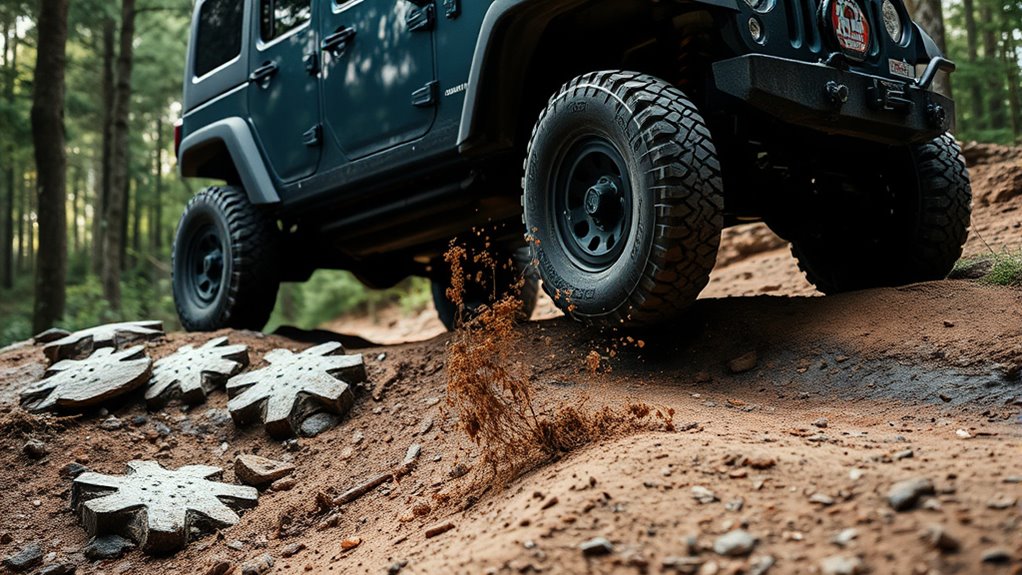
4-Low mode becomes essential when you need maximum torque and precise control in extreme off-road conditions. If you’re steering through muddy terrain, this mode provides the low-speed power needed to prevent wheel spin and maintain traction. It’s also vital when tackling steep inclines, giving you the torque to climb without losing control. Using 4-Low helps you crawl over obstacles and manage uneven surfaces safely. When traction is limited or you’re moving slowly through challenging terrain, engaging 4-Low ensures your vehicle responds predictably and with greater force. Remember, this mode isn’t for highway driving; it’s designed for situations demanding maximum power and control where safety and vehicle stability depend on it. Understanding transfer case operation is crucial for proper use of this mode. Additionally, being aware of power requirements can prevent potential issues during operation. Proper engagement of 4-Low also requires a clear understanding of vehicle drivetrain systems to avoid damage. Engaging 4-Low can also impact fuel consumption, so drivers should be mindful of increased fuel use during these maneuvers. Knowing how gear ratios affect performance can further help optimize your driving experience in difficult terrain.

AIDEA Microfiber Cleaning Cloth-50PK, Microfiber Towels for Cars, 12×12"
- Super Absorbent Material: Quickly wicks away water and dirt
- Soft and Lint-Free: Scratch-free cleaning on various surfaces
- Reusable and Durable: Washable for hundreds of uses
As an affiliate, we earn on qualifying purchases.
Common Mistakes to Avoid When Switching Between Modes

Switching between drive modes without proper caution can lead to serious vehicle damage or unsafe situations. One common gear shifting mistake is attempting to switch modes while the vehicle is moving above recommended speeds, which can cause transfer case damage. Always come to a complete stop or follow the manufacturer’s instructions before shifting. Ignoring this step is a frequent mode switching error that can result in costly repairs. Additionally, shifting between 4-High and 4-Low at inappropriate times, such as on dry pavement or high-speed driving, increases the risk of drivetrain strain. Avoid these gear shifting mistakes by understanding your vehicle’s guidelines and only switching modes when conditions are suitable. Proper mode switching guarantees safe operation and longevity of your 4×4 system.
Tips for Safely Operating Your 4×4 in Different Conditions
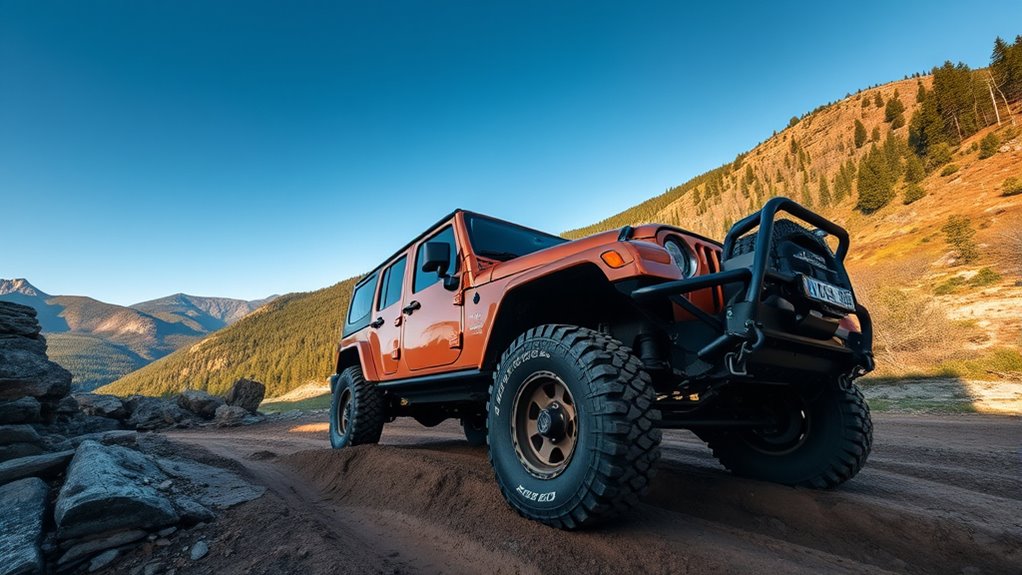
To operate your 4×4 safely in different conditions, it’s essential to understand how terrain and weather affect your vehicle’s performance. Adjust your tire pressure according to the terrain—lower pressure for better traction on loose surfaces like sand or mud, and higher pressure for paved roads. Keep an eye on your vehicle weight, as excess load can impact handling and braking, especially in challenging conditions. Before hitting rough terrain, make certain your tires are properly inflated and your vehicle isn’t overloaded. In snow or ice, maintaining appropriate tire pressure helps prevent slipping. Also, shift between 4-high and 4-low carefully, matching your mode to the terrain. Proper tire pressure and managing vehicle weight are key to maximizing safety and control in any environment. Understanding your transfer case can further optimize your vehicle’s performance in diverse driving conditions. Additionally, knowing when to switch between 4-high and 4-low ensures you’re using the correct 4×4 modes for optimal traction and safety.
Frequently Asked Questions
Can I Switch Between 4-High and 4-Low While Driving?
You can switch between 4-high and 4-low while driving, but only under specific conditions. Make sure your transfer case is in neutral before shifting, and avoid doing so at high speeds. Typically, you should switch when driving on low-traction surfaces or challenging driving conditions, like mud or snow, to optimize traction. Always consult your vehicle’s manual for proper procedures, ensuring safe and smooth operation of your transfer case.
How Do I Know Which Mode Is Currently Engaged?
You can tell which mode is engaged by checking your transfer case indicators and mode confirmation lights on your dashboard. When 4-High is active, the corresponding light will be on, indicating you’re in that mode. If you’re in 4-Low, its indicator will be illuminated. Always verify these lights before driving, especially when switching between modes, to make sure you’re in the correct setting for your driving conditions.
Is It Necessary to Shift to Neutral Before Changing Modes?
You should shift to neutral before changing modes to guarantee safety and prevent damage. A neutral shift reduces stress on the transfer case and drivetrain components. Always follow safety precautions by parking your vehicle on a flat surface and engaging the parking brake. This way, you minimize risks and make mode changes smoothly. Remember, never shift while moving, as it can cause serious mechanical issues.
What Are Signs I Should Switch From 4-High to 4-Low?
You should switch from 4-high to 4-low when you face traction issues or need extra torque on steep inclines. While some believe you can shift at any speed, studies suggest shifting is safest at low speeds to prevent damage. If your vehicle struggles for grip or slows considerably on challenging terrain, engaging 4-low provides the power needed for controlled, confident navigation.
Can I Use 4-Low on Paved Roads or Highways?
You shouldn’t use 4-low on paved roads or highways because it can compromise your vehicle’s stability and handling. 4-low is designed for off-road conditions like steep inclines, mud, or deep snow, where extra torque is needed. Using it on smooth surfaces can cause unnecessary wear on your drivetrain and reduce control. Save 4-low for off-road situations to keep your vehicle stable and functioning properly.
Conclusion
Just like a seasoned explorer knows when to switch gears on a rugged trail, understanding when to use 4-high or 4-low keeps you in control. By mastering your transfer case, you’re the captain steering through challenging terrain, avoiding pitfalls that can turn adventure into trouble. So, trust your instincts, stay alert, and remember—your 4×4 is your trusty steed, ready to carry you safely through every twist and turn. Happy driving!