To wire an LED light bar on your truck, start by gathering the necessary tools, including wire strippers, electrical tape, zip ties, a relay, and the correct gauge wiring. Plan your wiring route from the light bar to the battery, keeping the wires neat and away from heat and moving parts. Connect the power source through a fuse for safety, wire the switch and relay properly, and secure everything in place. If you track these steps carefully, you’ll be ready to power up your light bar with confidence.

Get business pricing on garage and car supplies
- Business-only prices and quantity discounts
- Tax-exempt purchasing
- Multiple users, one account, clear invoices
Key Takeaways
- Mount the light bar securely and plan a wiring route avoiding heat, sharp edges, and moving parts.
- Disconnect the vehicle battery, then connect the fuse holder directly to the positive terminal for circuit protection.
- Run wiring from the fuse to the switch inside the cab, ensuring neat routing and securing with zip ties.
- Connect the switch to the relay, then wire the relay’s output to the LED light bar’s positive terminal, grounding the rest to the chassis.
- Reconnect the battery, test the light, and verify smooth switch operation and proper circuit function.
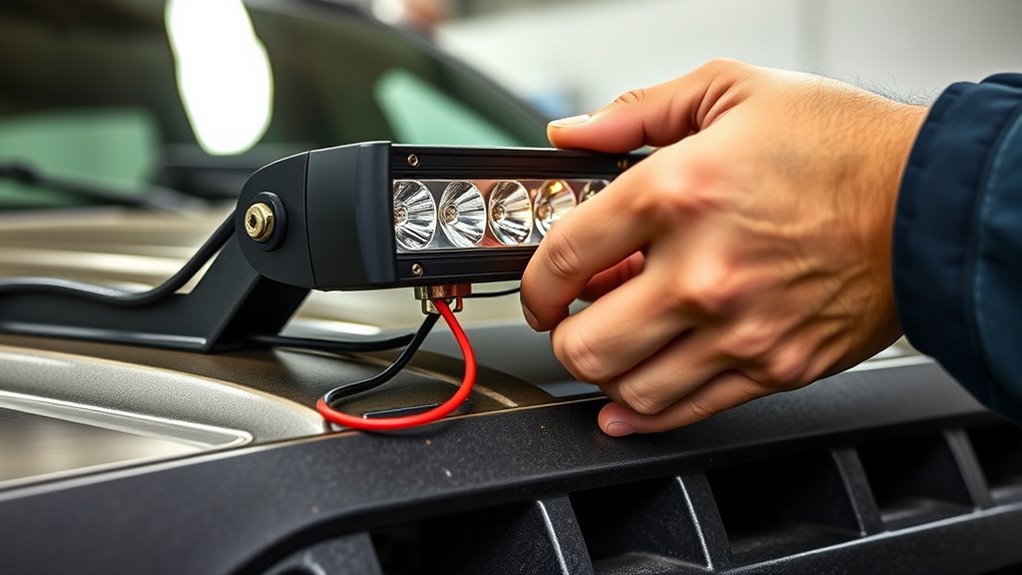
Wiring an LED light bar might seem complicated, but with the right steps, you can do it safely and effectively. The key is understanding the wire installation process and how to properly source power. Before you start, gather all necessary tools and materials: wire strippers, electrical tape, zip ties, a relay, a switch, and the correct gauge wiring. Having these ready will streamline the process and help prevent mistakes.
Begin by planning your wiring route. Decide where you want to mount the light bar and how the wiring will run from the light to your vehicle’s power source. When it comes to wire installation, keep your wiring as neat as possible, avoiding sharp edges or areas prone to heat or moisture. Use zip ties to secure the wires along the vehicle’s frame, preventing any sagging or damage during driving. Make sure the wires are away from moving parts or heat sources like the exhaust system.
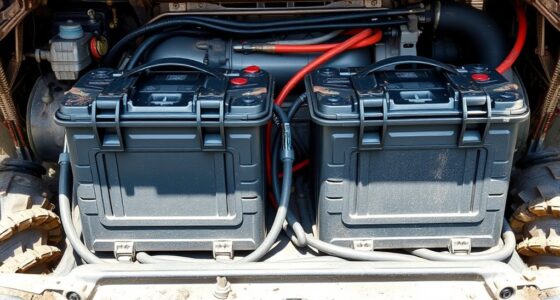
Next, focus on power sourcing. You need to connect your LED light bar to your vehicle’s electrical system, but it’s essential to choose the right power source. The most common approach is to connect directly to the battery, guaranteeing the circuit is protected by a fuse rated for the light bar’s power draw. Before making any connections, disconnect the negative terminal of the battery to prevent short circuits. Then, run your power wire from the battery’s positive terminal to the switch location inside the cab. Install a fuse holder close to the battery terminal to safeguard the circuit — this fuse should match the amperage required by your LED light bar.
From the fuse, run the wire to your switch, which allows you to control the LED light bar easily. When wiring the switch, connect the positive wire from the fuse to one terminal of the switch, and then connect another wire from the switch to the relay. The relay acts as a switch that handles the high current flow needed by the light bar. Connect the relay’s power input to the positive wire coming from the fuse, and the relay’s output to the LED light bar’s positive terminal. Don’t forget to ground the light bar and the relay properly to the vehicle’s chassis using a clean, bare metal surface. This completes your power sourcing setup and guarantees your LED light bar turns on and off with your switch.
Additionally, understanding the importance of proper electrical connections and ensuring the use of appropriate wiring gauges can greatly enhance the longevity and safety of your installation. Once everything is connected, double-check all connections, guarantee the fuse is in place, and then reconnect the negative battery terminal. Test your setup, making sure the light bar powers on and off smoothly. Proper wire installation and correct power sourcing are indispensable for safe operation and longevity of your LED light bar.
LED light bar wiring kit for trucks
As an affiliate, we earn on qualifying purchases.
As an affiliate, we earn on qualifying purchases.
Frequently Asked Questions
Can I Connect Multiple LED Light Bars on One Switch?
Yes, you can connect multiple LED light bars on one switch, but you need to take into account your LED wiring and light bar configuration. Use a suitable relay and make sure your switch can handle the total current load. It’s best to connect the light bars in parallel, so they share the same power source. Double-check your wiring and fuse ratings to prevent overloads and ensure safe, reliable operation.
What Is the Ideal Fuse Size for an LED Light Bar?
You should choose a fuse size that matches your LED light bar’s current draw, typically between 10-30 amps, to guarantee proper circuit protection. Coincidentally, the fuse ratings are vital for safeguarding your wiring and preventing damage. Always consult the manufacturer’s specifications, as using the correct fuse size ensures your light bar operates safely without risking electrical issues or fire hazards. Proper fuse sizing keeps your circuit protected and reliable.
Is It Necessary to Use a Relay for All LED Light Bars?
You should use a relay for all LED light bars to guarantee proper circuit protection and prevent electrical issues. A relay handles the high current load, reducing stress on your truck’s wiring and preventing damage. Check wiring diagrams to verify connections and ensure safe installation. Using a relay is a smart step, especially for larger LED light bars, to protect your vehicle’s electrical system and maintain reliable operation.
How Do I Troubleshoot if the LED Light Bar Doesn’t Turn On?
Think of your LED light bar as a musical instrument needing the right notes to play. First, check the LED wattage to verify it matches your power source. Then, consult your wiring diagram to trace every connection. If it still doesn’t turn on, inspect the fuse, relay, and switch for damage or loose wires. A clear visual check often reveals the silent culprit hiding in plain sight.
Can I Install an LED Light Bar Without Professional Help?
Yes, you can install an LED light bar yourself, but prioritize DIY safety to avoid hazards. While professional installation ensures perfect wiring and secure mounting, if you’re comfortable with basic electrical work and follow detailed instructions, you can do it safely at home. Just remember, if you encounter difficulties or feel unsure, it’s best to seek professional help to ensure proper wiring and avoid damaging your vehicle or risking safety.
truck LED light bar relay switch
As an affiliate, we earn on qualifying purchases.
As an affiliate, we earn on qualifying purchases.
Conclusion
Now that you know how to wire your LED light bar, you’re ready to turn your truck into a beacon that could outshine the stars. Just follow the steps carefully, and you’ll have a powerful, professional-looking setup in no time. Imagine your truck glowing like a UFO landing—it’s that easy! With a little patience, you’ll master this DIY project and enjoy bright, reliable lighting wherever you go. Happy wiring!
vehicle wiring harness for LED lights
As an affiliate, we earn on qualifying purchases.
As an affiliate, we earn on qualifying purchases.
truck LED light bar mounting brackets
As an affiliate, we earn on qualifying purchases.
As an affiliate, we earn on qualifying purchases.
Halloween Picks
halloween
As an affiliate, we earn on qualifying purchases.