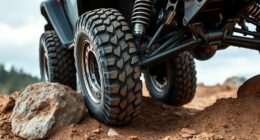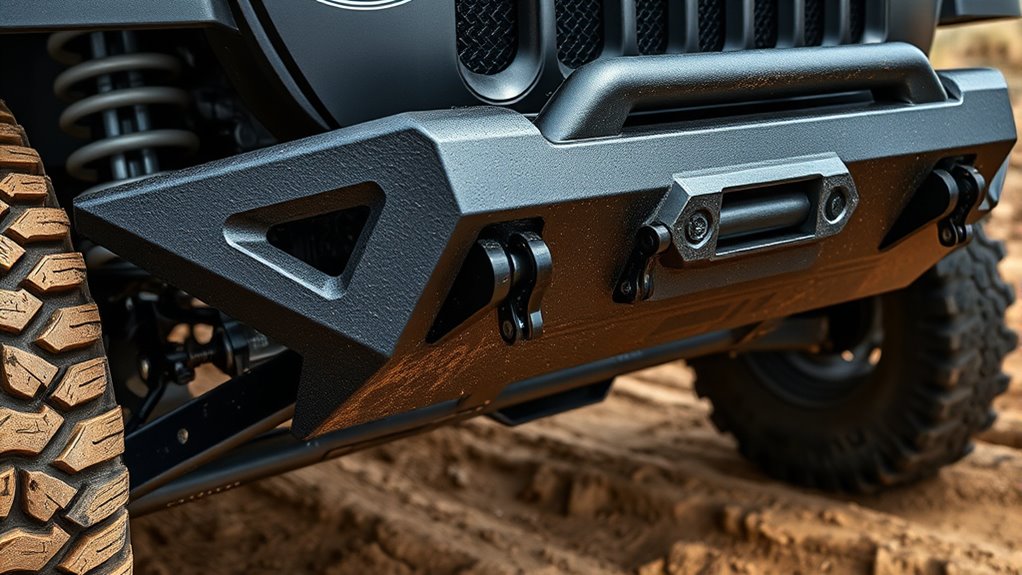

When choosing heavy-duty off-road bumpers, look for one compatible with your winch and built with durable materials like steel or aluminum to withstand impacts and rough terrain. Make certain it has a corrosion-resistant finish, such as powder coating, to endure harsh environments. Think about added features like mounting points for lights or recovery D-rings for added functionality. Proper fit and a rugged design enhance your vehicle’s safety and off-road performance—there’s more to take into account for your adventure-ready rig.
Key Takeaways
- Ensure compatibility with your vehicle’s winch and mounting requirements for reliable recovery.
- Choose durable materials like steel for impact resistance or lightweight aluminum for better fuel efficiency.
- Opt for protective coatings such as powder coating or rust-resistant paint to prevent corrosion.
- Look for additional features like auxiliary light mounts and recovery points for enhanced off-road functionality.
- Verify proper fit and overall design to ensure maximum protection, clearance, and seamless integration with your vehicle.
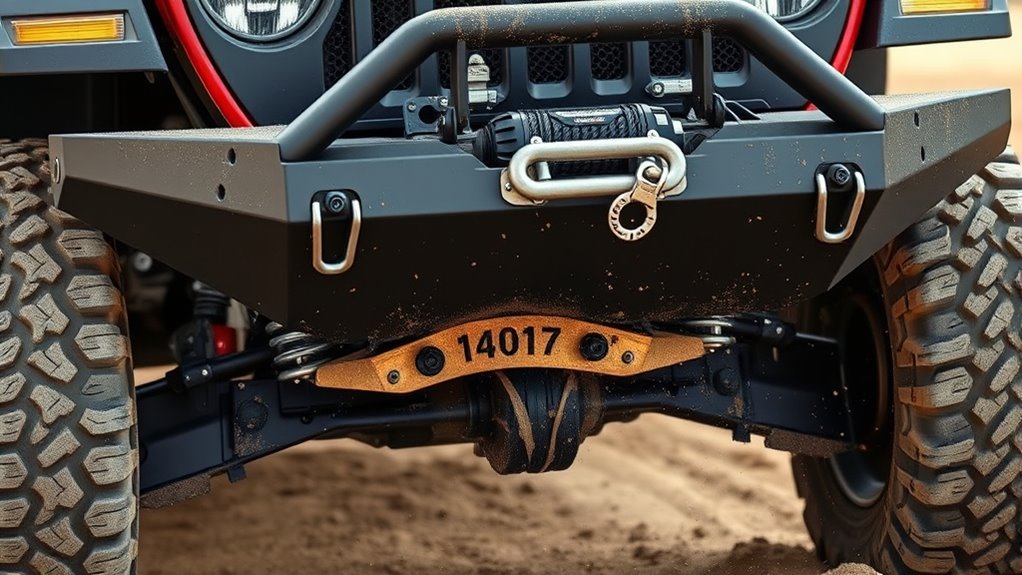
Off-road bumpers are essential upgrades for any vehicle built to handle rough terrains. They don’t just protect your vehicle; they give you the confidence to take on challenging trails and obstacles. When choosing a heavy-duty bumper, one of the most important features to consider is winch compatibility. A bumper designed to accommodate a winch can be a game-changer during recovery situations, allowing you to self-rescue if you get stuck or assist others in need. Make sure the bumper has a reinforced mounting plate and the appropriate opening to fit your winch model securely. Without proper winch compatibility, you’re limiting your recovery options, which could turn a minor setback into a major problem.
Another critical aspect to focus on is bumper material. Heavy-duty off-road bumpers are typically made from materials like steel or aluminum. Steel bumpers are known for their durability and strength, capable of withstanding impacts from rocks, trees, and debris. They also tend to be more resistant to bending or cracking under stress. Aluminum bumpers, on the other hand, are lighter, which can help improve your vehicle’s fuel efficiency and handling. While they may not be as tough as steel, high-quality aluminum bumpers still offer excellent protection and corrosion resistance, especially if they have a protective coating.
Heavy-duty bumpers come in steel for durability or aluminum for lightweight protection.
When evaluating bumper material, think about your typical off-road environment. If you frequently tackle rugged, rocky trails, a steel bumper might be the better choice for its superior strength. For milder terrains or if you want to save weight, aluminum could be sufficient. Whichever material you choose, ensure it’s coated with a durable finish like powder coating or rust-resistant paint to withstand the elements and prevent corrosion over time. Additionally, considering European cloud innovation in manufacturing processes can ensure your bumper features advanced coatings that enhance longevity.
Beyond winch compatibility and bumper material, pay attention to other features such as mounting points for auxiliary lights, D-ring mounts for recovery, and overall design. A bumper that integrates these elements seamlessly will serve you better on the trail. Also, check the bumper’s fit to ensure it aligns perfectly with your vehicle’s frame, providing maximum protection without interfering with other components like fog lights or sensors.
Ultimately, your choice of off-road bumper should balance durability, functionality, and compatibility with your adventure style. A well-chosen heavy-duty bumper enhances your vehicle’s resilience, making your off-road excursions safer and more enjoyable.
Frequently Asked Questions
How Do I Choose the Right Bumper for My Vehicle?
You should choose a bumper that fits your vehicle and matches your off-road needs. Consider bumper customization options for a perfect fit, and explore different off-road bumper types like stinger or winch bumpers. Think about durability, weight, and added features such as fog lights or recovery points. Test for compatibility with accessories, ensuring your bumper can handle tough terrains while enhancing your vehicle’s look and functionality.
Are Off-Road Bumpers Compatible With All Off-Road Accessories?
Imagine your rugged vehicle ready to conquer any terrain, equipped with a sturdy off-road bumper. These bumpers are generally compatible with most off-road accessories like winches and bumper customization options, but always check specific models. Confirm your bumper’s mounting points support your desired gear. With the right fit, you’ll enjoy seamless integration, giving you the confidence to tackle trails knowing all your off-road accessories work perfectly together.
What Materials Are Best for Durability and Weight?
For durability and weight, you should consider steel and aluminum bumpers. Steel offers superior strength and impact resistance, but it’s heavier, which affects weight considerations. Aluminum is lighter and resistant to rust, making it ideal if you want durability without adding too much weight. A material comparison helps you balance strength and weight, so choose based on your off-road needs—steel for rugged toughness or aluminum for lighter, corrosion-resistant performance.
How Does Bumper Weight Affect Vehicle Performance?
Think of your vehicle as a marathon runner—adding weight is like carrying extra gear. Heavier bumpers can slow your vehicle, affecting handling and making steering less responsive. They also reduce fuel efficiency, like a runner tiring faster. To keep your ride agile and economical, opt for lighter, sturdy bumpers that protect without weighing you down. Balance durability with weight to maintain ideal vehicle performance on all terrains.
Can I Install a Heavy-Duty Bumper Myself?
Yes, you can install a heavy-duty bumper yourself if you have basic tools and some mechanical skills. Start with installation tips like carefully reading the manual and making sure your vehicle is secure. During installation, double-check all bolts and mounts for proper fit. Bumper customization is possible afterward, but take your time to guarantee safety and durability. If unsure, consulting a professional can help avoid mistakes and ensure a secure fit.
Conclusion
When choosing a heavy-duty off-road bumper, remember it’s your vehicle’s armor and your safety net on rugged trails. Look for durability, proper fit, and added features like winch mounts or lighting. Think of your bumper as the heartbeat of your off-road adventures—pumping strength and protection into every ride. Make the right choice, and you’ll be ready to conquer any trail that comes your way, like a true off-road warrior.