
When choosing a winch for your off-road vehicle, first consider the type—wire rope for heavy-duty needs or synthetic for safety and ease of handling. Match the winch’s capacity to your vehicle’s weight, aiming for at least 1.5 times that weight for reliability. Look for key features like a wireless remote and accessories such as dampers and fairleads. Proper installation and maintenance are essential for safety and longevity. Keep these tips in mind, and you’ll be well-equipped for your next recovery.

Get business pricing on garage and car supplies
- Business-only prices and quantity discounts
- Tax-exempt purchasing
- Multiple users, one account, clear invoices
Key Takeaways
- Determine your vehicle’s weight and select a winch with at least 1.5 times that rating for safety.
- Choose between wire rope and synthetic rope winches based on durability, weight, and safety considerations.
- Ensure proper mounting options (bumper, frame, truck bed) compatible with your vehicle and recovery needs.
- Prioritize safety features like wireless remote controls and line dampers for secure operation.
- Regularly inspect, maintain, and use quality hardware to ensure longevity and reliable performance.
Understanding Different Types of Winches
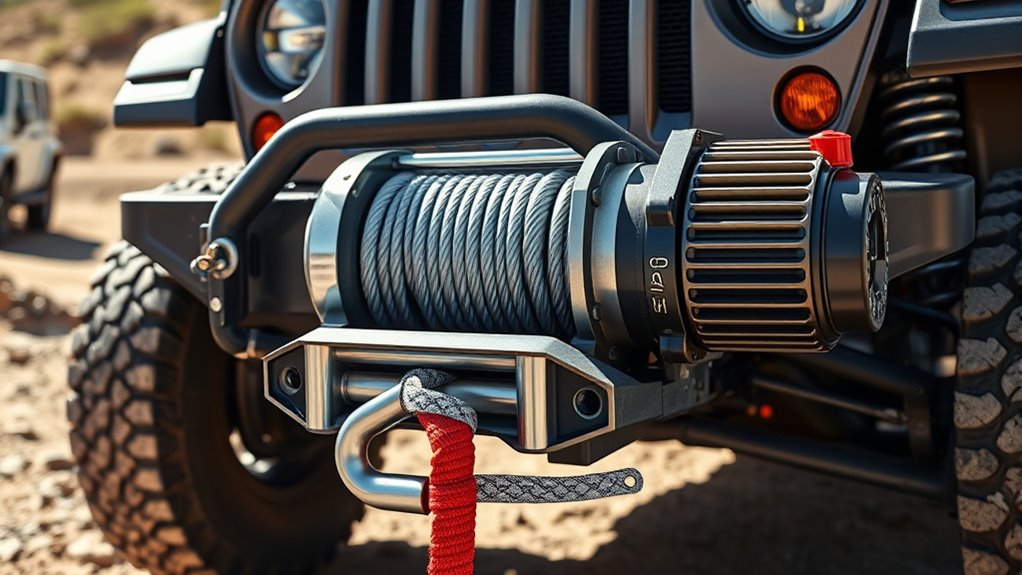
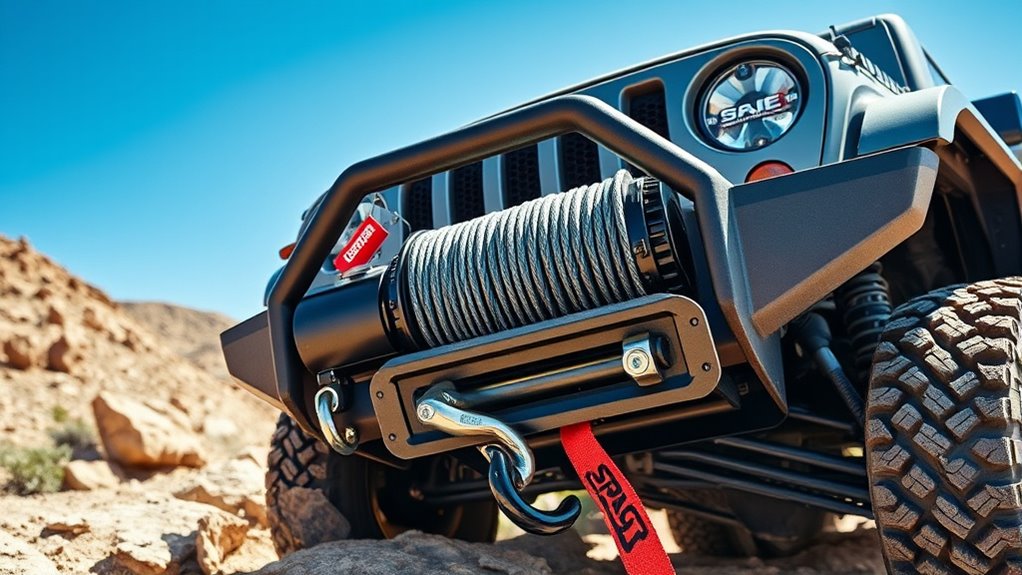
There are several types of winches, each designed for specific tasks and environments. Your choice depends on factors like rope materials and winch mounting options. For instance, wire rope winches use steel cables that are durable and ideal for heavy-duty use, but they require proper winch mounting to guarantee safety. Synthetic rope winches, on the other hand, feature lightweight, flexible cords that are easier to handle and less prone to injury if broken. Your winch mounting method—whether on a bumper, frame, or truck bed—affects which type suits your vehicle best. Additionally, understanding the European cloud innovation landscape can help you select a winch with the latest safety and performance features, ensuring reliable performance and safety during recovery or pulling tasks.
Determining the Right Capacity for Your Vehicle

Choosing the right winch capacity is essential to guarantee safe and effective recovery efforts. Your winch’s capacity should be based on your vehicle’s weight, ensuring it can handle the heaviest load you might encounter. A good rule of thumb is to select a winch with a capacity at least 1.5 times your vehicle’s weight. For example, if your vehicle weighs 4,000 pounds, aim for a winch rated around 6,000 pounds. This extra margin provides a safety buffer during recovery, reducing the risk of winch failure. Remember, using a winch with too low a capacity can lead to dangerous situations, while an oversized winch might be unnecessary and more expensive. Always match your winch capacity to your vehicle’s weight for optimal performance. Additionally, understanding vehicle weight distribution can help identify the best times for off-road adventures, as some signs are believed to be more adventurous and suited for outdoor activities. Proper knowledge of your vehicle’s weight distribution and typical recovery scenarios can further enhance your safety and effectiveness. Incorporating manufacturer guidelines can also ensure you select a winch that meets safety standards and compatibility requirements.
Key Features and Accessories to Consider

Once you’ve determined the appropriate winch capacity for your vehicle, it’s important to contemplate the key features and accessories that will enhance your recovery setup. A synthetic rope is a valuable upgrade, offering lighter weight, greater flexibility, and increased safety over steel cable. It’s easier to handle and less prone to kinks or frays. A wireless remote is another essential feature, allowing you to operate the winch from a safe distance, improving safety and convenience during recovery. Additionally, consider accessories like a winch line damper to control slack, a snatch block for added pulling power, and a fairlead for smooth line management. These features and accessories make your winch more versatile, safer, and better suited for a variety of recovery scenarios. Incorporating modern safety features can further ensure secure and efficient recoveries in challenging off-road conditions. Selecting components that complement your vehicle’s setup can greatly enhance overall recovery effectiveness, especially when considering factors like small appliance and equipment compatibility to ensure reliable operation.
Furthermore, choosing components that are compatible with your vehicle’s electrical system ensures reliable operation and prevents potential issues during use.
Installation and Safety Tips

Proper installation is essential to guarantee your winch operates safely and effectively. When doing your winch installation, follow the manufacturer’s instructions carefully, ensuring all mounting points are secure and compatible with your vehicle. Use high-quality, rated hardware to prevent failure under load. Before use, perform safety precautions such as inspecting the wiring, testing the remote control, and confirming the release mechanism works smoothly. Keep the area clear of debris and bystanders during operation. Always wear gloves and eye protection when connecting or operating the winch. Remember, a properly installed winch not only improves performance but also minimizes risk. properly securing the winch ensures it remains stable during operation and prolongs its lifespan. Incorporating safety guidelines from experienced off-road enthusiasts can further enhance your setup. Additionally, understanding the importance of load ratings can help prevent overloading and potential failures. Being aware of manufacturer recommendations can help you maintain your winch properly and avoid costly repairs. Taking these safety precautions ensures your off-road adventures stay fun and safe, reducing the chance of accidents or equipment damage. Regularly reviewing installation procedures can also help you stay updated with best practices for your specific winch model.
Maintaining Your Winch for Long-Term Performance

Regular maintenance is key to guaranteeing your winch stays reliable and performs at its best over time. Consistently check your winch for signs of wear, corrosion, or damage. Winch maintenance involves cleaning the drum, cable, and motor, and lubricating moving parts as recommended by the manufacturer. Keep the electrical connections tight and free of dirt or corrosion to prevent issues. Troubleshooting tips include inspecting the cable for frays or kinks and testing the remote control for proper functioning. If your winch isn’t operating smoothly or making unusual noises, don’t ignore these signs—address them promptly. Regular upkeep not only extends your winch’s lifespan but also ensures it’s ready when you need it most. Proper maintenance is essential for safe, long-term off-road adventures. Additionally, consulting manufacturer-specific maintenance guides can help ensure you’re following the correct procedures for your particular winch model. Performing routine inspections helps catch potential problems early and maintains optimal performance. Incorporating proper wiring practices can further prevent electrical issues and improve reliability. Checking and tightening electrical connections regularly is vital for preventing corrosion or loose wiring, which can impair winch performance. Remember that preventive care can save you time and money by avoiding more serious repairs down the line.
Frequently Asked Questions
What Is the Typical Lifespan of a Winch Under Heavy Use?
Under heavy use, your winch typically lasts around 3 to 5 years if you perform regular winch maintenance and focus on corrosion prevention. Keep the cable clean and lubricated, check for wear, and store it properly when not in use. Proper maintenance minimizes rust and damage, extending its lifespan. Remember, a well-maintained winch not only lasts longer but also performs reliably when you need it most.
How Do I Troubleshoot Common Winch Problems Effectively?
Troubleshooting your winch troubles starts with systematic steps. First, check the power source—ensure cables are clean and connections are secure. Next, verify the solenoid and switch function properly. Inspect for corrosion and damage, then test the motor and relay. Regular winch maintenance can prevent issues, but if problems persist, consult the manual or seek professional help. Following troubleshooting steps keeps your winch working smoothly and safely.
Can I Upgrade My Existing Winch With New Accessories?
Yes, you can upgrade your existing winch with new accessories, but first, consider winch maintenance to guarantee compatibility. Check if the accessories, like snatch blocks, synthetic ropes, or wireless remotes, fit your winch model. Always verify accessory compatibility with your specific winch brand and model. Proper maintenance helps prevent damage and ensures smooth operation. Upgrading accessories can boost your winch’s performance and versatility for off-road adventures.
Are There Specific Winches Suitable for Extreme Weather Conditions?
Think of your winch as a trusty hero braving the storm. For extreme weather, look for winches with rugged, weatherproof designs, and high-quality materials that withstand rain, snow, and mud. These winches boast enhanced durability, ensuring they don’t falter when conditions turn fierce. Select models with waterproof seals and corrosion-resistant parts. With the right winch, you’ll confidently face any tempest, knowing your gear is built for the battle.
What Are the Legal Considerations for Winch Use in Different Regions?
You must check regional regulations before using your winch off-road. Different areas often have safety compliance rules, such as proper signaling, load limits, and approved equipment. Failing to follow these laws could lead to fines or safety hazards. Always research local laws and guarantee your winch setup meets safety standards. Staying informed helps you enjoy off-roading responsibly and avoid legal issues while keeping everyone safe.
Conclusion
Choosing the right winch is like finding a trusted companion for your off-road adventures. When you select wisely, it becomes your steadfast guardian through mud and rock, ready to pull you free when you’re stuck. Treat it with care and attention, and it’ll stand by you for countless journeys. Remember, a good winch isn’t just equipment—it’s your reliable partner in conquering the wild, turning obstacles into stories worth telling.
Fall Picks
fall essentials
As an affiliate, we earn on qualifying purchases.