
If you’re off-roading, a Hi-Lift jack is much more useful than a standard jack because it’s built for tough terrains and heavy loads. It offers greater versatility, allowing you to lift, winch, or pull your vehicle out of mud or snow. While a standard jack works on paved roads for quick tire changes, the durability and extended reach of a Hi-Lift make it the go-to tool in challenging off-road situations. Continue to explore to find out more benefits.
Key Takeaways
- Hi-Lift jacks are designed for off-road recovery, offering higher lifting capacity and durability on uneven terrain.
- Standard jacks are lightweight, compact, and suitable for quick, routine tire changes on paved roads.
- Hi-Lift jacks provide greater versatility for lifting, winching, and pulling in challenging off-road environments.
- Standard jacks are easier to transport and set up but lack the robustness needed for off-road heavy loads.
- For off-road use, a Hi-Lift jack is generally more useful due to its strength, stability, and adaptability.
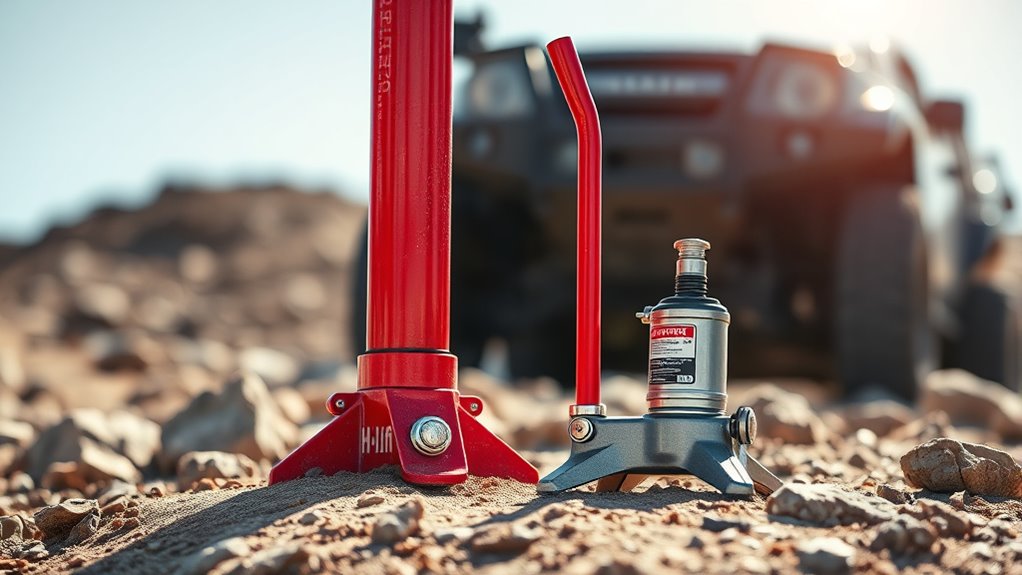
When it comes to lifting heavy vehicles or equipment, choosing the right jack can make all the difference. Off-road scenarios often demand tools that are durable, versatile, and reliable. If you’re comparing a Hi-Lift jack versus a standard jack, understanding their differences helps you make an informed choice that enhances vehicle safety and matches your lifting capacity needs. A standard hydraulic or scissor jack is typically designed for everyday use on paved roads and light-duty vehicles. It’s compact, easy to operate, and provides quick lifts, making it perfect for changing tires or minor repairs. However, these jacks usually have a limited lifting capacity and may not be suitable for rough terrain or heavier vehicles. Their design often restricts their reach and stability on uneven surfaces, which can compromise safety when you’re far from help or in challenging environments.
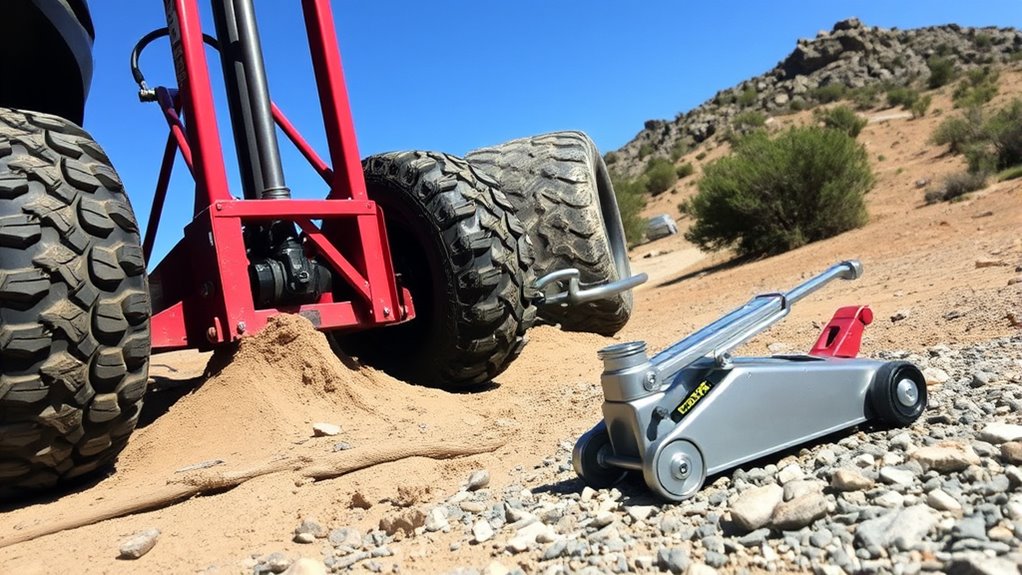
In contrast, a Hi-Lift jack is built explicitly for off-road and heavy-duty applications. Its robust construction and extended reach allow you to lift much heavier loads, often with a higher lifting capacity than standard jacks. This greater capacity enhances vehicle safety because you can stabilize or elevate your vehicle securely during repairs or recoveries. The Hi-Lift’s design is simple yet rugged, featuring a vertical lifting mechanism that can be operated manually, making it dependable even when power sources are unavailable. Its versatility is a major advantage—you can use it to lift, winch, or pull vehicles out of mud, snow, or sand, which is a common off-road challenge. Although it takes a bit more effort to operate, the added lifting capacity and stability make it a favorite for off-road enthusiasts.
Additionally, the power source independence of a Hi-Lift jack means you’re not reliant on batteries or hydraulic systems, making it a reliable choice in remote off-road situations. However, the Hi-Lift jack does require more space and can be less convenient to store or carry around compared to a standard jack. It’s heavier, bulkier, and takes longer to set up. But if your focus is on off-road adventures, recovery, or working with larger vehicles, its ability to handle higher loads safely outweighs these drawbacks. When choosing between the two, consider the typical weight of your vehicle, the terrain you’ll encounter, and your priority on vehicle safety. For everyday driving on pavement, a standard jack works well. But if you venture off-road regularly, a Hi-Lift jack’s superior lifting capacity and rugged construction provide a safer, more versatile solution. Ultimately, selecting the right jack hinges on matching its capabilities with your specific needs for safety, capacity, and terrain.
As an affiliate, we earn on qualifying purchases.
Frequently Asked Questions
Can a Hi-Lift Jack Be Used as a Winch Alternative?
A Hi-Lift jack isn’t a reliable winch alternative because it lacks the capacity to pull heavy loads steadily. While it can help in emergency situations, its limitations include slow operation and potential safety hazards if not used correctly. For winch alternatives, consider a proper winch designed for controlled, powerful pulling. Relying solely on a Hi-Lift jack for winching can be risky and ineffective, especially in tough off-road conditions.
What Safety Precautions Should I Take When Using a Hi-Lift Jack?
Imagine you’re stuck off-road; safety should be your top priority. Always make certain jack stability by placing it on solid, level ground, and never exceed its weight limit. Use safety gear like gloves and eye protection to prevent injuries. Keep your hands clear of the jack’s moving parts, and double-check that all parts are secure before lifting. These precautions help you stay safe and avoid accidents during your off-road adventures.
Are Standard Jacks Suitable for Off-Road Recovery?
Standard jacks aren’t ideal for off-road recovery because they have off-road limitations, such as limited height and stability on uneven surfaces. You might find them suitable for basic vehicle maintenance on flat surfaces, but off-road situations demand more robust tools. For safe and effective recovery, consider using a Hi-Lift jack or a high-lift capable jack designed to handle rough terrain and provide the necessary height and stability.
How Does Terrain Affect the Effectiveness of Each Jack Type?
Terrain challenges and surface stability markedly impact each jack’s effectiveness. A Hi-Lift Jack works well on uneven or loose surfaces, offering versatility for challenging terrain. However, on soft or unstable ground, it may sink or tip without proper support. Standard jacks perform best on firm, level surfaces, but struggle with uneven terrain. Your choice depends on the terrain’s stability; for rough off-road conditions, a Hi-Lift Jack generally provides better reliability.
Which Jack Is Better for Lifting Heavy Off-Road Vehicles?
A Hi-Lift jack is better for lifting heavy off-road vehicles because it offers higher lifting capacity and is built to handle rugged terrain. Its sturdy design and portability features make it ideal for off-road situations where you need reliable support. The Hi-Lift’s versatility, combined with its ability to lift substantial weight, guarantees you can handle challenging recovery tasks more effectively than a standard jack.
As an affiliate, we earn on qualifying purchases.
Conclusion
Ultimately, choosing between a hi-lift and a standard jack depends on your off-road needs. You might find that a hi-lift’s versatility perfectly matches those unexpected tough spots, while a standard jack offers quick, reliable lifts for everyday fixes. Sometimes, it’s almost like they’re meant to complement each other—you get the best of both worlds. So, whether you’re tackling rugged trails or just handling basic repairs, knowing when to use each makes all the difference.
As an affiliate, we earn on qualifying purchases.
As an affiliate, we earn on qualifying purchases.