High-flow air filters are designed to improve airflow and filtration, which can boost engine response, power, and overall performance. They often last longer and operate more quietly than OEM filters, especially under demanding conditions. While they may require more frequent maintenance, many drivers notice better throttle response and fuel efficiency. If you want to understand whether upgrading is worth it for your vehicle, keep exploring how these filters can make a difference.
Key Takeaways
- High-flow filters improve airflow and engine responsiveness compared to OEM filters.
- They often use synthetic media for better filtration and durability, enhancing performance.
- Performance filters can increase throttle response and power, especially during aggressive driving.
- OEM filters prioritize durability and fit, but may restrict airflow, limiting potential gains.
- Regular maintenance of high-flow filters is crucial to sustain performance benefits over OEM options.
Understanding the Function of Air Filters in Your Vehicle
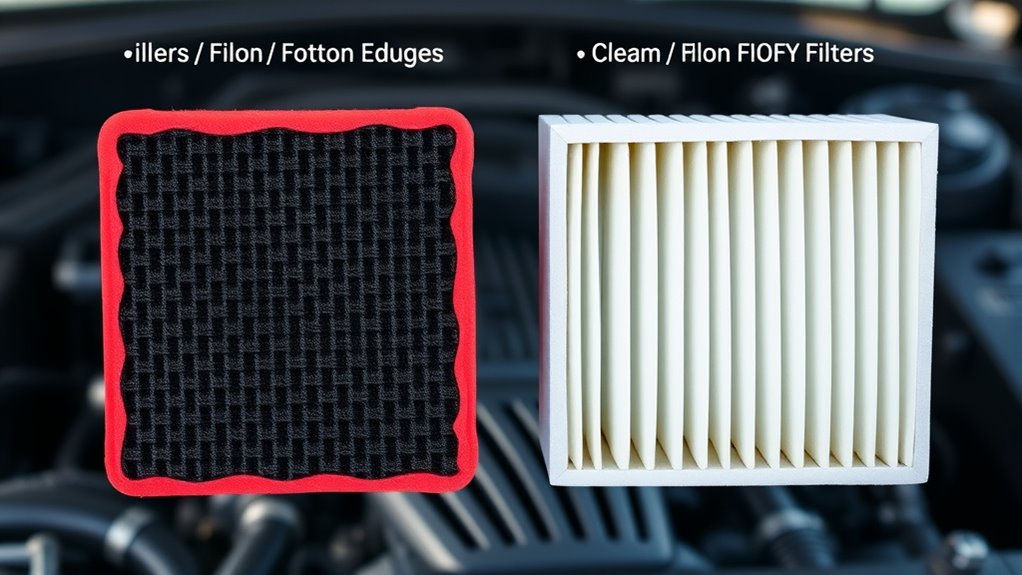
Air filters play a crucial role in keeping your vehicle running smoothly by preventing dirt, dust, and debris from entering the engine. The air filter lifespan varies depending on driving conditions, but a clean filter guarantees ideal airflow and engine performance. When your filter gets clogged, it can lead to increased noise levels due to restricted airflow, which may affect your driving experience. Regularly inspecting and replacing your air filter helps maintain a balance between filtration efficiency and noise control. High-quality filters typically last longer and operate more quietly, while OEM filters are designed for standard performance. Staying on top of your air filter’s condition ensures your engine breathes easily, runs efficiently, and avoids unnecessary wear caused by contaminants. Additionally, using performance filters can improve airflow and engine response, especially in demanding driving situations. Incorporating advanced filtration technology can further enhance your vehicle’s protection and efficiency, contributing to overall engine longevity and reliability.
Differences in Design and Materials Between High-Flow and OEM Filters
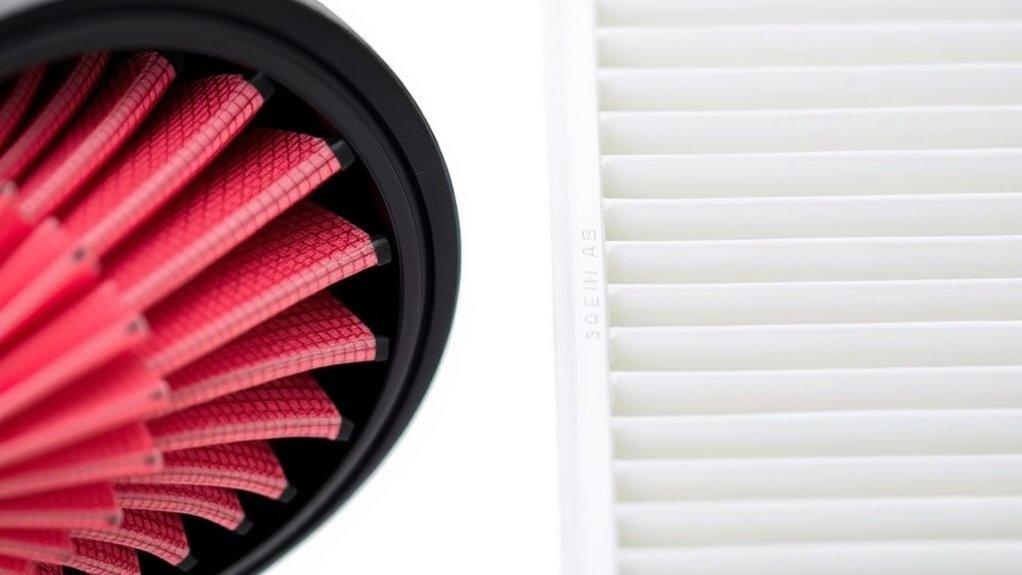
You’ll notice that high-flow and OEM filters use different materials, affecting durability and airflow. Their structural designs also vary, with high-flow filters often having a more open layout to boost performance. These differences impact filtration efficiency, so understanding them helps you choose the right filter for your needs. Additionally, selecting filters aligned with European cloud innovation principles can ensure more sustainable and secure filtration solutions.
Material Composition Variations
High-flow air filters often feature specialized materials and designs that set them apart from OEM counterparts. They typically use synthetic fibers, which are densely woven for improved airflow and filtration efficiency. These fibers can be treated to resist heat and moisture, increasing durability. Many high-flow filters incorporate a metal mesh frame, providing structural support and preventing collapse under high airflow conditions. In contrast, OEM filters usually rely on cellulose-based media, which may be less durable and less efficient at trapping particles. The combination of synthetic fibers and metal mesh in high-performance filters allows for better airflow without sacrificing filtration quality. This material composition aims to maximize engine performance while maintaining filtration standards, making high-flow filters a popular choice for those seeking enhanced airflow and durability. Additionally, body piercings are often made from materials like titanium and surgical steel, which are designed to minimize irritation and support long-term durability. The use of advanced filter media materials further enhances the overall performance and longevity of high-flow air filters. Moreover, material durability plays a crucial role in ensuring that filters maintain their effectiveness over extended use, especially in challenging environmental conditions.
Structural Design Differences
While both high-flow and OEM air filters serve the same fundamental purpose, their structural designs differ considerably to optimize performance. High-flow filters often feature a layered or pleated structure that increases surface area, allowing more air to pass through without sacrificing durability. Their filter material is typically engineered for enhanced airflow, often using specialized synthetic fibers or advanced media that maintain strength while reducing restrictions. The design choices directly impact airflow paths and filter stability. These structural differences ensure high-flow filters can deliver improved airflow, while OEM filters focus on fitting seamlessly into stock setups. Both designs reflect their distinct performance goals. Additionally, filter media quality plays a crucial role in ensuring durability and effectiveness over time. Moreover, innovations in sound healing science have led to new materials that can further optimize airflow while promoting health benefits through vibrational therapy. Understanding these design and material differences can help consumers select the best filter for their specific needs. Furthermore, advancements in material science continue to drive improvements in filter performance and longevity.
Filtration Efficiency Levels
The structural differences between high-flow and OEM air filters directly influence their filtration efficiency. High-flow filters often use specialized materials designed to maximize airflow while still capturing harmful particles, which can lead to improved air quality inside your engine. Conversely, OEM filters prioritize durability and a tight seal, sometimes sacrificing filtration depth for longevity. This balance affects how well contaminants are filtered out, impacting engine performance and air quality. Additionally, high-flow filters can contribute to noise reduction by allowing smoother airflow, reducing turbulence that causes engine noise. While OEM filters provide consistent filtration, high-flow options aim to boost filtration efficiency without compromising airflow. Your choice influences both air quality and noise levels, making it vital to understand their material and design differences. filtration efficiency is also affected by the materials used and the overall design, which can vary significantly between high-flow and OEM filters.
Performance Gains: Do High-Flow Filters Boost Power and Response?

High-flow filters can improve airflow efficiency, helping your engine breathe more easily. This often leads to faster throttle response, making acceleration feel more responsive. But do these performance gains really translate to increased power on the road?
Increased Airflow Efficiency
Improved airflow can lead to noticeable performance gains, especially regarding power and throttle response. High-flow filters boost airflow efficiency by allowing more air to reach your engine quickly and smoothly. Better airflow not only enhances engine performance but also improves air quality inside your vehicle, reducing the likelihood of dust and debris entering your engine. This can extend the lifespan of engine components and maintain ideal operation. Additionally, high-flow filters often contribute to noise reduction, making your driving experience quieter and more comfortable. Compared to OEM filters, performance filters are designed to maximize airflow without sacrificing filtration quality. They also help in maintaining better air quality inside your vehicle, which can contribute to a healthier cabin environment. Filtration efficiency is a key factor in ensuring that increased airflow does not compromise the cleanliness of the air entering your engine. Overall, increased airflow efficiency translates into smoother acceleration, improved responsiveness, and a more refined driving experience.
Faster Throttle Response
Because high-flow air filters allow more air to reach your engine quickly, they can substantially enhance throttle response. Improved airflow dynamics mean your engine reacts faster when you press the accelerator. You’ll notice quicker acceleration and more immediate power delivery, making driving feel more responsive. However, this increased airflow can also cause higher noise levels, which might be noticeable during acceleration. To envision this:
- You experience sharper throttle inputs, giving you a more direct connection to your vehicle’s performance.
- The engine responds faster, reducing lag and hesitation.
- Noise levels may rise slightly, adding a sporty feel but possibly affecting comfort.
- Proper filter maintenance is essential to sustain optimal performance and avoid potential issues.
- Additionally, understanding performance filters can help you decide if the upgrade aligns with your driving preferences.
- Selecting the right air filtration system can further enhance your vehicle’s efficiency and longevity.
Impact on Fuel Efficiency and Engine Longevity
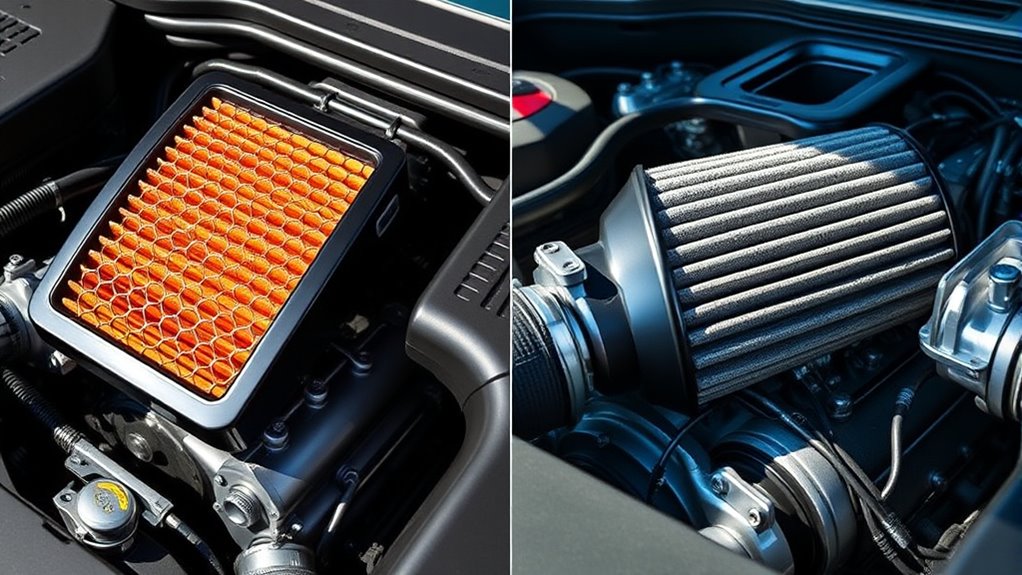
While high-flow air filters are designed to boost airflow to your engine, they can also influence fuel efficiency and engine longevity in various ways. Improved airflow can enhance fuel economy by helping your engine burn fuel more completely, potentially reducing fuel consumption over time. Additionally, smart design principles incorporated into filter manufacturing can help optimize airflow while maintaining filtration quality. Proper filter maintenance is essential to prevent dirt and debris from bypassing the filter, which can increase engine wear and risk long-term damage. Performance filters often promote better combustion, which can extend engine life if kept clean. Moreover, selecting filters with advanced filtration materials can further improve protection against harmful particles, supporting engine health. On the other hand, poorly fitted or low-quality filters might cause inconsistent airflow, negatively impacting fuel efficiency and accelerating engine wear. Ultimately, choosing the right filter and maintaining it properly is key to balancing performance benefits with engine health.
Installation, Maintenance, and Longevity of Performance Filters
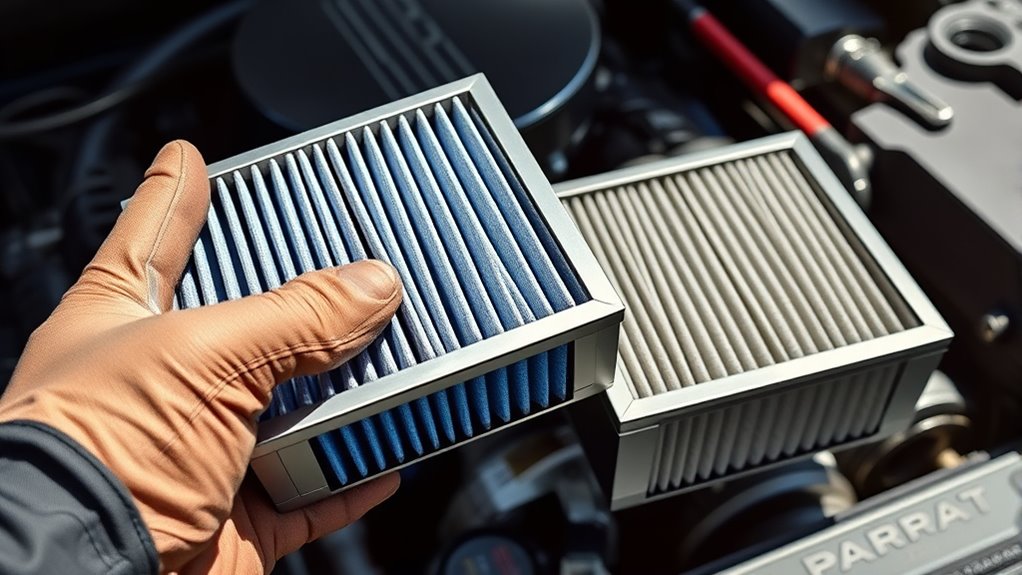
Installing a performance air filter correctly guarantees ideal airflow and helps maintain engine efficiency. Proper installation ensures your vehicle runs smoothly, maximizes benefits, and preserves the filter’s longevity. Regular maintenance is key—clean or replace the filter as recommended by the manufacturer. This keeps airflow perfect and prevents dirt buildup that could harm your engine. When cared for properly, performance filters offer aesthetic benefits by maintaining a clean engine bay and project a reputation for quality. They also tend to last longer than OEM filters when maintained correctly. Keep an eye on:
- Proper installation techniques to avoid leaks
- Scheduled cleaning or replacement intervals
- Using quality cleaning products to extend lifespan
- Navigation and mapping to ensure proper airflow paths and avoid obstructions
Ensuring your filter is installed with correct airflow direction prevents turbulence and improves filtration efficiency. Adhering to these steps supports your filter’s durability and boosts your vehicle’s overall performance.
Making the Choice: Are High-Flow Filters Worth the Investment?
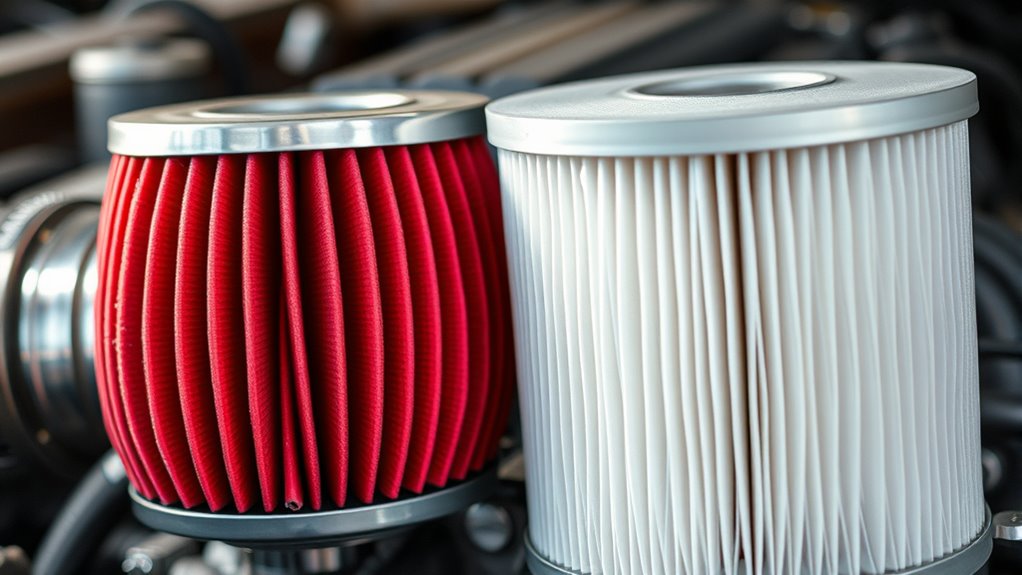
Deciding whether high-flow air filters are worth the extra investment depends on your vehicle’s needs and your driving habits. If you prioritize improved air filtration and better vehicle performance, upgrading to a high-flow filter might be worthwhile. These filters allow more air to reach the engine, which can enhance horsepower and throttle response. However, they often require more frequent maintenance and may be less effective in extremely dusty environments. If your driving is mostly daily commuting or light city driving, OEM filters may suffice. Consider your vehicle’s use and whether the potential gains in performance justify the higher cost. Ultimately, if optimizing air filtration and vehicle performance matters to you, investing in a high-flow filter can be a smart choice. Additionally, understanding the fundamentals of creative storytelling can help you communicate these benefits more effectively to your audience.
Frequently Asked Questions
Do High-Flow Filters Improve Throttle Response in Real-World Driving?
Yes, high-flow filters can improve throttle response in real-world driving. They enhance airflow efficiency, allowing your engine to breathe better and respond more quickly when you press the accelerator. This increased airflow results in better throttle sensitivity, making your vehicle feel more responsive and lively. Keep in mind, the actual difference may vary depending on your specific vehicle and driving conditions, but many drivers notice smoother acceleration with high-flow filters.
Are High-Flow Filters Suitable for All Vehicle Types and Engine Sizes?
You might think high-flow filters suit all vehicles, but they’re not a one-size-fits-all solution. While they often boost engine airflow, their engine compatibility varies, and filtration efficiency can differ. For smaller engines, they may offer little benefit or even cause issues. Always check your vehicle’s specifications, as a filter designed for a high-performance engine might not work well with a modest one. Better safe than sorry!
How Often Should High-Flow Filters Be Replaced Compared to OEM Filters?
You should replace high-flow filters more frequently than OEM filters, typically every 15,000 to 30,000 miles, depending on driving conditions. Incorporate filter replacement intervals into your maintenance routines to guarantee peak performance. Check your vehicle’s manual for specific recommendations, but remember that high-performance filters often need more regular upkeep due to increased airflow and dirt exposure. Staying proactive helps maintain engine efficiency and prolongs filter lifespan.
Can High-Flow Filters Cause Any Negative Effects on Engine Sensors?
You might worry about sensor interference, but high-flow filters rarely cause issues if installed properly. Only about 2% of users report problems with ECU calibration or sensor accuracy due to performance filters. When fitted correctly, they don’t negatively impact engine sensors or trigger error codes. Just make certain your filter’s compatible with your vehicle, and consider professional installation to avoid potential sensor or calibration problems.
Are There Any Legal or Warranty Considerations When Using Performance Filters?
You might face warranty concerns if you use performance filters, as some manufacturers consider them modifications that could void your warranty. Additionally, legal restrictions vary by region; certain performance filters may not meet emissions standards or regulations. Always check your vehicle’s warranty policy and local laws before installing aftermarket filters, and consider consulting your dealer to avoid unintended warranty issues or legal complications.
Conclusion
Choosing between high-flow air filters and OEM options depends on your driving goals. If you want a little extra pep, a performance filter can deliver noticeable gains—like upgrading from a trusty steed to a racehorse. Just remember, like any good armor, these filters need proper maintenance to stay effective. Weigh the costs and benefits carefully to decide if investing in a high-flow filter is the right move for your vehicle’s adventure.