
Steel-braided brake lines can definitely improve your brake feel by providing a firmer and more consistent pedal response compared to rubber hoses. They resist expansion under pressure, giving you better feedback and more confidence during braking. This upgrade reduces sponginess and helps achieve precise control, especially during aggressive driving or track use. Curious how they can make a difference for your vehicle? Keep exploring to discover tips on installation and maintenance.
Key Takeaways
- Steel-braided lines reduce hose expansion, providing a firmer and more responsive brake pedal feel.
- They offer lower flex and better resistance to pressure, enhancing braking consistency.
- Upgrading to steel-braided lines can improve overall brake responsiveness and driver confidence.
- Proper installation and compatible brake fluids are essential for optimal brake feel benefits.
- Regular maintenance ensures the lines maintain their performance and continue to enhance brake response.
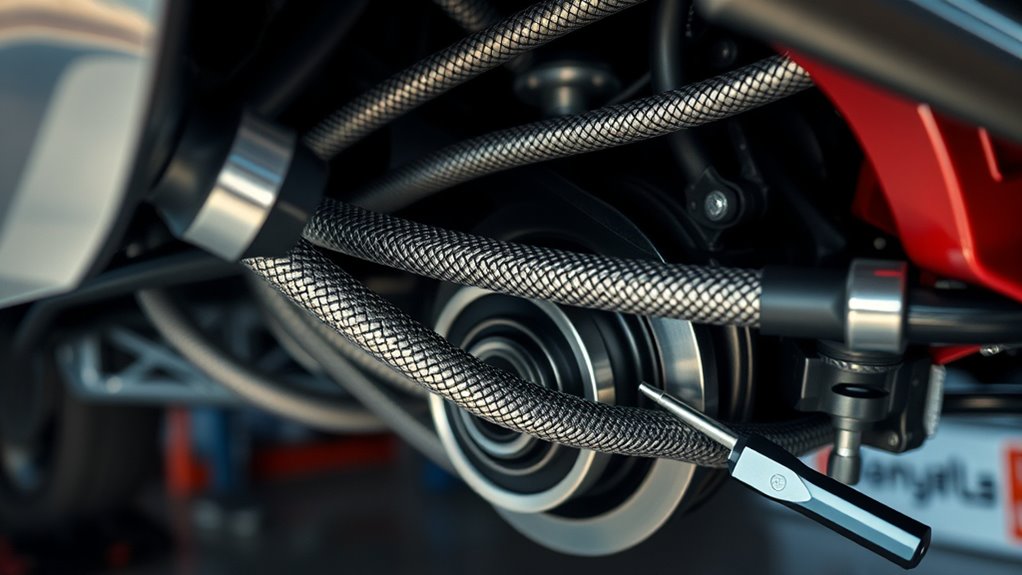
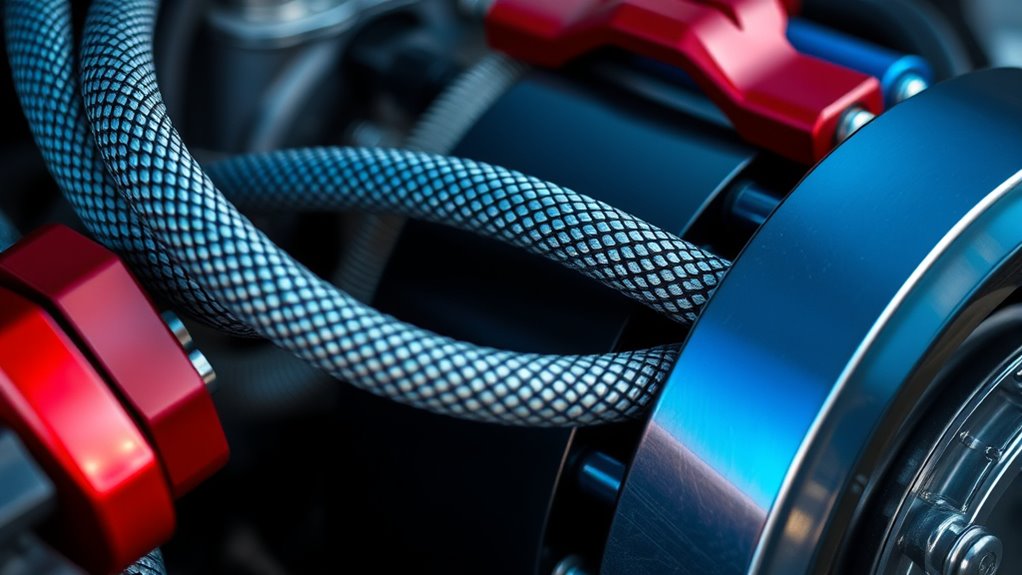
Steel-braided brake lines are a popular upgrade for vehicle enthusiasts seeking improved braking performance. These lines replace the standard rubber hoses with durable stainless steel braided ones, which offer lower flex and better resistance to expansion under pressure. As a result, you often experience a firmer brake pedal feel and more consistent braking response. But before you dive in installing them, it’s crucial to understand brake fluid compatibility. Not all brake lines are compatible with every type of brake fluid, so you need to ensure that the lines you choose are suitable for your vehicle’s braking system. Most steel-braided lines are compatible with DOT 3, DOT 4, and DOT 5.1 brake fluids, but some may not work well with silicone-based fluids like DOT 5.0. Checking the manufacturer’s specifications helps prevent any issues down the line, such as swelling or degradation of the lines caused by incompatible fluids.
When it comes to installation tips, preparation is key. First, make sure your vehicle is safely lifted and supported on jack stands to give you clear access to the brake lines. Before removing the old hoses, have new crush washers and fittings ready to avoid leaks. When disconnecting the lines, take care not to strip the fittings or damage the brake calipers or master cylinder. As you install the new steel-braided lines, ensure they are routed correctly, avoiding contact with moving parts or sharp edges that could wear through the protective coating over time. Tighten fittings according to the manufacturer’s torque specifications—over-tightening can deform the fittings, while under-tightening might cause leaks. After installation, it’s crucial to bleed the brake system thoroughly to remove any air pockets, which can compromise braking performance. Use the recommended brake fluid for your vehicle, and double-check that there’s no contamination or air in the lines before closing everything up. Additionally, considering proper maintenance practices can help extend the lifespan of your brake lines and ensure optimal performance over time.
Furthermore, after completing the installation, it’s wise to test the brakes in a controlled environment. Pump the pedal several times to firm it up, and then perform a gentle stop to ensure everything feels right. Over time, monitor the lines for any signs of leaks or wear, especially after heavy use or track days. Remember, the benefits of steel-braided brake lines are maximized when paired with proper maintenance and compatible brake fluids. By paying attention to brake fluid compatibility and following essential installation tips, you can enjoy a noticeable improvement in brake feel, responsiveness, and confidence behind the wheel.
steel braided brake lines for cars
As an affiliate, we earn on qualifying purchases.
As an affiliate, we earn on qualifying purchases.
Frequently Asked Questions
Are Steel-Braided Brake Lines Legal for Street Use in All Regions?
Steel-braided brake lines are generally legal for street use, but you need to verify your local traffic regulations and regional restrictions. Some areas may have specific rules about aftermarket modifications, including brake components. You should verify with your local DMV or transportation agency to ensure compliance. If approved, steel-braided lines can enhance your brake feel by providing more consistent pressure and durability, improving overall safety on the road.
How Do Steel-Braided Lines Affect Brake System Maintenance?
Steel-braided brake lines make maintenance easier by offering superior corrosion resistance, which helps prevent rust and damage over time. They also reduce the risk of leaks, ensuring consistent brake performance. With these lines, you’ll spend less time checking for wear and tear, and more time enjoying reliable braking. Regular inspections are still essential, but their durability means less frequent replacements, keeping your brake system in ideal condition longer.
Can They Prevent Brake Fade During Aggressive Driving?
A stitch in time saves nine, and steel-braided brake lines help prevent brake fade during aggressive driving. By maintaining consistent pedal firmness and reducing brake fluid temperature, they improve heat dissipation. Because they resist expansion under pressure, your braking system stays responsive longer, especially when brake fluid quality is excellent. This means you can push harder without sacrificing control, keeping your brakes reliable even during intense driving situations.
What Is the Typical Lifespan of Steel-Braided Brake Lines?
You can anticipate steel-braided brake lines to last about 5 to 10 years, depending on your driving conditions and maintenance. Their material durability makes them more resistant to expansion and wear compared to rubber lines, but they still require periodic inspection. Regularly check for leaks, cracks, or damage, and plan for replacement intervals to guarantee ideal braking performance and safety. Proper upkeep extends their lifespan considerably.
Do They Require Special Installation Tools or Procedures?
You don’t need special tools for installing steel-braided brake lines, but the process can be tricky. The installation complexity varies depending on your vehicle, so compatibility considerations are essential. You should have basic hand tools, and sometimes, a flare wrench or line disconnect tool helps. Follow the manufacturer’s instructions carefully to guarantee proper fit and function. If you’re unsure, consulting a professional can help avoid potential safety issues.
As an affiliate, we earn on qualifying purchases.
Conclusion
Switching to steel-braided brake lines is like upgrading from a whisper to a shout—your brake feel sharpens, responsiveness quickens, and control becomes a finely-tuned instrument. They’re the secret threads weaving strength and precision into your stopping power, turning every press into a confident command. With these lines, you’re not just stopping; you’re orchestrating a symphony of safety and performance, making each drive feel like a masterstroke on the road’s canvas.
As an affiliate, we earn on qualifying purchases.
brake fluid compatible with steel braided lines
As an affiliate, we earn on qualifying purchases.
As an affiliate, we earn on qualifying purchases.