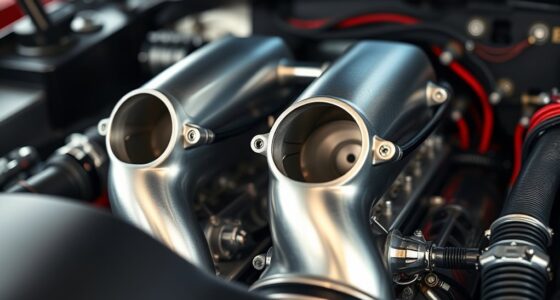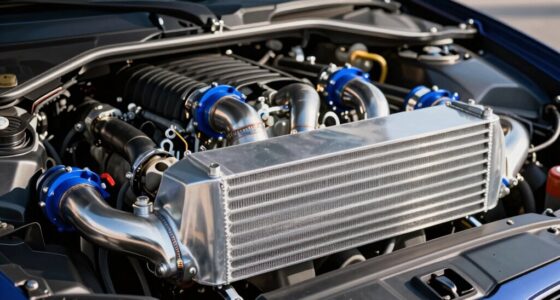
A lightweight flywheel can definitely improve your throttle response by reducing rotational inertia, making your engine react faster to your inputs. This means you’ll notice quicker acceleration and sharper throttle control. It also helps your engine spin up and slow down more rapidly. However, balancing durability and proper installation is key to maximizing these benefits. Want to discover how material choice and engine balancing influence overall performance? Keep exploring to get the full picture.

Get business pricing on garage and car supplies
- Business-only prices and quantity discounts
- Tax-exempt purchasing
- Multiple users, one account, clear invoices
Key Takeaways
- Lightweight flywheels reduce rotational inertia, allowing the engine to respond more quickly to throttle inputs.
- They enable sharper acceleration and improved throttle responsiveness during driving.
- Properly balanced lightweight flywheels minimize vibrations, enhancing engine smoothness and response.
- Material quality and heat dissipation features contribute to consistent performance and durability.
- Overly light flywheels may cause rough idling or increased noise, so balance is crucial for optimal throttle response.
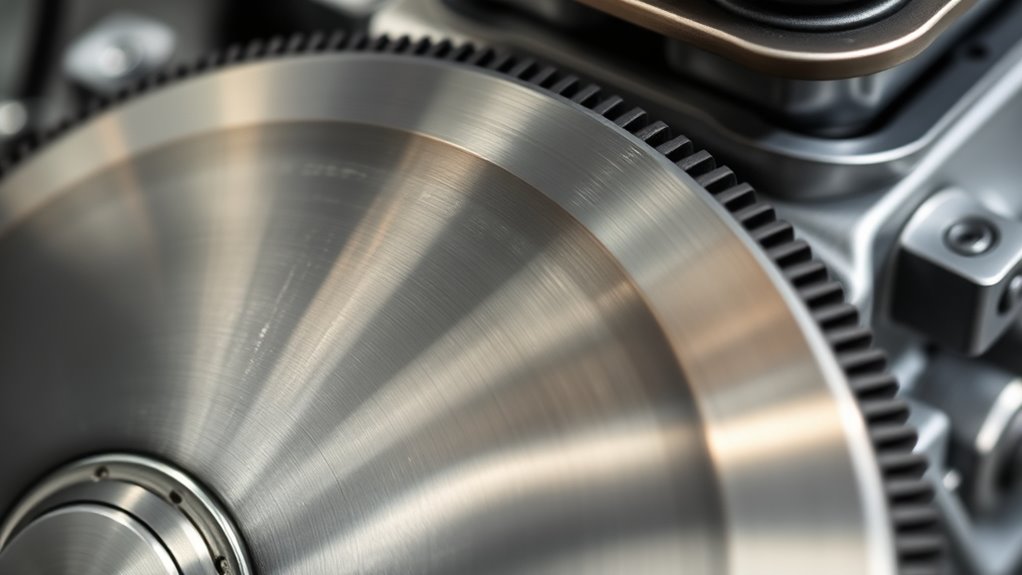
A lightweight flywheel can substantially improve your vehicle’s performance by reducing rotational inertia and enabling faster engine response. When you opt for a flywheel made from high-quality, durable materials, you’re not only decreasing weight but also guaranteeing that the component withstands the rigors of daily driving and high-performance demands. Material durability is vital because a lightweight flywheel needs to resist warping, cracking, or wearing down over time, especially under high stress or repeated use. Choosing a flywheel constructed from robust materials like billet aluminum or high-grade composites guarantees longevity and consistent performance, preventing costly replacements and maintaining smooth operation.
Engine balancing plays a pivotal role in the effectiveness of a lightweight flywheel. When installed correctly, a well-balanced flywheel minimizes vibrations that could otherwise lead to engine stress or uneven wear. An unbalanced flywheel can cause rough idling, reduced acceleration, or even damage to engine components. Proper engine balancing ensures that the rotating assembly operates smoothly, maximizing the benefits of the reduced weight. When you install a lightweight flywheel, it’s essential to have it professionally balanced to match your engine’s specifications. This step guarantees that your engine responds quickly to throttle inputs without causing undue vibrations or noise, making your driving experience more responsive and enjoyable.
Proper engine balancing maximizes lightweight flywheel benefits and ensures smooth, responsive performance.
Reducing rotational inertia with a lightweight flywheel means your engine can spin up and slow down more rapidly. This leads to quicker throttle response, sharper acceleration, and more precise control over speed changes. When you press the accelerator, your engine doesn’t have to work as hard to overcome the inertia of a heavier flywheel, which translates into a more immediate feeling of power and responsiveness. This benefit is especially noticeable in performance driving or racing scenarios, where every millisecond counts. However, remember that reducing weight too much could lead to increased engine noise or less smooth idling, so finding the right balance between weight reduction and durability is essential.
Additionally, the material choice not only impacts durability but also influences heat dissipation. A well-chosen lightweight material can help keep the flywheel cooler during operation, further extending its lifespan and maintaining consistent performance. When you prioritize material durability and proper engine balancing, you ensure that your lightweight flywheel delivers on its promise of improved throttle response without compromising engine longevity. Overall, a carefully selected, well-balanced lightweight flywheel can transform your driving experience by making your engine more responsive, efficient, and reliable, especially when durability and precision engineering are at the forefront of your modifications.
As an affiliate, we earn on qualifying purchases.
Frequently Asked Questions
How Does a Lightweight Flywheel Affect Engine Longevity?
A lightweight flywheel can slightly increase engine wear because it allows the engine to rev more quickly, stressing components over time. You might notice a need for more frequent maintenance due to this added strain. However, if you drive carefully, it shouldn’t substantially reduce engine longevity. Just stay attentive to signs of wear and keep up with regular maintenance, ensuring your engine stays healthy despite the lightweight flywheel.
Can a Lightweight Flywheel Improve Fuel Efficiency?
In the age of dial-up internet, a lightweight flywheel can boost your vehicle’s fuel efficiency by improving throttle response and reducing engine load. You might notice better fuel economy and emission reduction because lighter flywheels allow the engine to spin more freely, minimizing energy loss during acceleration. While it won’t transform your gas mileage dramatically, it helps your engine operate more efficiently, saving fuel and reducing environmental impact.
Are Lightweight Flywheels Suitable for All Car Types?
Lightweight flywheels aren’t suitable for all car types, especially if your vehicle’s clutch compatibility or weight varies considerably. If you have a heavy-duty truck or a vehicle with a complex clutch system, a lightweight flywheel might not be ideal. They work best in lighter, sportier cars where reducing rotational mass enhances performance. Always consider your vehicle’s weight and clutch compatibility before installing one to guarantee ideal results.
Do Lightweight Flywheels Require Special Installation Procedures?
Installing a lightweight flywheel is like tuning a finely balanced dance; it requires careful steps. You’ll need to follow special procedures for clutch engagement and engine balancing to guarantee everything syncs smoothly. Proper installation prevents vibrations and ensures ideal performance. It’s not a DIY project for everyone—professional help is recommended to achieve the precise alignment and secure fit that makes lightweight flywheels truly effective.
How Does a Lightweight Flywheel Impact Vehicle Comfort?
A lightweight flywheel can make your vehicle less comfortable by increasing resonance issues and noise levels. You might notice more vibrations and a higher pitch sound during idling or acceleration. This happens because the lighter flywheel doesn’t absorb engine vibrations as well, leading to a rougher ride. If comfort is a priority, consider how these potential noise and resonance issues could affect your driving experience before upgrading.
high performance billet aluminum flywheel
As an affiliate, we earn on qualifying purchases.
As an affiliate, we earn on qualifying purchases.
Conclusion
So, if you’re tired of feeling the engine’s gentle hum and crave the thrill of every tiny throttle input, a lightweight flywheel might just be your new best friend. Sure, it may improve response, but don’t expect it to turn your daily commute into a race track. Remember, sacrificing a bit of smoothness for snappy reactions is like swapping your comfy slippers for racing boots—you’ll definitely feel the difference, whether you’re ready or not.
As an affiliate, we earn on qualifying purchases.
performance clutch and flywheel combo
As an affiliate, we earn on qualifying purchases.
As an affiliate, we earn on qualifying purchases.
Columbus Day / Indigenous Peoples' Day Picks
long weekend sales
As an affiliate, we earn on qualifying purchases.