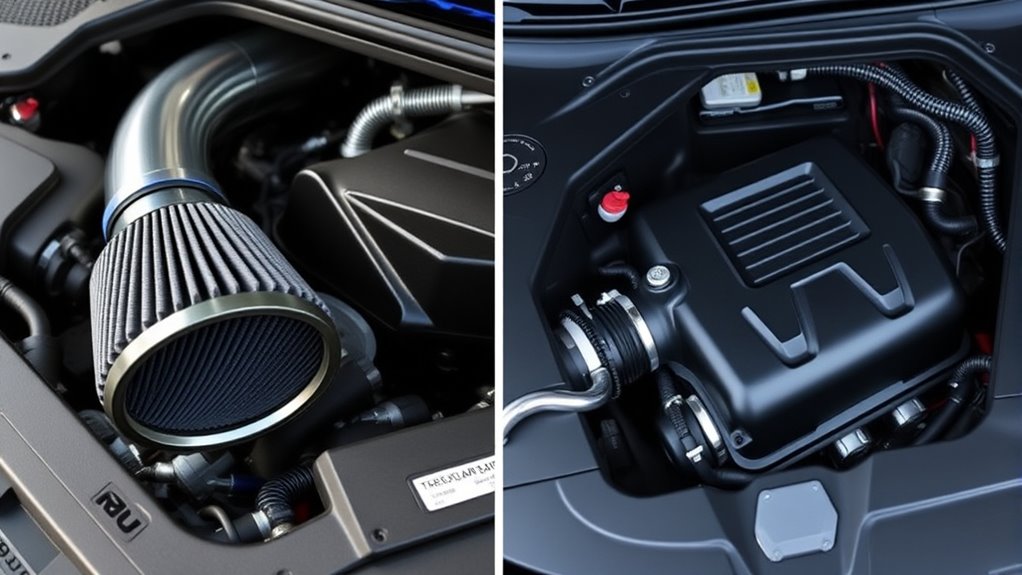

A cold air intake pulls in cooler, denser outside air, which can improve your engine’s power and efficiency compared to a stock airbox. While you might see some gains in horsepower, torque, and throttle response, actual results depend on factors like installation and tuning. Usually, the increase isn’t dramatic, but it can enhance engine sound and responsiveness. To understand how these systems really compare and whether an upgrade suits you, keep exploring the details.
Key Takeaways
- Cold air intakes can improve power by delivering denser, cooler air to the engine, enhancing combustion efficiency.
- Stock airboxes are more restrictive, limiting airflow and potential power gains compared to cold air intakes.
- Properly installed cold intakes often yield 5-15% horsepower increases, especially at higher RPMs.
- Actual power gains depend on vehicle setup, tuning, and driving conditions, with some setups showing minimal improvements.
- Cold air intakes may offer sound and aesthetic benefits, but their impact on power varies and requires proper installation for noticeable results.
How Does a Cold Air Intake Differ From a Stock Airbox?
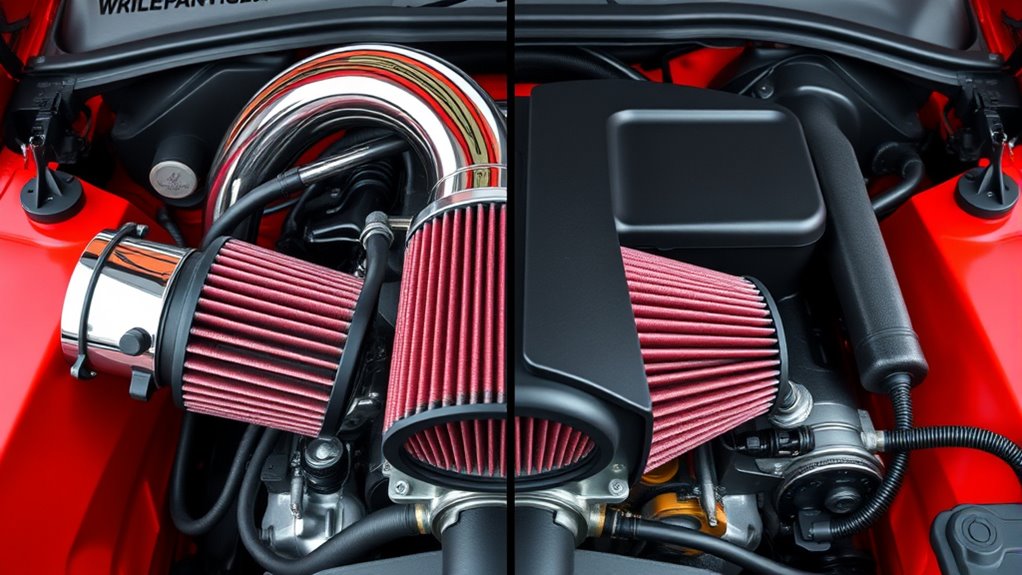
A cold air intake differs from a stock airbox primarily in how it delivers air to your engine. It pulls in cooler, denser air from outside the engine bay, which can improve fuel efficiency by enhancing combustion. Since the air is colder, your engine may burn fuel more effectively, potentially saving you money over time. However, because cold air intakes often have less sound dampening than stock airboxes, you might notice increased noise levels during acceleration. This louder intake noise can be appealing if you enjoy a sportier sound, but it might also be a drawback if you prefer a quieter ride. Overall, a cold air intake can boost your vehicle’s efficiency and give a more aggressive sound, but it may come with trade-offs in noise.
The Mechanics Behind Air Intake Systems
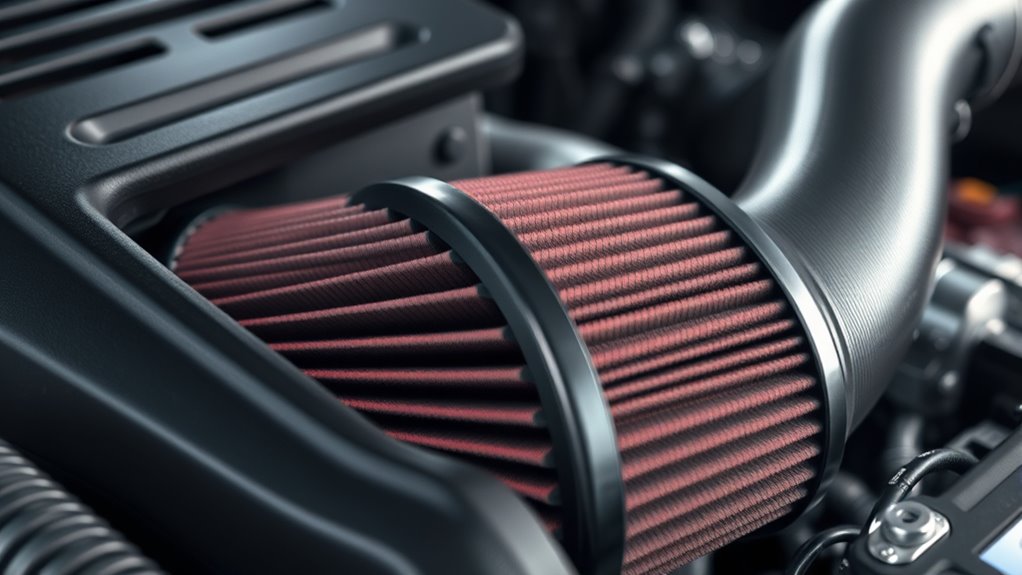
Understanding how airflow moves through your intake system is key to maximizing performance. The design and materials of the intake influence how efficiently air reaches your engine, affecting power and response. By exploring these mechanics, you’ll see how each component plays a role in overall engine performance. Additionally, smart sensor technology can monitor airflow to optimize engine efficiency and adapt to driving conditions. Incorporating airflow dynamics can further improve the system’s effectiveness and help prevent potential issues. Recognizing the importance of system airflow management can lead to more precise tuning and better engine longevity. Awareness of air intake efficiency can also guide modifications for improved power gains and fuel economy. Understanding visual and auditory cues can assist in diagnosing airflow issues and ensuring optimal system performance.
Airflow Dynamics and Design
The design of an air intake system directly influences how efficiently your engine breathes. A well-designed intake maximizes airflow, reducing resistance and turbulence. Cold air intakes often feature smoother, wider ducts to improve airflow dynamics, helping turbochargers operate more effectively by providing cooler, denser air. This can lead to increased power and quicker throttle response. Conversely, stock airboxes are usually more restrictive, limiting airflow and potentially causing turbulence that hampers performance. Proper airflow design also considers exhaust modifications, since optimized exhaust flow complements intake efficiency, reducing backpressure and improving overall engine breathing. Understanding these mechanics helps you choose an intake system that aligns with your power goals and enhances turbocharger performance, ensuring your engine gets the air it needs for maximum output. Additionally, Free Floating concepts in intake design can help further optimize airflow efficiency and performance. Optimizing airflow also involves considering airflow dynamics, which are essential for achieving the best possible engine response and power gains. Incorporating airflow efficiency principles can further refine intake performance, making sure your engine operates at peak potential.
Impact on Engine Intake
Since the way air enters your engine directly affects performance, the mechanics behind air intake systems are essential. A cold air intake often delivers cooler, denser air, which can improve fuel efficiency by allowing better combustion. It also reduces restrictions compared to the stock airbox, helping your engine breathe more freely. This increased airflow can lead to slight power gains and smoother throttle response. Additionally, airflow dynamics play a crucial role in how effectively the engine can utilize the incoming air. The design of the intake influences noise levels; aftermarket intakes tend to be louder, which some drivers enjoy, but others may find intrusive. Conversely, stock airboxes are designed to minimize noise and optimize airflow for balanced performance. Understanding these mechanics helps you choose an intake system that aligns with your goals for efficiency, sound, and power. Moreover, considering engine performance can guide you toward the best upgrade to meet your driving needs. Proper air filtration is also vital to prevent debris from entering the engine and causing damage. Selecting an intake system with optimized airflow can further enhance overall engine efficiency and longevity, especially when combined with proper maintenance practices.
Material and Construction Factors
Material and construction play a significant role in how effectively an air intake system performs. High-quality materials ensure durability, resisting heat, moisture, and debris that can degrade performance. Construction quality impacts airflow efficiency and longevity, giving you confidence in your system’s reliability. Consider these key factors:
- Material Durability: Choose materials that withstand extreme conditions without cracking or warping. For example, heat-resistant plastics can maintain integrity under high temperatures.
- Construction Precision: Well-built components minimize leaks and turbulence, boosting airflow. Precise manufacturing processes contribute to consistent performance.
- Seal Integrity: Properly sealed systems prevent unfiltered air from entering, protecting your engine. Ensuring tight seals also helps maintain optimal airflow.
- Ease of Maintenance: Quality construction allows for easier cleaning and replacement, extending system life. This reduces downtime and keeps your vehicle running smoothly. Additionally, a robust design can improve the system’s resistance to wear and tear over time, and selecting materials with superior corrosion resistance can further enhance durability.
– Additionally, selecting eco-friendly materials like Suprem fabric can contribute to sustainability and long-term performance. Incorporating environmentally conscious options not only benefits the planet but can also improve the overall durability of the system. Using advanced manufacturing techniques can further ensure tight tolerances and reliable performance over time.
Focusing on these factors guarantees a more robust, efficient intake that can truly enhance your vehicle’s power and performance.
Potential Power Gains From Upgrading to a Cold Air Intake
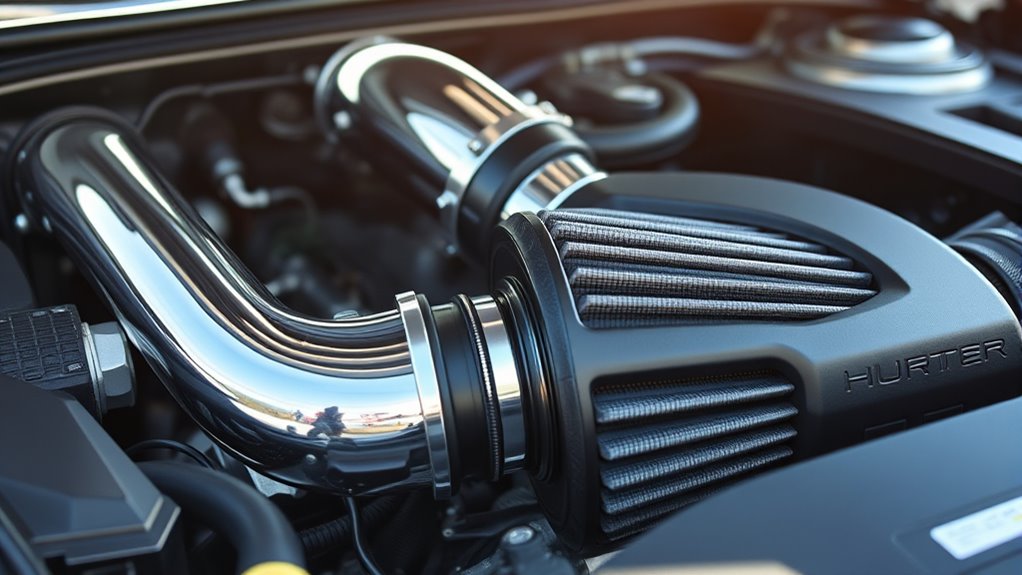
Upgrading to a cold air intake can lead to noticeable power gains, as it allows your engine to breathe more freely. By improving airflow, you may see increases in horsepower and torque, especially at higher RPMs. While the actual gains vary depending on your vehicle and setup, many enthusiasts report 5-15% improvements. Keep in mind that these gains often require proper engine tuning to maximize performance. Additionally, a colder, denser air charge can help your engine run more efficiently, but you must confirm your upgrade complies with emission regulations to avoid legal issues. Although the power boost isn’t drastic for all vehicles, a cold air intake can enhance throttle response and overall driving experience, making it a popular upgrade for those seeking modest but meaningful improvements.
Factors That Influence Performance Improvements
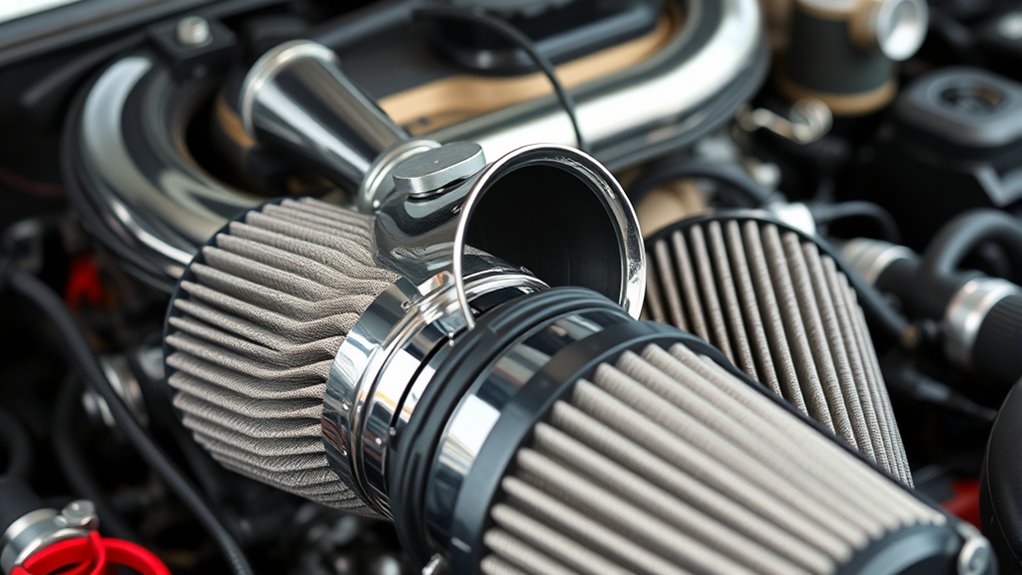
Several factors can influence how much your vehicle benefits from a cold air intake upgrade. First, proper engine tuning is essential; without it, gains may be limited or inconsistent. Second, your driving habits markedly impact results—aggressive acceleration can highlight performance improvements. Third, the vehicle’s existing setup, including its intake and exhaust systems, plays a role in how effectively the intake works. Fourth, fuel efficiency can improve or stay the same depending on how you drive and how well your engine adapts to the new airflow. Additionally, proper luggage organization can help ensure your vehicle remains optimized for performance and efficiency during trips. Keep in mind that these factors collectively determine your actual gains. A well-tuned engine that matches your driving style will maximize power and fuel savings, making the upgrade more worthwhile. Moreover, understanding engine airflow dynamics can help you better assess the potential benefits of modifications. Recognizing how air intake systems influence airflow can further optimize your vehicle’s performance. For example, considering air filter quality can significantly impact how effectively air enters your engine.
Real-World Results: Do Intakes Make a Difference?
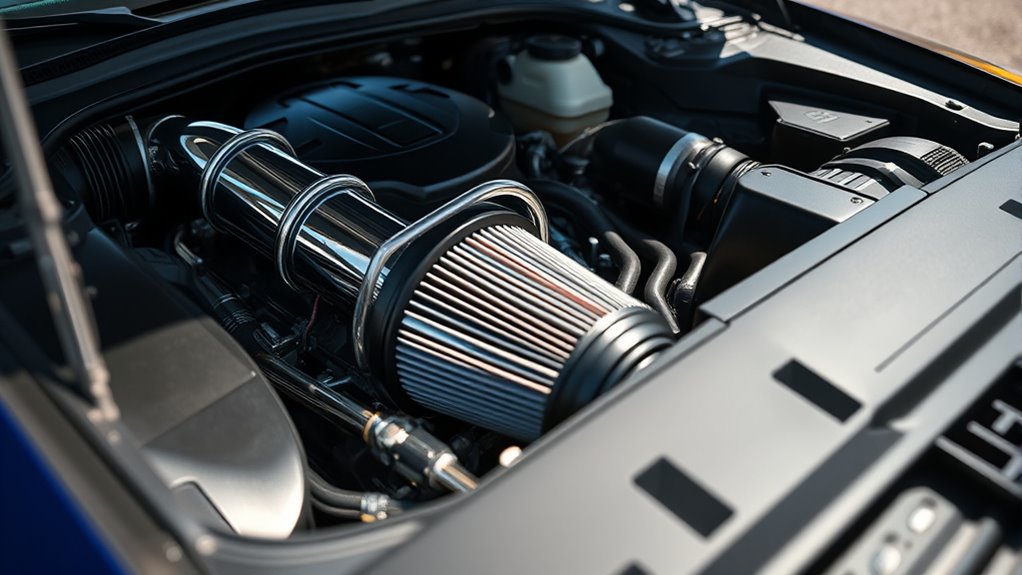
You might wonder if upgrading to a cold air intake really boosts your vehicle’s power. Real-world tests show some gains, but results can vary based on your car and driving style. Let’s look at how these performance improvements hold up in everyday driving situations. Additionally, trusted local resources can help you find reputable shops and products to ensure you get the best results. To maximize performance, consider how performance upgrades are tailored to your specific vehicle and driving habits. Consulting with professionals who understand automotive enhancement can further optimize your modifications. Understanding how airflow efficiency impacts engine performance can also help you make more informed decisions.
Power Gains in Practice
While cold air intakes often promise noticeable power gains, real-world results vary depending on the vehicle and setup. You might experience:
- Slight increases in horsepower and torque, but not always dramatic.
- Changes in emissions control, which can impact your vehicle’s compliance.
- Reduced noise levels, making your ride quieter or more aggressive, depending on the setup.
- Enhanced throttle response, giving you quicker acceleration in everyday driving.
However, these gains often depend on proper installation and tuning. Some setups deliver more noticeable improvements, while others barely make a difference. Keep in mind that while intakes can boost performance, they may also influence emissions control systems, which could affect legality in certain areas. Always assess your vehicle’s specific needs and regulations before making a change.
Real-World Performance Tests
Real-world performance tests provide a clearer picture of whether cold air intakes truly deliver on their promises. When you evaluate fuel efficiency, some drivers notice slight improvements, especially at highway speeds, due to better airflow. However, gains are often minor and depend on driving habits. Noise levels are another key factor; cold air intakes tend to produce a louder intake sound, which some find appealing while others find distracting. These tests show that while cold air intakes can provide measurable power increases on the dyno, real-world results vary. Factors such as installation quality, vehicle type, and driving conditions influence actual benefits. Ultimately, these tests help you decide if the perceived performance boost justifies potential trade-offs like increased noise or marginal gains in fuel efficiency.
Pros and Cons of Installing a Cold Air Intake
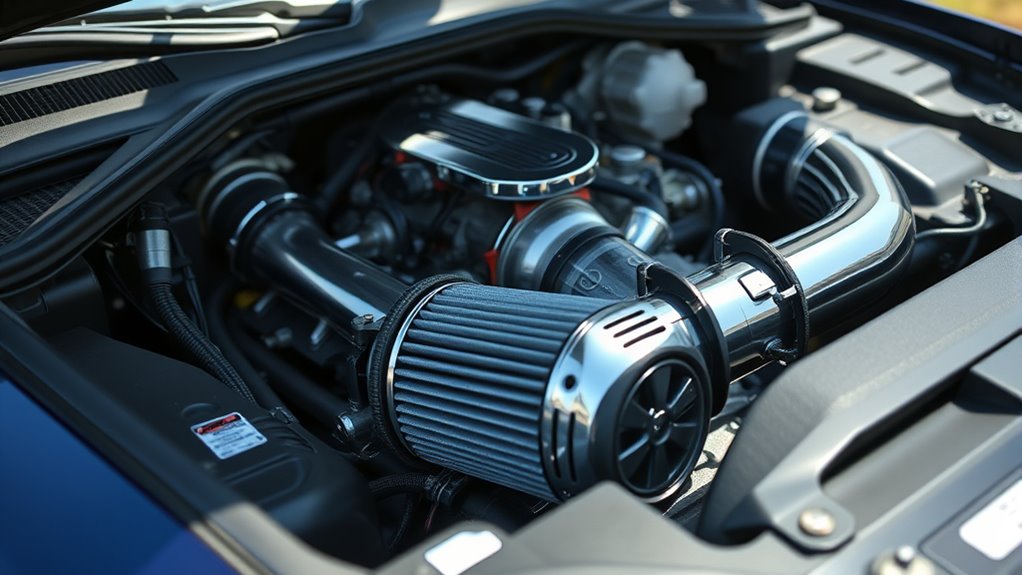
Installing a cold air intake can boost your vehicle’s performance by increasing airflow to the engine, potentially enhancing horsepower and throttle response. However, it also has its pros and cons.
- Enhanced engine sound: You’ll notice a more aggressive, sporty noise that excites driving enthusiasts.
- Aesthetic appeal: The aftermarket intake often looks cooler, adding a personalized touch to your engine bay.
- Potential warranty issues: Some manufacturers may void warranties if the intake isn’t stock.
- Maintenance needs: Increased debris exposure means more frequent filter cleaning or replacement.
While you gain a more satisfying engine sound and a sharper aesthetic, you might also face higher upkeep and possible warranty challenges. Consider these factors before upgrading.
Cost Considerations and Installation Challenges
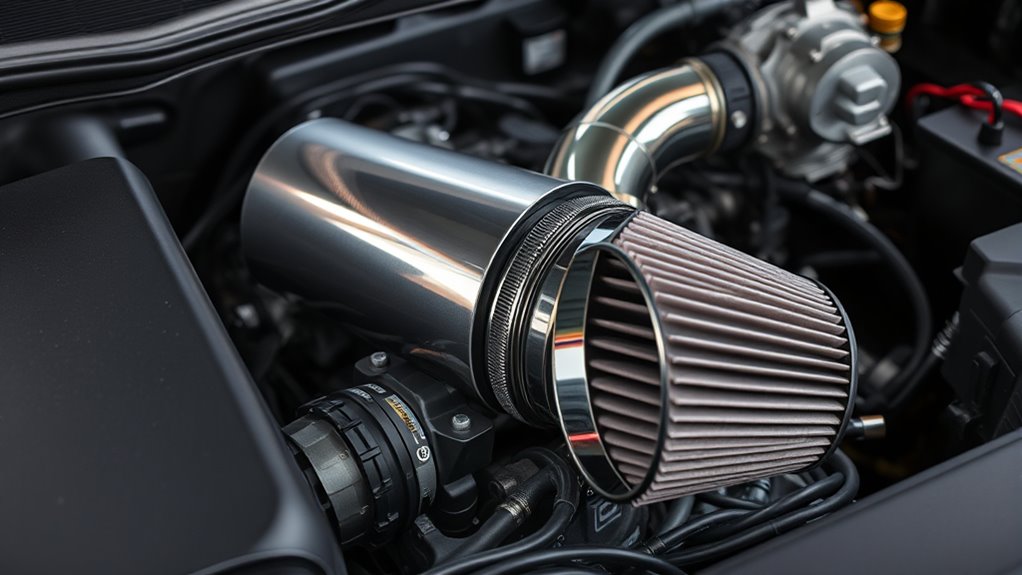
Upgrading to a cold air intake involves both financial investment and logistical considerations that can impact your decision. The cost varies depending on quality, with higher-end models offering better durability but at a higher price. Installation challenges might include fitting issues or potential warranty concerns, especially if you’re not familiar with vehicle modifications. Keep in mind that a cold air intake can influence fuel efficiency—sometimes improving it, other times not—depending on how it’s installed and used. Noise levels may increase, which could be a consideration if you prefer a quieter ride. Here’s a quick comparison:
| Aspect | Details |
|---|---|
| Cost | $200 – $600, depending on brand and quality |
| Installation | Moderate; may require tools and mechanical skill |
| Fuel Efficiency | Can improve or stay the same |
| Noise Levels | Usually louder, especially at high RPMs |
| Compatibility Issues | Potential fitment challenges |
When to Upgrade Your Air Intake System

Knowing when to upgrade your air intake system can make a significant difference in your vehicle’s performance and efficiency. You should contemplate upgrading if you notice:
- Decreased fuel efficiency, meaning your engine isn’t getting ideal airflow.
- Increased noise levels, especially if your current system sounds muffled or sluggish.
- Poor acceleration or sluggish throttle response that could benefit from better airflow.
- Regular dust or debris buildup indicating your stock filter isn’t filtering effectively.
An upgrade can boost fuel efficiency by improving airflow, but it may also alter noise levels — often making your engine sound more aggressive. If these signs resonate, it’s time to think about a new air intake system to enhance both performance and driving experience.
Making an Informed Choice: Is a Cold Air Intake Worth It?

Deciding whether a cold air intake is worth it depends on your vehicle’s current performance and your driving goals. If you’re seeking extra horsepower and improved throttle response, a cold air intake can deliver noticeable gains. However, it often increases engine noise, which might be a concern if you prefer a quieter ride. Additionally, a cold air intake generally requires more maintenance, such as frequent filter cleaning or replacement, to ensure peak performance. Consider whether you’re comfortable with the added upkeep and louder engine sounds. If you prioritize reliability and low maintenance, sticking with the stock airbox might be better. Ultimately, weigh your desire for performance against the potential increase in noise and maintenance to make an informed decision.
Frequently Asked Questions
Do Cold Air Intakes Improve Fuel Efficiency?
Cold air intakes can improve your fuel economy and gas mileage by increasing airflow to your engine, allowing it to run more efficiently. When your engine breathes better, it doesn’t have to work as hard, reducing fuel consumption. However, gains may vary based on driving habits and vehicle type. If installed correctly, a cold air intake can help you save money at the pump over time.
Are Cold Air Intakes Legal for Street Use?
Cold air intakes can be street legal if they meet emission compliance and local regulations, but you gotta check your state’s rules first. Think of it like a dance—you need to stay in step with the law’s rhythm. Some intakes might require modifications or certifications to keep your ride street-legal. Always verify with local authorities or your car’s manual to avoid trouble and keep your car running smooth on every street corner.
How Long Does a Typical Cold Air Intake Installation Take?
A typical cold air intake installation takes about 1 to 2 hours. You’ll need basic tools like screwdrivers, pliers, and socket wrenches. The process is straightforward—you’ll remove the stock airbox, connect the new intake, and secure everything in place. Make sure to follow the manufacturer’s instructions carefully. With the right tools and a bit of patience, you can complete the installation efficiently and enjoy improved airflow and performance.
Can a Cold Air Intake Cause Engine Damage?
A cold air intake can potentially cause engine damage if you ignore proper maintenance. You might picture debris sneaking past your filter, risking engine harm. To prevent this, stick to recommended air filter lifespan and check for damage regularly. Also, consider warranty considerations, as some manufacturers void coverage if aftermarket parts aren’t installed correctly. Stay vigilant, and your engine stays safe and performing at its best.
What Maintenance Is Required for Cold Air Intakes?
You should regularly check and clean your cold air intake’s air filter to maintain ideal performance. Typically, you’ll need to clean the filter every 30,000 to 50,000 miles, but this varies based on driving conditions. Replacing the air filter when it’s dirty or damaged helps extend its air filter lifespan and keeps your engine running smoothly. Regular maintenance ensures your cold air intake continues to boost power without causing damage.
Conclusion
If you’re considering upgrading, a cold air intake can boost your car’s performance and sound—especially if you drive often in open areas. For instance, imagine a driver who installed one and noticed quicker throttle response and slight horsepower gains on the highway. While it’s not a miracle fix, it’s a worthwhile upgrade if you want a more aggressive feel without breaking the bank. Just weigh the costs and benefits to decide if it’s right for you.