
An open differential splits torque evenly between wheels, but if one wheel slips, it sends power to the wheel with less grip, reducing traction. A limited-slip differential (LSD) adjusts torque more effectively, transferring more power to the wheel with better traction and preventing wheel spin. This improves handling, cornering, and off-road capability. If you want to understand how different types of LSDs work and their benefits, there’s more to discover.

Get garage and car supplies delivered free — and shop member deals
- Fast, free delivery on millions of items
- Access to Prime Big Deal Days deals on October 6–7
- Prime Video, Amazon Music and more included
Key Takeaways
- Open differentials split torque equally, causing wheel spin if one wheel loses traction.
- LSD types (clutch, viscous, torsen) limit wheel slip, maintaining better contact with the road.
- LSD transfers torque to the wheel with more grip, enhancing traction during turns or uneven terrain.
- LSD improves handling stability, acceleration, and off-road capability compared to open differentials.
- Properly functioning LSD reduces wheel spin and drivetrain stress, increasing safety and performance.
How an Open Differential Distributes Power
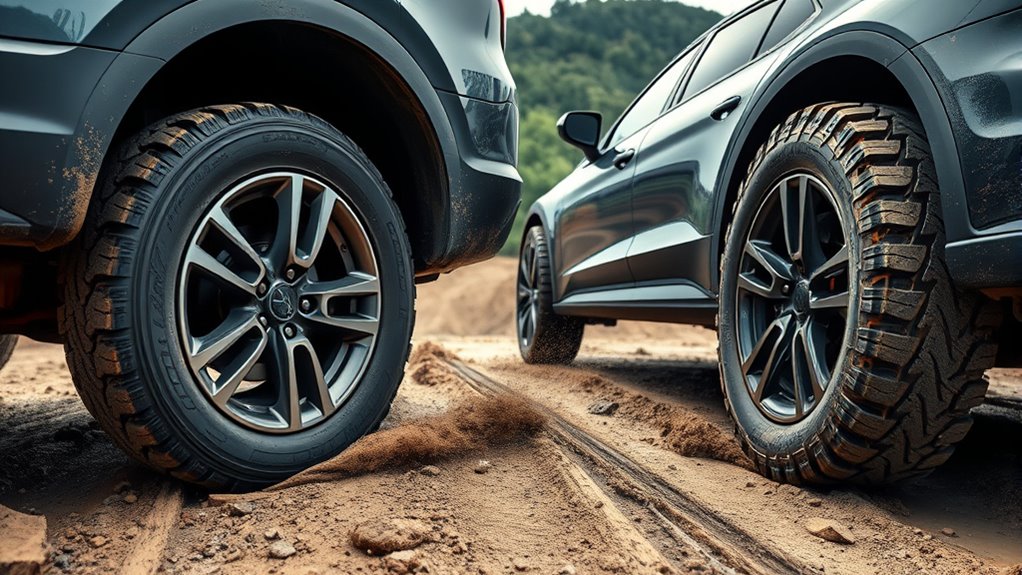
Have you ever wondered how an open differential handles power when one wheel loses traction? It’s all about torque distribution and differential design. In an open differential, power is split equally between both wheels on an axle. When one wheel slips or loses grip, the design allows more torque to flow to the wheel with less traction, often causing that wheel to spin freely. This happens because the differential’s gears adjust to differences in wheel speed, prioritizing equal torque distribution. While this setup provides smooth handling and simplifies manufacturing, it’s not ideal for challenging traction conditions. The open differential’s design is simple, but it can leave you stuck if one wheel encounters low grip terrain. Properly functioning differentials are essential for maintaining traction and safety during diverse driving conditions.
The Mechanics Behind Limited-Slip Differentials
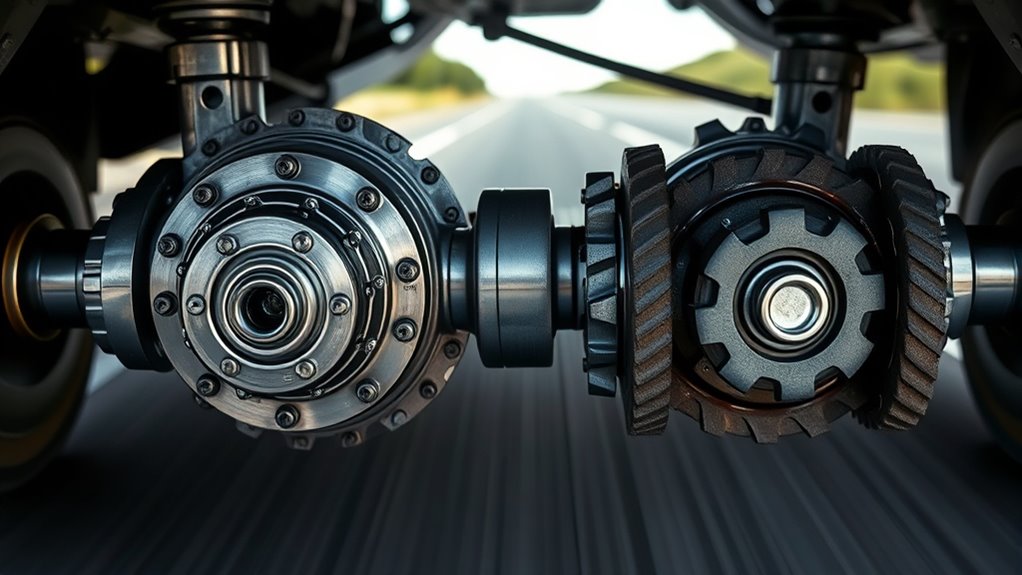
Limited-slip differentials use specialized clutches or gears to limit wheel spin and improve traction. Inside, differential lubrication guarantees smooth operation and prevents overheating, especially under high load. Manufacturing tolerances are critical; precise parts reduce unwanted play and ensure consistent force transfer. When one wheel begins to slip, the internal clutches or gears engage, transferring torque to the wheel with better grip. The design varies—some use clutch packs, others rely on gear mechanisms. Proper lubrication and tight manufacturing tolerances are essential for durability and performance, minimizing wear and maintaining consistent engagement. Properly maintaining differential components ensures optimal function and longevity. Additionally, advancements in differential design have enhanced their ability to adapt to varying driving conditions, further improving traction and safety. Understanding these mechanics helps you appreciate how LSDs deliver better traction compared to open differentials.
Advantages of Using a Limited-Slip Differential
A limited-slip differential gives you better cornering grip, helping your vehicle stay stable when turning. It also reduces wheel spin, so you can accelerate more smoothly without losing traction. These advantages make your driving experience safer and more confident on a variety of roads. Additionally, features like ergonomic support in vehicle components enhance overall handling and comfort during driving. Implementing a limited-slip differential can also improve vehicle safety by providing more predictable handling in challenging conditions, especially when combined with appropriate driving techniques. Understanding contrast ratio is essential for optimizing your vehicle’s performance in various driving environments. Proper maintenance of differentials can prevent costly repairs, ensuring consistent performance over time.
Enhanced Cornering Grip
When taking sharp turns, a limited-slip differential enhances your vehicle’s grip on the road by preventing excessive wheel spin. This stability is vital in situations like drift racing, where control during tight corners makes all the difference. The LSD distributes torque more evenly between wheels, helping you maintain traction and avoid slipping out. On off-road terrains, this improved grip allows you to navigate uneven surfaces confidently, reducing the risk of losing control. With better cornering grip, your vehicle responds more predictably, giving you greater confidence and precision during aggressive maneuvers. Whether you’re racing on a track or tackling rugged trails, a limited-slip differential ensures you stay connected to the road or trail, improving overall handling and safety during high-stress turns. Understanding vehicle mechanics helps drivers appreciate how differentials impact driving performance.
Reduced Wheel Spin
Ever wonder how your vehicle maintains stability during aggressive acceleration or uneven surfaces? A limited-slip differential helps reduce wheel spin by controlling wheel slippage. When one wheel starts to slip, a standard open diff allows all torque to go to that wheel, causing loss of traction. But with a limited-slip diff, torque transfer is managed more effectively, directing power to the wheel with better grip. This controlled torque transfer prevents excessive wheel slippage, ensuring both wheels maintain better contact with the ground. Additionally, many vehicle performance systems incorporate limited-slip differentials to optimize handling. As a result, your vehicle gains improved traction and stability, especially during challenging conditions. By minimizing wheel spin, a limited-slip differential enhances acceleration, reduces drivetrain stress, and keeps you in control when it matters most. Additionally, understanding vehicular traction can help you appreciate how differentials work to optimize your vehicle’s performance. Recognizing the role of the differential type can further enhance your understanding of vehicle dynamics. For example, tire grip plays a crucial role in how effectively a limited-slip differential can improve overall traction and handling performance.
Situations Where LSD Outperforms Open Diff
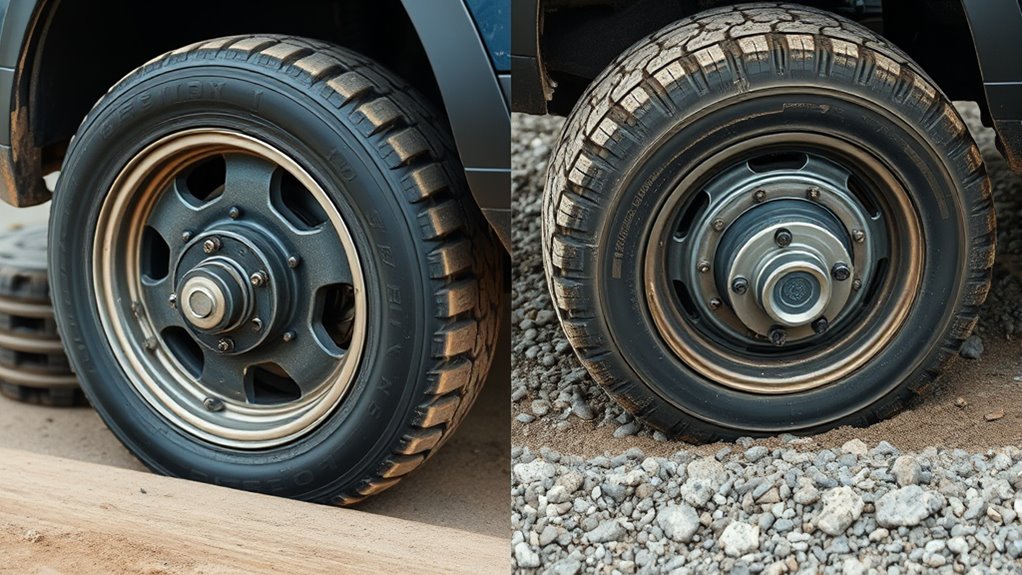
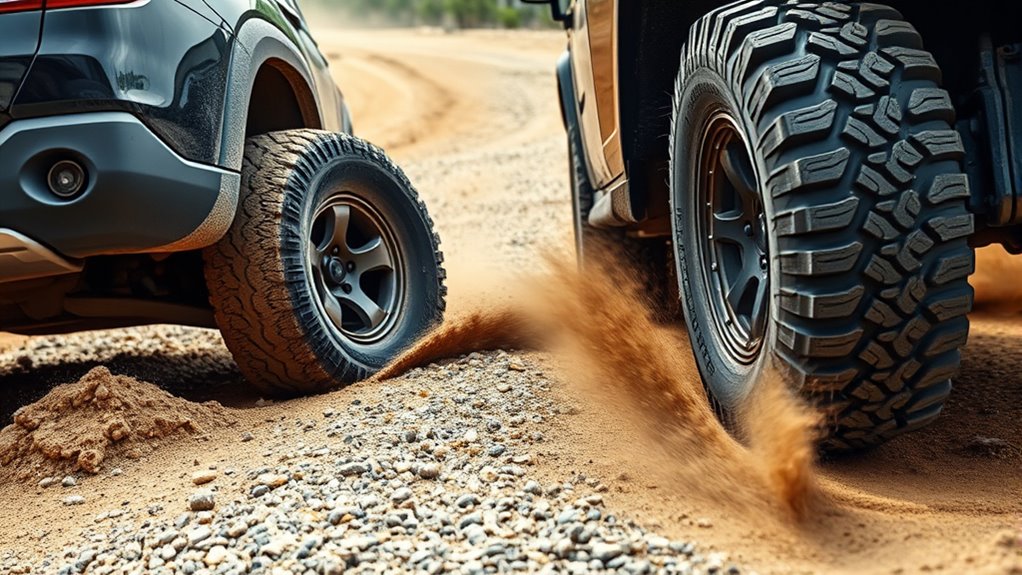
Because locking a differential provides better traction, limited-slip differentials (LSDs) outperform open differentials in scenarios requiring maximum grip. Off-road performance is a prime example, where LSDs help you maintain control on uneven, loose, or slippery terrain by distributing torque more effectively between wheels. This prevents wheel spin and allows you to navigate challenging trails confidently. Similarly, in drag racing, LSDs deliver better acceleration by ensuring both wheels spin in unison, maximizing power transfer to the ground. Open differentials tend to send power to the wheel with the least traction, reducing performance in these situations. Overall, whenever you need consistent, reliable traction—whether on rugged terrain or during high-speed starts—LSDs give you a significant advantage over open differentials. Traction control systems also play a crucial role in enhancing grip in various driving conditions. Additionally, differential types are designed with specific performance goals in mind, and choosing the appropriate one depends on your driving environment and needs. Understanding the mechanical design of differentials can help you make informed decisions about vehicle modifications and upgrades. Recognizing how torque distribution influences vehicle handling can further optimize your driving experience in demanding situations. Proper maintenance of these systems ensures optimal performance and prolongs their lifespan, especially in demanding conditions.
Common Types of Limited-Slip Differentials

There are several common types of limited-slip differentials you should know about. Clutch-type LSDs use friction plates to transfer torque, while viscous LSDs rely on a thick fluid to provide slip resistance. Torsen differentials, on the other hand, use gear mechanisms to distribute torque automatically without clutches or fluids. Understanding foraging techniques can help you identify different types of soil and terrain which influence the choice of differential for optimal performance. Recognizing mechanical principles involved in each type can also aid in better maintenance and troubleshooting.
Clutch-Type LSD Mechanics
Clutch-type limited-slip differentials (LSDs) operate by using clutch plates or packs that engage when one wheel begins to slip, transferring torque to the opposite wheel. This engagement occurs through a controlled clutch pack that provides resistance to differential action. When slip happens, the clutch pack compresses, forcing torque transfer between wheels, improving traction during challenging conditions. The effectiveness depends on factors like clutch pack design and preload settings.
| Feature | Description |
|---|---|
| Engagement | Activates when one wheel slips |
| Clutch Pack | Controls torque transfer |
| Adjustment | Can be tuned for sensitivity |
| Durability | Designed for repeated use |
| Ideal Use | Performance driving and off-road |
This system helps you maintain better grip without sacrificing vehicle handling.
Viscous LSD Functionality
Viscous limited-slip differentials (LSDs) operate using a different mechanism to manage torque transfer between wheels, relying on a viscous fluid rather than clutch packs. Inside, a thick, viscous fluid surrounds the clutch plates connected to each wheel. When one wheel begins to slip—indicated by a high slip ratio—the fluid’s shear strength causes it to resist sudden differences in rotation. This resistance transfers torque from the slipping wheel to the one with better traction, helping both wheels turn more evenly. The viscous fluid’s properties allow for smooth, gradual engagement without harsh clutches. As the slip ratio increases, the fluid’s resistance amplifies, improving traction during slippery conditions. This simple yet effective design makes viscous LSDs popular for vehicles needing consistent, predictable performance. Additionally, the role of media in shaping public perception of these mechanisms influences how enthusiasts and consumers understand their benefits and limitations. Understanding the different types of LSDs can help in choosing the right differential based on driving conditions and preferences.
Torsen Differential Operation
A Torsen differential operates by using gears to automatically transfer torque to the wheel with the most traction, providing better handling during uneven grip conditions. Its differential design relies on helical gears that distribute torque based on resistance, ensuring ideal torque distribution without electronic intervention. When one wheel begins to slip, the Torsen design directs more torque to the wheel with better grip, enhancing traction and stability. This continuous torque transfer makes it suitable for performance vehicles and off-road driving. Unlike open differentials, a Torsen system responds instantly to changes in traction, improving control during cornering or slippery situations. Its gear-based operation delivers consistent power delivery, making it a favored choice for those seeking enhanced traction without relying on clutch packs or viscous couplings.
Considerations When Upgrading to an LSD
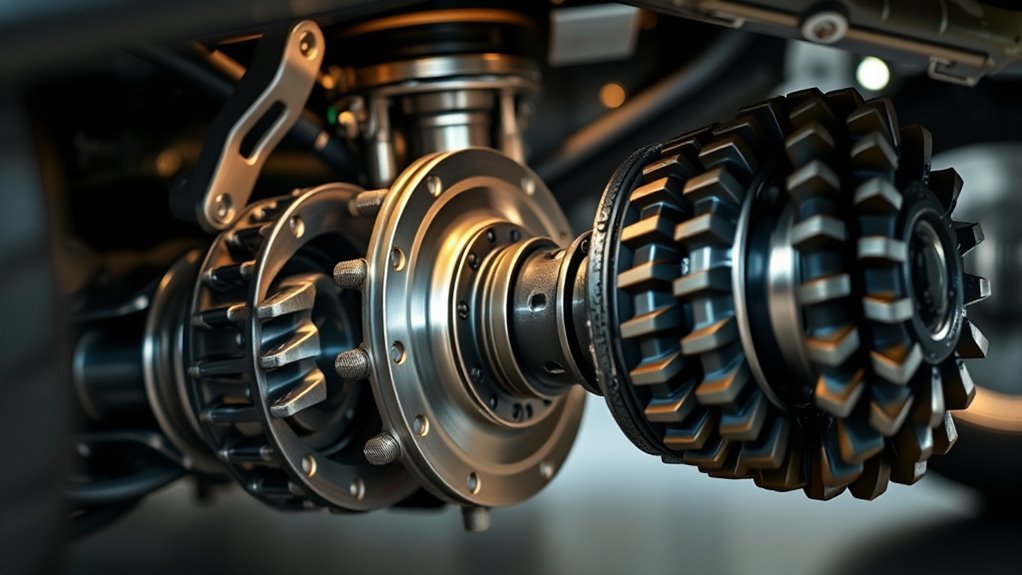
Upgrading to a limited-slip differential (LSD) is a smart move if you want better traction and handling, but it’s important to contemplate several factors before making the switch. While LSD improves grip, consider how it affects driver comfort and maintenance. An LSD can cause more noise and slightly harsher handling during everyday driving, which might impact comfort. Additionally, maintenance requirements tend to be higher, as LSD components need periodic inspection and occasional fluid changes. Compatibility with your vehicle’s drivetrain is *vital*, so verify if your car can handle the upgrade. Here’s a quick overview:
| Consideration | Impact | Recommendation |
|---|---|---|
| Driver comfort | Slightly increased noise and harshness | Test drive before upgrading |
| Maintenance | Higher, more frequent checks | Schedule regular inspections |
| Compatibility | Necessary for proper fit | Consult a professional |
| Cost | Varies depending on type and install | Budget accordingly |
| Longevity | Depends on driving style and care | Follow manufacturer guidelines |
Frequently Asked Questions
How Does an LSD Affect Fuel Efficiency?
An LSD can slightly reduce your fuel economy because it adds some resistance to drivetrain movement. When the limited-slip mechanism engages, it requires extra power to transfer torque smoothly between wheels, which can lead to increased fuel consumption. However, this impact is usually minimal and often outweighed by the benefits of improved traction and handling. Overall, an LSD may slightly lower drivetrain efficiency, but it helps you maintain control in challenging conditions.
Can an Open Differential Be Modified to Act Like an LSD?
You can modify an open differential to act more like an LSD through a differential upgrade. Installing limited-slip clutch packs or aftermarket locking mechanisms enhances traction improvement by distributing torque more evenly between wheels. This modification reduces wheel spin during low traction conditions, giving you better control and stability. Keep in mind, though, that these upgrades may require professional installation and tuning to maximize performance and ensure durability.
What Maintenance Is Required for a Limited-Slip Differential?
Your limited-slip differential needs regular attention, or it’ll betray you in a heartbeat. You should check the differential fluid monthly, ensuring it’s clean and at the right level—think of it as blood for your car’s soul. Also, perform wear inspections periodically to catch any signs of damage early. Proper maintenance keeps your LSD performing like a champion, providing consistent traction and preventing costly repairs down the road.
Are There Specific Vehicle Types Best Suited for LSD?
If you’re choosing a limited-slip differential, off-road vehicles and sports cars are ideal candidates. Off-road vehicles benefit from LSD’s enhanced traction on uneven terrain, helping you tackle mud, rocks, and steep inclines. Sports cars, on the other hand, use LSD to improve cornering and acceleration by distributing power more effectively. So, if you own either type, an LSD can markedly boost your vehicle’s performance and handling in challenging conditions.
How Does Temperature Influence LSD Performance?
Sure, cold temperatures turn your LSD into a grumpy old man, slowing down thermal effects and thickening oil viscosity. As the weather cools, the limited-slip mechanism struggles to engage smoothly, reducing traction. Conversely, heat thins the oil, making your diff more responsive. So, if you want your LSD to perform like a well-oiled machine, keep an eye on temperature swings and maintain proper fluid levels for ideal traction.
Conclusion
Choosing an LSD transforms your driving experience from a mere commute to an unstoppable force on the road. It’s like giving your car superpowers, turning every wheel into a traction monster that conquers even the wildest terrains. Don’t settle for an open diff’s mediocrity—upgrade to an LSD and release unstoppable grip and control. Once you feel that surge of confidence, you’ll realize nothing else compares—your car becomes an unstoppable, grip-defying beast!
Fall Picks
fall essentials
As an affiliate, we earn on qualifying purchases.