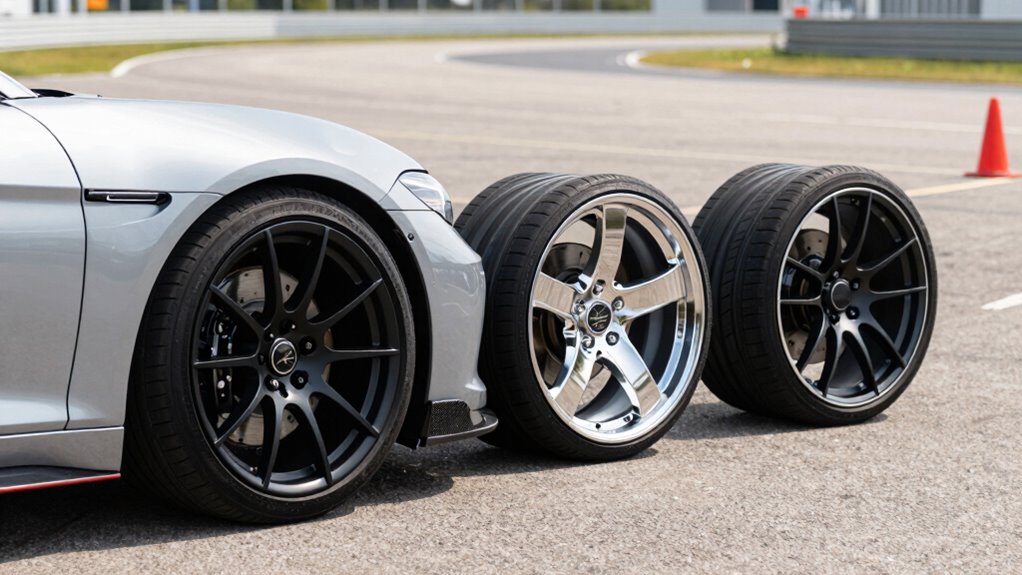

To choose the right wheel package for track days, focus on wheels that are compatible with your suspension and fitment needs, such as correct offset and diameter to prevent rubbing. Opt for lightweight materials like forged aluminum to reduce unsprung weight, boosting handling and response. Make certain the wheels support high-performance tires for better grip and safety. Proper tire pressure management and balancingWheel choice with your driving style will maximize safety and performance. Keep exploring to find even more ways to optimize your setup.

Get business pricing on garage and car supplies
- Business-only prices and quantity discounts
- Tax-exempt purchasing
- Multiple users, one account, clear invoices
Key Takeaways
- Ensure wheel size and offset are compatible with your vehicle’s suspension to prevent rubbing and maintain handling.
- Opt for lightweight, durable materials like forged aluminum to improve response and reduce unsprung weight.
- Match tires to wheel dimensions that provide optimal grip and contact patch for track conditions.
- Verify wheel fitment and clearance to avoid vibrations or suspension damage during aggressive driving.
- Balance aesthetics with safety and performance, considering material quality and proper tire pressure management.
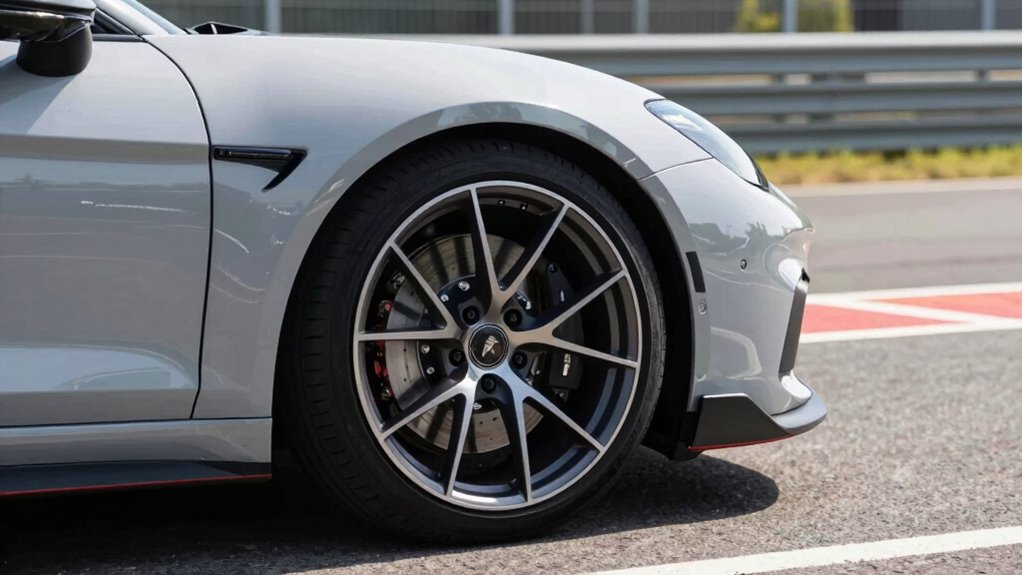
When preparing for track days, selecting the right wheel package can make a meaningful difference in your car’s performance and safety. The choices you make about wheels directly impact how well your car handles, accelerates, and brakes on the track. A key factor to evaluate is tire pressure enhancement. Proper tire pressure ensures maximum contact patch with the road, which translates to better grip and more predictable handling. You should regularly check and adjust tire pressures before each session, matching them to track conditions and your driving style. Overinflated tires can reduce traction and lead to uneven wear, while underinflated tires increase rolling resistance and heat buildup. Achieving the right balance maximizes your tires’ performance and prolongs their lifespan. Additionally, using proper tire pressure can help prevent issues like tire blowouts or excessive wear during high-speed cornering.
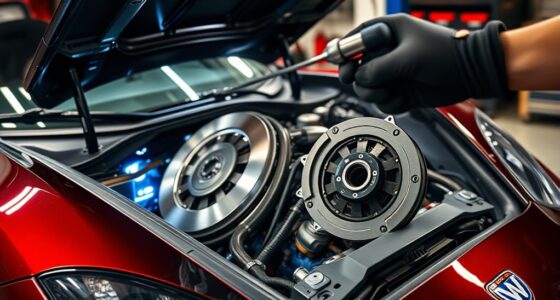
Suspension compatibility is equally vital when selecting wheel packages. Not all wheels fit every suspension setup, so you need to verify your new wheels are compatible with your existing suspension components. This involves checking the wheel offset, backspacing, and diameter to prevent rubbing against the fenders or suspension parts during aggressive cornering. A wheel with the correct offset maintains proper suspension geometry, ensuring your car handles as intended. If you upgrade to larger wheels or wider tires, you may need to modify or upgrade suspension components to maintain ideal clearance and performance. Ignoring suspension compatibility can lead to unwanted vibrations, uneven tire wear, or even damage to your suspension system, all of which compromise safety and handling on the track. Understanding wheel fitment is essential to avoid these issues and optimize your car’s setup. Moreover, paying attention to the materials used in wheels can significantly influence both weight and durability, which are crucial factors for track performance. Furthermore, selecting wheels made from forged aluminum can provide the advantages of strength and reduced weight, enhancing overall handling.
Additionally, lighter wheels can greatly improve your car’s response by reducing unsprung weight, which enhances acceleration, braking, and cornering. But don’t sacrifice durability for weight savings; your wheels need to withstand the rigors of track driving. The material of the wheel—such as forged aluminum—offers a good balance of strength and weight reduction. When choosing your wheel package, consider also the type of tires you’ll use; some wheels are better suited for high-performance tires, which are essential for track day performance.
Ultimately, the right wheel package isn’t just about aesthetics; it’s a strategic choice that affects tire pressure management, suspension compatibility, and overall handling. Taking the time to research and select wheels that match your car’s setup and your driving goals will give you better control, safety, and confidence on the track. Properly enhanced tires and compatible suspension setup will help you push your car to its limits while maintaining safety and reliability.
forged aluminum wheel package for track days
As an affiliate, we earn on qualifying purchases.
As an affiliate, we earn on qualifying purchases.
Frequently Asked Questions
Can I Use My Daily Wheels for Track Days?
You can technically use your daily wheels for track days, but it’s not ideal. Daily wheels aren’t designed for the high stresses of track driving, so they lack track wheel durability. Over time, they may crack or warp under intense conditions, reducing safety and performance. For maximum safety and performance, it’s best to invest in track-specific wheels built to handle the extreme demands of track day sessions.
How Often Should I Replace My Track Wheels?
You should replace your track wheels when you notice significant tire wear, cracks, or damage that affects safety and performance. Regularly check your tire pressure and guarantee proper wheel alignment before each track day, as misalignment can accelerate wear. If you’re hitting the track frequently, consider replacing wheels every season or after about 10-15 track days. Maintaining ideal tire pressure and alignment helps extend wheel life and keeps your car performing at its best.
Do Wheel Packages Affect Overall Vehicle Safety?
Think of your wheel package as the backbone of your car’s safety on track days. Yes, it impacts overall safety, especially if you maintain proper tire pressure and guarantee adequate brake clearance. Well-chosen wheels prevent issues like rubbing or overheating, keeping you confident and secure. Ignoring these details can lead to compromised grip or brake failure. So, selecting the right wheel package is essential for safe, high-performance driving.
Are There Specific Brands Recommended for Track Wheels?
You should consider reputable brands like BBS, Volk Racing, and Enkei for track wheels, as they’re known for quality and performance. Comparing wheel brands helps you assess durability, ensuring your wheels withstand track conditions. Look into wheel brand comparisons to find models with high track wheel durability. Choosing trusted brands guarantees you get lightweight, strong wheels that improve handling and safety during track days, making your driving experience more confident and enjoyable.
What Is the Typical Cost Difference Between Stock and Track Wheels?
You’ll find that track wheels typically cost more than stock wheels, mainly due to enhanced materials and design. The price difference often reflects improvements in tire compatibility and brake clearance, which are vital for safety and performance during track days. Expect to spend anywhere from a few hundred to over a thousand dollars extra. Always make certain your chosen wheels maintain proper tire compatibility and brake clearance to avoid issues on the track.
high performance track tires and wheels
As an affiliate, we earn on qualifying purchases.
As an affiliate, we earn on qualifying purchases.
Conclusion
So, go ahead and pick that shiny new wheel package—just remember, your track day dreams might turn into a ballet of tire smoke and squealing brakes. With the right setup, you’ll be carving corners like a racing legend, or at least convincing your friends you did. Just don’t be surprised if your car starts looking more like a racecar and less like a weekend cruiser. Happy racing—may your wheels spin faster than your excuses!
car wheel offset and fitment kit
As an affiliate, we earn on qualifying purchases.
As an affiliate, we earn on qualifying purchases.
lightweight forged alloy wheels for racing
As an affiliate, we earn on qualifying purchases.
As an affiliate, we earn on qualifying purchases.
Halloween Picks
halloween
As an affiliate, we earn on qualifying purchases.