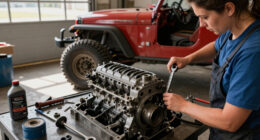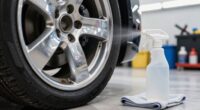
To build a sensible street and track brake setup, choose brake fluids with appropriate boiling points—DOT 3 or DOT 4 for street and DOT 4 or DOT 5.1 for track, to handle higher temps without boiling. Select pads based on your driving style: organic or semi-metallic for street, sintered for track, or ceramic for a quieter, longer-lasting option. Regularly inspect, bleed, and maintain your system to guarantee consistent performance, and you’ll gain more confidence in your braking under any conditions.

Get business pricing on garage and car supplies
- Business-only prices and quantity discounts
- Tax-exempt purchasing
- Multiple users, one account, clear invoices
Key Takeaways
- Choose a high boiling point brake fluid (DOT 4 or 5.1) suitable for both street and track conditions.
- Select brake pads that balance performance and durability, such as semi-metallic for street and sintered for track use.
- Regularly inspect and bleed the brake system to maintain fluid quality, levels, and remove air or contaminants.
- Use effective filtration and proper system maintenance to ensure consistent brake performance and prevent component wear.
- Tailor the brake setup to your driving style, balancing performance, comfort, and longevity for safe street and track use.

Whether you’re upgrading your vehicle for better performance on the street or the track, building a reliable brake setup is essential. One of the first decisions you’ll need to make involves brake fluid selection. The right brake fluid guarantees consistent braking performance, especially under demanding conditions. For street use, a high-quality DOT 3 or DOT 4 fluid often suffices, offering good lubrication and moisture resistance. However, if you’re heading to the track, consider a DOT 4 or even a DOT 5.1 fluid, which can handle higher temperatures without boiling. Boiling brake fluid leads to spongy pedal feel and reduced braking power, so choosing a fluid with a higher boiling point is critical for maintaining control during intense braking sessions.
Choosing the right brake fluid is crucial for reliable performance under demanding street or track conditions.
Next, focus on brake pad materials. The choice of brake pads directly impacts your vehicle’s stopping power, pedal feel, and durability. On the street, you’ll want a pad material that balances performance and comfort. Organic or semi-metallic pads are common choices—they’re quieter, produce less dust, and offer decent modulation. But if you’re serious about track performance, sintered or ceramic brake pads are your best options. Sintered pads, made from compressed metal particles, excel in high-temperature environments, providing consistent braking even after repeated heavy stops. Ceramic pads, on the other hand, produce less dust and noise, and they tend to be gentler on rotors, which can extend the lifespan of your braking components.
Additionally, proper maintenance such as inspecting brake components and monitoring fluid condition is crucial for long-term reliability. Being aware of brake fluid boiling points and how they influence performance can help prevent system failure during critical moments.
Furthermore, effective filtration in the brake fluid system can prevent contamination and extend the life of your brake components. Regularly bleeding your brake system and maintaining proper fluid levels will help sustain reliable performance. In essence, a sensible street and track brake setup hinges on selecting the right brake fluid and pad materials tailored to your driving style and needs. By paying attention to these details, you’ll ensure your brakes perform dependably, providing confidence and safety whether cruising city streets or racing on the track.
high boiling point brake fluid DOT 4
As an affiliate, we earn on qualifying purchases.
As an affiliate, we earn on qualifying purchases.
Frequently Asked Questions
How Often Should Brake Fluid Be Changed for Optimal Performance?
You should change your brake fluid every 1 to 2 years for peak performance. Different brake fluid types, like DOT 3, DOT 4, or DOT 5.1, have varying moisture absorption rates, impacting effectiveness. Regular checks can reveal brake fluid leaks, which compromise safety. If you notice spongy brakes or reduced braking power, it’s time for a fluid change, ensuring your brake system remains dependable on the street and track.
What Are the Signs of Brake Fade During Driving?
You’ll notice brake fade when your brake pedal feels softer or sinks further than usual, and stopping distances increase. You might also experience a slight vibration or pulsation, indicating brake rotor warping. Check for excessive brake pad wear, which reduces braking efficiency, and look for signs of overheating, like a burnt smell. These signs signal your brakes need attention to prevent further damage and maintain peak performance.
Can I Upgrade My Stock Brake Lines to Braided Ones?
Yes, you can upgrade your stock brake lines to braided ones. Think of it like replacing a garden hose with a more durable, flexible one—braided lines resist expansion better, providing firmer pedal feel. When upgrading, consider brake line materials like stainless steel for durability and peak performance. Proper brake line routing is essential to avoid kinks or interference, ensuring smooth, reliable braking on both street and track.
What’s the Ideal Brake Pad Compound for Daily Street Use?
For daily street use, you should choose brake pads with a ceramic compound, as they offer excellent noise reduction and produce less brake dust. Ceramic brake pad materials provide smooth, consistent braking performance without squealing, making your drives more comfortable. They also tend to last longer and generate less heat, which helps maintain braking efficiency over time. Overall, ceramic pads are a reliable, quiet choice for everyday driving.
How Do I Properly Bed-In New Brake Pads and Rotors?
Imagine awakening your brakes’ full potential. To bed-in new brake pads and rotors, start gently, applying light pressure to warm the pads and rotor surface finish. Gradually increase pressure over several stops, mimicking a steady storm of braking that sculpts the rotor surface finish and aligns brake pad materials perfectly. This process guarantees maximum grip, reduces noise, and extends brake life, transforming your stopping power into a symphony of control.
sintered brake pads for track use
As an affiliate, we earn on qualifying purchases.
As an affiliate, we earn on qualifying purchases.
Conclusion
Building a street and track brake setup is like tuning a fine instrument—you need the right balance to perform perfectly. When you choose the right pads, rotors, and fluid, you’re crafting a symphony of stopping power, ready to respond whether you’re cruising city streets or tearing up the track. With patience and attention to detail, you’ll create a reliable, responsive system that keeps you in control, no matter where your driving takes you.
ceramic brake pads for street driving
As an affiliate, we earn on qualifying purchases.
As an affiliate, we earn on qualifying purchases.
As an affiliate, we earn on qualifying purchases.
Fall Picks
fall essentials
As an affiliate, we earn on qualifying purchases.