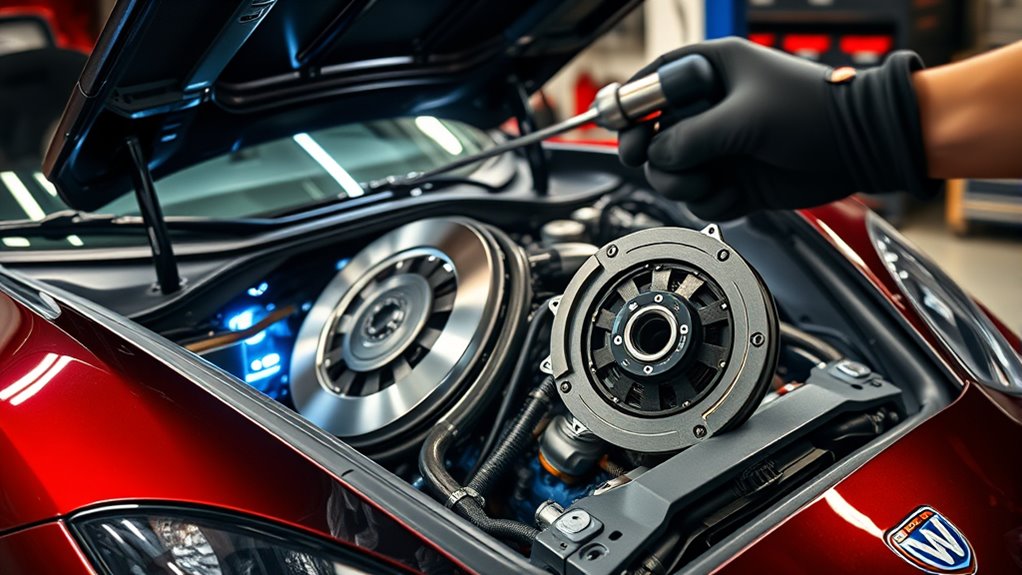

If your vehicle is making more power or you’re participating in track days, drag racing, or spirited driving, you’ll need a performance clutch. Signs like slipping or difficulty shifting under stress indicate it’s time to upgrade. A performance clutch can handle higher torque and give you quicker engagement, improving responsiveness and durability. If you’re curious about when these upgrades make sense for your driving style, keep exploring to find out more.
Key Takeaways
- When your stock clutch slips or struggles under increased power, a performance clutch improves grip and engagement.
- For frequent track days, drag racing, or spirited driving, upgrading enhances responsiveness and durability.
- If engine modifications raise horsepower or torque, a high-performance clutch is necessary to handle the added stress.
- Experiencing a stiff or abrupt pedal after installation indicates a need for a performance clutch to match driving preferences.
- Upgrading extends the lifespan of drivetrain components and ensures reliable performance under high-stress conditions.
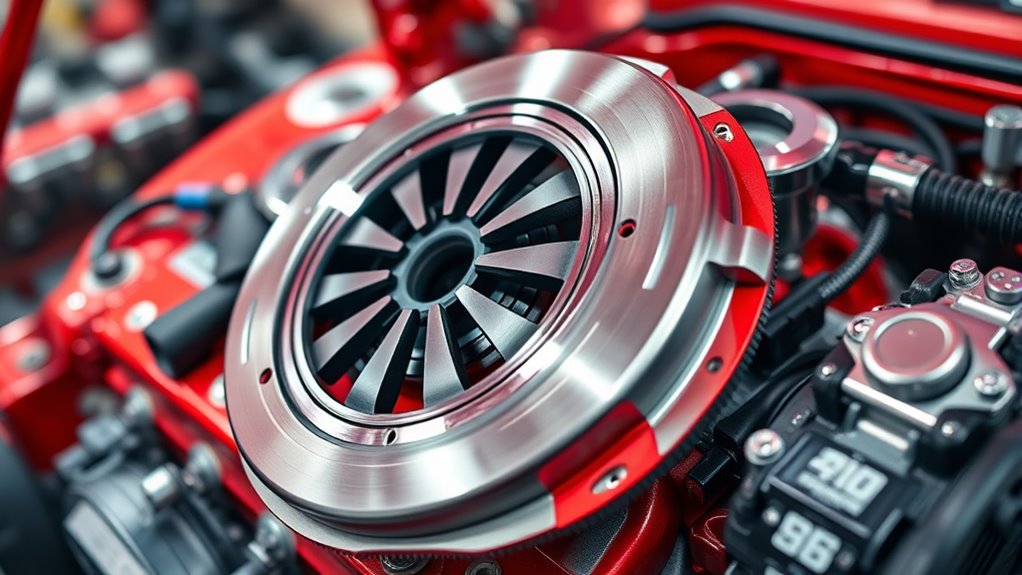
Have you ever wondered how your vehicle smoothly shifts gears? It’s all thanks to your clutch system working in harmony with the transmission. When your clutch begins to slip or feels less responsive, it’s a clear sign that an upgrade might be necessary. Upgraded clutch kits can dramatically improve your driving experience, especially if you’re pushing your car to its performance limits. But before diving into a performance clutch, it’s important to understand when you truly need one and what it involves. A performance clutch isn’t just for racing; it can also enhance everyday driving, but it’s not always suitable for casual drivers.
A performance clutch boosts responsiveness and durability, ideal for spirited driving and high power, but not always for casual drivers.
One of the key factors in deciding whether to go for an upgraded clutch kit is your driving style and vehicle use. If you frequently participate in track days, drag racing, or spirited driving, a performance clutch can offer the increased holding capacity and faster engagement you need. These kits often feature high-performance friction materials and stronger pressure plates that handle higher torque loads. However, if you’re merely looking to replace your clutch for regular commuting, a standard OEM replacement might suffice. Upgrading isn’t always necessary unless you’re experiencing slipping, difficulty shifting, or if you’ve considerably modified your engine for more power.
Performing a DIY installation is a viable option if you’re mechanically inclined, but it requires patience and proper tools. When installing a performance clutch, pay attention to the clutch pedal feel. It often becomes stiffer or more abrupt compared to stock setups, which can take some getting used to. Adjusting the clutch pedal free play during installation ensures you get the right engagement point and prevents premature wear. A properly installed performance clutch will give you a more direct and responsive pedal feel, allowing for better control during aggressive driving. Keep in mind, a DIY approach isn’t for everyone—if you’re unfamiliar with clutch systems or lack experience, it’s best to seek professional help to avoid costly mistakes. Additionally, understanding how your clutch system interacts with other components can help maintain optimal performance.
Ultimately, upgrading to a performance clutch kit makes sense when your vehicle’s power output exceeds the capabilities of your stock clutch, or if you’re seeking improved responsiveness and durability for high-stress driving. It’s an investment that can transform your driving experience, but it’s vital to choose the right kit for your needs and driving habits. Remember, a high-quality clutch not only enhances performance but also extends the lifespan of your drivetrain components. Whether you opt for a DIY install or have a professional handle it, understanding when and why to upgrade ensures you get the best value and performance from your vehicle.

Exedy Sport Clutch Kit – 08801A
- Product Name: Exedy Sport Clutch Kit – 08801A
As an affiliate, we earn on qualifying purchases.
As an affiliate, we earn on qualifying purchases.
Frequently Asked Questions
How Do I Know if My Clutch Needs Upgrading?
You’ll know your clutch needs upgrading if you notice difficulty with clutch adjustment or a change in pedal feel. If the pedal becomes spongy, sticks, or requires more effort, it’s a sign to contemplate an upgrade. Additionally, if your clutch slips during acceleration or struggles with heavy loads, these are clear indicators that a performance clutch can improve your driving experience. Don’t ignore these signs to avoid further damage.
Can a Performance Clutch Improve Fuel Efficiency?
A performance clutch can improve fuel efficiency if it offers better engagement and reduces slippage, making gear shifting smoother and clutch pedal feel more consistent. When you upgrade, you’ll notice easier, more precise shifts, which can enhance your overall driving economy. Additionally, a high-quality clutch helps your engine work efficiently, saving fuel over time, especially during city driving or frequent stop-and-go conditions.
Are Performance Clutches Suitable for Daily Driving?
Imagine smoothly pressing your clutch pedal, feeling the precise feedback from aftermarket clutch options. Performance clutches can be suitable for daily driving if you choose ones with a softer engagement and better pedal feel. They offer enhanced durability and grip, but you might notice a firmer pedal and more aggressive engagement. If you value control and responsiveness without sacrificing comfort, a performance clutch can work well for your daily commute.
How Long Does a Performance Clutch Typically Last?
A performance clutch typically lasts between 20,000 to 50,000 miles, but this depends on your clutch material and driving style. If you use a high-performance ceramic or carbon fiber clutch and drive aggressively or frequently tow, expect it to wear out faster. Gentle driving and lighter clutch material can extend its lifespan. Keep an eye on slipping or difficulty shifting, indicating it’s time for a replacement.
What Are Signs of Clutch Slipping or Failure?
If your clutch slips, you’ll notice clutch noise like squealing or grinding, especially when shifting gears. You might also feel pedal stiffness or that the pedal sinks too low, making it hard to engage fully. These signs indicate your clutch isn’t gripping properly and may be failing. Address them promptly to avoid further damage, and consider upgrading to a performance clutch if you frequently push your vehicle’s limits.

Hi-Torque 150ftlb (OEM 105) BIGBearing PTO Clutch Upgrade for John Deere AM141536 AM136787 X300 X300R X304 X305R X310 X320 X324 X340 X360 X500 X520 X530 X534 X540 X590 AM134397 Tractor Mower
- Higher Torque Capacity: 150 ft-lb torque for tough cuts
- Durable BIGBearing: Larger, replaceable pulley bearing
- Tough Billet Pulleys: Reduces belt wear and maintains speed
As an affiliate, we earn on qualifying purchases.
As an affiliate, we earn on qualifying purchases.
Conclusion
If you’re pushing your car to its limits, upgrading to a performance clutch can make all the difference. Did you know that drivers who upgrade report a 30% improvement in acceleration and control? Whether you’re racing or hauling heavy loads, a performance clutch helps you handle stress and maintain reliability. Don’t wait until slipping or burning out happens—upgrade proactively to keep your rides smooth and responsive when it matters most.

Joyfolk 3 Pack Clutch Pedal Linkage Bushing Clutch Cylinder Push Rod Linkage Bushing Car Automotive Black Parts Accessories for Most Cars, Trucks, Vans, Pickups
- Package Includes: 3-piece clutch linkage bushing kit
- Compact Size: Measures 1.8 x 1.8 x 2 cm
- Universal Fit: Suitable for most vehicles
As an affiliate, we earn on qualifying purchases.
As an affiliate, we earn on qualifying purchases.

Mautopily 10-Piece Clutch Alignment Tool Kit – Universal Automotive Clutch Pilot Alignment Tool Set for Car, Truck & SUV, Clutch Installation Tools for Professional Mechanics & DIY Enthusiasts
- High Precision Calibration: Ensures accurate clutch alignment
- Durable Material: Made of high-strength alloy steel
- Corrosion and Wear Resistant: Long-lasting and reliable
As an affiliate, we earn on qualifying purchases.
As an affiliate, we earn on qualifying purchases.