To keep your tires wearing evenly and maximize their lifespan, rotate them roughly every 5,000 to 7,000 miles, though you should check your vehicle’s manual for specific guidance. The pattern depends on your drive type—front-wheel drive tires go straight to the rear, while rear-wheel or AWD tires may cross to the front. Proper rotation enhances safety and performance, so stick with the recommended schedule to prevent early tire replacements; more details follow to help you get it right.
Key Takeaways
- Rotate tires every 5,000 to 7,000 miles or as specified in your vehicle’s manual.
- Follow the recommended rotation pattern based on your vehicle’s drivetrain (FWD, RWD, AWD).
- Check tire wear regularly to identify uneven patterns indicating rotation or repair needs.
- Ensure proper tire pressure before rotating to promote even wear and accurate assessment.
- Regular rotations extend tire life, improve safety, and maintain optimal vehicle handling.
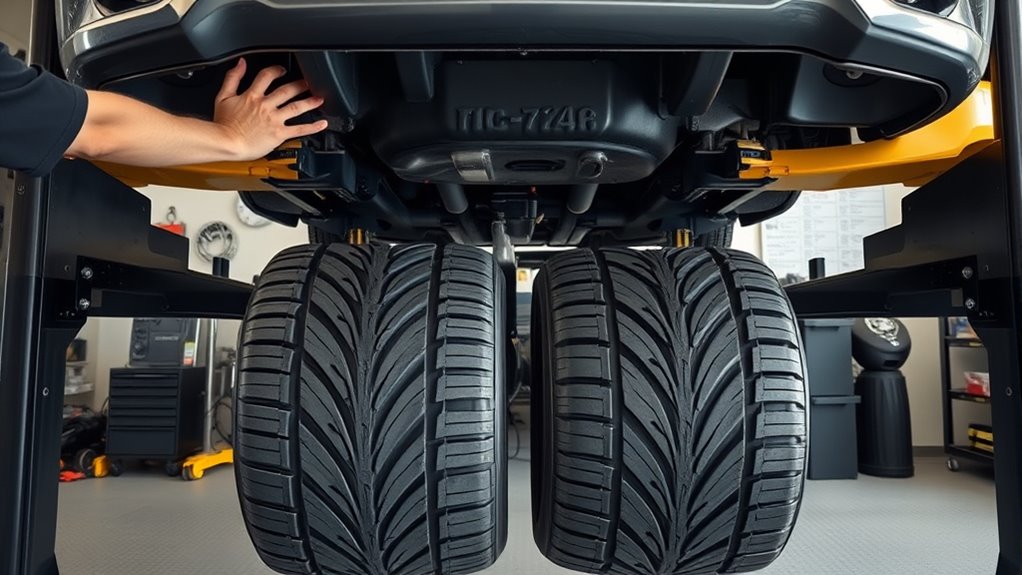
Regular tire rotation is essential to guarantee even wear and extend the lifespan of your tires. When you don’t rotate your tires regularly, uneven tire wear patterns can develop, leading to premature replacements and potentially dangerous driving conditions. Understanding how often you should rotate your tires and recognizing the tire wear patterns can help you maintain ideal performance and safety.
Regular tire rotation prevents uneven wear, extends tire life, and ensures safe driving conditions.
The general rule for rotation frequency is about every 5,000 to 7,000 miles, but it can vary based on your vehicle type, driving habits, and road conditions. Some manufacturers recommend specific intervals, so check your owner’s manual for guidance. If you frequently drive on rough terrain or have a vehicle with an all-wheel or four-wheel drive system, you might need to rotate your tires more often to prevent uneven wear. Regular rotations ensure that all tires wear evenly, maximizing their lifespan and maintaining consistent traction.
Pay attention to tire wear patterns, as they can tell you a lot about your vehicle’s alignment, suspension, and inflation. For example, if you notice the inner or outer edges of your tires are more worn than the center, it could indicate underinflation or alignment issues. Conversely, if the center of your tires wears faster than the edges, you might be overinflating them. A cupping or scalloping pattern often points to suspension problems or imbalance. By observing these patterns, you can address underlying issues early and decide whether a rotation is needed sooner.
When it’s time to rotate your tires, follow a pattern suited to your vehicle’s drivetrain. For front-wheel drive cars, you typically move the front tires straight to the rear, and the rear tires cross to the front. For rear-wheel drive or four-wheel drive vehicles, the pattern usually involves crossing the rear tires to the front and moving the front tires straight back. Some vehicles have a specific rotation pattern, so always consult your owner’s manual. Properly rotating your tires not only promotes even tire wear but also helps you spot any early signs of problems, like bulges or embedded objects.
Frequently Asked Questions
Can Tire Rotation Improve Fuel Efficiency?
Yes, rotating your tires can improve fuel economy and driving performance. When you regularly rotate tires, you guarantee even tire wear, which helps maintain ideal traction and reduces rolling resistance. This efficiency means your engine doesn’t have to work as hard, saving fuel. Plus, balanced tires improve handling and stability, leading to smoother driving. Make tire rotation a part of your maintenance routine to keep your vehicle performing at its best.
Does Tire Rotation Affect Tire Warranty Coverage?
Think of tire rotation as a secret handshake with your warranty. Yes, it can safeguard your coverage if you follow the manufacturer’s guidelines. Regularly rotating your tires ensures even tread wear and maintains proper tire alignment, preventing uneven damage that could void your warranty. Keep a record of rotations, and you’ll steer clear of issues, ensuring your tires stay covered and your driving remains smooth on the road ahead.
Are There Specific Rotation Patterns for Different Vehicle Types?
Yes, specific rotation patterns vary depending on your vehicle type. For all-wheel-drive cars, you typically follow a front-to-back or cross pattern to prevent uneven wear and protect the drivetrain. Sports cars often need more frequent rotations, sometimes in a diagonal pattern, to maintain handling and tire longevity. Always check your owner’s manual for tailored recommendations, as different vehicles have unique needs to guarantee peak performance and safety.
How Does Tire Rotation Impact Tire Balancing?
Tire rotation helps maintain even tire wear patterns, which can improve overall balance and riding comfort. When you rotate your tires, you may notice better tire balancing because it reduces uneven wear that affects wheel alignment effects. Proper rotation ensures your tires wear evenly, preventing vibrations and extending their lifespan. This process supports ideal vehicle handling and safety by keeping your tires balanced and aligned properly over time.
Is Professional Rotation Necessary, or Can I Do It Myself?
You can definitely tackle tire rotation yourself, but it’s a bit like walking a tightrope—you need the right tools and some DIY tips. Basic tools like a jack, lug wrench, and torque wrench are essential. If you’re comfortable working under your car and follow safety precautions, it’s doable. However, professional rotation guarantees proper balance and alignment, especially if you’re unsure or uncomfortable handling the equipment yourself.
Conclusion
Regular tire rotations can extend your tires’ lifespan by up to 6,000 miles, saving you money and keeping you safe on the road. Remember, about 60% of tire failures are caused by uneven wear, which proper rotation helps prevent. By staying on top of your tire maintenance, you guarantee smoother rides and better fuel efficiency. Don’t wait—rotating your tires every 5,000 to 7,500 miles keeps you rolling confidently and safely.