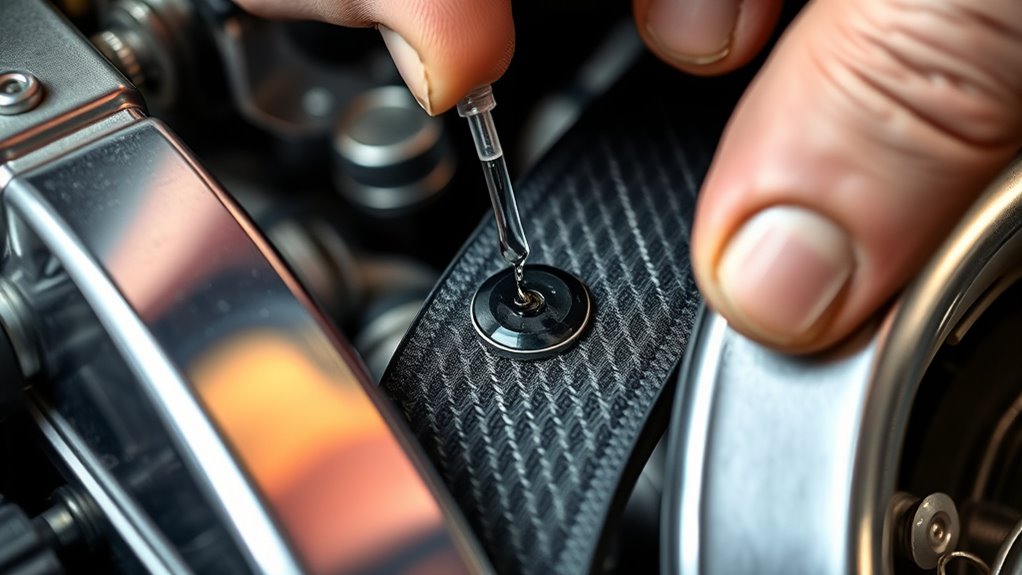

To quiet a squeaky belt, start by inspecting it for cracks, glazing, or fraying. If the belt looks good, check its tension; it should have about half to one inch of give when pressed. Adjust the tension manually or make sure the automatic tensioner is functioning properly. Proper alignment and prompt replacement of worn belts help prevent squeals. Want to learn more tips to keep your belt quiet and lasting longer? Keep going for detailed steps.
Key Takeaways
- Inspect the belt for cracks, glazing, or fraying, and replace if worn out.
- Check and adjust the belt tension to ensure it’s snug but not overly tight.
- Confirm the belt is properly aligned on pulleys to prevent misalignment squeals.
- Use belt dressing sparingly; often, proper tension and replacement solve squeaking.
- Regularly maintain and replace worn belts promptly to prevent future squealing.
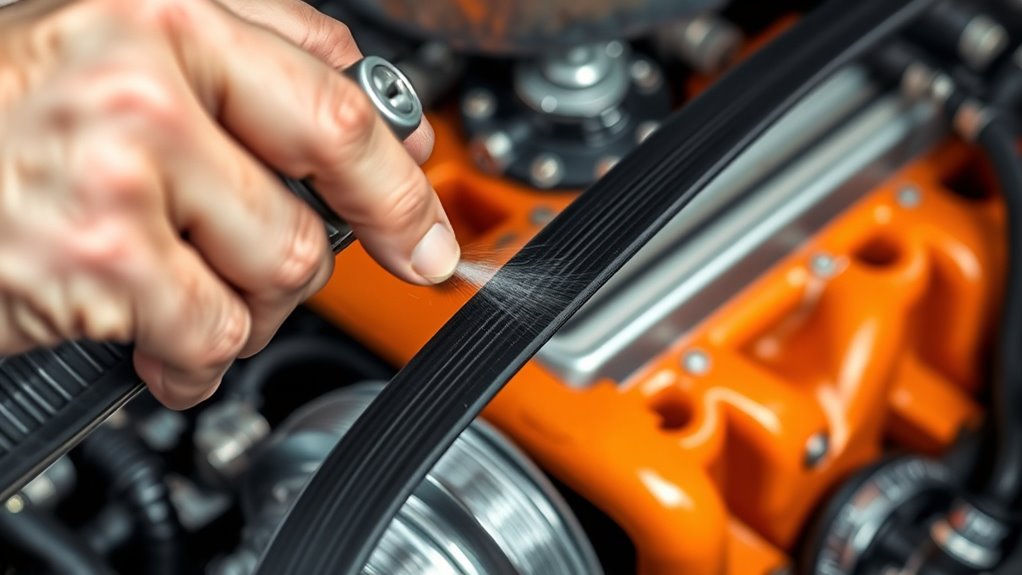
A squeaky belt can be both annoying and a sign that something isn’t right. When your vehicle’s belt starts squealing, it’s often a signal that it needs attention before it causes more serious issues. The good news is, fixing a squeaky belt usually involves straightforward steps like belt replacement or tension adjustment. Addressing the root cause early can save you money and prevent breakdowns down the line.
First, you want to determine if the belt is worn out or just loose. A worn belt might look cracked, glazed, or frayed, and it’s best to replace it rather than try to tighten it. If the belt looks healthy but squeals, it’s likely a tension issue. Belts need to be tight enough to grip pulleys without slipping but not so tight that they cause excessive wear on bearings or pulleys. To check the tension, press down on the belt midway between pulleys; it should have a slight give, about a half-inch to an inch of movement. If it feels too loose, it’s time for tension adjustment.
Check belt wear and tension; a healthy belt has slight give but should not be loose.
Adjusting tension depends on your vehicle’s make and model. Many modern cars have automatic tensioners that keep the belt tight, so you might only need to replace the belt if it’s worn. For vehicles with manual tensioners, you’ll need to loosen the mounting bolt and move the tensioner pulley to tighten or loosen the belt. Use a wrench to carefully apply pressure, then tighten the bolt once the belt feels snug but not overly tight. Make sure to double-check the tension after tightening to ensure it’s within the recommended specifications. Proper tension reduces squeaking and prolongs the life of the belt.
If adjusting the tension doesn’t stop the squeal, consider belt replacement. Remove the old belt carefully, noting the routing if you need to reinstall it or replace it with a new one. Fit the new belt around the pulleys, following the correct routing, then apply tension as needed. Always check your vehicle’s manual for specific instructions on belt replacement and tension settings. Once installed, start the engine and observe if the squeaking persists. If it does, recheck the tension and alignment. Sometimes, a misaligned pulley can cause squeals, so ensure everything is aligned properly.

USANOOKS Microfiber Cleaning Cloth Grey - 12 Pcs (12.5"x12.5") - High Performance - 1200 Washes, Ultra Absorbent Microfiber Towel Weave Grime & Liquid for Streak-Free Mirror Shine - Car Washing Cloth
- High Absorbency Microfiber: Locks in 8-10x its weight in liquids
- Durable 2.5mm Thickness: Resists lint, scratches, and shedding
- Long-Lasting Use: Over 1200 washes for extended durability
As an affiliate, we earn on qualifying purchases.
Frequently Asked Questions
How Often Should I Inspect My Belt for Wear?
You should inspect your belt for wear every 3 to 6 months, especially if it’s made of rubber or other flexible materials. Use inspection tools like a flashlight and mirror to check for cracks, fraying, or glazing. Regular inspections help catch issues early, preventing squeaks and belt failure. If you notice signs of wear, replace the belt promptly to keep your vehicle running smoothly and quietly.
Can a Squeaky Belt Cause Engine Damage?
A squeaky belt is like a warning siren for your engine. If the belt’s tension is too loose or the pulley alignment is off, it can cause extra strain on your engine parts, potentially leading to damage over time. Ignoring the squeak risks more costly repairs, so regularly check your belt tension and pulley alignment. Keeping these in check helps prevent engine damage and keeps everything running smoothly.
Are There Preventive Measures to Avoid Belt Squeal?
Yes, you can prevent belt squeal by regularly checking belt tension and ensuring pulley alignment. Keep your belt properly tensioned—neither too tight nor too loose—to reduce slipping and squeaking. Also, inspect pulleys for proper alignment; misaligned pulleys cause uneven wear and noise. Regular maintenance, including these checks, helps avoid squeals, extends belt life, and keeps your engine running smoothly without unnecessary noise or damage.
What Type of Belt Lubricant Is Safe to Use?
You should use a belt lubricant that’s specifically designed for automotive or machinery belts, ensuring it’s a safe product. Look for silicone-based or belt-specific lubricants, as they’re safe to use and won’t damage the belt material. Avoid petroleum-based products, which can degrade the belt over time. Always follow the manufacturer’s instructions, apply sparingly to prevent slippage, and test for squeal reduction before regular operation.
When Should I Replace a Belt Instead of Repairing It?
You should replace your belt when it shows significant signs of wear, cracks, or fraying, especially if it’s made from rubber or synthetic materials. Repairing might be enough for minor issues, but if the damage affects its integrity, replacement is wiser. Consider the replacement cost versus repair; if repairs become costly or ineffective, it’s better to invest in a new belt to avoid breakdowns and guarantee peak performance.

HOMEXCEL Microfiber Cleaning Cloth 12 Pack, 12.5 x 12.5 inch Microfiber Towels for Cars, Ultra Absorbent Washing Cloth, Lint Free Streak Free Cleaning Rags for Car, Kitchen, and Window (Grey)
- High Water Absorption: Excellent at absorbing dirt and liquids
- Gentle on Surfaces: Soft fabric prevents scratches and damage
- Fast Drying: Quickly absorbs water for streak-free drying
As an affiliate, we earn on qualifying purchases.
Conclusion
Now that you’ve learned the secret art of silencing squeaky belts, you’ll never have to suffer through that annoying noise again—unless, of course, you enjoy the symphony of squeals. Remember, a little maintenance goes a long way, and your ears will thank you (probably). So go ahead, show that squeaky belt who’s boss. After all, a quiet belt isn’t just maintenance; it’s a small victory in the battle against automotive chaos.

Witaxima Upgrade Car Seat Organizer Backseat with Storage Pockets, Multipurpose Car Organizer Hanging, Car Trash Bag Can,Premium PU Leather Garbage Can 2.14 Gallon Large Capacity, Black.
- Large 2.14 Gallon Capacity: Spacious car trash can with extra pockets
- Adjustable Strap for Fit: Customizable strap length up to 10.62 inches
- Multi-purpose Car Organizer: Hanging storage for backseat essentials
As an affiliate, we earn on qualifying purchases.