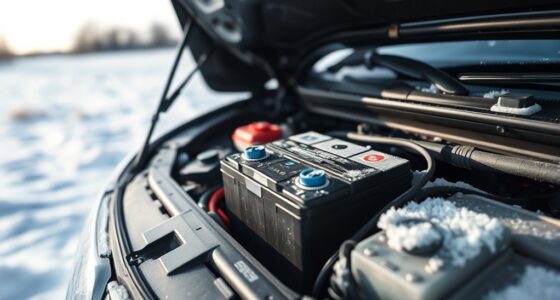
To check and replace your car’s air filter, open the hood and locate the filter housing, which is usually in a plastic box held with clips or screws. Carefully remove the filter and inspect its condition; if it’s dark, dirty, or clogged, it’s time for a new one. Clean or replace the filter, ensuring it fits snugly before sealing the housing. Keep your engine running smoothly and improve MPG by following these simple steps—more tips await you.
Key Takeaways
- Locate the air filter housing under the hood, typically near the engine, and open it using clips or screws.
- Remove the filter and inspect its condition; replace if it appears dirty, dark, or clogged.
- Check your owner’s manual for recommended replacement intervals, usually every 12,000-15,000 miles.
- Clean the housing and insert a new filter securely, ensuring a proper seal to prevent unfiltered air bypass.
- Regularly replacing the air filter improves engine performance, fuel efficiency, and prolongs engine lifespan.

Your car’s air filter plays a crucial role in maintaining engine performance and fuel efficiency, but many drivers overlook its importance. Regular air filter maintenance is essential to keep your vehicle running smoothly and to maximize miles per gallon. When the air filter becomes clogged with dirt, dust, or debris, it restricts airflow into the engine, which can lead to decreased performance and higher fuel consumption. That’s why checking and replacing your air filter at appropriate intervals is a simple yet effective way to keep your car running efficiently.
To check your air filter, start by opening the hood and locating the filter housing. Most vehicles have a box near the engine, usually held in place with clips or screws. Once you’ve accessed it, carefully remove the filter and examine its condition. A clean air filter should appear light-colored and free of dirt or debris. If it looks dark, clogged, or visibly dirty, it’s time for a replacement. Keep in mind that even if it appears somewhat clean, it’s a good idea to replace it if you’re approaching the recommended interval specified in your owner’s manual.
Replacing the air filter is straightforward, but it requires some attention to detail. Before installing the new filter, ensure that the housing is clean and free of any loose debris. Insert the new filter, making sure it fits snugly and properly seals the housing to prevent unfiltered air from bypassing the filter. Once secured, close the housing and double-check that everything is reassembled correctly. This simple task can have a significant impact on your engine’s overall performance. When the engine breathes easier due to a clean air filter, you’ll notice better acceleration, smoother idling, and improved fuel economy. Additionally, a well-maintained air filter supports optimal airflow, which is essential for efficient combustion and engine health.
You should consider checking your air filter every 12,000 to 15,000 miles, or more frequently if you drive in dusty or polluted environments. Regular air filter maintenance doesn’t just benefit engine performance; it also prolongs the lifespan of other engine components by preventing dirt and debris from circulating through your system. Replacing an old, dirty air filter is a cost-effective way to optimize engine function and fuel efficiency without the need for expensive repairs down the line. Taking a few minutes to inspect and swap out your air filter can save you money at the pump and help your vehicle perform at its best.
Frequently Asked Questions
How Often Should I Replace My Car’s Air Filter?
You should replace your car’s air filter roughly every 12,000 to 15,000 miles, but this varies based on your air filter lifespan and driving conditions. If you drive in dusty or polluted areas, consider more frequent replacements. Regularly checking your air filter helps you determine if it’s clogged or dirty, ensuring peak engine performance and fuel efficiency. Stick to the recommended replacement frequency for the best results.
Can a Dirty Air Filter Cause Engine Misfires?
A dirty air filter can definitely cause engine misfires by restricting airflow, leading to improper fuel mixture. When airflow restriction occurs, the engine struggles to breathe, which affects combustion and can cause misfires. This also impacts fuel efficiency, as the engine compensates for poor airflow by burning more fuel. Regularly checking and replacing your air filter guarantees peak airflow, preventing misfires and maintaining your vehicle’s efficiency.
Is It Better to Buy a OEM or Aftermarket Air Filter?
Choosing between OEM and aftermarket air filters depends on your priorities. OEM benefits include guaranteed fit, quality, and compatibility, ensuring your engine runs smoothly. However, aftermarket drawbacks can involve lower quality or poor fit, which might affect performance or fuel efficiency. If you want reliability and peace of mind, OEM is the better choice. But if you’re on a budget, some high-quality aftermarket options can work, just make sure they meet your car’s specifications.
Will Replacing the Air Filter Improve Acceleration?
Replacing your air filter can give your engine a breath of fresh air, boosting acceleration performance. When the air filter reaches the end of its lifespan, it chokes your engine’s airflow, making acceleration sluggish. By swapping it out, you clear the path for improved airflow, which helps your car respond quicker and run more efficiently. Regularly replacing the air filter ensures your vehicle maintains ideal acceleration and keeps performance smooth.
How Do I Know if My Air Filter Is the Correct Size?
You can determine if your air filter is the correct size by checking its dimensions and comparing them to your vehicle’s specifications. Look at the air filter compatibility listed in your owner’s manual or on the existing filter for the right measurements. If you’re unsure, measure the length, width, and height of your current filter and match those to the recommended air filter dimensions to guarantee proper fit and performance.
Conclusion
Keeping your car’s air filter in check is like giving your engine a gust of fresh air—simple, quick, and rewarding. When you replace it, you’re not just improving your fuel efficiency; you’re also preventing future engine problems. Think of it as swapping out a stuffy, smog-filled mask for a clear, crisp breeze. Small effort now can mean smoother rides ahead, reminding you that sometimes, the simplest fixes make the biggest difference.