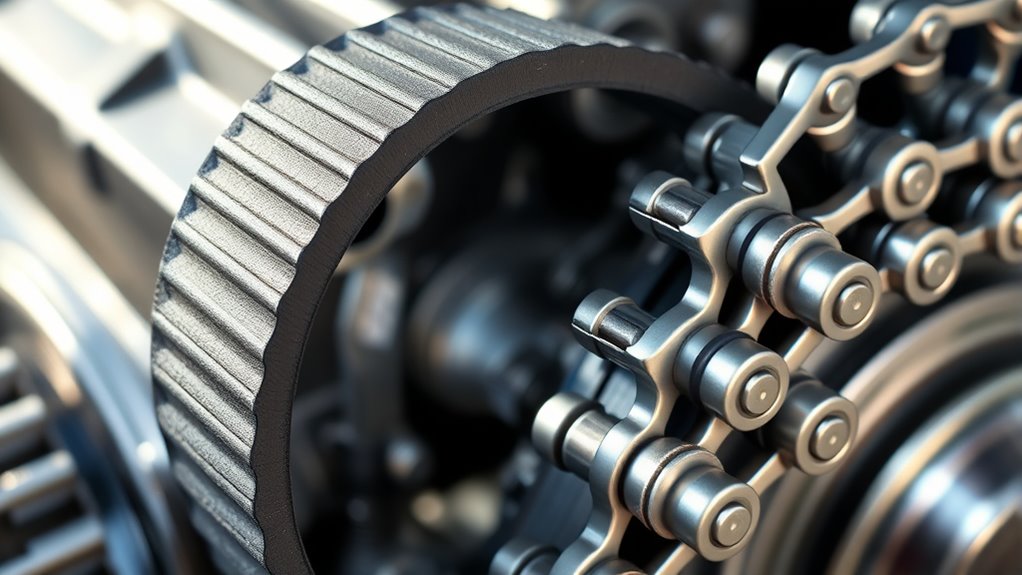

Timing belts are made of reinforced rubber and need replacement every 60,000 to 100,000 miles, while timing chains are metal and usually last the lifetime of your vehicle. Belts are cheaper initially but require more maintenance, whereas chains are more durable and cost more upfront but need less frequent attention. If you want to learn more about their differences, maintenance schedules, and what’s best for your engine, keep exploring further.

Get business pricing on garage and car supplies
- Business-only prices and quantity discounts
- Tax-exempt purchasing
- Multiple users, one account, clear invoices
Key Takeaways
- Timing belts are rubber and require replacement every 60,000–100,000 miles; timing chains are metal and typically last the vehicle’s lifetime.
- Belts are cheaper initially but need more frequent maintenance; chains cost more upfront but are more durable and require less frequent inspection.
- Replacement of a timing belt involves removing several engine components; chain replacement is more complex, involving engine disassembly.
- Timing chains generally last longer, but wear or stretching can lead to engine damage if not maintained properly.
- Proper maintenance choice impacts vehicle longevity, with belts needing scheduled replacements and chains benefiting from periodic inspections.
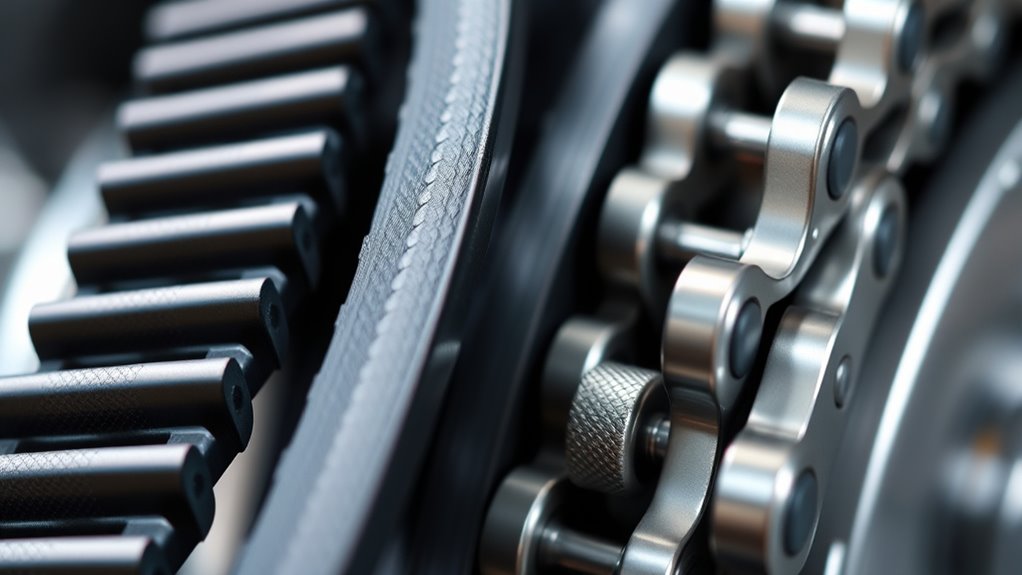
When it comes to maintaining your vehicle’s engine, understanding the difference between a timing belt and a timing chain is essential. These components synchronize the camshaft and crankshaft, ensuring your engine runs smoothly and efficiently. Knowing how they differ can help you make informed maintenance decisions and avoid costly repairs down the line.
Understanding your vehicle’s timing belt and chain is key to reliable engine performance and maintenance.
The primary difference lies in their construction and longevity. A timing belt is a reinforced rubber belt with teeth that connect to pulleys, while a timing chain resembles a motorcycle chain, made of metal links. Because of their materials, timing chains tend to last longer—often the lifetime of the vehicle—whereas timing belts usually require replacement around 60,000 to 100,000 miles. This difference profoundly impacts your maintenance schedule and cost implications. Timing belts are generally cheaper to replace initially, but they need to be replaced more frequently. Timing chains, on the other hand, have a higher upfront cost but often don’t need routine replacement. However, if a timing chain fails or stretches over time, the repair can be more expensive and complex. Additionally, high-quality materials used in modern chains can improve their durability and lifespan.
Replacement procedures for each also vary considerably. Replacing a timing belt typically involves removing numerous components like the serpentine belt, pulleys, and sometimes the water pump, to access the belt. It’s often a labor-intensive process, but it’s straightforward and well-documented in repair guides. Timing chain replacement, however, can be more complicated. Since the chain is located inside the engine, accessing it requires removing the engine’s front cover or even disassembling parts of the engine block. This makes the procedure more expensive and time-consuming. If a timing chain or its tensioner wears out prematurely, the potential for extensive engine damage increases, and repairs become more costly.
Maintenance intervals also differ. Timing belts usually come with recommended replacement intervals specified by the manufacturer, often between 60,000 and 100,000 miles. Chains generally require less frequent inspections, but if you notice unusual engine noises or performance issues, a professional inspection is wise. Regular maintenance and timely replacements are vital for both to prevent catastrophic engine damage, which can be profoundly more expensive than routine replacements.
As an affiliate, we earn on qualifying purchases.
Frequently Asked Questions
Can a Timing Belt or Chain Be Replaced With DIY Skills?
Yes, you can attempt a DIY replacement of a timing belt or chain if you have the right tools and mechanical skills. You’ll need basic tools like wrenches, screwdrivers, and possibly a torque wrench. Make sure to follow your vehicle’s manual closely, as proper timing alignment is essential. If you’re confident in your abilities and prepared for the task, a DIY replacement is doable, but don’t hesitate to seek professional help if unsure.
How Do Noise Levels Differ Between Timing Belts and Chains?
You’ll notice that timing chains generally produce lower noise levels than belts, thanks to their metal construction. The sound frequency of chains tends to be deeper and more constant, making them quieter during engine operation. In contrast, timing belts often generate higher-pitched sounds, especially if they’re worn or have slack. Overall, chains offer a smoother, quieter experience, while belts may produce more noticeable noise, particularly when nearing maintenance intervals.
Are There Specific Vehicle Models That Prefer One Over the Other?
Imagine you’re in the driver’s seat of a vintage car—certain models, like some BMWs and Honda Civics, tend to favor timing chains for durability and lower maintenance. Meanwhile, manufacturers often recommend timing belts for specific vehicles like some Subaru and Ford models due to cost and ease of replacement. Check your vehicle’s manual or manufacturer recommendations to choose the right option for your car’s model and your driving habits.
What Are the Signs of a Failing Timing Chain or Belt?
If your timing chain or belt is failing, you might notice unusual noises like rattling or squeaking, especially during startup or acceleration. During a visual inspection, look for signs of wear, cracks, or looseness. Keep an eye on mileage indicators—timing belts typically need replacement every 60,000 to 100,000 miles, while chains usually last longer but still require attention if you notice performance issues or engine misfires.
How Does Maintenance Cost Compare Between Belts and Chains?
If you own a car with a timing belt, you’ll likely spend more on maintenance over its lifespan compared to a chain. For example, a typical timing belt replacement costs $500 to $1,000, while a chain’s repair might be just $200 to $600. Chains generally have better longevity factors, meaning they don’t need replacing as often, which can save you money long-term.
As an affiliate, we earn on qualifying purchases.
Conclusion
Choosing between a timing belt and a timing chain depends on your vehicle and maintenance preferences. Did you know that timing chains typically last around 200,000 miles, whereas belts often need replacing every 60,000 to 100,000 miles? While chains are more durable and require less frequent attention, belts are quieter and lighter. Consider these differences to decide which suits your driving style best, ensuring your engine runs smoothly for miles to come.
As an affiliate, we earn on qualifying purchases.
As an affiliate, we earn on qualifying purchases.
Fall Picks
fall essentials
As an affiliate, we earn on qualifying purchases.