Upgrading from halogen to LED headlights is worth it because LEDs offer brighter, more consistent light with better color temperature, improving visibility and safety. They consume less energy, last over 25,000 hours, and resist damage better. While the initial cost is higher, you save money on replacements and maintenance over time. Plus, LEDs give your vehicle a sleek, modern look. Keep exploring further to discover how these benefits truly make a difference.

Get business pricing on garage and car supplies
- Business-only prices and quantity discounts
- Tax-exempt purchasing
- Multiple users, one account, clear invoices
Key Takeaways
- LED headlights offer brighter, more focused illumination with better visibility and reduced glare compared to halogens.
- They are more energy-efficient, leading to lower power consumption and potential vehicle savings over time.
- LEDs have a significantly longer lifespan, reducing maintenance and replacement costs.
- Although initial installation may be more complex and costly, long-term durability makes LEDs a cost-effective upgrade.
- Upgrading to LEDs enhances vehicle aesthetics with a modern look and customizable lighting options.
LED headlight conversion kit for cars
As an affiliate, we earn on qualifying purchases.
As an affiliate, we earn on qualifying purchases.
Comparing Brightness and Light Quality

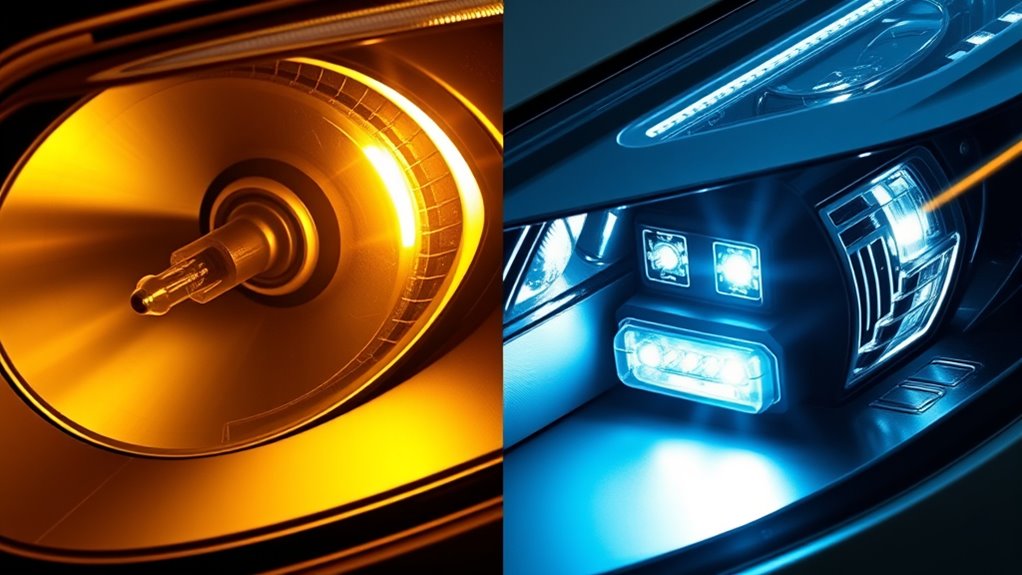
When it comes to brightness and light quality, LED headlights generally outperform halogen bulbs. LEDs produce a higher and more consistent brightness, making your nighttime driving safer. The color temperature of LEDs tends to be cooler, closer to daylight, which improves visibility and reduces eye strain. Halogens, on the other hand, emit a warmer, yellowish light that can limit your peripheral vision. The beam pattern of LED headlights is typically more precise, providing a focused, even spread that reduces glare for oncoming drivers. This sharper beam pattern enhances overall clarity on the road. In contrast, halogen bulbs often have a less defined beam pattern, which can cause scattered light and diminished visibility. Additionally, LEDs are more energy-efficient compared to halogens, which can contribute to better vehicle performance and lower energy consumption. For those considering an upgrade, the installation process for LED headlights can often be straightforward, especially with modern vehicle models. Overall, LEDs offer superior brightness and light quality, making them a clear upgrade.
best halogen to LED headlight upgrade
As an affiliate, we earn on qualifying purchases.
As an affiliate, we earn on qualifying purchases.
Energy Efficiency and Power Consumption
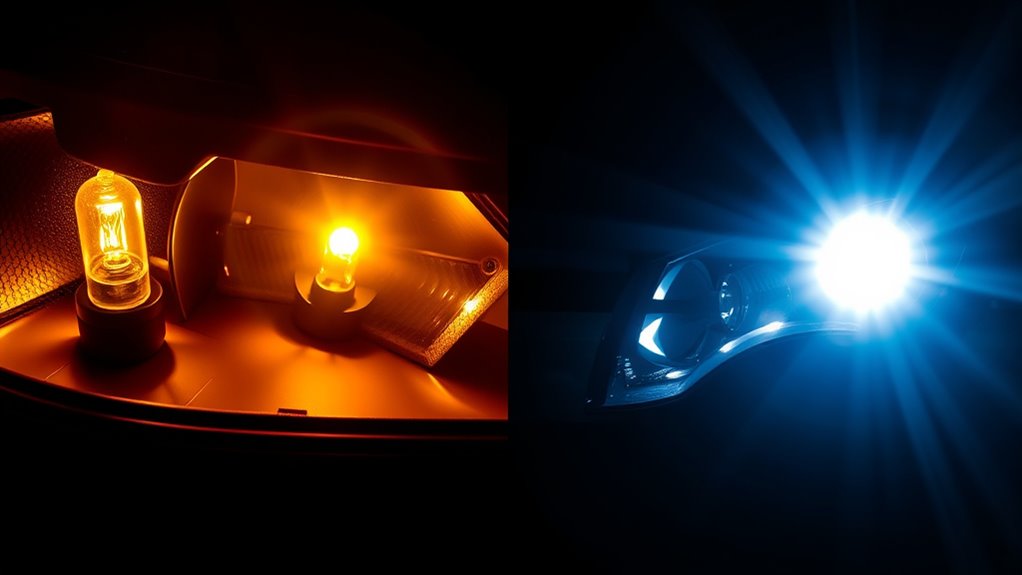
LED headlights are more energy-efficient than halogen bulbs, consuming considerably less power while delivering comparable or better brightness. This efficiency means you’ll use less energy, which can extend your vehicle’s battery life and reduce fuel consumption. Additionally, LEDs offer a higher color temperature, producing a whiter, more natural light that improves visibility. Unlike halogen bulbs, whose beam pattern can be uneven, LEDs provide a more precise and consistent beam pattern, ensuring better illumination without wasting energy on unnecessary areas. This focus enhances safety by reducing glare for other drivers and providing clearer road visibility. Overall, LED headlights’ combination of lower power consumption and superior light quality makes them a smart upgrade for better efficiency and safer driving. Furthermore, the design technology behind LED headlights contributes to their durability and longer lifespan compared to traditional halogen bulbs. The manufacturing process of LEDs also allows for more innovative and customizable lighting solutions, further benefiting drivers. The energy efficiency of LED headlights not only impacts energy savings but also influences overall vehicle performance and environmental impact. Additionally, improved thermal management in LED systems helps maintain optimal performance and longevity. Modern advancements in LED chip technology continue to enhance their efficiency and brightness, making them an even more attractive upgrade option.
As an affiliate, we earn on qualifying purchases.
Lifespan and Durability
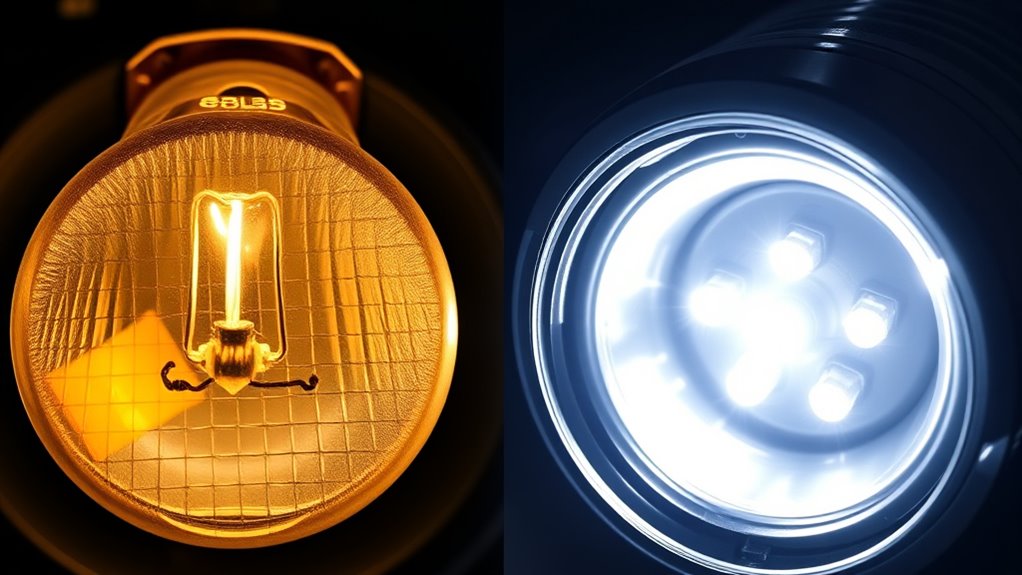
When considering lifespan and durability, you’ll notice that LED headlights typically last much longer and resist damage better than halogen bulbs. They require less maintenance because they wear down more slowly and are more resistant to vibrations and impacts. This increased resilience makes LEDs ideal for rough driving conditions and extended use. This means you’ll spend less time replacing bulbs and dealing with repairs over the years. Additionally, LED headlights often have tested recommendations for longevity and performance, making them a more reliable choice. Moreover, their robust construction contributes to their durability in various driving conditions. According to reliability standards, LED technology is designed to withstand harsh environments, further enhancing their durability. Their advanced cooling systems also help prevent overheating, which can extend their lifespan even further.
Bulb Longevity and Wear
Halogen and LED headlights differ considerably in their longevity and durability. Your bulb lifespan heavily influences how often you’ll need replacements. With halogens, expect around 500 to 1,000 hours of use before replacement, mainly affected by wear and tear. LEDs, on the other hand, last much longer—often over 25,000 hours—thanks to their solid-state design. Here’s what impacts their durability:
- Frequent switching can reduce halogen lifespan more quickly.
- Heat buildup accelerates wear and tear in halogen bulbs.
- LEDs maintain consistent brightness longer, resisting wear.
- Environmental factors like moisture can impact both, but LEDs tend to handle it better.
- Free Floating design principles can also influence the overall performance and longevity of lighting systems.
- Additionally, the lifecycle of LED bulbs is less affected by typical use conditions, making them a more reliable option over time. Moreover, advancements in technology continue to enhance their robustness and lifespan.
Understanding these differences helps you assess which bulb type offers better longevity for your needs.
Resistance to Damage
Despite their differences in design, halogen and LED headlights vary considerably in their resistance to damage and overall durability. LEDs generally offer higher impact resistance because they lack fragile filaments, making them less prone to shattering upon impact. Their solid-state construction also enhances crack durability, reducing the risk of damage from vibrations or minor collisions. LEDs are less affected by temperature fluctuations that can cause cracks or wear over time. Furthermore, navigation and mapping technologies in LED headlights help optimize their placement and protection, contributing to their robustness. Additionally, materials used in housings improve their resilience against environmental factors such as moisture and debris. Understanding the manufacturing standards and quality control processes can further ensure the longevity of LED headlights. Proper assembly techniques also play a significant role in enhancing their durability and resistance to damage. Overall, LEDs tend to be more robust and durable, making them a better choice if you’re looking for headlights that withstand rough conditions and last longer without damage.
Maintenance Requirements
LED headlights generally require less maintenance over their lifespan compared to halogen bulbs, thanks to their increased durability. You’ll find that they last longer and are less prone to damage, reducing the need for frequent bulb replacements. To keep your LEDs performing at their best, consider these maintenance tips:
- Check for any signs of dimming or flickering regularly.
- Replace bulbs only when necessary to avoid unnecessary costs.
- Clean the lenses gently to remove dirt and debris that can diminish brightness.
- Polish the lenses periodically to prevent fogging and maintain clarity.
- Proper installation of body jewelry ensures the longevity and safety of your piercings.
- Understanding lighting technology can help you better appreciate the advantages of LED systems and ensure proper care.
- Additionally, keeping the air purifier in good condition can extend the lifespan of internal components and ensure optimal performance.
- Familiarizing yourself with arcade game history can deepen your appreciation for classic gaming icons and their evolution, similar to how LED technology has advanced over time. A thorough understanding of product lifespan can also help plan for timely upgrades and replacements.
As an affiliate, we earn on qualifying purchases.
Cost and Installation Expenses

While halogen headlights typically cost less upfront, they often require more frequent replacements and maintenance, which can add to the overall expense. Installing halogen bulbs is usually straightforward and inexpensive, but you’ll need to replace them more often, increasing long-term costs. LED headlights, on the other hand, tend to have a higher initial price due to advanced technology and installation complexity. However, they last longer and might save you money over time. When choosing bulbs, consider bulb color, as some options may be more costly but offer better visibility. Also, reputable brands often provide higher-quality, durable bulbs, reducing the need for early replacements. Regular use of Glycolic Acid can improve skin clarity and durability, similar to how LED headlights offer longer-lasting performance. Overall, while LED upgrades require a bigger initial investment, their durability and performance could make them more cost-effective in the long run.
Aesthetic Appeal and Modern Features

When it comes to enhancing your vehicle’s look and feel, the aesthetic appeal of headlights plays a crucial role. Upgrading to LED headlights offers a sleek, modern appearance that instantly boosts your car’s style. They provide a sharper, brighter light that makes your vehicle stand out. Plus, LED headlights often feature modern features like customizable colors, adaptive lighting, and seamless integration with smart car systems. Consider these benefits:
Upgrade to LED headlights for a sleek, modern look with brighter, customizable illumination and smart technology integration.
- A more aggressive and contemporary look
- Brighter, more focused illumination
- Compatibility with advanced lighting technology
- Customizable options to match your personal style
Making the Decision: Are Upgrades Worth It?
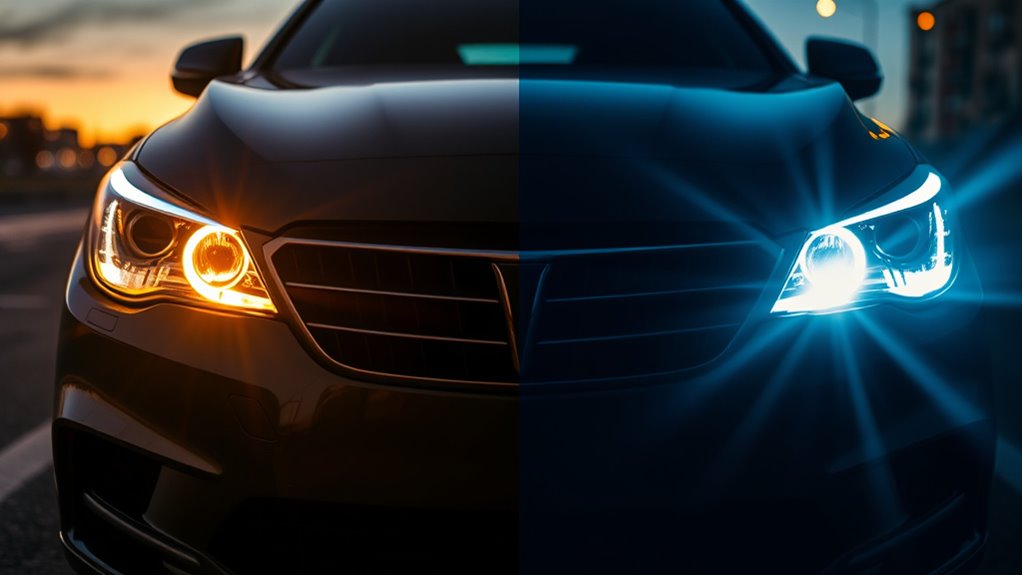
Deciding if upgrading your headlights is worth it depends on weighing the costs against the benefits. You’ll want to contemplate installation complexity and whether the performance improvements justify the investment. Let’s explore how these factors influence your decision.
Cost-Benefit Analysis
Upgrading to halogen or LED headlights involves weighing the initial costs against the long-term benefits. A clear cost comparison helps determine if the upgrade makes financial sense for you. First, consider the market availability: LEDs tend to be more widely available but often cost more upfront. Second, evaluate bulb longevity; LEDs typically last longer, reducing replacement costs over time. Third, look at energy efficiency; LEDs consume less power, which can improve fuel economy or battery life. Fourth, factor in the initial investment—LEDs usually come with higher prices but might save you money in the long run. Overall, if you’re seeking durability and efficiency, the higher upfront cost of LEDs could be justified by their long-term benefits.
Installation Complexity
Installing new halogen or LED headlights can vary in complexity, depending on your vehicle’s make and model. You may find that wiring complexity differs, especially with LEDs that sometimes need additional components like ballast or adapters. Halogen headlights generally have straightforward wiring and mounting options, making installation easier for DIY enthusiasts. In contrast, LED headlights often require more precise wiring connections and compatibility checks to ensure proper fitment. Mounting options can also differ; some LED kits come with adjustable brackets or adapters, while others may need custom modifications. If you’re not comfortable with electrical work or vehicle modifications, professional installation might be the best choice. Overall, LED upgrades tend to be more involved but offer long-term benefits if properly installed.
Performance Improvements
When it comes to performance, LED headlights typically deliver brighter, more focused illumination than halogen bulbs, enhancing visibility on the road. Their superior color temperature produces a whiter, more natural light, improving contrast and clarity. Plus, the beam pattern is more precise, reducing glare for oncoming drivers and illuminating more of the road ahead. Consider these points:
- Higher brightness and improved clarity at night.
- Consistent color temperature that mimics daylight.
- Sharper, more defined beam pattern for better focus.
- Reduced eye strain during long drives.
Frequently Asked Questions
Are Halogen or LED Headlights Better for Off-Road Driving?
For off-road driving, LED headlights are better because they offer superior off-road visibility, helping you see obstacles and uneven terrain clearly. They also tend to have greater headlight durability, standing up to rough conditions and vibrations better than halogens. While halogen lights are cheaper, LEDs last longer and perform more reliably in challenging environments, making them a smarter choice if you frequently drive off-road.
Do LED Headlights Require Special Wiring or Modifications?
LED headlights typically don’t require special wiring or modifications during installation, but you should check your vehicle’s wiring requirements and the LED kit’s instructions. The installation process is usually straightforward, often just plugging in the new LEDs to your existing sockets. However, some vehicles may need a wiring harness or adapters to guarantee proper power and prevent flickering. Always follow the manufacturer’s guidelines for a safe, hassle-free upgrade.
How Do Headlights Affect Vehicle Resale Value?
Upgrading to modern headlights can boost your vehicle’s resale value by up to 10%, thanks to improved aesthetic appeal and headlight durability. Buyers favor vehicles with sleek, bright headlights that look newer and are less prone to damage. LED headlights, in particular, enhance your car’s appearance and longevity, making it more attractive in the used market. So, investing in quality headlights can pay off when you’re ready to sell.
Are There Legal Restrictions on Upgrading to LED Headlights?
Yes, there are legal restrictions on upgrading to LED headlights. You need to follow headlight regulations in your area, which specify the brightness, color, and beam pattern. Many regions require headlights to meet specific standards to ensure safety and prevent glare for other drivers. Before upgrading, check your local laws to guarantee your new LED headlights are street-legal, and consider professional installation to avoid compliance issues.
Can LED Headlights Improve Visibility in Foggy or Rainy Conditions?
Yes, LED headlights can improve visibility in foggy or rainy conditions. They offer a better beam pattern that cuts through moisture and reduces glare, making it easier to see the road and other vehicles. LED lights also typically have better glare reduction, which minimizes strain on other drivers’ eyes. This results in safer driving during poor weather, helping you spot hazards sooner and respond more effectively.
Conclusion
Think of your headlights as the guiding stars on your journey. Upgrading from halogen to LED is like swapping a flickering candle for a bright, steady lighthouse beam — clearer, more efficient, and lasting longer. While the initial investment might seem steep, the enhanced visibility and modern features make every drive safer and more enjoyable. Ultimately, choosing to upgrade lights is like lighting your path with the brightest star — a decision that shines in every mile ahead.
Fall Picks
fall essentials
As an affiliate, we earn on qualifying purchases.