Projector headlights use a lens to focus the light into a sharp, precise beam with less glare, providing better night visibility. Reflector headlights rely on a curved mirror behind the bulb to spread light outward, often scattering it and causing less focus. Projectors offer a sleeker look and improved performance, while reflectors are simpler and more affordable. To discover which type suits your needs, explore their features and benefits further.

Get garage and car supplies delivered free — and shop member deals
- Fast, free delivery on millions of items
- Access to Prime Big Deal Days deals on October 6–7
- Prime Video, Amazon Music and more included
Key Takeaways
- Projector headlights use lenses for precise, focused beams, while reflector headlights rely on curved reflectors to scatter light broadly.
- Projectors produce sharper, more intense illumination with less glare, enhancing nighttime visibility; reflectors have wider but less focused light patterns.
- Projector headlights offer a modern aesthetic and better beam control, whereas reflector headlights are simpler, more affordable, and easier to maintain.
- Reflector headlights tend to scatter light more, causing potential glare; projectors provide a precise cutoff line for safer, clearer long-distance viewing.
- Choice depends on factors like budget, desired aesthetics, ease of maintenance, and safety benefits of improved light focus.
As an affiliate, we earn on qualifying purchases.
How Do Projector and Reflector Headlights Work?
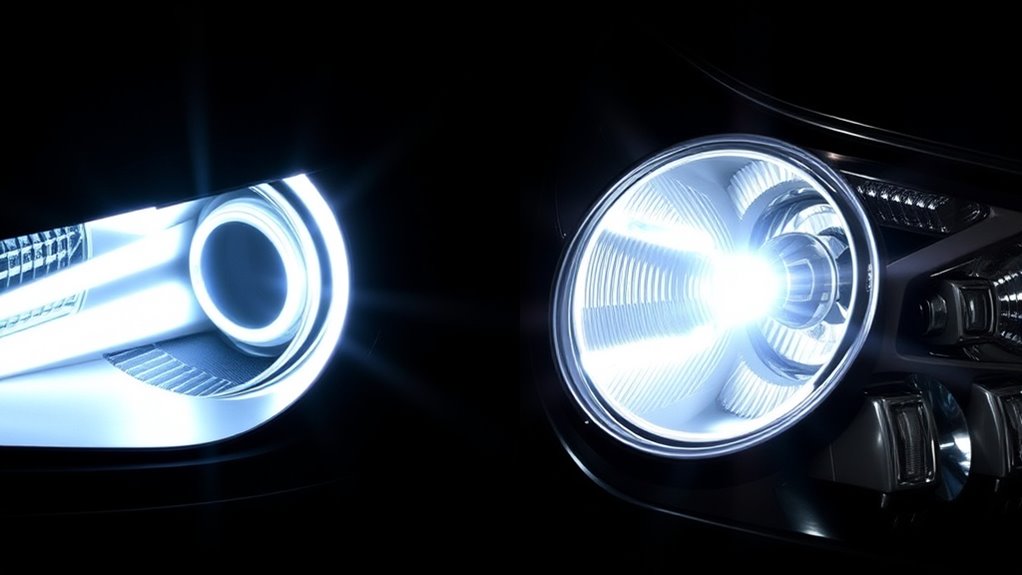
Projector and reflector headlights achieve their illumination differently, relying on distinct optical systems to focus and direct light. In projector headlights, a lens concentrates the beam, producing a more precise and intense light output. This design enhances beam intensity, allowing you to see farther and clearer. Additionally, the focused beam helps reduce glare for oncoming drivers, improving safety. Reflector headlights use a reflective surface behind the bulb to spread light outward. While effective, they typically produce a broader, less directed beam, which can cause more glare. The focused nature of projector headlights offers better control over light distribution, making nighttime driving safer and more comfortable. Understanding these differences helps you choose headlights that optimize visibility and reduce glare for everyone on the road. Moreover, light distribution plays a crucial role in overall road safety and driver comfort. Proper beam pattern management is essential to prevent glare and ensure the best possible illumination.
As an affiliate, we earn on qualifying purchases.
Design and Structure of Projector Headlights
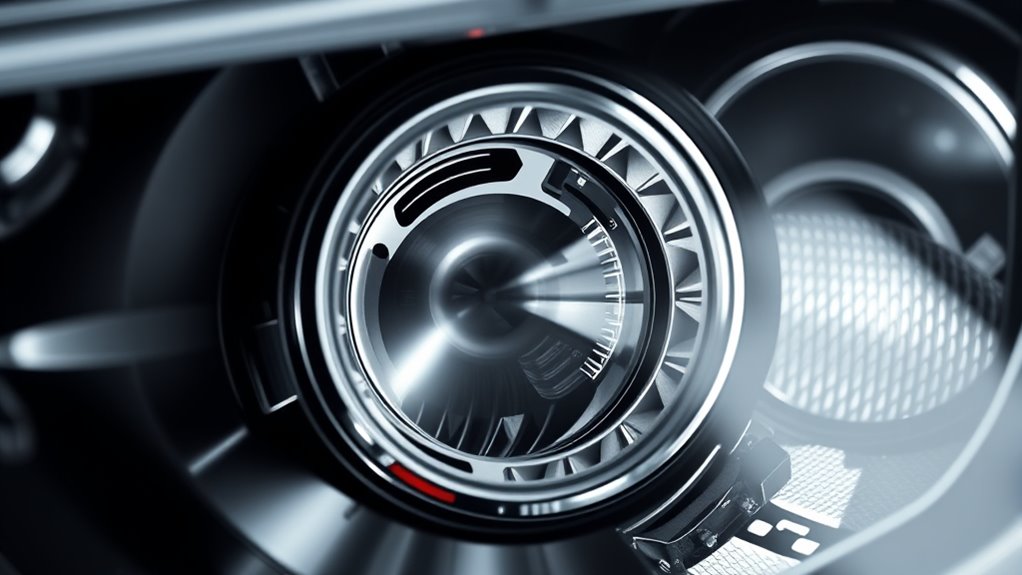
Understanding the design and structure of projector headlights starts with examining their lens shape and material, which focus the light precisely. You should also consider how internal components are arranged to optimize light output and durability. Ultimately, the light distribution mechanism determines how effectively the beam is projected onto the road, affecting visibility and safety.
Lens Shape and Material
The shape and material of the lens play a crucial role in how projector headlights focus and direct light. The lens shape impacts the beam pattern, with options like convex or aspheric designs that enhance focus. The material type influences durability and clarity, typically using polycarbonate or glass for exemplary performance. Consider these aspects:
- Lens shape: Determines the beam focus and spread.
- Material type: Affects durability, clarity, and resistance to heat.
- Optical quality: Higher quality materials improve light transmission.
- Design flexibility: Shapes allow customization for specific beam patterns.
- Additionally, proper ventilation considerations can help maintain lens integrity and prevent heat-related issues, ensuring consistent performance over time.
Choosing the right lens shape and material type ensures effective illumination, improving safety and visibility on the road. Your selection directly impacts how well your headlights perform in different driving conditions.
Internal Components Design
The internal components of projector headlights are meticulously designed to optimize light output and beam control. You’ll notice that they use specific bulb types, such as HID or LED, which are selected for their brightness and efficiency. These bulbs are integrated into precise manufacturing processes that ensure proper alignment and durability. The projector housing contains a compact, high-quality reflector and a sharply defined cutoff shield, which work together to shape the beam. During manufacturing, tight tolerances are maintained to guarantee consistent performance and to prevent light scatter. The design emphasizes heat management, so components are often equipped with cooling mechanisms. Additionally, advances in component manufacturing have contributed to improved longevity and performance of projector headlights. Overall, every element is crafted to deliver a focused, intense light pattern, making projector headlights both effective and reliable.
Light Distribution Mechanism
Light distribution in projector headlights relies on a precisely engineered combination of optical elements that focus and direct the beam. This setup ensures a sharp, well-defined light pattern with ideal beam focus and enhanced light intensity. To achieve this, you should understand these key components:
- Lens System: Concentrates light into a narrow, controlled beam, improving beam focus.
- Reflector Design: Directs light efficiently toward the lens, maximizing light intensity.
- Cutoff Shield: Creates a sharp cutoff line, preventing glare and ensuring better light distribution.
- Adjustable Components: Allow fine-tuning of beam focus and direction for ideal illumination.
This sophisticated design results in a more precise light distribution compared to reflector headlights, offering better visibility and safety.
LED projector headlight conversion kit
As an affiliate, we earn on qualifying purchases.
As an affiliate, we earn on qualifying purchases.
Design and Structure of Reflector Headlights
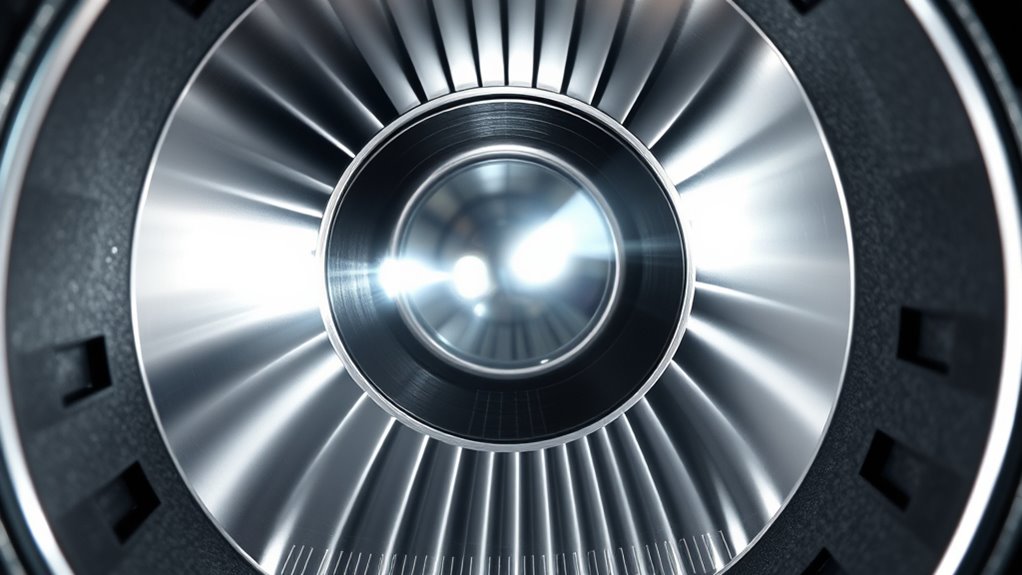
Reflector headlights are designed with a curved, reflective surface that directs light forward efficiently. The reflective bowl or parabola shape helps focus the light beam, making it effective for illuminating the road. This design is simple, which contributes to lower manufacturing costs, making them a popular choice for many vehicles. The structure also offers a classic aesthetic appeal, giving a clean and familiar look to your vehicle’s front end. Because of their straightforward construction, reflector headlights are easier to produce and maintain. Their shape and materials are optimized for cost-effectiveness while providing reliable illumination. Overall, the design balances functional performance with an aesthetic that complements various vehicle styles, making them a practical and attractive lighting option. Additionally, understanding headlight safety can help ensure your vehicle’s lighting meets safety standards and enhances driving visibility. Moreover, the design simplicity of reflector headlights facilitates easier repairs and replacements, reducing maintenance costs.
As an affiliate, we earn on qualifying purchases.
Light Output and Beam Pattern Differences
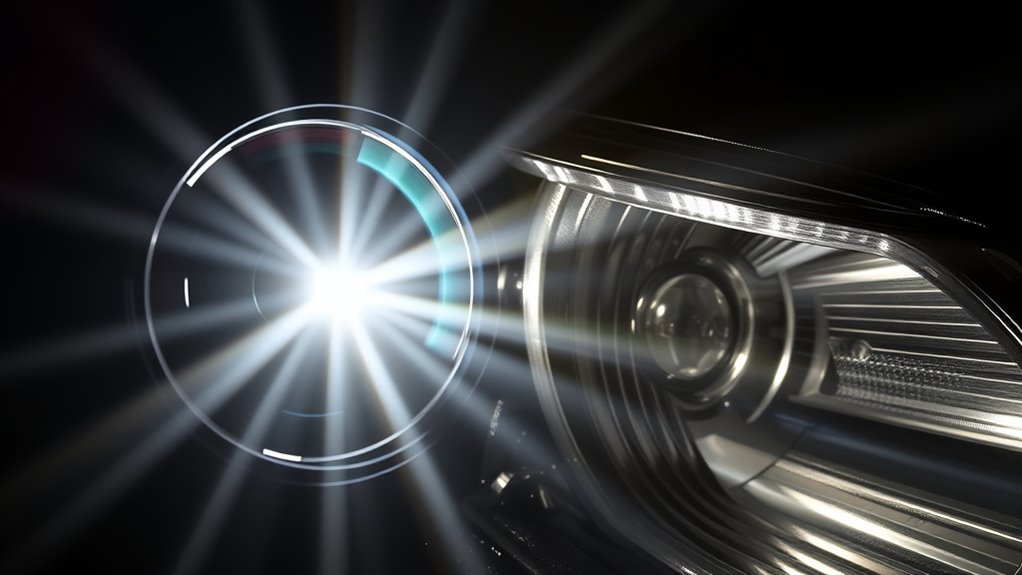
While the simple design of reflector headlights makes them cost-effective and easy to produce, their light output and beam pattern have notable limitations. You may notice that the beam pattern tends to be scattered, reducing focus and clarity. This scattering can cause difficulty in judging distances and obstacles on the road. Additionally, the light output often isn’t as bright or evenly distributed as other types. Specifically:
- The beam pattern can be inconsistent, causing glare for other drivers.
- Light output tends to be lower, limiting visibility at longer distances.
- The reflector design scatters light, reducing sharpness.
- Overall, the beam pattern lacks the precision needed for ideal road illumination.
- In some cases, the design can lead to free floating issues, where the light disperses unpredictably, further impairing visibility. This can be exacerbated by the light dispersion caused by the reflector’s reflective surfaces, which can diminish overall effectiveness. Proper beam control is essential for maximizing visibility and safety during night driving, especially when considering the light distribution patterns of different headlight types.
Brightness and Visibility Considerations

Your choice between projector and reflector headlights impacts how well you see at night, especially regarding light focus and spread. Projector headlights typically offer a sharper beam, improving clarity and range, while reflector headlights may spread light more broadly. Considering these factors helps guarantee you get the best visibility and safety during nighttime drives. Additionally, understanding different design styles can help you choose headlights that complement your vehicle’s aesthetic. Recognizing lighting technology differences can also influence your decision by highlighting how each type performs under various conditions.
Light Focus and Spread
The way headlights focus and spread light considerably impacts your visibility on the road. With projector headlights, the beam intensity is more precise, providing a sharper cutoff that reduces glare for other drivers. Reflector headlights, on the other hand, disperse light more broadly, enhancing overall spread but sometimes sacrificing sharpness. Consider these factors:
- Beam Focus: Projectors concentrate light for clearer, more defined illumination.
- Light Spread: Reflectors cast light over a wider area, improving peripheral visibility.
- Brightness Consistency: Projector headlights often maintain a more uniform beam, enhancing aesthetic appeal.
- Visibility Balance: Reflectors offer a softer spread that can be less harsh but less focused.
- Understanding beam pattern can help in appreciating how different headlight types contribute to your driving experience. Recognizing beam pattern differences can also influence your choice for specific driving conditions. Additionally, the light source technology used in each type affects their performance and durability, making it an important factor to consider when upgrading headlights.
Nighttime Clarity and Range
Projector headlights generally offer brighter, more focused beams that improve nighttime visibility, allowing you to see farther and with greater detail. Their precise beam focus minimizes light scatter, reducing glare for oncoming drivers and enhancing overall clarity. This targeted light dispersion means you get a sharper, more intense illumination directly ahead, which extends your range and improves your ability to detect obstacles early. Reflector headlights, by contrast, tend to spread light more broadly, which can dilute brightness and limit visibility at longer distances. With projector headlights, you benefit from better light concentration, resulting in a clearer, more defined view of the road at night. This improved beam focus guarantees you have ideal nighttime clarity and a safer driving experience. Additionally, performance ratings for projector headlights are often higher due to their superior light output and focus.
Advantages of Projector Headlights
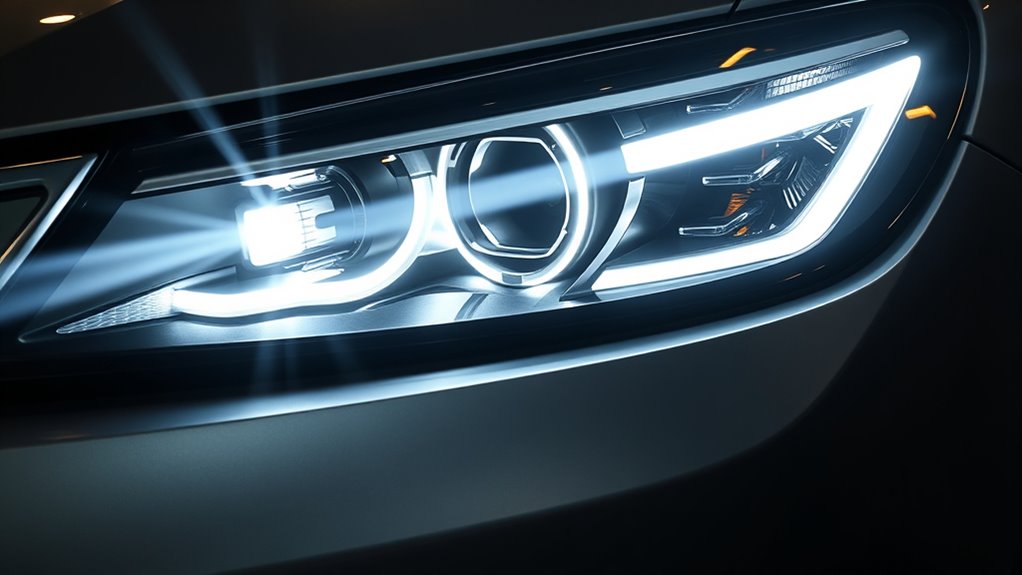
One key advantage of projector headlights is their ability to produce a more focused and intense beam of light, which improves visibility on the road. This enhanced beam focus means your headlights illuminate farther and more accurately, reducing glare for other drivers. Additionally, projector headlights offer a sleek aesthetic appeal that can upgrade your vehicle’s look. Here are some benefits:
- Better beam focus for clearer, longer-range visibility
- Reduced glare, making night driving safer for everyone
- Clean, modern appearance that enhances your vehicle’s style
- Consistent light distribution, minimizing dark spots
Advantages of Reflector Headlights
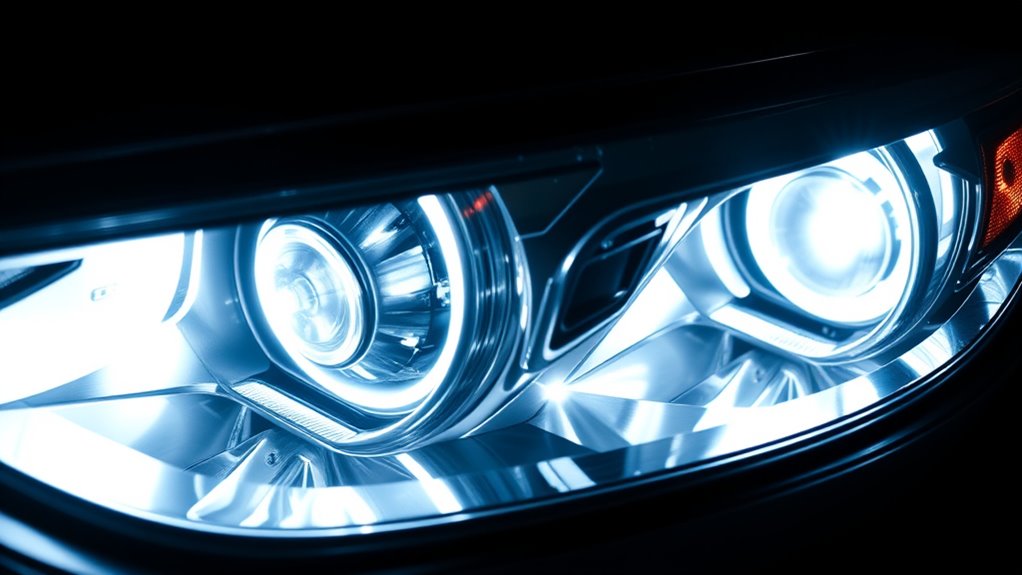
Reflector headlights offer a straightforward lighting solution that has been standard on many vehicles for years. One key advantage is their simple design, which makes beam alignment easier to adjust and maintain. This guarantees you get a consistent and reliable light pattern on the road. Additionally, reflector headlights tend to be more energy-efficient because they use traditional halogen bulbs that require less power compared to some projector systems. Their design also makes them more affordable and easier to replace, saving you money over time. While they may not provide the same sharp cutoff as projector headlights, their proven reliability and straightforward setup make them a practical choice for everyday driving. Overall, reflector headlights deliver dependable illumination with benefits in beam alignment and energy efficiency.
Common Applications and Vehicle Compatibility
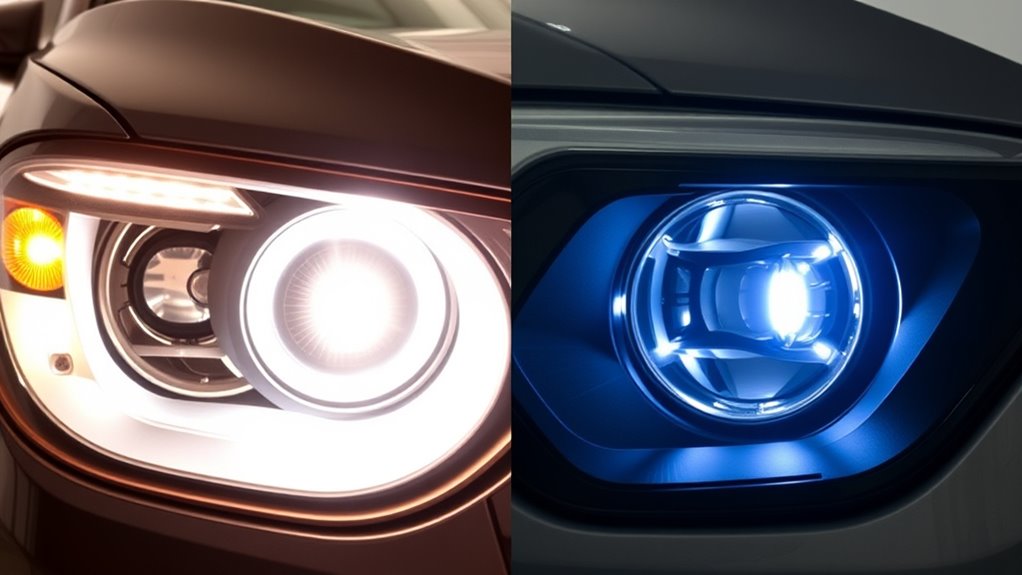
Because of their simplicity and proven durability, reflector headlights are commonly found on a wide range of vehicles, especially older models and budget-friendly options. They suit vehicles used for daily driving and basic road safety needs. If you’re considering vehicle modification, reflector headlights are easy to install and compatible with many car types. Here are some typical applications:
- Economical daily drivers – reliable and cost-effective.
- Older vehicles – maintain original lighting systems.
- Budget-friendly options – minimal installation costs.
- Fleet vehicles – consistent performance across models.
While they may lack advanced features, reflector headlights still effectively support road safety and vehicle functionality. Their broad compatibility makes them a practical choice for many drivers seeking dependable lighting. Additionally, their widespread use in various vehicle types underscores their versatility and durability, and understanding headlight types can help in making informed vehicle upgrades. Recognizing the security and reliability of these lighting options can also influence maintenance and replacement decisions. Furthermore, the ease of installation makes them particularly suitable for a wide range of vehicle owners. Moreover, technological advancements continue to enhance the performance and safety features of traditional reflector headlights.
Factors to Consider When Choosing Between Them

When choosing between projector and reflector headlights, it’s essential to evaluate factors like brightness, beam pattern, and installation complexity to guarantee you select the best option for your vehicle and driving needs. Consider the aesthetic appeal, as projector headlights often provide a modern, sleek look that enhances your vehicle’s style, while reflector headlights tend to be more traditional. Manufacturing costs also play a role; reflectors generally cost less upfront, making them a budget-friendly choice. However, projectors may offer better light focus and visibility, which can improve safety. Think about how much you value appearance versus cost, and how easy it is to install each type. Balancing these factors will help you make an informed decision that suits your preferences and driving conditions. Additionally, understanding the different lighting technologies can help you choose the most effective headlight type for your needs.
Frequently Asked Questions
Are Projector Headlights More Energy-Efficient Than Reflector Headlights?
Yes, projector headlights are generally more energy-efficient than reflector headlights. They use advanced optics to focus light more precisely, reducing energy consumption while providing brighter and more effective lighting. This improved lighting efficiency means you get better visibility without draining your vehicle’s power. So, if you’re looking to save energy and enhance your headlights’ performance, projector headlights are a smarter choice for better lighting efficiency.
Do Projector Headlights Require Special Bulbs Compared to Reflectors?
You’ll find that projector headlights often require special bulbs compared to reflector headlights due to their unique lens design. This means you need to check bulb compatibility before upgrading. Installation requirements can also be more complex, sometimes needing additional adjustments or adapters. Make sure to verify the correct bulb type and follow the manufacturer’s instructions to guarantee proper fit and peak performance.
How Do Projector and Reflector Headlights Perform in Adverse Weather Conditions?
Think of your headlights as a lighthouse guiding your way through fog and rain. Projector headlights often deliver sharper beam focus, improving visibility and fog penetration, especially in bad weather. Reflector headlights may scatter light more, reducing clarity in adverse conditions. For safer driving, especially in fog or heavy rain, projector headlights generally perform better by providing a more focused and penetrating beam, helping you see and be seen more clearly.
Can Projector Headlights Be Retrofitted Into Older Vehicle Models?
Yes, you can retrofit projector headlights into older vehicle models, but you should consider retrofit compatibility and installation challenges. Not all vehicles are designed for these headlights, so modifications might be necessary. You’ll need to confirm the mounting points fit and that wiring is compatible. It’s best to consult a professional to handle the installation, preventing issues like improper alignment or electrical problems, ensuring your upgrade is safe and effective.
What Maintenance Differences Exist Between Projector and Reflector Headlights?
Think of your headlights as trusted guides on your journey. For projector headlights, you’ll need to handle delicate lens cleaning carefully and replace bulbs more frequently due to their complex design. Reflector headlights, on the other hand, are simpler—easier to clean and maintain, with less frequent bulb replacements. Keep both clean and functioning well, and they’ll continue to light your way smoothly, like faithful companions on every drive.
Conclusion
Choosing between projector and reflector headlights depends on your needs. Projectors offer a sharper, more focused beam, improving visibility and reducing glare, while reflectors are simpler and more affordable. Did you know that about 60% of new cars now come equipped with projector headlights? This trend highlights their growing popularity for better nighttime driving. Consider your driving conditions and preferences to make the right choice for safer, clearer road visibility.
Fall Picks
fall essentials
As an affiliate, we earn on qualifying purchases.