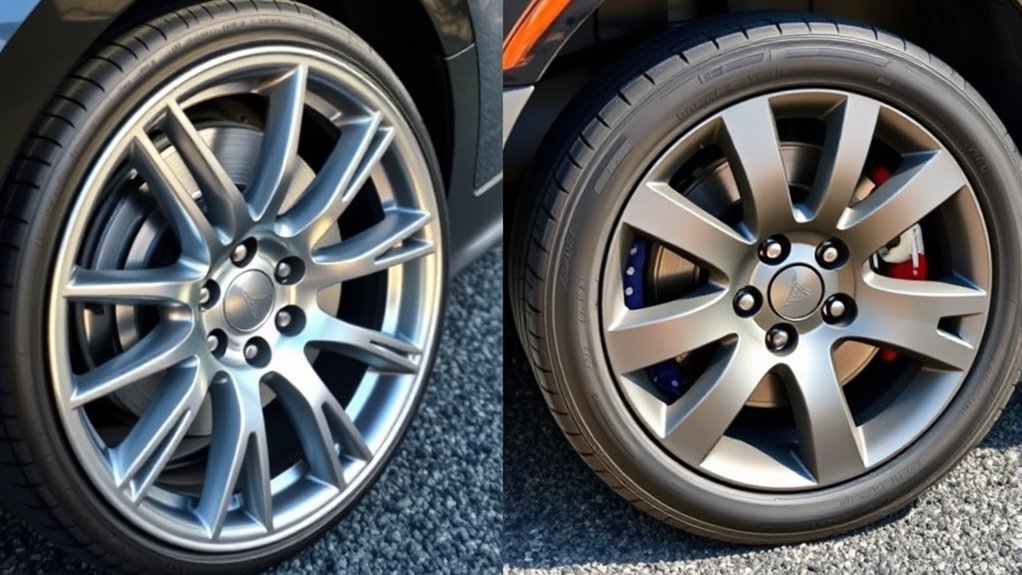

Choosing between alloy and steel wheels depends on what you value most. Alloy wheels are lighter, improve handling, and look more stylish, making them ideal for performance and aesthetics. Steel wheels are tougher, cheaper, and better for harsh conditions or off-road use. If you want a balance of style and performance, alloy might suit you better; for durability and affordability, steel could be the way to go. To understand which is best for your needs, explore further.

Get business pricing on garage and car supplies
- Business-only prices and quantity discounts
- Tax-exempt purchasing
- Multiple users, one account, clear invoices
Key Takeaways
- Alloy wheels are lighter, improving vehicle handling, acceleration, and braking performance compared to heavier steel wheels.
- Steel wheels are more durable and impact-resistant, making them suitable for rough terrains and harsh driving conditions.
- Alloy wheels offer superior corrosion resistance and aesthetic customization options, enhancing vehicle appearance and longevity.
- Steel wheels are generally more affordable, easier to repair, and better for budget-conscious buyers or rugged environments.
- The choice depends on your driving needs: performance and style favor alloy wheels, while durability and cost-efficiency favor steel wheels.
Material Composition and Construction
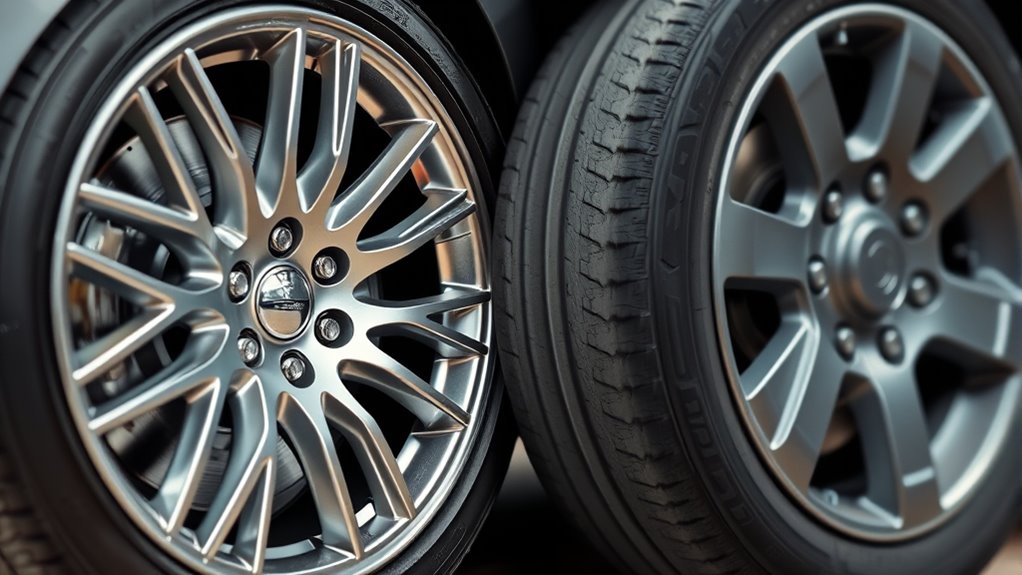
When comparing alloy and steel wheels, understanding their material composition and construction is essential. Alloy wheels are made from aluminum or magnesium alloys, making them lightweight and resistant to corrosion. Their construction often involves casting or forging, which enhances strength and allows for intricate designs. A significant advantage of alloy wheels is their ability to dissipate heat efficiently, which can improve brake performance during demanding driving conditions. Steel wheels, on the other hand, are crafted from pressed steel, making them heavier but durable and easier to repair. The material durability of steel wheels ensures they withstand harsh environments effectively. The wheel material in steel wheels provides robustness, especially in rough conditions. While alloy wheels prioritize aesthetics and reduced weight, steel wheels focus on strength and affordability. Additionally, understanding the 16PF traits can assist in selecting wheels that match your driving personality and preferences. Recognizing the importance of material composition helps in making informed choices based on your vehicle’s requirements and your driving habits.
Weight and Performance

The weight of your wheels directly affects how your vehicle handles and performs on the road. Lighter wheels can improve acceleration, braking, and cornering, while heavier ones may slow you down and cause more wear on components. Understanding the impact of weight helps you choose wheels that enhance your driving experience and durability. Additionally, selecting materials like alloy or steel can influence weight distribution and overall vehicle performance, making it essential to consider material composition when choosing wheels. The weight reduction achieved with certain alloys can also contribute to better fuel efficiency and a more responsive driving feel. Moreover, considering online tools can assist in comparing the weight and specifications of different wheel options effectively. Being aware of ear wax odor and other sensory indicators can also help in maintaining vehicle health and safety.
Weight Impact on Handling
Choosing lighter wheels can substantially enhance your vehicle’s handling by reducing unsprung weight, which allows for quicker response and better control during turns and acceleration. Alloy wheels are typically lighter than steel, so they improve agility and steering precision. This weight difference can make a noticeable difference, especially if you enjoy spirited driving or frequent cornering. Plus, lighter wheels often boost your car’s aesthetic appeal, giving it a sportier look. When selecting wheels, consider brand reputation, as trusted manufacturers ensure quality and consistent weight. Lighter wheels also decrease strain on suspension components, contributing to a smoother ride. Additionally, traditional cooking techniques like using high-quality materials and proper maintenance can influence the durability and performance of your wheels. Incorporating quality manufacturing standards can further optimize weight and strength, ensuring your wheels perform reliably over time. Recognizing the role of proper installation can further prevent issues related to weight distribution and ensure optimal handling. Moreover, understanding how material composition affects wheel performance can help you choose the best option for your driving needs. Applying advanced manufacturing processes such as forging can also produce lighter, more durable wheels, enhancing overall vehicle performance.
Performance and Durability
Lighter alloy wheels generally enhance your vehicle’s performance by reducing unsprung weight, which allows for quicker acceleration, sharper handling, and improved braking response. They also tend to offer better wheel aesthetics, giving your car a sleek, modern look. Thanks to advanced manufacturing techniques, alloy wheels are crafted for strength and durability while remaining lightweight. This makes them more resistant to bending and cracking under stress, ensuring longevity and reliability. Steel wheels, while often more durable against impacts, tend to be heavier and less refined in manufacturing, which can affect overall performance and appearance. Ultimately, alloy wheels provide a good balance of performance and durability, making them a popular choice for drivers seeking both style and functional benefits.
Strength and Durability

While alloy wheels are often praised for their aesthetic appeal, they also deliver impressive strength and durability. Their advanced manufacturing processes and materials make them a reliable choice for demanding driving conditions. Consider these points:
- Alloy wheels resist corrosion better, extending their lifespan.
- They typically handle impact better, reducing crack risk.
- The brand reputation of top manufacturers ensures quality and consistency.
- Although lighter, alloy wheels maintain structural integrity under stress.
- Additionally, alloy wheels often incorporate innovative materials and design techniques that enhance their overall resilience and longevity.
- Their manufacturing methods often involve precise engineering that optimizes both strength and weight, contributing to their durability. Incorporating traditional Indigenous practices into manufacturing can also promote sustainable and culturally respectful production processes, further supporting their long-term durability.
- With ongoing advancements in market analysis tools, manufacturers can better tailor their products to meet evolving durability standards. Furthermore, ongoing research into material science continues to push the boundaries of alloy wheel durability and performance.
While steel wheels are known for their toughness, alloy wheels strike a balance between style and durability. Their strength is often sufficient for everyday driving, and their brand reputation adds a layer of trust. Overall, alloy wheels offer a compelling mix of durability and aesthetic appeal.
Appearance and Customization Options
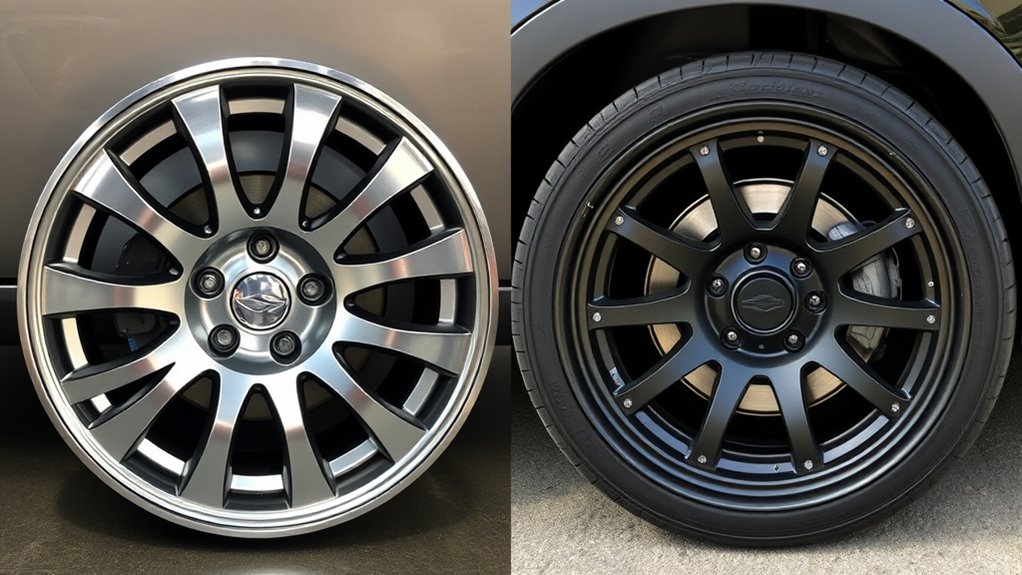
Alloy wheels are renowned for their striking appearance and extensive customization options, making them a popular choice for car enthusiasts. Their aesthetic appeal stands out, as they often feature sleek designs and intricate details that enhance your vehicle’s look. You can choose from a wide range of color options, allowing you to personalize your car’s style to match your preferences. Whether you prefer a classic silver finish or bold, custom colors, alloy wheels offer versatility that steel wheels can’t match. This ability to tailor the appearance helps your car stand out on the road, giving it a unique and attractive look. With alloy wheels, you can easily upgrade your vehicle’s aesthetic appeal without sacrificing functionality. Additionally, alloy wheels often incorporate lightweight construction, which can improve overall vehicle performance and fuel efficiency. The aesthetic appeal of alloy wheels is a significant factor that influences many drivers’ choices when selecting new wheels, especially those looking to make a statement. Moreover, the customization options available with alloy wheels enable car owners to express their individual style more effectively. Furthermore, alloy wheels can be engineered to enhance strength and durability, ensuring they withstand various driving conditions better than some alternatives.
Cost and Budget Considerations
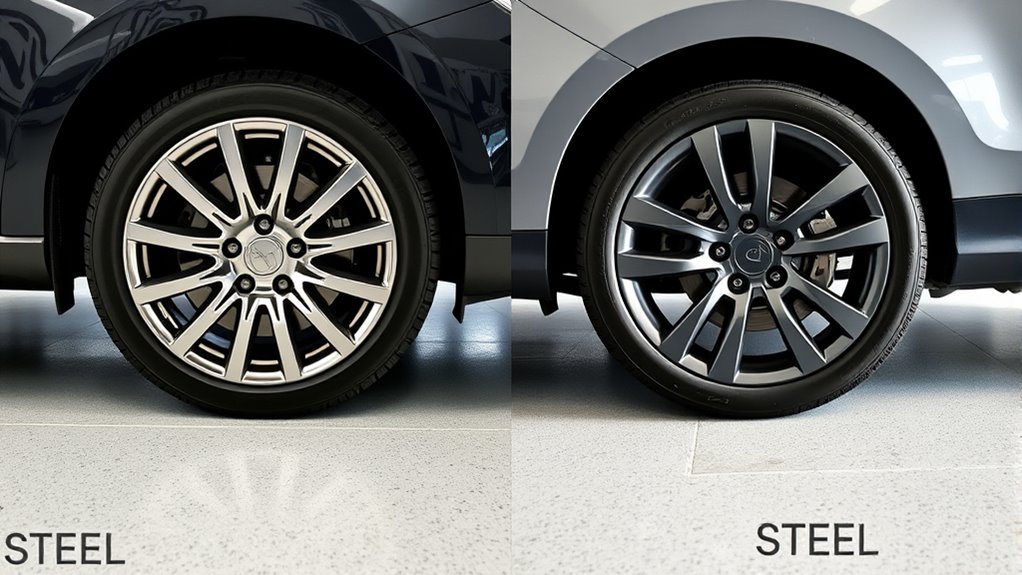
When comparing alloy and steel wheels, your initial concern might be the purchase price, as steel wheels are typically more budget-friendly. However, you should also consider long-term maintenance costs, which can vary substantially between the two options. Luckily, there are affordable choices in both categories to fit different budgets without sacrificing quality. Additionally, understanding material properties can help you make a more informed decision based on durability and performance. For example, alloy wheels often offer better corrosion resistance, which can reduce maintenance expenses over time. Moreover, some cost-effective options are designed to balance affordability with durability, making them suitable for various driving needs.
Purchase Price Differences
Steel wheels generally cost less upfront than alloy wheels, making them an attractive choice for budget-conscious buyers. The initial purchase price is a key factor if you’re prioritizing affordability. Keep in mind, however, that the higher aesthetic appeal of alloy wheels often comes with a higher price tag. When comparing options, consider these points:
- Alloy wheels typically have a higher purchase price due to their design and material quality.
- Steel wheels are often more budget-friendly but may lack the visual appeal of alloys.
- Brand reputation can influence cost; reputable brands might charge more for better quality.
- Your budget will determine whether you prioritize lower initial costs or aesthetic appeal, which often correlates with higher prices.
Understanding these differences helps you make an informed decision aligned with your financial plan.
Long-term Maintenance Costs
While the initial purchase price influences your decision, it’s equally important to contemplate the long-term maintenance costs associated with each wheel type. Alloy wheels often require wheel refurbishment over time, especially if they get scratched or curb-rashed, which can add to your expenses. Alloy wheel repairs tend to be more costly than steel wheel fixes due to their intricate design and materials. Steel wheels are generally more durable and easier to repair, reducing ongoing costs. However, they may need repainting or rust treatment if corroded. Keep in mind that alloy wheels, while initially more expensive to maintain, can preserve their appearance longer with proper care. Ultimately, consider how often you’ll need repairs and the associated costs when weighing your options.
Budget-Friendly Options
Choosing the right wheels often comes down to budget, as initial costs can vary considerably. If you’re looking for budget-friendly options, consider these points:
- Steel wheels are generally cheaper upfront, making them ideal if you want to save money.
- Alloy wheels may cost more initially but often offer better tire compatibility and a lighter weight.
- Steel wheels tend to require less frequent wheel cleaning because dirt and grime are less noticeable.
- For maintenance, alloy wheels might need more careful cleaning to prevent corrosion but can improve overall vehicle appearance without breaking the bank.
Your choice should balance upfront costs with long-term maintenance needs, ensuring you pick wheels that fit your budget and support easy wheel cleaning.
Resistance to Corrosion and Weather Effects
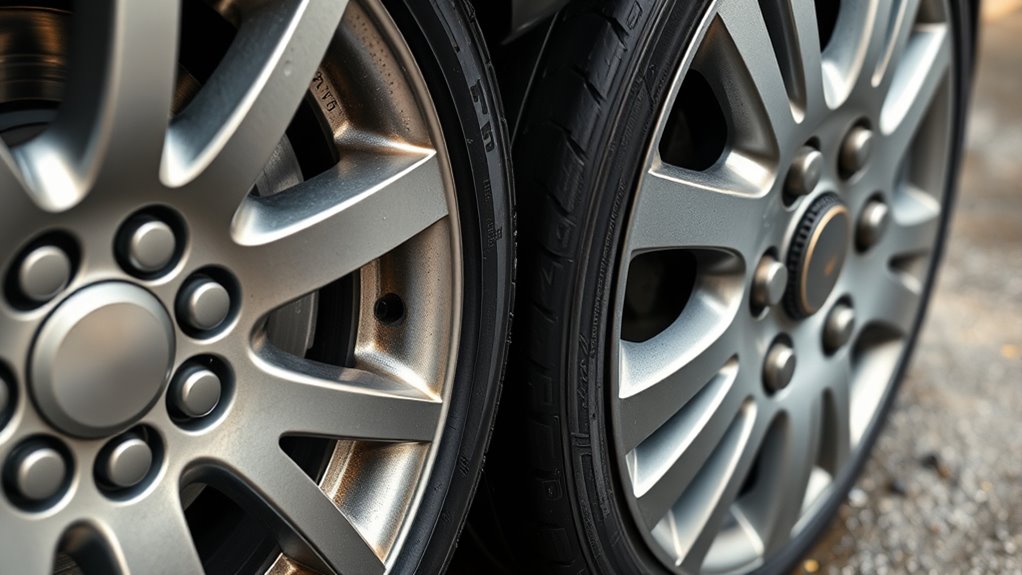
When it comes to resisting corrosion and weather effects, alloy wheels generally outperform steel wheels thanks to their composition and protective finishes. They offer better oxidation resistance and weather durability, making them ideal for harsh climates. Steel wheels tend to rust faster when exposed to moisture and salt, which can lead to deterioration over time. Alloy wheels, often coated with clear finishes, resist corrosion more effectively and maintain their appearance longer.
| Feature | Alloy Wheels | Steel Wheels |
|---|---|---|
| Oxidation Resistance | High | Low |
| Weather Durability | Better | Less durable |
| Corrosion Resistance | Superior | Prone to rust |
| Finish Options | Multiple, protective coatings | Limited, prone to rusting |
| Longevity | Longer-lasting | Shorter lifespan |
Impact on Fuel Efficiency and Handling
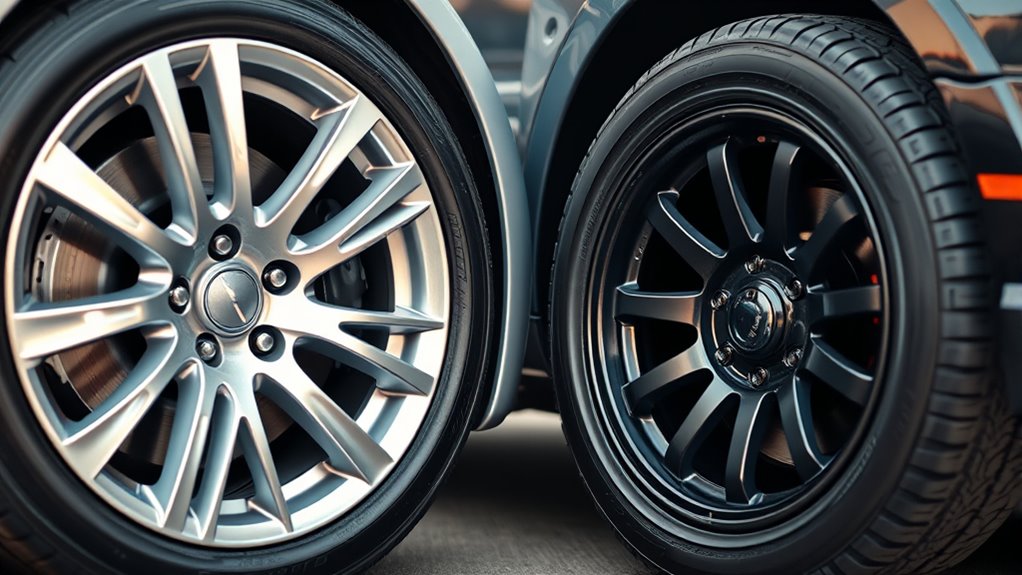
The type of wheels you choose can considerably influence your vehicle’s fuel efficiency and handling. Alloy wheels typically are lighter, which reduces the vehicle’s weight and improves acceleration, braking, and cornering. This enhances handling and can slightly boost fuel efficiency. Steel wheels, being heavier, may decrease these aspects but are more durable in rough conditions. Consider these points:
Choosing lightweight alloy wheels can improve your vehicle’s handling and fuel efficiency.
- Alloy wheels’ aesthetic appeal often attracts attention and can elevate your car’s look.
- Manufacturing processes for alloys allow for complex designs, contributing to better aerodynamics.
- Lighter wheels reduce rotational mass, improving fuel consumption.
- Heavier steel wheels may increase fuel use but offer better robustness for challenging terrains.
Choosing the right wheel depends on your driving style and priorities for handling and efficiency.
Maintenance and Longevity
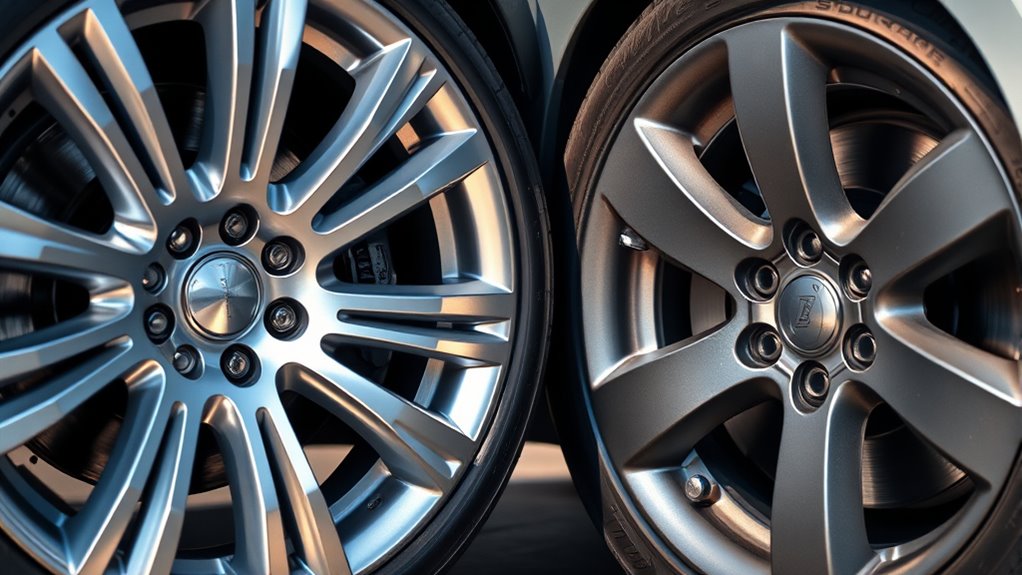
Maintaining alloy wheels requires regular cleaning to prevent brake dust and road grime from corroding the finish, which can lead to discoloration and structural weakening over time. Proper upkeep helps preserve their appearance and extends their lifespan. You should also check tire compatibility regularly to ensure your wheels fit correctly and avoid uneven wear. Wheel balancing is essential for alloy wheels, as imbalances can cause vibrations, uneven tire wear, and faster deterioration. Steel wheels are generally more durable but can rust if not properly maintained, especially in harsh climates. Regular inspections for damage or corrosion, regardless of wheel type, are crucial for longevity. By staying attentive to these maintenance practices, you maximize your wheels’ durability and performance.
Ideal Use Cases and Recommendations

Choosing between alloy and steel wheels depends largely on your driving needs and environmental conditions. For everyday commuting, steel wheels are ideal due to their durability and cost-effectiveness. If you prioritize aesthetic appeal, alloy wheels enhance your vehicle’s look and are lighter, improving handling. Consider these recommendations:
- Use alloy wheels if you want a stylish appearance and better tire compatibility for performance driving.
- Opt for steel wheels in harsh environments, like snow or off-road, where durability and resistance to impacts matter most.
- Choose alloy wheels for lighter weight, which can boost acceleration and fuel efficiency.
- Select steel wheels if budget and longevity are your top concerns, especially in rough conditions.
Matching your needs with these factors ensures the right choice for your vehicle.
Frequently Asked Questions
Which Type of Wheel Is More Environmentally Friendly to Produce?
Steel wheels are more environmentally friendly to produce because they involve simpler material sourcing and recycling processes. Steel is widely recycled, reducing the need for new raw materials and energy consumption. Alloy wheels, on the other hand, require more complex manufacturing and sourcing of materials like aluminum, which has a higher environmental impact during extraction and processing. So, if you’re eco-conscious, steel wheels are the better choice for minimizing environmental impact.
Are Alloy Wheels More Prone to Theft Than Steel Wheels?
Imagine a thief eyeing your car, drawn to shiny alloy wheels that catch the light. Yes, alloy wheels are generally more prone to theft than steel wheels because they’re more attractive and easier to steal. To prevent theft, you should invest in security measures like lug nut locks and alarm systems. These theft prevention tactics can help protect your valuable wheels and give you peace of mind.
How Do Alloy and Steel Wheels Affect Ride Comfort?
Alloy wheels generally improve your ride comfort because they’re lighter, which reduces tire ride vibrations and enhances suspension performance. Steel wheels tend to be heavier, leading to a bumpier ride and more stress on your suspension system. When choosing between the two, consider how important ride comfort is to you—if a smoother experience matters, alloy wheels are the better option for better tire ride and suspension performance.
Can Alloy Wheels Be Repaired if Damaged?
Yes, alloy wheels can be repaired if damaged. When you experience alloy wheel damage, wheel repair specialists assess the severity of the damage, whether it’s a crack, bend, or curb rash. They often use techniques like filling, welding, or reshaping to restore the wheel’s integrity and appearance. Keep in mind, not all damage is repairable, so it’s best to consult an expert promptly to avoid further issues.
Which Wheels Are Better for Off-Road Driving Conditions?
For off-road driving, steel wheels are better because they offer superior durability in mud and rough terrain. They provide better off-road traction, helping you maintain control on uneven surfaces. Steel wheels are tougher and less prone to cracking or breaking under harsh conditions. While alloy wheels look great and are lighter, they aren’t as durable in mud or rocky trails, making steel wheels the smarter choice for off-road adventures.
Conclusion
Choosing between alloy and steel wheels depends on your driving style and priorities. Picture cruising down the open road, wheels gleaming under the sun—your choice shapes that moment. Alloy wheels add a touch of elegance and sparkle, perfect for style-conscious drivers, while steel wheels offer rugged durability for tough conditions. Whichever you pick, understanding their differences helps you make a smarter decision, ensuring your car’s wheels support your journey with confidence and flair.
Fall Picks
fall essentials
As an affiliate, we earn on qualifying purchases.