
TL;DR
Volvo has released a software update for the EX60 EV that allows the vehicle to detect deer approaching from around corners. This new feature aims to improve safety in rural and wooded areas. The update is confirmed, but the extent of its real-world effectiveness remains under evaluation.
Volvo has announced a new software update for its EX60 electric SUV that enables the vehicle to detect deer approaching from around corners. This development represents a significant step in automotive safety technology, aiming to reduce collisions with wildlife in rural areas. The update is now being rolled out to existing EX60 models, with Volvo stating that it leverages advanced sensor fusion and machine learning algorithms to identify wildlife at greater distances and around obstacles.
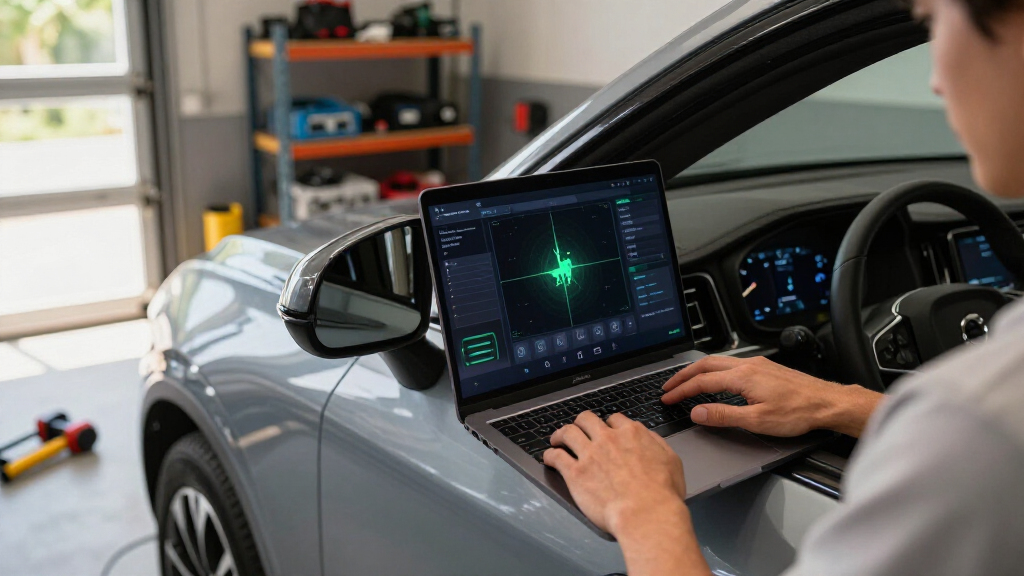
The new feature uses a combination of radar, lidar, and camera sensors integrated into the EX60’s driver assistance system. According to Volvo, the update allows the vehicle to recognize the presence of deer or similar animals approaching from blind spots or around corners, where traditional sensors may not have a direct line of sight. Volvo spokesperson Jane Miller explained, “This technology enhances the vehicle’s ability to ‘see’ beyond the direct view, helping drivers react earlier and avoid potential collisions.” The update is available via a over-the-air (OTA) software download, making it accessible to current owners without requiring a visit to service centers.
While Volvo confirms the update’s deployment, the company emphasizes that the system is designed to assist, not replace, attentive driving. The feature activates alerts and, in some cases, automatic braking if a deer is detected in the vehicle’s path. The technology is initially being tested in select regions with high wildlife activity, such as parts of Scandinavia and North America, before a broader rollout.
Implications for Wildlife and Road Safety
This development could significantly reduce wildlife-vehicle collisions, which often result in injury, death, and property damage. According to the Insurance Institute for Highway Safety, deer collisions alone cause hundreds of thousands of accidents annually in North America, with substantial human and animal casualties. The ability for vehicles to detect animals around corners addresses a known blind spot, potentially saving lives and reducing insurance costs. For Volvo, this innovation positions the company as a leader in integrating wildlife detection into consumer vehicles, setting a new standard for safety in electric SUVs.
As an affiliate, we earn on qualifying purchases.
Previous Wildlife Detection Technologies in Vehicles
Many automakers have introduced systems to detect large animals, primarily using radar and cameras for frontal or side detection. However, these systems often struggle with blind spots and obstacles such as trees or hills that block the line of sight. Volvo’s new update builds on its existing driver assistance systems, which include collision avoidance and pedestrian detection, by incorporating advanced sensor fusion and machine learning to interpret environmental cues more effectively. The concept of ‘seeing around corners’ is part of a broader trend toward predictive safety features that anticipate hazards before they become visible to the driver.
Volvo has previously announced similar safety features in its high-end models, but this is the first time such technology is being rolled out specifically for the EX60 EV, reflecting the company’s push toward smarter, safer electric vehicles. The development aligns with industry efforts to improve autonomous driving capabilities and reduce accident rates involving wildlife and other road hazards.
“”This technology enhances the vehicle’s ability to ‘see’ beyond the direct view, helping drivers react earlier and avoid potential collisions.””
— Jane Miller, Volvo spokesperson
vehicle deer collision avoidance system
As an affiliate, we earn on qualifying purchases.
As an affiliate, we earn on qualifying purchases.
Effectiveness and Limitations of the New Detection System
It is not yet clear how well the system performs in diverse real-world conditions. Volvo states the feature is in testing, and independent evaluations are pending to confirm its reliability and accuracy in different environments and lighting conditions.advanced driver assistance systems for SUVs
As an affiliate, we earn on qualifying purchases.
As an affiliate, we earn on qualifying purchases.
Next Steps for Deployment and Evaluation
Volvo plans to expand testing in various regions to gather data on the system’s real-world performance. The company will monitor collision rates and driver feedback over the coming months. A wider rollout is expected later in 2024, with potential updates to improve detection range and reduce false alerts. Industry observers will watch closely to see if this technology influences safety standards and prompts other automakers to develop similar wildlife detection features.
As an affiliate, we earn on qualifying purchases.
Key Questions
How does the new deer detection system work?
The system combines radar, lidar, and cameras, processed through machine learning algorithms, to identify animals approaching from around corners or blind spots. It then alerts the driver or activates automatic braking if necessary.
Is this feature available on all Volvo EX60 models?
The feature is being rolled out via a software update and is initially available in select regions. Volvo intends to make it widely accessible through over-the-air updates later in 2024.
Can this technology prevent all wildlife collisions?
While it improves detection capabilities, no system can guarantee complete prevention. Drivers should remain attentive, especially in high-risk areas.
Will other automakers adopt similar wildlife detection features?
Several industry players are exploring wildlife detection, but Volvo’s implementation of ‘seeing’ around corners is among the most advanced. Broader adoption depends on further validation and regulatory support.
Are there any limitations or false alarms with the new system?
As with any sensor-based technology, false alarms are possible, especially in complex environments. Volvo is refining the system to minimize these issues based on ongoing testing.
Source: rss