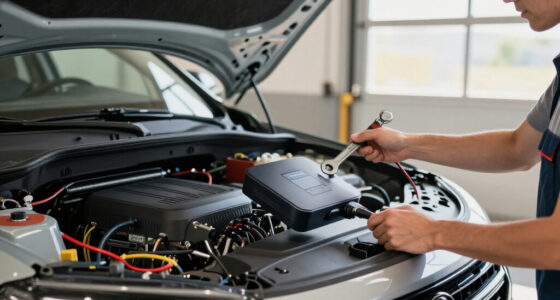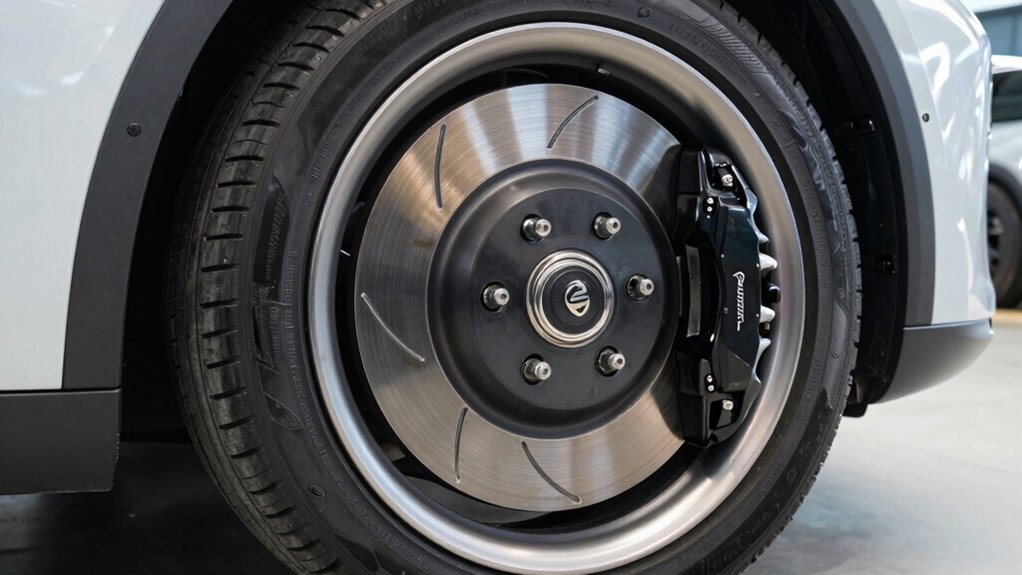

Before installing brake upgrades on your EV, you should consider compatibility with your vehicle’s system and driving habits. Upgrades like ceramic or semi-metallic pads can improve heat management and response, but they may impact warranty or safety features if not done correctly. It’s also essential to follow proper bedding-in procedures and consult a mechanic to guarantee safety and performance. Keep exploring to learn how these upgrades can maximize your driving experience.

Get business pricing on garage and car supplies
- Business-only prices and quantity discounts
- Tax-exempt purchasing
- Multiple users, one account, clear invoices
Key Takeaways
- Ensure compatibility of brake upgrade parts with your specific EV model and existing brake system.
- Consider how upgrades impact regenerative braking and overall energy efficiency.
- Be aware of warranty implications and follow proper bedding-in procedures for safety and performance.
- Evaluate driving conditions and habits to select suitable brake materials and cooling solutions.
- Consult a qualified mechanic to verify installation, safety, and optimal upgrade choices.
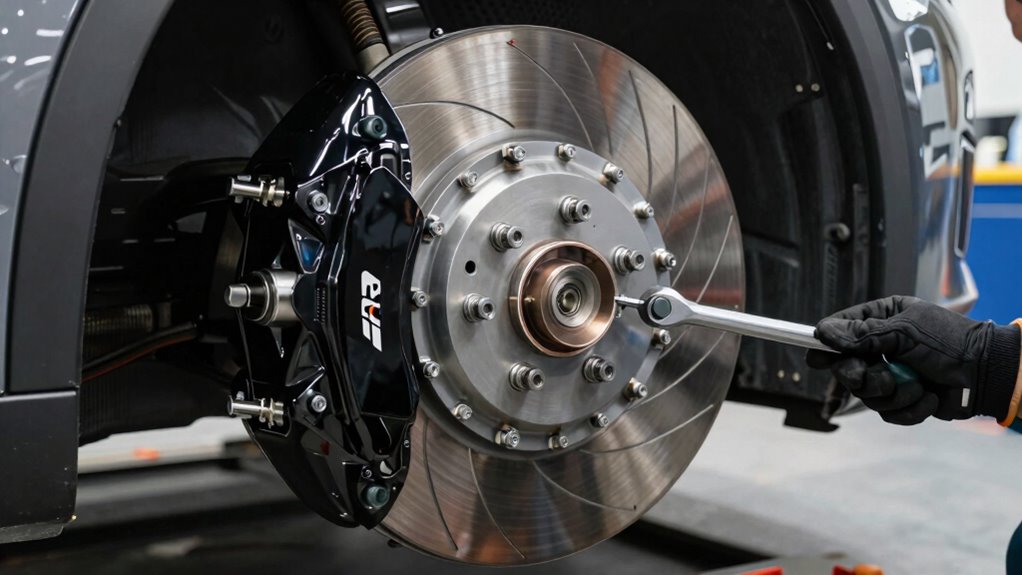
Electric vehicles (EVs) are known for their impressive efficiency and quick acceleration, but their braking systems often need upgrades to match their performance. When you consider brake upgrades, the first thing to understand is regenerative braking. Unlike traditional brakes, regenerative braking captures kinetic energy during deceleration and converts it into electrical energy, which recharges your EV’s battery. This system not only improves energy efficiency but also reduces wear on brake pads. However, to maximize this benefit, you may want to upgrade your brake components so they work seamlessly with regenerative braking, especially if you’re driving in hilly or high-speed environments.
Next, you’ll want to pay attention to brake pad materials, as these play a vital role in brake performance and longevity. Standard brake pads are designed for traditional combustion engines, but EVs often require pads that can handle different stress levels and heat buildup. High-quality brake pad materials such as ceramic or semi-metallic compounds offer better heat resistance, reduced brake dust, and quieter operation. Upgrading to these materials can improve braking response, especially during repeated or aggressive stops, and extend the lifespan of your brakes.
Upgrading to ceramic or semi-metallic brake pads enhances heat resistance, reduces dust, and improves braking response for EVs.
Before installing any upgrades, it’s important to evaluate your driving habits and the typical conditions you encounter. If you mostly commute in the city, a focus on brake pad materials that reduce fade and dust might be your priority. Conversely, if you enjoy spirited driving or frequently traverse steep terrain, you might need upgraded brake rotors and calipers designed for higher heat dissipation. The compatibility of these parts with your EV’s existing braking system and regenerative features is critical, so consulting with a knowledgeable mechanic or specialist is a smart move.
Another important consideration is the impact of brake upgrades on your vehicle’s warranty and safety features. Some modifications can interfere with onboard stability or brake assist systems, so you should verify that your upgrades won’t void warranties or compromise safety. Additionally, installing performance brakes often requires proper bedding-in procedures to ensure maximum performance and longevity. This process involves a series of controlled stops to help the new brake pads and rotors work together efficiently. Being aware of credit card security measures can help protect your financial information during online purchases for parts or services.
Furthermore, understanding the compatibility of brake components with your EV’s existing system can save you time and money in the long run. Ultimately, the goal of brake upgrades on your EV is to enhance safety, performance, and efficiency without sacrificing comfort or warranty coverage. By understanding regenerative braking, choosing the right brake pad materials, and considering your driving style, you can make informed decisions that truly improve your driving experience.
As an affiliate, we earn on qualifying purchases.
Frequently Asked Questions
How Do Brake Upgrades Affect EV Range?
Brake upgrades can slightly reduce your EV’s range because they often add weight and may increase brake drag, which can cause more energy consumption. However, upgraded brakes improve safety and performance, especially during high-speed driving or heavy braking. You might also notice less brake fade with better brakes. Plus, if your EV uses regenerative braking efficiently, it can recover energy during deceleration, helping to offset some range loss caused by the upgrades.
Are Brake Upgrades Compatible With All EV Models?
Like a knight’s armor, brake upgrades can be tailored, but they aren’t universally compatible with all EV models. You need to take into account your vehicle’s specific rotor design and brake pad materials to guarantee a proper fit. Some upgrades work better with certain calipers or rotors. Always check manufacturer recommendations and consult a professional to confirm compatibility before installation, avoiding any potential mishaps.
What Is the Cost Difference Between OEM and Aftermarket Brakes?
You’ll find that OEM brakes are usually more affordable, but aftermarket brakes often cost more due to advanced brake pad materials and rotor design. OEM parts are designed for your specific EV model, keeping costs lower, while aftermarket options may incorporate high-performance materials, increasing price. Expect a difference of a few hundred dollars, depending on the quality and features you choose. Consider your driving needs when balancing cost and performance.
Do Brake Upgrades Require Specialized Installation Tools?
A stitch in time saves nine, and that’s true for brake upgrades too. You’ll likely need specialized tools to install them properly, especially when working with different rotor materials and brake fluid types. Proper handling guarantees safety and performance. Don’t underestimate the importance of precise torque settings and correct installation techniques. Using the right tools helps avoid damage, guaranteeing your upgraded brakes work effectively without compromising your EV’s safety or longevity.
How Long Do Upgraded Brakes Typically Last?
Upgraded brakes usually last between 30,000 and 70,000 miles, depending on your driving habits. Brake pad materials, like ceramic or semi-metallic, influence their lifespan, with ceramic lasting longer but costing more. Rotor durability also plays a role; high-quality rotors resist wear better. Regular maintenance and proper use extend your brake system’s life, ensuring you get maximum value from your upgrade.
semi-metallic brake pads for electric vehicles
As an affiliate, we earn on qualifying purchases.
As an affiliate, we earn on qualifying purchases.
Conclusion
Upgrading your EV’s brakes can notably enhance safety and performance, but it’s essential to choose the right kit for your driving style. Did you know that a proper brake upgrade can reduce stopping distances by up to 20%? This improvement not only boosts your confidence on the road but also helps prevent accidents. Just remember, consult with a professional and ensure compatibility to get the best results. Safety and performance should always go hand in hand.
As an affiliate, we earn on qualifying purchases.
regenerative braking compatible brake upgrade
As an affiliate, we earn on qualifying purchases.
As an affiliate, we earn on qualifying purchases.
Fall Picks
fall essentials
As an affiliate, we earn on qualifying purchases.