
TL;DR

Get business pricing on garage and car supplies
- Business-only prices and quantity discounts
- Tax-exempt purchasing
- Multiple users, one account, clear invoices
BYD performed 350 ultra-fast charging sessions on an EV over nine days to evaluate battery durability. The company aims to understand how repeated fast charging affects battery health, a key concern for EV adoption.
Chinese automaker BYD has conducted an intensive test involving 350 ultra-fast charging cycles on a single EV over nine days, aiming to assess the impact of repeated fast charging on battery health. This test, unprecedented in scale, seeks to address concerns about whether ultra-fast charging accelerates battery degradation, which could influence consumer confidence and charging infrastructure development.
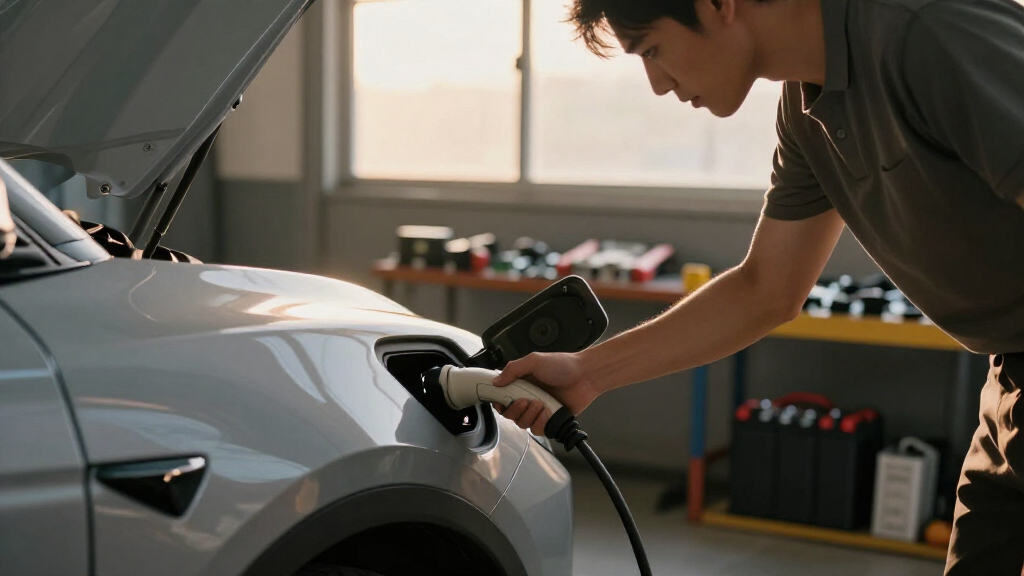
During the test, BYD charged an electric vehicle (EV) using its proprietary ultra-fast chargers, which can deliver up to 150 kW or more, repeatedly over nine days. The company reports that the vehicle was charged from near empty to full multiple times daily, simulating real-world high-frequency charging scenarios. The purpose was to observe any signs of battery deterioration, capacity loss, or safety issues associated with such intensive use.
Official sources from BYD confirmed that the vehicle was subjected to 350 charging sessions, with the entire process monitored closely by engineers. The company has not yet released detailed data on the battery’s performance post-testing but emphasized that the vehicle’s battery management system (BMS) continuously tracked parameters such as voltage, temperature, and capacity throughout the process.
Industry experts and analysts note that this test is among the most rigorous attempts to simulate extreme fast-charging conditions on an EV battery, which is a critical concern as automakers push for widespread adoption of ultra-fast chargers. The results could influence future battery design and charging standards, particularly if the test shows minimal degradation.
Implications for EV Battery Longevity and Fast-Charging Standards
This testing initiative by BYD is relevant because it addresses questions about the potential effects of ultra-fast charging on EV batteries over extended use. The outcomes could inform improvements in battery design, charging infrastructure policies, and consumer confidence in fast-charging networks. If the battery maintains its capacity and safety standards, it may support increased deployment of ultra-fast chargers, facilitating longer-distance travel and commercial applications.
Should the results indicate significant degradation, automakers might need to adjust charging protocols or develop more durable battery chemistries. The findings will contribute to ongoing discussions about balancing charging speed, battery longevity, and safety considerations in EV development.
As an affiliate, we earn on qualifying purchases.
Background on Fast Charging and Battery Durability Concerns
Fast-charging technology has become a key aspect of expanding EV adoption, with chargers capable of delivering 150 kW or more becoming increasingly prevalent. However, concerns remain about whether such rapid charging accelerates battery aging, reduces capacity, or introduces safety risks. Past studies have shown mixed results, with some indicating minimal impact when thermal management is effective, while others highlight potential long-term effects.
Automakers such as BYD and Tesla have invested significantly in fast-charging infrastructure, but comprehensive testing under extreme conditions remains limited. The industry continues to evaluate the trade-offs between charging speed, battery lifespan, and safety, making this recent test a noteworthy contribution to the field.
Battery degradation has historically been associated with factors such as high temperature, high voltage, and frequent fast charging. This recent testing aims to provide empirical data on how these factors interact under intensive usage, which could inform future standards and user guidelines.
“This is an extensive test to evaluate how our batteries perform under repeated ultra-fast charging conditions. Our aim is to gather data on durability and safety.”
— BYD spokesperson
As an affiliate, we earn on qualifying purchases.
Unclear Outcomes and Data from the Test
At present, BYD has not released detailed results regarding the battery’s condition following the 350 charging cycles. It remains uncertain whether the battery experienced capacity reduction, increased internal resistance, or safety concerns. The company has indicated that data analysis is ongoing, with results expected in the near future.
Experts note that laboratory or controlled environment tests may not fully replicate real-world conditions, and the long-term effects of such usage patterns may only become clear after extended periods of operation.
As an affiliate, we earn on qualifying purchases.
Upcoming Results and Industry Impact Assessment
BYD intends to publish comprehensive findings once data analysis is complete, likely within the next few weeks. These results will be reviewed by industry stakeholders, regulators, and consumers. If the battery shows minimal degradation, it could support the viability of ultra-fast charging technology.
Further, automakers and charging infrastructure providers may consider adjustments to standards and protocols based on these findings. Long-term testing and real-world data collection are expected to continue to better understand battery performance under frequent fast-charging conditions.
As an affiliate, we earn on qualifying purchases.
Key Questions
Does frequent ultra-fast charging damage EV batteries?
Current information from BYD’s recent testing indicates that batteries may tolerate high-frequency ultra-fast charging with limited short-term degradation. However, long-term effects are still under investigation, and additional data is needed for definitive conclusions.
How does fast charging affect battery lifespan?
Fast charging can generate additional heat and stress on the battery, which may influence aging processes. Proper thermal management and optimized charging protocols can help mitigate potential impacts.
Will this test influence EV charging standards?
If the results show minimal impact on battery health, it could support broader adoption of ultra-fast chargers. Conversely, if issues are identified, standards may be revised to prioritize battery longevity.
When will the results be available?
BYD has stated that detailed results will be published once data analysis is finalized, which is expected in the coming weeks.
Could this testing lead to changes in EV design?
Depending on the findings, automakers might consider developing more durable batteries or improving thermal management systems to better withstand frequent fast charging.
Source: rss
Halloween Picks
halloween
As an affiliate, we earn on qualifying purchases.