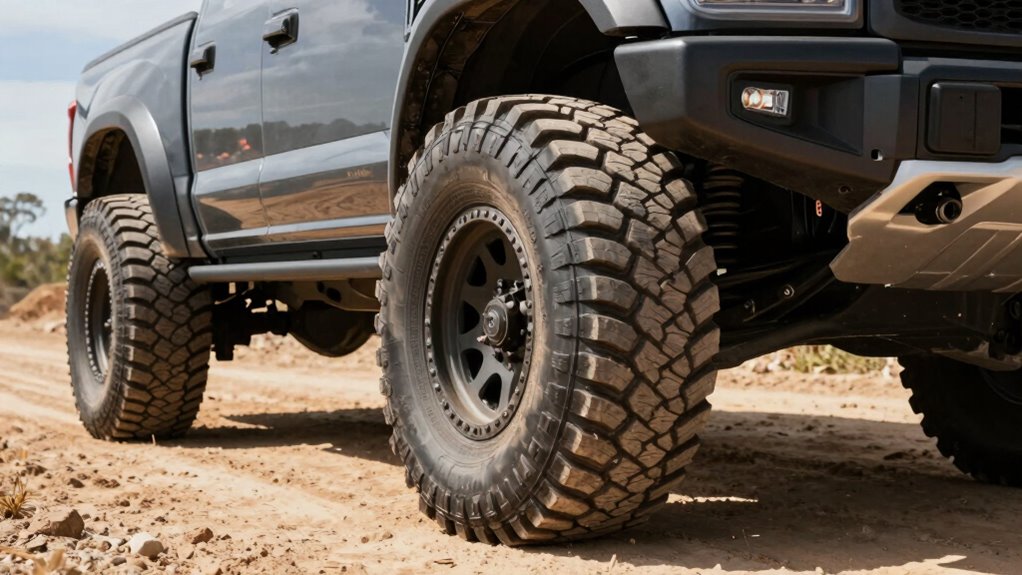

When you upgrade to bigger tires on your truck, you’re affecting more than its appearance. Larger tires add weight, alter suspension needs, and change handling and stability—especially when off-road or towing. They also impact fuel efficiency, since the engine works harder to rotate them. Plus, your speedometer and odometer may become inaccurate, requiring calibration. All these factors matter, so if you want to understand how to keep your truck running smoothly with bigger tires, keep going.
Key Takeaways
- Larger tires increase vehicle weight and dimensions, affecting ride quality and suspension performance.
- Bigger tires alter handling, stability, and off-road capability, requiring suspension upgrades for safety.
- Increased tire size raises engine workload, leading to decreased fuel efficiency.
- Larger tires cause speedometer and odometer inaccuracies, affecting legal compliance and trip measurements.
- Aesthetic improvements from bigger tires can compromise ride comfort and vehicle performance without proper modifications.

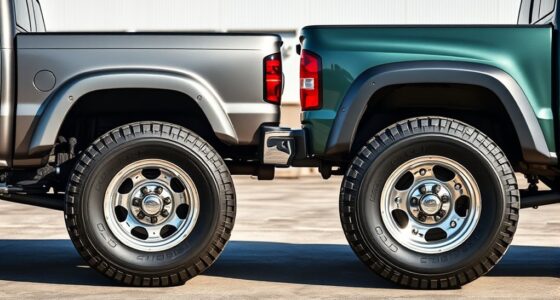
When you upgrade to bigger tires on your truck, the change isn’t just about making it look more rugged or aggressive. Bigger tires alter the way your truck handles, affecting everything from ride comfort to performance. One of the key considerations is a suspension upgrade. Larger tires add weight and change the overall dimensions of your vehicle, so your suspension system needs to be adjusted accordingly. Without these modifications, you might notice a rougher ride, increased body roll, or even premature wear on suspension components. Upgrading your suspension ensures your truck maintains stability and comfort, compensating for the added size and weight of the new tires. It also helps improve handling, especially when off-roading or towing heavy loads, where stability becomes even more critical. Additionally, larger tires can impact the natural balance of your vehicle’s handling and stability, making suspension upgrades even more essential.
Beyond the handling and ride comfort, bigger tires have a noticeable impact on your truck’s fuel efficiency. It’s tempting to think that larger tires only contribute to a bold aesthetic, but they actually influence how efficiently your engine performs. Larger tires typically have a larger diameter, which means your engine has to turn them more to cover the same distance. This increased rotational mass causes your engine to work harder, leading to higher fuel consumption. You might find yourself refueling more often, especially if your driving involves a lot of city stop-and-go traffic or frequent short trips. Understanding how tire size affects overall vehicle performance can help you make more informed modification choices. The rotational mass of larger tires is an important factor to consider, as it can significantly impact engine workload. Additionally, the increased unsprung weight can affect your vehicle’s suspension dynamics and ride quality. While larger tires give your truck a commanding look, they tend to decrease overall fuel efficiency, so it’s important to weigh this factor when upgrading.
Installing bigger tires also affects your speedometer and odometer readings. Since these devices are calibrated for stock tire sizes, larger tires can cause your speed readings to be inaccurate, often showing you’re going slower than you actually are. This discrepancy can lead to issues with speed regulation and even legal concerns if you’re not aware of the change. Some vehicles allow for recalibration or software adjustments to compensate for larger tires, but it’s an additional step you’ll need to consider.

Rough Country 6" Lift Kit with N3 Shocks for Chevy Silverado & GMC Sierra 1500 4WD (1999-2006 & Classic) – Increased Clearance, Aggressive Look
Smooth, Factory-Like Ride: Enjoy the extra height without giving up comfort – this 6-inch suspension lift kit maintains…
As an affiliate, we earn on qualifying purchases.
As an affiliate, we earn on qualifying purchases.
Frequently Asked Questions
How Do Bigger Tires Affect Fuel Efficiency?
Bigger tires can decrease your truck’s fuel efficiency because they increase rolling resistance, requiring more energy to move. You’ll also notice more tire noise on the road, which can be distracting. Additionally, larger tires often improve road grip, but that extra grip can lead to increased fuel consumption since your engine works harder to maintain speed. Overall, bigger tires impact efficiency, noise, and traction, so consider these factors before upgrading.
Do Larger Tires Impact Towing Capacity?
Bigger tires can definitely impact your towing capacity, but it’s a bit of a balancing act. While they might improve off-road performance and tire durability, they often add weight and change your truck’s gear ratios, which can reduce towing power. You might think the sky’s the limit, but oversized tires can strain your drivetrain and suspension, making towing less efficient and potentially risking damage if not properly managed.
Are Bigger Tires Legal on All Roads?
Bigger tires aren’t legal on all roads, as regulations vary by location. You must guarantee the tire tread meets safety standards and that sidewall strength complies with local laws. Some areas restrict tire size to maintain road safety and vehicle handling, so check your state’s requirements before upgrading. Remember, oversized tires can affect your vehicle’s compliance, so always verify local laws to avoid fines or issues during inspections.
How Do Bigger Tires Influence Vehicle Handling?
Bigger tires can feel like you’re steering a ship instead of a car, and they profoundly influence handling. Your tire tread patterns affect grip, especially in wet conditions, while increased sidewall strength offers better cushioning but may reduce responsiveness. Larger tires can cause sluggish steering, altered braking, and uneven tire wear. You’ll notice that your vehicle’s agility diminishes, making driving feel less precise—like trying to turn a bigger, heavier object.
What Maintenance Is Required for Larger Tires?
When you upgrade to larger tires, you need to perform regular maintenance like tire rotations to prevent uneven wear and extend their lifespan. Additionally, you should check and adjust wheel alignment frequently, as bigger tires can affect your truck’s handling and cause uneven tread wear. Keep an eye on tire pressure and inspect for damage, ensuring your larger tires stay in good condition and your vehicle remains safe on the road.
off-road tire size calculator
As an affiliate, we earn on qualifying purchases.
As an affiliate, we earn on qualifying purchases.
Conclusion
Upgrading to bigger tires on your truck isn’t just about turning heads; it’s like giving your vehicle a new set of muscles. You’ll notice changes in performance, fuel economy, and handling—almost as if you’ve swapped out your truck’s heart for a stronger, more capable one. So, before you hit the upgrade button, remember that bigger tires are more than just eye candy—they’re a whole new chapter in your truck’s story.
truck speedometer calibration tool
As an affiliate, we earn on qualifying purchases.
As an affiliate, we earn on qualifying purchases.
heavy-duty truck tires 35 inch
As an affiliate, we earn on qualifying purchases.
As an affiliate, we earn on qualifying purchases.