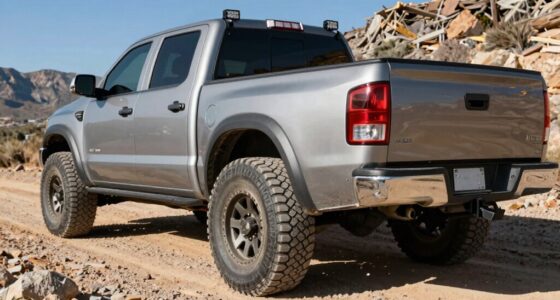
Choosing the right lift height affects your pickup’s daily use in many ways. A higher lift gives you more off-road clearance but can make the ride less stable and increase wear on suspension components. It also raises aerodynamic drag, reducing fuel efficiency, and may cause uneven tire wear. A lower or moderate lift offers a comfortable, stable ride for city driving and less strain on parts. Keep exploring to discover how the perfect lift balances appearance, durability, and performance.

Get business pricing on garage and car supplies
- Business-only prices and quantity discounts
- Tax-exempt purchasing
- Multiple users, one account, clear invoices
Key Takeaways
- Higher lifts enhance appearance but can decrease stability and ride comfort during daily driving.
- Excessive lift strains suspension components, potentially leading to increased maintenance needs.
- Moderate lifts improve clearance for off-road use without significantly affecting fuel efficiency.
- Lower lifts maintain better handling, stability, and safety for everyday road conditions.
- The optimal lift height balances aesthetics, durability, and practicality for daily use.

Choosing the right lift height is essential for efficient daily use, especially when it comes to pickups. When you decide on a lift, you’re not just changing the look of your truck; you’re also influencing how it performs day-to-day. A higher lift might give your pickup a more aggressive stance, but it can also impact suspension durability. If you lift it too high, you risk putting extra strain on suspension components, which can lead to faster wear and tear. Conversely, a lift that’s too low might not provide enough clearance for off-road adventures, limiting your versatility. Finding that perfect balance ensures your truck remains reliable and comfortable for your daily routines. Proper lift height can also help maintain suspension integrity and prolong your vehicle’s lifespan. Lift height plays a significant role in fuel efficiency. When your pickup is lifted higher, it often creates increased aerodynamic drag, which means your engine has to work harder to maintain speed. This added effort results in higher fuel consumption over time. If you’re aiming to keep fuel costs down, a moderate lift might be the better choice. It can provide enough clearance for off-road use without drastically affecting your truck’s aerodynamics. Additionally, a higher lift can alter your truck’s center of gravity, making it more prone to instability, especially when carrying heavy loads or driving at higher speeds. This instability can lead to uneven tire wear and suspension strain, further decreasing fuel efficiency and increasing maintenance costs. Incorporating appropriate suspension modifications can help mitigate some of these issues, ensuring a smoother ride and better handling. The decision around lift height also impacts your truck’s handling and ride quality. A lift that’s too high might make your pickup feel less stable, especially on uneven roads or during sharp turns. This instability can compromise your safety and put additional stress on suspension parts, reducing their longevity. On the other hand, a lower lift or stock height tends to offer better ride comfort and predictable handling, making your daily drives smoother and safer. It’s a delicate balance—choosing a lift height that boosts your truck’s appearance and off-road capabilities, without sacrificing suspension durability or fuel efficiency. Ultimately, your choice should reflect your daily needs and driving habits. If you rarely go off-road, a modest lift can give your pickup a rugged look without the downsides of increased wear or fuel costs. If off-road adventures are frequent, investing in a lift that enhances clearance while maintaining suspension integrity is worth it. Remember, the right lift height isn’t just about looks—it’s about optimizing your pickup’s overall performance for everyday use.
Products Worth Considering

DEWALT 20V MAX Drill and Impact Driver Combo Kit (DCK277D2)

Autel MaxiCharger AC Home 50A Level 2 EV Charger, Hardwired, J1772, Wi-Fi and Bluetooth, 25 ft Cable

DEWALT 20V MAX 7-Tool Combo Kit with Cordless Drill, Impact Driver, Reciprocating Saw, Circular Saw, Oscillating Tool, Random Orbital Sander
As an affiliate, we earn on qualifying purchases.
Frequently Asked Questions
How Does Lift Height Affect Fuel Efficiency on a Pickup Truck?
Higher lift heights increase your pickup truck’s fuel consumption because they create more aerodynamic drag, making the engine work harder. When you lift your truck, it faces greater air resistance at highway speeds, which reduces efficiency. So, if you’re mindful of fuel costs, keep in mind that a taller lift can negatively impact your truck’s mileage by increasing aerodynamic drag and requiring more power to maintain speed.
Are There Legal Height Limits for Lifted Pickups in Different States?
Yes, there are legal height limits for lifted pickups, which vary by state. You need to verify your state’s regulations on vehicle height restrictions, as some states set maximum height or bumper height rules to ensure safety and compliance. Ignoring these legal restrictions can lead to fines or failed inspections. Always stay informed about your local state regulations to avoid legal issues when customizing your pickup.
What Impact Does Lift Height Have on Towing Capacity?
Lift height can decrease your towing capacity because taller lifts often shift suspension stability and off-road performance, making towing less stable. When you lift your pickup, the center of gravity rises, which can lead to less control, especially when hauling heavy loads. You might notice more sway, reduced braking efficiency, and increased wear on suspension components. So, while lifts boost off-road looks, they can compromise towing strength and safety.
Does a Higher Lift Height Make Parking Easier or Harder?
A higher lift height makes parking harder because it reduces your visibility and makes maneuvering in tight spaces more challenging. While it improves off-road performance by increasing ground clearance, it can hinder visibility, especially in crowded parking lots. You’ll need to rely more on mirrors and parking sensors, which can take some getting used to. Overall, a lift height benefits off-road use but complicates parking in daily driving situations.
How Does Lift Height Influence the Truck’s Resale Value?
A higher lift height can boost your truck’s resale value by enhancing its aesthetic appeal and off-road performance, attracting buyers interested in rugged looks and capabilities. However, it may also narrow your market to off-road enthusiasts or truck lovers, potentially limiting appeal for everyday drivers. If you maintain the lift and keep it functional, it can be a selling point, but excessive or poorly done lifts might deter some buyers.
Conclusion
So, next time you lift your pickup higher for that tough look, remember—it might just make your daily drive a little more interesting. You’ll gain that commanding stance, sure, but also lose some agility and comfort. Ironically, all that extra height might just turn your smooth ride into a bumpy adventure. So, enjoy the view from the top, but don’t be surprised if your daily commute feels a bit more… elevated.