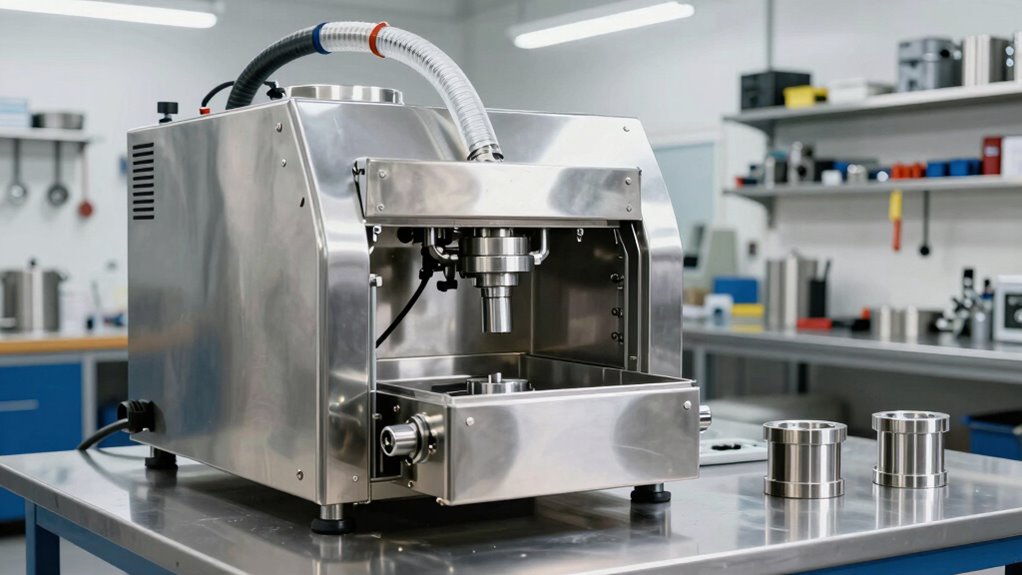

For fabrication shops, the best overall pick is the VEVOR 40-Gallon Parts Washer, whose larger cabinet suits frequent cleaning of bulky shop components. The 20-gallon portable washer is a practical middle ground for shops that need more working room without committing to the largest unit, while the Jack Boss 3.5-gallon steel washer favors compact work areas and smaller parts. The main tradeoff is between capacity and floor space, with portability, cabinet material and pump setup also shaping the choice. A small unit can be easier to place but may require more batches; a large one can take up space beyond what occasional cleanup justifies. Read on for the full breakdown and help matching a washer to your shop’s workload.

Get business pricing on garage and car supplies
- Business-only prices and quantity discounts
- Tax-exempt purchasing
- Multiple users, one account, clear invoices
Complete the kit


Key Takeaways
- The VEVOR 40-gallon model leads for higher-volume work because its steel cabinet and larger capacity are better suited to repeated cleaning and bigger components, but it needs more shop space.
- The 20-gallon washer fills the middle-capacity role for shops that find compact units limiting but do not need the footprint of the largest option.
- The Jack Boss 3.5-gallon steel washer favors compact, targeted cleanup; its smaller basin can mean more batches when a fabrication job produces many parts.
- The Jack Boss 5-gallon plastic model and VEVOR 5-gallon steel model serve different priorities: the former emphasizes a portable plastic body, while the latter offers a steel cabinet at similar stated capacity.
- The BikeMaster washer is harder to rank for fabrication throughput from its listed name alone; buyers should verify capacity, pump details and workpiece fit before choosing it over models with clearer specifications.


| top rated parts washers for fabrication shop | Brand | Dimensions | Tank volume | Power source |
|---|---|---|---|---|
| Jack Boss 3.5 Gallon Portable | Jack Boss | 18 × 18 × 9 inches | 3.5 gallons | Electric |
| BikeMaster Parts Washer | BikeMaster | — | 5 gallons | Corded electric |
| VEVOR 5-Gallon Parts Washer wi | VEVOR | 18.11 × 13.39 × 9.06 inches | 5 gallons | AC |
| Parts Washer | — | — | — | — |
| Jack Boss 5 Gallon Portable Pl | Jack Boss | 13.8 × 13.8 × 5.5 inches | — | — |
| VEVOR 40-Gallon Parts Washer | — | 21.7 in D x 44.5 in W x 35 in H | — | — |
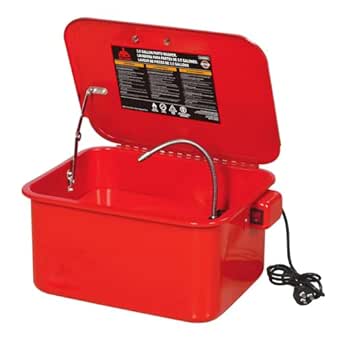
More Details on Our Top Picks
Jack Boss 3.5 Gallon Portable Steel Cabinet Parts Washer with 110V Electric Pump – Red
The Jack Boss 3.5-gallon washer earns this spot for fabrication shops that clean small components at a bench and need a steel cabinet rather than a bucket-based setup. Its 110V pump moves 0.5 gallons per minute, a modest flow suited to bearings, gears, and carburetors rather than production-scale degreasing. Compared with the VEVOR 5-Gallon Parts Washer, it holds less fluid but offers a slightly higher stated pump flow and a similarly compact footprint. The hinged fusible-link lid adds a fire-safety feature, but this model is not for flammable or combustible solvents. Its small reservoir also means less room for larger parts and more frequent fluid attention in a busy shop. I’d choose it when bench space and a durable, self-contained cabinet matter more than capacity.
Pros:- Compact steel cabinet suits a bench-top work area
- 110V pump recirculates fluid at a stated 0.5 gpm
- Hinged fusible-link lid provides a fire-safety feature
- Portable design is easier to reposition than a full-size cabinet washer
Cons:- 3.5-gallon reservoir limits part size and fluid capacity
- Cannot be used with flammable or combustible solvents
- Electric pump requires a suitable outlet near the work area
Best for: Fabrication-shop operators cleaning bearings, gears, and other small components at a dedicated bench with access to 110V power.
Not ideal for: Shops cleaning large assemblies, processing parts continuously, or needing to use flammable or combustible solvents.
- Brand:Jack Boss
- Model:ASG4001
- Tank volume:3.5 gallons
- Power source:Electric
- Voltage:110V
- Maximum flow rate:0.5 gpm
- Dimensions:18 × 18 × 9 inches
- Warranty:1-year limited
Our verdict“Choose this Jack Boss when you want a compact steel washer for small parts and can work within its 3.5-gallon capacity and solvent restrictions.”
BikeMaster Parts Washer
The BikeMaster Parts Washer is the lineup’s water-based cleaning pick, with a corrosion-proof, insulated design and UL and SAA safety certifications listed in the product data. That makes it a different proposition from the steel-cabinet Jack Boss 3.5 Gallon washer: BikeMaster emphasizes portable handling and water-based agents, while Jack Boss offers a contained bench-top cabinet and a specified pump flow. BikeMaster’s 5-gallon tank gives it more stated capacity than the smaller Jack Boss, but the supplied details do not specify pump output, so I can’t rank its cleaning speed against the electric-pump models. Its 32-inch wand and 24-inch hose support reaching parts during cleaning, though the tank still rules out bulky components. Skip it if your process depends on solvent compatibility beyond water-based agents.
Pros:- Corrosion-proof and insulated construction
- UL and SAA safety certifications are listed
- Five-gallon tank offers more capacity than the Jack Boss 3.5-gallon model
- 32-inch wand and 24-inch hose provide reach while cleaning
Cons:- Requires water-based cleaning agents, limiting cleaner choice
- Five-gallon capacity is not suited to large parts
- Pump flow rate is not specified in the supplied product data
Best for: Small fabrication and repair shops that use water-based cleaning agents and want a portable washer with a wand for routine component cleaning.
Not ideal for: Shops that require solvent-based cleaners, need documented pump-flow performance, or routinely wash large components.
- Brand:BikeMaster
- Model number:700MS
- Tank volume:5 gallons
- Power source:Corded electric
- Hose length:24 inches
- Wand length:32 inches
- Item weight:16 ounces
- Certification:UL
Our verdict“Pick the BikeMaster for portable, water-based parts cleaning, but choose a pump-specified steel washer if flow performance or broader cleaner compatibility is a priority.”
VEVOR 5-Gallon Parts Washer with Electric Pump, Portable Steel Automotive Parts Cleaner
The VEVOR 5-Gallon Parts Washer suits shops that want a compact steel unit with a way to direct fluid at awkward surfaces. Its adjustable gooseneck can help reach recesses and complex shapes without moving the part as often, while the 0.4-gpm pump keeps the setup focused on small-component work. Compared with the Jack Boss 3.5 Gallon washer, VEVOR gives you 1.5 gallons more tank capacity, though its stated flow is lower than Jack Boss’s 0.5 gpm. The rust- and corrosion-resistant steel construction is useful in a shop environment, but the 5-gallon tank still limits part size and sustained workload. It also needs AC power, and the supplied product information notes moderate cleaning efficiency, so I would not select it for stubborn, heavy-duty buildup.
Pros:- Adjustable gooseneck helps direct fluid onto complex parts
- Five-gallon tank provides more capacity than the Jack Boss 3.5-gallon model
- Steel construction is described as rust- and corrosion-resistant
- Portable 15-pound design is easier to move around a shop
Cons:- 0.4-gpm pump output is lower than the Jack Boss 3.5-gallon model’s stated 0.5 gpm
- Five-gallon capacity restricts part size and extended cleaning work
- Product information cites moderate cleaning efficiency rather than heavy-duty performance
Best for: Fabrication and repair shops cleaning small, irregularly shaped parts that benefit from a repositionable fluid outlet.
Not ideal for: High-throughput operations, large assemblies, or shops without convenient AC power at the cleaning station.
- Brand:VEVOR
- Model number:XH-PW3-1/2G
- Tank volume:5 gallons
- Pump output:0.4 gallons per minute
- Power source:AC
- Item weight:15 lbs
- Dimensions:18.11 × 13.39 × 9.06 inches
- Material:Steel
Our verdict“Choose VEVOR for portable, targeted cleaning of small complex parts, not for large components or demanding wash throughput.”
Parts Washer, 20 Gallon Portable Automotive Parts Cleaner with 110V Pump
This 20-gallon portable parts washer is the largest cabinet-style option in this five-product group, giving shops more working room than the VEVOR 5-Gallon Parts Washer. Its removable shelf and basket help organize smaller pieces, while the flexible gooseneck directs fluid without requiring a fixed spray position. The powder-coated steel cabinet and hinged safety lid make it a more substantial workstation than the plastic Jack Boss bucket-mounted unit. Capacity needs careful interpretation, though: the listed maximum liquid level is 10 gallons, with a minimum of 6 gallons, not a full 20 gallons of working fluid. Pump output is 50 gallons per hour, and the product data warns that flow may be insufficient for heavy-duty cleaning. Its 30-by-21-inch footprint and 58-pound shipping weight also make it less convenient to relocate.
Pros:- Freestanding cabinet offers more working room than the five-gallon washers
- Removable shelf and work basket help contain and organize small components
- Powder-coated steel cabinet is designed to resist rust and corrosion
- Flexible gooseneck and hinged safety lid support controlled operation
Cons:- Working liquid range is listed as 6 to 10 gallons despite the 20-gallon product title
- 50-gallon-per-hour pump may not suit heavy-duty cleaning
- Large footprint and 58-pound shipping weight reduce portability
- Requires 110V power and proper ventilation
Best for: Shops that want a freestanding steel station for repeated small-part cleaning and value a basket, shelf, and larger working area over portability.
Not ideal for: Small benches, mobile work areas, large-part cleaning, or heavy-duty jobs that need stronger pump flow.
- Motor:110V, single-phase, 0.7A
- Tub depth:10 inches
- Maximum liquid level:10 gallons or 5 inches
- Minimum liquid level:6 gallons or 3 inches
- Nozzle diameter:5-1/2 mm
- Pump output:50 gallons per hour
- Overall dimensions:30 × 21 × 35 inches
- Approximate shipping weight:58 lbs
Our verdict“Choose this cabinet when a larger, organized small-parts station matters more than easy relocation or high-flow cleaning.”
Jack Boss 5 Gallon Portable Plastic Automotive Parts Washer
The Jack Boss 5-gallon plastic washer takes a different route from the steel cabinets: it fits a standard 5-gallon bucket and uses a submersible pump with a flow-through brush. That makes it a flexible add-on for a shop that already has a suitable bucket, rather than a self-contained workstation like the VEVOR 5-Gallon Parts Washer. The channel drainage system is intended to collect waste and recirculate water, while the lightweight plastic housing is easy to move between work areas. The tradeoff is that the bucket is not included, and this setup is limited to non-corrosive, water-based solutions. Unlike the steel-cabinet Jack Boss 3.5-gallon model, it does not provide the same enclosed cabinet format. I’d reserve it for light-duty cleanup of small tools and components, not a central fabrication-shop wash station.
Pros:- Fits a standard 5-gallon bucket, allowing use with existing shop containers
- Submersible pump and flow-through brush combine fluid delivery with scrubbing
- Channel drainage system is designed to collect waste and recirculate water
- Lightweight plastic housing is easy to move between work areas
Cons:- Bucket is not included
- Limited to non-corrosive, water-based cleaning solutions
- Plastic, bucket-mounted format is less suited to a permanent fabrication-shop station
Best for: Small shops and home-workshop fabricators who already own a standard 5-gallon bucket and clean small tools with non-corrosive water-based solutions.
Not ideal for: Fabrication shops needing a self-contained steel cabinet, solvent compatibility, or a washer for large or heavily soiled parts.
- Brand:Jack Boss
- Capacity:5 gallons
- Dimensions:13.8 × 13.8 × 5.5 inches
- Material:Plastic
- Color:Black
- Finish:Matte
- Compatible groove diameter:27.94 cm
- Cleaning solution compatibility:Non-corrosive, water-based solutions
Our verdict“Choose this Jack Boss for a movable, bucket-based cleaning setup for small parts, but select a steel cabinet washer for regular shop-station duty.”
VEVOR 40-Gallon Parts Washer, 17 Gallon Solvent Capacity, 1 Gallon/min Pump Output, Steel Cabinet Electric Pump for Automotive Parts
For a fabrication shop cleaning bulky weldments, fixtures, or several components in one session, this VEVOR offers the lineup’s largest stated tank capacity: 40 gallons, with room for up to 220 lb of parts. Its 17-gallon solvent capacity and 1-gallon-per-minute pump support repeated rinsing, while the adjustable gooseneck helps direct flow into hard-to-reach areas. Compared with the VEVOR 5-Gallon Parts Washer, this model is built for larger batches rather than compact, occasional jobs; the 20 Gallon Portable Automotive Parts Cleaner is a less space-intensive middle ground. The tradeoff is substantial: at 44.5 inches wide and 92.8 pounds, this washer needs a dedicated floor position and is difficult to move. Its manual operation may also demand attention during cleaning.
Pros:- 40-gallon tank accommodates multiple large parts in one batch
- Supports parts weighing up to 220 lb
- Adjustable gooseneck and 1-gallon-per-minute pump direct solvent across components
- Powder-coated steel cabinet includes a shelf for tools and supplies
Cons:- Wide cabinet requires considerable floor space
- 92.8-pound weight makes relocation difficult
- Manual operation may require supervision during cleaning
Best for: Fabrication shops that regularly clean multiple heavy or oversized components and have dedicated floor space for a stationary washer.
Not ideal for: Small shops, mobile repair teams, or occasional users who need a compact washer that can be relocated easily.
- Tank capacity:40 gallons
- Solvent capacity:17 gallons
- Maximum part load:220 lb
- Pump output:Up to 1 gallon per minute
- Material:Steel
- Finish:Powder coated
- Dimensions:21.7 in D x 44.5 in W x 35 in H
- Item weight:92.8 lb
- Voltage:120 V
Our verdict“Choose this VEVOR for high-volume shops cleaning large parts in batches; choose a smaller washer if floor space or portability matters more.”

How We Picked
I ranked these washers by how well their stated capacity, construction and pump setup match the demands of a fabrication shop: repeated cleanup, varied component sizes and limited floor space. The VEVOR 40-gallon model ranks first for buyers prioritizing a larger work area and steel construction; the 20-gallon unit follows as a less space-intensive capacity step. Compact options rank lower for sustained workloads, though they can be a better fit for small parts and constrained benches. I also weighed how clearly each product’s listed specifications support a buying decision.
Capacity alone does not establish cleaning performance, and the supplied product details do not state comparable flow, basin dimensions or solvent compatibility for every model. I treated those gaps as a reason to recommend checking fit and operating requirements before purchase, rather than assuming equivalent capability. The BikeMaster listing has the least detail in its supplied name, so it is placed last for specification clarity—not as a claim that it cleans worse. My order reflects the likely shop use case and the information available, not hands-on testing.
| top rated parts washers for fabrication shop | Brand | Power source | Material |
|---|---|---|---|
| Jack Boss 3.5 Gallon Portable | Jack Boss | Electric | — |
| BikeMaster Parts Washer | BikeMaster | Corded electric | — |
| VEVOR 5-Gallon Parts Washer wi | VEVOR | AC | Steel |
| Parts Washer | — | — | — |
| Jack Boss 5 Gallon Portable Pl | Jack Boss | — | Plastic |
| VEVOR 40-Gallon Parts Washer | — | — | Steel |
Factors to Consider When Choosing Top Rated Parts Washers For Fabrication Shops
Match a washer to the parts your shop actually cleans, the chemicals you plan to use and the space available around the workbench. A larger tank can reduce batching, but it also occupies floor area and may invite filling beyond what your routine requires. These checks can prevent a capacity mismatch or an avoidable compatibility problem.
Size the basin for your largest regular part
Measure the longest and widest components you expect to clean, then compare those measurements with the washer’s usable basin dimensions—not just its gallon label. A tank’s stated capacity does not tell you whether a long bracket, fixture or awkwardly shaped assembly will sit flat inside it. Leave room to move a brush around the part; a close fit can make cleaning slower even when the workpiece technically fits. Shops that mostly clean small fittings may get more value from a compact unit and a repeatable batch routine. Do not buy a large washer solely for rare oversized jobs unless storing or outsourcing those parts is a real problem.
Treat solvent compatibility as a purchase requirement
Check the manufacturer’s allowed cleaning fluids, then confirm that the pump, seals, basin and any plastic components are compatible with the fluid you intend to use. Do not assume that a washer described for automotive parts accepts every solvent or degreaser. The wrong fluid can damage components, create a leak or present a fire and exposure hazard. Also review local rules and the product instructions for storage, ventilation, disposal and personal protective equipment. If your shop changes cleaning chemistry by job, favor a washer with compatibility information clear enough to verify before operating it.
Choose capacity around throughput, not appearance
Estimate how many parts arrive for cleaning during a typical shift and how much time your team can spend loading, brushing and changing fluid. A small basin may work well for occasional repairs, but repeated batches can interrupt fabrication work. A bigger washer can make batch handling easier, yet it may require more fluid and more room for safe access. Check whether the listed pump output and basin layout suit your cleaning routine; gallon capacity by itself does not predict cleaning speed. If volume fluctuates, compare the cost of batching in a smaller unit with the space and upkeep burden of a larger one.
Plan the washer’s location before choosing portability
Map the washer’s footprint, lid clearance and space needed to stand and work beside it. A portable label does not tell you how easy a loaded unit is to move, so check its weight, handle or wheel details and whether it must be drained before relocation. Keep the location near the work that generates dirty parts, but away from traffic routes and ignition sources where applicable. Smaller models can suit shared benches or temporary work areas; a large cabinet makes more sense when it has a dedicated cleaning station. Moving a washer frequently can also complicate fluid handling, so plan for its normal home rather than relying on portability alone.
Compare cabinet material and maintenance access
Steel and plastic bodies can serve different priorities, but material alone does not determine service life or chemical compatibility. Review the manufacturer’s approved fluids, construction details and care instructions before treating either material as a durability guarantee. Ask how the pump, filter and work basin can be reached for routine cleaning, since trapped debris can undermine a washer that otherwise has ample capacity. Check whether replacement parts or service information are available for the pump and other wear items. For a busy shop, easy maintenance access may matter more than a small difference in tank size.
Verify electrical and shop-safety requirements
For a 110V pump model, confirm that the outlet and circuit arrangement at the intended station meet the product instructions and local electrical requirements. Keep cords and connections clear of spilled fluid, chips and work traffic. Review the washer’s operating guidance for ventilation, lid use, fluid temperature limits and fire precautions before placing it near welding or grinding activity. Fabrication shops often have hot work and combustible materials in the same building, so a convenient corner is not automatically a suitable location. If the product listing leaves these details unclear, ask the manufacturer before buying rather than improvising after delivery.
Frequently Asked Questions
Is a 40-gallon parts washer too large for a small fabrication shop?
It may be, especially if the shop cleans small parts only occasionally or has limited floor space. The VEVOR 40-gallon model is the strongest match in this lineup for frequent work and larger components, but its stated capacity does not make it the right choice for every bench. Measure the installation area and consider clearance for loading, lid movement and maintenance. If most work fits in a smaller basin, a compact model may reduce clutter and avoid carrying capacity you rarely use. Choose the larger option when batching or part size is a recurring bottleneck.
How do I choose between the VEVOR 5-gallon steel washer and the Jack Boss 5-gallon plastic washer?
Start with the washer’s approved cleaning fluid and the construction details, rather than assuming one material is always better. The VEVOR listing specifies a steel cabinet, while the Jack Boss listing identifies a portable plastic body; those distinctions may affect placement and handling preferences. Neither product name alone confirms compatibility with a particular solvent, service life or ease of maintenance. Compare the full manuals for permitted fluids, pump access, basin dimensions and care requirements. If those details are not available, get confirmation from the seller or manufacturer before deciding.
Can a compact parts washer handle a fabrication shop’s daily cleanup?
It can if the shop’s parts are small and the volume stays modest, but repeated batches may take time away from production. The Jack Boss 3.5-gallon model is the most compact named option here, so it fits targeted cleanup better than a steady stream of larger assemblies. Before buying, record a typical day’s part count and measure the parts that cannot be split into smaller batches. If staff regularly wait for the washer or postpone cleanup, stepping up to a 5- or 20-gallon model may make more sense. Capacity should follow actual workload, not an occasional peak job.
What should I verify before using a parts washer near welding or grinding work?
Check the washer’s instructions for fluid restrictions, ventilation, electrical setup and required separation from heat or ignition sources. Fabrication work can produce sparks and hot material, so the cleaning station needs a deliberate location rather than a convenient spot beside active hot work. Keep the washer’s electrical connections protected from fluid and shop debris, and follow the specified lid and operating procedures. Confirm local requirements for storage and disposal of the selected cleaning fluid as well. If the product documentation does not address the planned setting, ask the manufacturer before putting the unit into service.
Is the BikeMaster washer a safe choice when its listing gives few specifications?
Its brief product name does not provide enough information to compare capacity, pump details or workpiece fit confidently with the other five options. That does not prove the washer is unsuitable, but it makes verification more important before purchase. Ask for basin dimensions, allowed fluids, pump information, electrical requirements and maintenance instructions. Compare those answers with the parts and cleaning chemistry used in your shop. If specifications remain unavailable, a model with clearly stated capacity and construction is easier to evaluate.
Conclusion
Best overall: I would choose the VEVOR 40-Gallon Parts Washer for shops with frequent cleanup and room for a larger steel cabinet. Best value in capability: the 20-gallon portable washer is the sensible middle-capacity pick when a compact basin is limiting but the largest model is too much washer. Best for beginners: the Jack Boss 3.5-gallon steel washer suits a small, straightforward cleanup station, provided its capacity matches the parts being cleaned. Best premium: the VEVOR 40-gallon model is the lineup’s high-capacity choice for buyers who can use its larger work area. Best for specific needs: choose the Jack Boss 5-gallon plastic washer when its portable body fits your setup, or the VEVOR 5-gallon steel model when a steel cabinet matters at compact capacity. I would place the BikeMaster option on hold until its full specifications are confirmed.