
For premium dual dash cam options for luxury cars, my best overall pick is the VIOFO A229 Pro, which pairs front and rear 4K recording with dual STARVIS 2 sensors and HDR. The VIOFO A329S stands out for drivers who want 4K at 60 frames per second and newer connectivity, while the Kenwood DRV-A610WDP may suit buyers who prefer a familiar automotive electronics brand. The main tradeoffs are image detail versus system complexity, discreet installation versus a built-in screen, and front-and-rear coverage versus adding an interior camera. Luxury cars can also have sensitive electrical systems and carefully finished cabins, so fit and installation matter as much as resolution. Read on for my full comparison and advice on choosing a setup that suits your car and parking needs.

Get business pricing on garage and car supplies
- Business-only prices and quantity discounts
- Tax-exempt purchasing
- Multiple users, one account, clear invoices
Complete the kit


Key Takeaways
- The VIOFO A229 Pro leads the all-around group: its dual STARVIS 2 sensors, front-and-rear 4K recording, and HDR make it the clearest fit for buyers prioritizing detailed evidence across both views.
- The A329S is the performance-focused alternative: 4K 60FPS and Wi-Fi 6 set it apart, but that level of capability may be unnecessary for drivers who mainly want reliable incident recording.
- Resolution claims need context: several listings advertise 4K on both cameras, but buyers should compare sensor and HDR details as well as the headline number.
- Three-channel models answer a different need: the 70mai and 4K+4K+1080P options add cabin coverage, trading a simpler two-camera installation for more coverage and more hardware.
- Included memory and connectivity affect setup, not just convenience: models with a card in the box can be ready sooner, while GPS, Wi-Fi, and app controls matter most to drivers who regularly retrieve and review footage.
| VIOFO A229 Pro 4K HDR Dash Cam Front and Rear, Dual STARVIS 2 Sensors |  | Best Overall | Resolution: 4K 2160p front; 2K 1440p rear | Sensors: IMX678 front; IMX675 rear | Night recording: HDR with STARVIS 2 sensors | VIEW ON AMAZON | See Our Full Breakdown |
| 4K+2K Dual Dash Cam Front and Rear, Starvis 2 IMX678 with HDR |  | Best Discreet Fit | Resolution: 4K 3840×2160 front; 2K 2560×1440 rear | Sensor: STARVIS 2 IMX678 | Night recording: HDR night vision | VIEW ON AMAZON | See Our Full Breakdown |
| ROVE R2-4K Dual Dash Cam Front and Rear with STARVIS 2 Sensor and 128GB Card |  | Best Starter Bundle | Resolution: Upscaled 4K front from QHD; 1080p rear | Sensor: Sony STARVIS 2 IMX675 | Night recording: Super Night Vision with HDR | VIEW ON AMAZON | See Our Full Breakdown |
| Vantrue S1 Pro Max Dual 4K Dash Cam, Front and Rear, Night Vision, GPS, WiFi, App Control |  | Best for Dual 4K Coverage | Resolution: 4K front and 4K rear at 30fps | Field of view: 155 degrees front; 160 degrees rear | Sensors: STARVIS 2 sensors | VIEW ON AMAZON | See Our Full Breakdown |
| VIOFO A329S 4K 60FPS Dash Cam Front and Rear, STARVIS 2 HDR, Wi-Fi 6 |  | Best for Fast Capture and Large Archives | Front resolution: 4K at 60fps | Rear resolution: 2K | Sensors: Dual STARVIS 2: IMX678 and IMX675 | VIEW ON AMAZON | See Our Full Breakdown |
| ROVE R2-4K Dual PRO Dash Cam Front and Rear, 4K+2K Recording for Cars |  | Best Overall for Premium Dual Coverage | Video resolution: 3840×2160 front; 2560×1440 rear | Image sensors: Sony STARVIS 2 IMX678 front; IMX675 rear | Field of view: 150° front; 140° rear | VIEW ON AMAZON | See Our Full Breakdown |
| 70mai 4K Dash Cam Front and Rear Inside, 3 Channel Car Dash Camera with GPS, Wi-Fi 6, Voice Control, Parking Monitor, Night Vision, Loop Recording, 64GB SD Card Included |  | Best for Chauffeurs and Rideshare Coverage | Video resolution: 4K front; 1080P interior; 1080P rear | Camera coverage: Three channels; listed 402° field of view | Wi-Fi: Wi-Fi 6 | VIEW ON AMAZON | See Our Full Breakdown |
| 4K+4K Dual Dash Cam Front and Rear with 128GB Card and Night Vision |  | Best for Matching Front and Rear Detail | Video resolution: 4K front and rear | Frame rate: 25fps | Field of view: 170° front; 150° rear | VIEW ON AMAZON | See Our Full Breakdown |
| Kenwood DRV-A610WDP Dash Cam with Front and Rear Cameras, GPS, 4K/2K Resolution, Wi-Fi & Bluetooth Support, 64GB Micro SD Card Included | 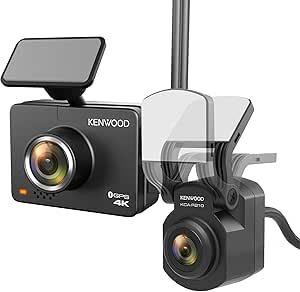 | Best for Brand-Conscious Buyers | Camera resolution: 8.3MP 4K front; 3.7MP 2K rear | Field of view: 113° | Display: 2-inch LCD | VIEW ON AMAZON | See Our Full Breakdown |
| 4K+1080P*3 FHD Dash Cam Front and Rear, 360° Car Camera, 5.8GHz WiFi |  | Best for Multi-Angle Security | Camera configuration: Four channels: 4K front and three 1080P lenses | Video capture resolution: 2160p listed | Display: 3.18 inches | VIEW ON AMAZON | See Our Full Breakdown |
| 4K+4K Dash Cam with 128GB Card, WiFi6, GPS, Night Vision, 3″ Screen |  | Best for Dual-4K Coverage | Video resolution: 4K front + 4K rear | Field of view: 170 degrees | Frame rate: 25 fps | VIEW ON AMAZON | See Our Full Breakdown |
| 4K+4K+1080P 3 Channel Dash Cam with 128GB Card and Night Vision |  | Best for Cabin-and-Road Coverage | Video resolution: 4K front + 4K rear + 1080P cabin | Viewing angles: 170° front, 150° rear, 150° cabin | Night vision: AProX HD Night Vision with cabin IR lights | VIEW ON AMAZON | See Our Full Breakdown |
| VIOFO A229 Plus Dash Cam Front and Rear, 2K Dual STARVIS 2 Sensors & HDR |  | Best for HDR and Frame-Rate Flexibility | Sensors: Sony STARVIS 2 IMX675 | Resolution: 1440P front + 1440P rear | Front frame rate: Up to 60fps; HDR disables 1440P 60fps | VIEW ON AMAZON | See Our Full Breakdown |
| premium dual dash cam options for luxury car | GPS | Wi-Fi | Display |
|---|---|---|---|
| VIOFO A229 Pro 4K HDR Dash Cam | Quad-mode GPS with location, speed, and timestamp logging | 5GHz | — |
| 4K+2K Dual Dash Cam Front and | Built-in | Dual-band 2.4GHz and 5GHz | — |
| ROVE R2-4K Dual Dash Cam Front | Built-in, with speed and route tracking | Dual-band 2.4GHz and 5.8GHz | 3-inch IPS wide screen |
| Vantrue S1 Pro Max Dual 4K Das | — | — | 2-inch |
| VIOFO A329S 4K 60FPS Dash Cam | Built-in, multi-constellation support | Wi-Fi 6 | — |
| ROVE R2-4K Dual PRO Dash Cam F | Quad-mode GPS with speed, compass, and timestamp | Dual-band Wi-Fi 6 | 3-inch IPS |
| 70mai 4K Dash Cam Front and Re | Built-in 5-mode GPS | Wi-Fi 6 | 1.9 inches |
| 4K+4K Dual Dash Cam Front and | Built-in route tracking and speed display | Dual-band 5GHz and 2.4GHz | 3-inch |
| Kenwood DRV-A610WDP Dash Cam w | Built-in | — | 2-inch LCD |
| 4K+1080P*3 FHD Dash Cam Front | — | — | 3.18 inches |
| 4K+4K Dash Cam with 128GB Card | — | — | 3-inch IPS screen |
| 4K+4K+1080P 3 Channel Dash Cam | — | — | — |
| VIOFO A229 Plus Dash Cam Front | Quad-mode: GPS, BEIDOU, GALILEO, GLONASS | 5GHz | — |
More Details on Our Top Picks
VIOFO A229 Pro 4K HDR Dash Cam Front and Rear, Dual STARVIS 2 Sensors
For a luxury car owner who wants strong front-and-rear detail without moving to a more specialized setup, the VIOFO A229 Pro is my best-balanced pick. Its native 4K front and 2K rear recording, dual STARVIS 2 sensors, and HDR night capture offer a useful combination for documenting road incidents in varied lighting. Compared with the ROVE R2-4K Dual, whose front image is upscaled and rear recording is 1080p, the A229 Pro gives more clearly specified resolution across both views. GPS logging and voice control also help make daily use less fiddly, while the included CPL filter can reduce windshield reflections. The tradeoff is a more involved installation if you want parking coverage: the hardwire kit and memory card are separate, and its menu setup may take patience.
Pros:- Native 4K front and 2K rear recording capture more detail than the ROVE R2-4K Dual’s upscaled 4K front and 1080p rear.
- Dual STARVIS 2 sensors with HDR support clearer footage in challenging light.
- GPS logging records location, speed, and timestamps.
- CPL filter, voice control, and multiple parking modes add useful day-to-day flexibility.
Cons:- MicroSD card is not included.
- Hardwire kit is sold separately for parking-mode installation.
- Setup and configuration may feel involved for first-time dash-cam owners.
Best for: Luxury-car owners seeking native high-resolution front and rear footage, GPS records, and flexible parking modes in one system.
Not ideal for: Drivers who want a ready-to-install package with storage and hardwire components included, or who prefer the simplest possible setup.
- Resolution:4K 2160p front; 2K 1440p rear
- Sensors:IMX678 front; IMX675 rear
- Night recording:HDR with STARVIS 2 sensors
- Parking modes:Auto Event Detection, Low Bitrate, Time Lapse
- Wi-Fi:5GHz
- GPS:Quad-mode GPS with location, speed, and timestamp logging
- Storage:64GB–512GB microSD; card not included
- Power:Built-in supercapacitor
Our verdict“Choose the A229 Pro if you want a well-rounded, native 4K/2K dual-camera system and can handle separate storage and hardwire purchases.”
4K+2K Dual Dash Cam Front and Rear, Starvis 2 IMX678 with HDR
My pick for a restrained cabin is this screen-free 4K/2K dual cam. Its compact body is designed to sit behind the rearview mirror, so it can preserve a clean dashboard view in a luxury interior better than the ROVE R2-4K Dual, which has a visible 3-inch display. The 4K front and 2K rear recordings, HDR night vision, GPS, and dual-band Wi-Fi cover the core needs without adding a display to manage. That minimal design comes with a practical compromise: there is no screen for checking framing or changing settings directly, so app control becomes more important. Parking monitoring also depends on a separately purchased hardwire kit, and the microSD card is not included. I would choose it for discreet installation, not for owners who want the camera to operate as a self-contained dashboard unit.
Pros:- Compact, screen-free design can sit discreetly behind the rearview mirror.
- Records 4K front and 2K rear with HDR night vision.
- Dual-band 2.4/5GHz Wi-Fi and built-in GPS support video sharing and route records.
- Supercapacitor power supports the stated parking-mode capability.
Cons:- No screen for live framing or direct menu navigation.
- MicroSD card is not included and requires high-speed storage.
- Hardwire kit is needed for parking monitoring and is sold separately.
Best for: Owners of high-end cars who want front-and-rear recording with a compact, low-visibility windshield installation and are comfortable using an app.
Not ideal for: Drivers who want on-device viewing and menu controls, or a package that includes the card and parking-power hardware.
- Resolution:4K 3840×2160 front; 2K 2560×1440 rear
- Sensor:STARVIS 2 IMX678
- Night recording:HDR night vision
- Field of view:140 degrees
- Wi-Fi:Dual-band 2.4GHz and 5GHz
- GPS:Built-in
- Storage:microSDXC up to 512GB; card not included
- Dimensions:1.57 × 4.11 × 1.34 inches
Our verdict“Pick this model if a discreet windshield presence matters more than having a screen or an all-in-one installation package.”
ROVE R2-4K Dual Dash Cam Front and Rear with STARVIS 2 Sensor and 128GB Card
The ROVE R2-4K Dual makes a sensible entry point for buyers who want a screen and storage in the box rather than piecing together a system. Its included 128GB card gets recording started without a separate memory-card purchase, while the 3-inch display makes setup and basic checks more straightforward than on the screen-free 4K+2K Dual Dash Cam. Its central limitation is image detail: the front image is described as upscaled 4K from QHD, and the rear camera records at 1080p. That is a step down from the A229 Pro’s native 4K front and 2K rear, a difference worth weighing if plate detail is a priority. GPS, dual-band Wi-Fi, and STARVIS 2 night recording give it a capable feature set, but parking mode still calls for a separate hardwire kit.
Pros:- Includes a 128GB microSD card, unlike the A229 Pro and the screen-free 4K+2K model.
- Three-inch display aids setup and lets drivers check footage on the device.
- Built-in GPS, dual-band Wi-Fi, and voice guidance provide useful everyday controls.
- Supports microSD cards up to 1TB.
Cons:- Front 4K is upscaled from QHD rather than native 4K.
- Rear recording is 1080p, below the 2K rear capture of the A229 Pro and 4K+2K model.
- Hardwire kit for parking mode is not included.
Best for: First-time dash-cam buyers who want an included memory card, a built-in screen, and straightforward front-and-rear recording.
Not ideal for: Owners who prioritize native high-resolution rear footage or want the strongest specified detail for identifying distant plates.
- Resolution:Upscaled 4K front from QHD; 1080p rear
- Sensor:Sony STARVIS 2 IMX675
- Night recording:Super Night Vision with HDR
- Display:3-inch IPS wide screen
- Storage included:128GB microSD card
- Maximum storage:Up to 1TB microSD
- Wi-Fi:Dual-band 2.4GHz and 5.8GHz
- GPS:Built-in, with speed and route tracking
Our verdict“Choose the ROVE if an included card and built-in display matter more to you than native 4K/2K image detail.”
Vantrue S1 Pro Max Dual 4K Dash Cam, Front and Rear, Night Vision, GPS, WiFi, App Control
For buyers who want the same stated resolution from both directions, the Vantrue S1 Pro Max stands apart with 4K front and 4K rear recording at 30fps. That gives it a clearer high-resolution brief than the A229 Pro, which records 2K at the rear, and the ROVE R2-4K Dual, whose rear view is 1080p. Its wide 155-degree front and 160-degree rear fields of view suit drivers who want broad scene coverage, while dual HDR and STARVIS 2 sensors target difficult lighting. The extra rear detail is the reason to favor this model; the available product information does not specify its supported card capacity or a complete storage package, so buyers should check card compatibility before installation. Parking-mode hardwiring is separate, and routing two camera cables neatly through a luxury cabin may require care.
Pros:- 4K front and rear recording at 30fps offers more rear resolution than the A229 Pro or ROVE R2-4K Dual.
- Wide 155-degree front and 160-degree rear fields of view capture broad surrounding scenes.
- Dual HDR and STARVIS 2 sensors are designed for challenging light.
- App control, Wi-Fi, GPS, and voice control support convenient operation and footage handling.
Cons:- Hardwire kit for parking mode is sold separately.
- Supported card capacity and included storage are not specified in the supplied product details.
- Dual-camera cable routing may take extra effort in a premium interior.
Best for: Luxury-car owners who prioritize matching 4K detail from front and rear cameras and want broad fields of view.
Not ideal for: Buyers seeking a clearly documented storage bundle, a simple self-install, or the lower-profile arrangement of a screen-free camera.
- Resolution:4K front and 4K rear at 30fps
- Field of view:155 degrees front; 160 degrees rear
- Sensors:STARVIS 2 sensors
- Night recording:Dual HDR with PlatePix technology
- Display:2-inch
- Connectivity:USB and Wi-Fi
- Power:Built-in supercapacitor
- Storage:SD card supported; capacity not specified
Our verdict“Choose the S1 Pro Max if matching 4K resolution at both ends matters more than a documented storage bundle or simpler installation.”
VIOFO A329S 4K 60FPS Dash Cam Front and Rear, STARVIS 2 HDR, Wi-Fi 6
The A329S is the most specialized choice here for drivers who value smoother front footage and room for long recording archives. Its 4K front recording at 60fps can preserve motion detail more smoothly than the A229 Pro’s listed 4K front mode, while the rear remains 2K. Wi-Fi 6 supports faster file transfers, and the option to use an SSD up to 4TB is a notable storage advantage over the other models in this group, which rely on microSD capacity limits or have less clearly stated storage support. There is a meaningful capture tradeoff: 4K 60fps is unavailable with HDR enabled, so drivers must choose between frame rate and HDR recording. The SSD and microSD card are both separate purchases, and parking-mode installation needs a separately sold hardwire kit.
Pros:- 4K front recording at 60fps offers a higher listed frame rate than the A229 Pro.
- Supports up to 4TB SSD storage as well as microSD up to 512GB.
- Wi-Fi 6 can speed up wireless video transfers compared with the listed Wi-Fi options on the other models.
- Dual STARVIS 2 sensors, GPS, and voice control add useful recording and operating features.
Cons:- 4K 60fps front recording cannot be used with HDR enabled.
- Neither microSD card nor SSD is included.
- Hardwire kit for impact-detection parking mode is sold separately.
Best for: Drivers who frequently review footage, want smoother 4K front capture, or need expanded storage for extended recording archives.
Not ideal for: Owners who want HDR and 4K 60fps simultaneously, or prefer an included memory card and minimal setup decisions.
- Front resolution:4K at 60fps
- Rear resolution:2K
- Sensors:Dual STARVIS 2: IMX678 and IMX675
- HDR limitation:4K 60fps front recording is unavailable with HDR enabled
- Storage:Up to 4TB SSD or 512GB microSD
- Wi-Fi:Wi-Fi 6
- GPS:Built-in, multi-constellation support
- Connectivity:Type-C
Our verdict“Pick the A329S if faster front capture and expandable SSD storage outweigh the HDR/frame-rate tradeoff and separate storage costs.”
ROVE R2-4K Dual PRO Dash Cam Front and Rear, 4K+2K Recording for Cars
The ROVE R2-4K Dual PRO is my strongest all-around fit here for a luxury car owner who wants detailed front and rear evidence without adding an interior camera. Its 4K front and 2K rear recording, Sony STARVIS 2 sensors, and wide fields of view balance plate detail with useful rear coverage; the included 128GB card and CPL filter also make the package more ready to install than options that start with less storage. Compared with the Kenwood DRV-A610WDP, ROVE offers wider views and newer Wi-Fi 6, while Kenwood may appeal more to buyers who prefer an established automotive-electronics brand. The tradeoffs are substantial files that can fill storage quickly and parking mode that needs a separately purchased hardwire kit. Its feature-rich setup may also take more effort than a simpler dual camera.
Pros:- 4K front and 2K rear video with Sony STARVIS 2 sensors
- Wide 150° front and 140° rear fields of view
- Wi-Fi 6, GPS route data, and app control
- Includes a 128GB microSD card and CPL filter
Cons:- Parking mode requires a separately purchased hardwire kit
- High-resolution recordings can consume storage quickly
- Setup may feel involved for drivers who want a simple installation
Best for: Luxury-car owners seeking sharp front footage, strong rear detail, GPS trip data, and a useful included storage card.
Not ideal for: Drivers who want hands-off installation or always-on parking monitoring without buying and wiring an additional kit.
- Video resolution:3840×2160 front; 2560×1440 rear
- Image sensors:Sony STARVIS 2 IMX678 front; IMX675 rear
- Field of view:150° front; 140° rear
- Wi-Fi:Dual-band Wi-Fi 6
- GPS:Quad-mode GPS with speed, compass, and timestamp
- Included storage:128GB microSD card; supports up to 1TB
- Display:3-inch IPS
- Aperture:f/1.7 front; f/1.55 rear
- Parking and incident features:Parking monitor, G-sensor, and emergency lock
Our verdict“Choose the ROVE R2-4K Dual PRO for a well-rounded premium dual-camera setup with strong resolution, useful included accessories, and room to expand storage.”
70mai 4K Dash Cam Front and Rear Inside, 3 Channel Car Dash Camera with GPS, Wi-Fi 6, Voice Control, Parking Monitor, Night Vision, Loop Recording, 64GB SD Card Included
Among these options, the 70mai makes the clearest case for recording more than the road: its three-channel layout captures 4K front footage alongside 1080P interior and rear views. That extra cabin angle suits chauffeur-driven luxury cars, rideshare work, or anyone who needs context about passengers and events inside the vehicle. By contrast, the ROVE R2-4K Dual PRO gives its recording capacity to higher-resolution rear footage, making it the better fit if exterior detail matters more than cabin coverage. The 70mai adds switchable infrared night vision, voice control, GPS, and Wi-Fi 6, while its super capacitor is designed for temperature extremes. Its 1.9-inch screen is small, and continuous parking monitoring requires a hardwire kit. Skip it if a discreet, two-camera system is the priority.
Pros:- Three-channel recording includes a cabin camera
- 4K front video with 1080P interior and rear recording
- Switchable infrared night vision, HDR, and voice control
- Super capacitor is designed for temperature resilience
Cons:- Rear and interior footage are limited to 1080P
- Small 1.9-inch display offers limited on-camera viewing space
- Continuous parking monitoring requires a separate hardwire kit
Best for: Chauffeurs, rideshare drivers, and luxury-car fleet operators who need cabin footage as well as front and rear road coverage.
Not ideal for: Owners seeking the sharpest rear image or a discreet, simple two-camera installation; the cabin camera and added controls may be unnecessary.
- Video resolution:4K front; 1080P interior; 1080P rear
- Camera coverage:Three channels; listed 402° field of view
- Wi-Fi:Wi-Fi 6
- GPS:Built-in 5-mode GPS
- Night vision:Night vision with switchable infrared
- Included storage:64GB card; supports up to 512GB
- Display:1.9 inches
- Controls:App, push button, and voice
- Parking and impact features:Parking monitor and G-sensor auto lock
Our verdict“Pick the 70mai when documenting the cabin matters as much as recording the road, and choose a dual-camera model instead if rear resolution or a cleaner setup matters more.”
4K+4K Dual Dash Cam Front and Rear with 128GB Card and Night Vision
For luxury-car owners who want similar image resolution at both ends of the vehicle, this model’s 4K front and 4K rear recording is its defining advantage. It avoids the rear-camera resolution step-down found in the ROVE R2-4K Dual PRO and Kenwood DRV-A610WDP, which can matter when reviewing an incident behind the car. The 170° front and 150° rear views also give it broad coverage, and a 128GB card is included. Its 25fps frame rate, however, is less suited to buyers prioritizing smoother motion than models whose supplied data emphasizes other performance strengths. GPS, dual-band Wi-Fi, and a 3-inch screen add convenience, but the feature set may take time to configure. Parking mode needs separate hardwiring, and the supplied details do not specify battery life for extended parked use.
Pros:- 4K recording from both front and rear cameras
- Wide 170° front and 150° rear fields of view
- Includes a 128GB memory card
- Dual-band Wi-Fi and GPS route and speed data
Cons:- 25fps recording may be less suited to buyers seeking smoother motion capture
- Parking mode requires a separately purchased hardwire kit
- Feature setup may take time, and battery life for extended parking is unspecified
Best for: Owners who want front and rear footage at the same stated 4K resolution, with broad views and included storage.
Not ideal for: Drivers who prioritize higher frame rates, simple setup, or parked monitoring without additional wiring.
- Video resolution:4K front and rear
- Frame rate:25fps
- Field of view:170° front; 150° rear
- Aperture:f/1.5
- Wi-Fi:Dual-band 5GHz and 2.4GHz
- GPS:Built-in route tracking and speed display
- Included storage:128GB card; supports up to 512GB
- Display:3-inch
- Additional features:Starlight night vision, collision sensor, loop recording, and OTA updates
Our verdict“Choose this model if equal stated 4K resolution front and rear is your priority, but favor another option if you value smoother frame rates or simpler parking-mode installation.”
Kenwood DRV-A610WDP Dash Cam with Front and Rear Cameras, GPS, 4K/2K Resolution, Wi-Fi & Bluetooth Support, 64GB Micro SD Card Included
The Kenwood DRV-A610WDP suits buyers who put a familiar automotive-electronics name and a straightforward 4K/2K split ahead of expansive camera views. It pairs an 8.3MP 4K front camera with a 3.7MP 2K rear camera, GPS, and wireless access through Wi-Fi and Bluetooth. Compared with the ROVE R2-4K Dual PRO, Kenwood’s listed 113° field of view is much narrower, so it may capture less of the scene to either side; ROVE also includes a larger card and supports faster Wi-Fi 6. Kenwood counters with an IP67 weather-resistance specification and a compact 2-inch LCD. Its 64GB card may need upgrading for longer 4K recording, and parking mode requires a separate hardwire kit. Installation can also be more involved than buyers expect from a basic dual-camera system.
Pros:- 4K front and 2K rear cameras
- Built-in GPS with Wi-Fi and Bluetooth connectivity
- IP67 weather-resistance specification
- Loop recording, G-sensor, and motion detection
Cons:- Listed 113° field of view is narrower than the ROVE R2-4K Dual PRO’s coverage
- Included 64GB card may be limiting for sustained high-resolution recording
- Parking mode needs a separate hardwire kit, and installation may be complex
Best for: Luxury-car owners who prefer Kenwood branding, GPS-tagged recordings, and a compact screen in a front-and-rear setup.
Not ideal for: Drivers who need broad side coverage, ample included storage, or parking surveillance without separate wiring.
- Camera resolution:8.3MP 4K front; 3.7MP 2K rear
- Field of view:113°
- Display:2-inch LCD
- Connectivity:Wi-Fi, Bluetooth, and USB
- GPS:Built-in
- Included storage:64GB microSD card; supports up to 256GB
- Weather resistance:IP67
- Recording features:Auto recording and loop recording
- Incident features:G-sensor and motion detection
Our verdict“Choose the Kenwood for a brand-led 4K/2K system with weather-resistance specifications, but look to the ROVE if wider views and more included storage matter more.”
4K+1080P*3 FHD Dash Cam Front and Rear, 360° Car Camera, 5.8GHz WiFi
This four-channel system is the unusual pick in the group: instead of matching front and rear image quality, it aims to record the car’s surroundings from multiple directions. The 4K front lens and three 1080P side lenses make it better suited to documenting activity around a parked luxury vehicle or capturing side incidents than the dual-camera Kenwood DRV-A610WDP. That coverage comes at a resolution tradeoff: only the front camera is specified at 4K, while the other three views are 1080P. The model also lists 24-hour parking mode, night vision, Wi-Fi, and a 3.18-inch screen, but parking operation requires a separate hardwire kit. Compared with the ROVE R2-4K Dual PRO, this is a wider surveillance setup, not the stronger choice for detailed rear footage or a simpler windshield installation.
Pros:- Four-channel design adds side views beyond front and rear coverage
- 4K front recording with three 1080P lenses
- Lists 24-hour parking mode and night vision
- Wi-Fi access through an app
Cons:- Only the front camera is specified at 4K; the other three are 1080P
- Parking mode requires a separate hardwire kit
- Multi-camera wiring and rear setup can make installation more complex
Best for: Owners who prioritize multi-angle coverage of a vehicle’s sides and surroundings over matching high resolution front and rear.
Not ideal for: Drivers who want high-detail rear footage, a discreet two-camera arrangement, or straightforward installation without additional wiring.
- Camera configuration:Four channels: 4K front and three 1080P lenses
- Video capture resolution:2160p listed
- Display:3.18 inches
- Aperture:f/1.6
- Connectivity:Wi-Fi
- Parking mode:24-hour mode; separate hardwire kit required
- Recording features:Night vision, loop recording, and G-sensor
- Controls:App and push button
- Included storage:64GB SD card
Our verdict“Choose this system if side coverage and parked-vehicle surveillance matter more than high-resolution rear footage or a low-profile installation.”
4K+4K Dash Cam with 128GB Card, WiFi6, GPS, Night Vision, 3″ Screen
For luxury-car owners who want the same headline resolution at both ends of the car, this model records 4K front and rear with a broad 170-degree view. Built-in GPS adds location and route context to footage, while WiFi 6 and app control offer a convenient way to retrieve clips without removing the included 128GB card. Compared with the VIOFO A229 Plus, it prioritizes pixel resolution over HDR-focused 2K capture; that may appeal when reading distant details matters more than having the VIOFO’s stated front-camera frame rate of up to 60fps. The tradeoff is a more involved setup: 24-hour parking monitoring requires a separately sold hardwire kit, and the control options are less appealing if you prefer not to rely on an app. Its 25fps recording is also a more measured cadence than a higher-frame-rate choice.
Pros:- 4K recording from both front and rear cameras
- 170-degree field of view provides broad scene coverage
- Built-in GPS and WiFi 6 support route tracking and app-based clip access
- Includes a 128GB card and supports external storage up to 512GB
Cons:- Parking monitoring requires a separately sold hardwire kit
- Setup may be complex for owners seeking a straightforward installation
- 25fps recording is less suited to buyers prioritizing a higher frame rate
Best for: Luxury-car owners who want matching 4K front and rear footage, GPS tracking, and included storage for everyday driving.
Not ideal for: Drivers who want parking surveillance without buying and installing a hardwire kit, or who prefer simple controls that do not depend heavily on an app.
- Video resolution:4K front + 4K rear
- Field of view:170 degrees
- Frame rate:25 fps
- Display:3-inch IPS screen
- Included memory card:128GB
- Maximum external storage:512GB
- Connectivity:WiFi 6 and Bluetooth
- Parking monitoring:24-hour monitoring; hardwire kit required
Our verdict“Choose this model for dual-4K coverage and included storage, but pick the VIOFO A229 Plus if HDR and a stated higher front-camera frame rate matter more than resolution.”
4K+4K+1080P 3 Channel Dash Cam with 128GB Card and Night Vision
This is the broadest-coverage pick of these three: it records 4K front and rear while adding a 1080P cabin channel with infrared lights. That interior view makes it a more relevant fit for owners who need a record of passengers or activity inside the car; the dual-camera 4K model in this roundup leaves the cabin unrecorded, and the VIOFO A229 Plus is also a two-channel system. WiFi 6, built-in GPS, a 128GB card, and a 3.18-inch screen make the feature set well suited to managing footage across three views. The added coverage does bring compromises: the cabin channel is lower resolution than the road-facing cameras, and the 512GB storage ceiling may constrain long recording histories. Parking monitoring with time-lapse also needs a separately purchased hardwire kit, while setup may take more effort than a simpler dual-camera installation.
Pros:- Records 4K front and rear with an additional 1080P cabin channel
- Infrared lights support cabin recording in darkness
- Built-in GPS and WiFi 6 provide location tracking and app access
- Includes a 128GB card and supports 24-hour parking monitoring with time-lapse
Cons:- Cabin recording is 1080P rather than 4K
- Parking monitoring requires a separately purchased hardwire kit
- Maximum external storage is limited to 512GB
Best for: Luxury-car owners who regularly carry passengers, drive for work, or want cabin footage alongside high-resolution front and rear recording.
Not ideal for: Owners who only need exterior incident footage, want a simpler two-camera setup, or need more than 512GB of supported storage.
- Video resolution:4K front + 4K rear + 1080P cabin
- Viewing angles:170° front, 150° rear, 150° cabin
- Night vision:AProX HD Night Vision with cabin IR lights
- Screen:3.18 inches
- Included memory card:128GB
- Maximum external storage:512GB
- Connectivity:WiFi 6, 5.8GHz + 2.4GHz
- Parking monitoring:24-hour monitoring with time-lapse; hardwire kit required
- Warranty:3 years
Our verdict“Pick this three-channel model if cabin footage matters as much as road coverage; for exterior-only recording, the dual-4K model avoids an unnecessary camera channel.”
VIOFO A229 Plus Dash Cam Front and Rear, 2K Dual STARVIS 2 Sensors & HDR
The A229 Plus takes a different route from the two 4K systems: its 1440P front and rear recording pairs Sony STARVIS 2 sensors with HDR on both cameras. For a luxury car used in changing light, that combination gives this pick a distinct case against the dual-4K model, which offers higher stated resolution but no HDR specification in the supplied details. The VIOFO also lists up to 60fps on the front camera, although enabling HDR disables that 1440P 60fps mode. Its quad-mode GPS and voice commands add useful hands-free control, while three parking modes give buyers more ways to balance monitoring and recording demands. The main catch is that storage is not included, unlike the two 4K options here. Installation may also need extra hardwire hardware for parking use, so this is not the easiest route to a ready-to-record setup.
Pros:- Sony STARVIS 2 sensors record 1440P front and rear with HDR on both channels
- Front camera supports up to 60fps when HDR is off
- Quad-mode GPS supports GPS, BEIDOU, GALILEO, and GLONASS
- Voice control and three parking modes offer hands-free and configurable operation
Cons:- Memory card is not included
- Front HDR mode disables 1440P 60fps recording
- Parking-mode installation may require an additional hardwire cable
Best for: Drivers who value dual-channel HDR, hands-free voice control, and configurable parking modes more than 4K resolution or an included memory card.
Not ideal for: Buyers who want 4K footage from both cameras, a memory card in the box, or parking-mode installation without additional hardware.
- Sensors:Sony STARVIS 2 IMX675
- Resolution:1440P front + 1440P rear
- Front frame rate:Up to 60fps; HDR disables 1440P 60fps
- HDR:Front and rear
- GPS:Quad-mode: GPS, BEIDOU, GALILEO, GLONASS
- Wi-Fi:5GHz
- Parking modes:Auto Event Detection, Time Lapse, Low Bitrate
- Voice control:12 commands
- Memory card support:128GB, 256GB, or 512GB recommended; card not included
Our verdict“Choose the A229 Plus for dual-channel HDR and voice control, but select one of the 4K models if maximum stated resolution or included storage is the priority.”

How We Picked
I compared these 13 options around the needs that make a dash cam appropriate for a luxury car: front-and-rear image capability, low-light and HDR claims, installation demands, day-to-day controls, and how well the setup matches different types of driving and parking. I gave more weight to clearly specified camera systems and useful recording features than to resolution claims alone. A camera should provide useful footage without requiring a complicated cabin setup or adding features a buyer may never use.
The ranking reflects those tradeoffs. The VIOFO A229 Pro earns the leading position for its balanced dual-camera specifications; the A329S ranks as a stronger fit for buyers seeking higher frame-rate recording and newer connectivity, not as a universal upgrade for every driver. Lower-resolution dual-camera choices can make more sense when ease of setup or cost control matters, while three-channel systems rise for buyers who need cabin footage. Product descriptions do not establish compatibility with every vehicle, so I treat wiring, mounting, and power requirements as checks buyers should confirm before purchase.
Factors to Consider When Choosing Premium Dual Dash Cam Options For Luxury Cars
Choosing a dash cam for a luxury car is not only a camera-quality decision. My advice is to start with how footage will be used, then check how the system will fit the car’s glass, trim, power supply, and parking routine.
Match Camera Coverage to the Evidence You Need
A two-camera system records the road ahead and the view behind, which is the practical starting point for most drivers. A third interior camera may help with rideshare use, passenger-related incidents, or monitoring the cabin, but it does not automatically improve rear-road coverage. Before choosing a channel count, decide which events you would actually want footage of and where each camera can be mounted. A panoramic or multi-camera listing can sound like broader protection, yet placement and image angle still shape what the video captures. Avoid paying for cabin coverage if your priority is simply recording traffic ahead and behind.
Look Past Resolution Labels
“4K” describes a recording resolution, not a guarantee that small details will be readable in every condition. Sensor quality, exposure control, HDR, lens angle, and motion can all affect whether a plate or road sign appears clearly. Compare the front and rear camera specifications separately; some systems pair a higher-resolution front view with a more modest rear camera. High frame rates can help show motion more smoothly, but they are not a substitute for good low-light handling. If footage may be used after a nighttime incident, give sensor and HDR information real weight instead of ranking models by headline pixels alone.
Plan Installation Around the Car’s Electrical System
Luxury vehicles may have complex trim, driver-assistance sensors, and tightly managed electrical systems, so a clean installation deserves attention before purchase. Check whether the kit uses a standard power connection or needs a hardwire setup for parking monitoring, and confirm the vehicle’s fuse and power requirements. A poorly routed cable can interfere with airbags or leave visible wiring across a carefully finished cabin. If you are unsure about trim removal or fuse access, ask a qualified installer about the specific model of car rather than assuming a universal fit. A discreet, secure install can matter more to daily satisfaction than a small jump in recording specification.
Decide Whether Parking Monitoring Is Worth the Extra Setup
Parking recording can help document a hit while the car is unattended, but it usually requires a suitable power arrangement and careful battery management. Check what the specific camera requires for parked recording, whether a hardwire kit is needed, and how the system handles low vehicle voltage. A feature label alone does not tell you how long a car can sit safely while the camera monitors it. Drivers who park in a private garage may value driving footage more than continuous surveillance, while street parkers may accept extra installation work for added coverage. Set expectations around power and storage before treating parking mode as a must-have.
Treat Wi-Fi and Apps as Workflow Features
Wi-Fi and app control can save time when you need to find, preview, or transfer a clip without removing the memory card. Their value depends on how often you expect to review footage and whether the app makes file handling straightforward. A screen on the camera can be useful during setup, though it may take up more visible space behind the mirror. GPS can attach location and speed information to recordings, but buyers should decide whether those data are useful to them and check how they are presented. Choose the interface that fits your habits rather than assuming more connectivity always means a better ownership experience.
Check Storage, Heat, and Ongoing Upkeep
Loop recording continually replaces older footage, so an incident clip may be lost if it is not protected or copied in time. Included memory cards reduce initial setup steps, but they do not remove the need to confirm supported capacity, recording settings, and card health. Dash cams work in a hot cabin environment, making heat tolerance and reliable power relevant parts of long-term ownership. Periodically check that both cameras still record, the lens is clean, and saved clips can be opened. Buyers who want less maintenance should favor a straightforward system and establish a simple routine for checking footage and storage.
Frequently Asked Questions
Is a dual 4K setup worth choosing over a 4K front and lower-resolution rear camera?
It depends on how much detail you expect from the rear footage. A higher-resolution rear camera may help preserve more visual information, but sensor performance, lens placement, lighting, and exposure also affect what the recording shows. If rear incidents are a major concern, compare rear-camera specifications rather than judging by the front camera alone. For many drivers, a well-specified 4K front and 2K rear system may be a more balanced choice than a dual-4K model with less clearly described image processing. Confirm the full camera specifications and sample footage where available before deciding.
Should I have a dash cam professionally installed in a luxury car?
Professional installation is a sensible choice if the camera needs hardwiring, the car has complex trim, or you want cables hidden without disturbing airbags or sensors. It can also reduce the chance of a loose mount or an unreliable power connection. A simple plug-in setup may be manageable for some owners, but the power socket location and cable route can leave visible wiring. Ask the installer to confirm the camera placement, parking-mode power method, and whether the work affects any vehicle systems or warranty terms. The right choice depends on the car and the installation method, not just the camera.
Do I need parking mode if I usually park in a private garage?
Often, driving recording may be enough if the car is consistently kept in a secure private space. Parking mode is more useful when the vehicle regularly sits in public lots or on the street, where a parked collision or attempted entry is a concern. It may require hardwiring and can draw power while the engine is off, so check the camera’s power requirements and battery protection options first. You can also weigh how often you would retrieve or use a parked clip against the additional installation work. The feature is most valuable when your parking environment creates a real risk you want to document.
Is a three-channel camera a better choice than a dual camera for everyday driving?
Not automatically. A third camera adds a cabin view, which is useful for rideshare drivers or anyone who needs to document passenger activity, but it adds another camera and more installation decisions. If your main concern is road incidents behind the vehicle, a strong rear camera may be more relevant than an interior view. Check how the third channel is positioned and whether it captures the area you need without blocking the driver’s view. Choose three channels for a clear cabin-recording purpose, not simply because the system records more angles.
What should I check before relying on a dash cam to record an incident?
Confirm that both cameras are recording, the date and time are correct, and the memory card is supported and functioning. Learn how the camera locks or protects an incident clip, then copy important footage promptly so loop recording does not overwrite it. Check the camera angle after installation and again if the mount shifts, since a strong camera cannot record an area outside its view. For parking footage, verify that the hardwire setup and battery protection work as intended with your vehicle. A short periodic check can catch a failed card, loose cable, or changed camera angle before an incident happens.
Conclusion
For most luxury-car owners, I recommend the VIOFO A229 Pro as the best overall because its dual STARVIS 2 cameras and HDR make a balanced front-and-rear package. The ROVE R2-4K Dual Dash Cam is my best value direction for buyers who want a 4K-and-rear-camera setup with a memory card included, while the VIOFO A329S is my best premium performance pick for drivers who specifically want 4K 60FPS and Wi-Fi 6. Beginners may prefer a model with an included card and a simple installation plan, such as the ROVE R2-4K, while accepting that setup and compatibility still need checking. For cabin coverage, look to the 70mai three-channel model or the 4K+4K+1080P option; for a lower-resolution dual-camera alternative, consider the VIOFO A229 Plus. Match the camera to your evidence needs and confirm vehicle-specific power and mounting requirements before buying.
Halloween Picks
halloween
As an affiliate, we earn on qualifying purchases.