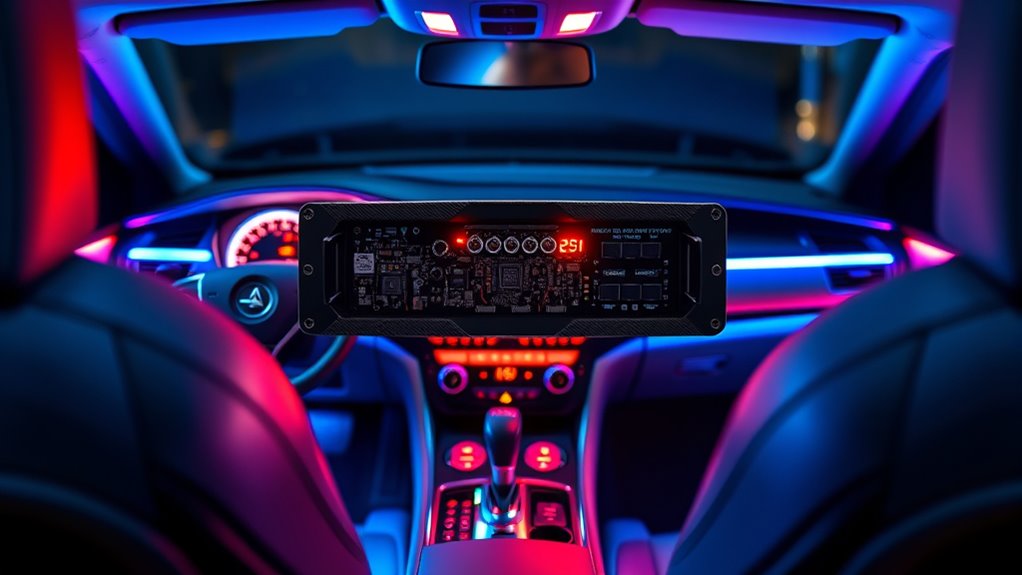

Car audio DSP processors help correct speaker timing, shape frequency response, and route signals for a more controlled system. My best overall pick is the Dayton Audio DSP-408, whose four inputs and eight outputs suit multi-speaker systems that need flexible routing; the Banda Audiopart X8AiR stands out for its 79-band equalizer and Bluetooth, while the B2 Audio 4V targets buyers seeking high-resolution processing and 10 channels. The main tradeoffs are channel capacity, tuning access, and whether you want Bluetooth or a wired setup. More channels give you room to expand, but they can add complexity and make setup more demanding. Read on for the full breakdown and guidance on matching a processor to your system.

Get business pricing on garage and car supplies
- Business-only prices and quantity discounts
- Tax-exempt purchasing
- Multiple users, one account, clear invoices
Complete the kit


Key Takeaways
- The Dayton Audio DSP-408 leads for flexible routing: four inputs and eight outputs give it more room for independently tuned speakers than the four-output models.
- The Banda Audiopart X8AiR pairs eight channels with Bluetooth and a 79-band equalizer, making it a standout for detailed adjustment without relying on the Dayton’s input and output layout.
- Four-channel processors such as the Timpano TPT-SP4BT and Taramps PRO 2.4S fit simpler builds, but they leave less room for separate amplification and future system expansion.
- Bluetooth is not the same across this lineup: several models include wireless control, while others prioritize a remote or wired setup, so check how you plan to tune before choosing.
- Channel count alone does not decide the best fit: output needs, app or software workflow, and installation details matter as much as features like equalizer band count.


| car audio dsp processor | Weight | Outputs | Dimensions | Inputs |
|---|---|---|---|---|
| Timpano TPT-SP4BT Bluetooth DS | 6.4 ounces | 4 channels | 3.15 x 2.36 x 0.5 inches | — |
| Taramps PRO 2.4S Car Audio DSP | 15.9 ounces | — | 4.45 x 7.8 x 1.46 inches | RCA and high-level |
| Taramps Pro 2.4 BT Bluetooth D | 15.2 ounces | 4 | 7.8 x 5.12 x 1.38 inches | 2, including high-level input |
| PRV Audio Car Audio DSP 2.4X D | — | 4 | — | 2 |
| Taramps PRO 2.8S Black 8-Chann | 15.8 ounces | 8 independent outputs | 7.8 x 4.45 x 1.46 inches | 2 |
| PRV AUDIO Car Audio Bluetooth | 1.4 pounds | — | 8.79 x 4.6 x 1.41 inches | High-level inputs supported |
| Taramps DSP Pro 2.4S Car Audio | 15.8 ounces | — | 7.8 x 4.45 x 1.46 inches | — |
| Banda Audiopart X8AiR DSP Car | 10.56 ounces | 8 | 6 x 6 inches | — |
| Stetsom STX2448 Floating PRO | 14.9 ounces | — | 9.02 x 4.47 x 1.44 inches | — |
| B2 Audio 4V 10 Channel DSP wit | — | — | — | — |
| LOWDR Car Audio LDX 2.4 Digita | 16 ounces | 4 | — | 2 |
| Dayton Audio DSP-408 4 Input 8 | 1.9 pounds | 8 | — | 4 |
| PRV AUDIO Car Audio DSP 2.8X D | 1 pound | 8-channel crossover outputs | — | — |
More Details on Our Top Picks
Timpano TPT-SP4BT Bluetooth DSP 4 Output Channel Car Audio Processor
The Timpano TPT-SP4BT is the space-saving choice here: its listed dimensions are just 3.15 x 2.36 x 0.5 inches, and Bluetooth control lets a compatible smartphone handle sound adjustments. That makes it a better fit for an install where a small processor and quick app-based changes matter more than a detailed hardware interface. It offers equalization, crossover, and phase adjustments, plus a voltmeter and frequency generator. Compared with the Taramps PRO 2.4S, the Timpano emphasizes compactness and wireless convenience rather than documented 15-band EQ, delay alignment, and limiter features. The tradeoff is that the supplied details do not specify its input options or compatibility across systems, and full control depends on a compatible phone. I’d shortlist it for a basic, space-constrained setup, but check system compatibility before choosing it.
Pros:- Bluetooth smartphone control supports convenient real-time sound adjustments.
- Small, lightweight housing can fit installations with limited space.
- Provides equalization, crossover, and phase adjustments.
- Includes a voltmeter and frequency generator.
Cons:- Full functionality depends on access to a compatible smartphone.
- Provided specifications do not identify input types or confirm broad system compatibility.
- Its feature details are less extensive than the Taramps PRO 2.4S listing for delay alignment and limiting.
Best for: Drivers building a compact four-output system who want to adjust sound from a compatible smartphone and have limited installation space.
Not ideal for: Buyers who need documented high-level and RCA inputs, advanced delay and limiter controls, or a clearly specified integration path; the Taramps PRO 2.4S lists more of those details.
- Model:TPT-SP4BT
- Outputs:4 channels
- Dimensions:3.15 x 2.36 x 0.5 inches
- Weight:6.4 ounces
- Color:Black
- Connectivity:Bluetooth smartphone control
- Sound controls:Equalization, crossover filters, and phase adjustment
- Additional functions:Voltmeter and frequency generator
Our verdict“Choose the TPT-SP4BT for a compact, phone-controlled four-output setup, but verify compatibility if your system needs clearly documented inputs.”
Taramps PRO 2.4S Car Audio DSP Equalizer 4 Channel Digital Crossover
The Taramps PRO 2.4S stands out for buyers who want substantial tuning control and do not mind a more involved setup. Its 15-band graphic EQ, parametric EQ, active crossover, delay alignment, and limiter give an installer several ways to shape and protect a four-channel system. RCA and high-level inputs also make it a more clearly specified integration option than the Timpano TPT-SP4BT, whose supplied details do not identify input types. Protection features such as Anti-Pop and clip indicators add practical help during setup and operation. The tradeoff is that this is not the pick for someone seeking the simplest phone-led adjustment process: tuning it well calls for technical knowledge. Mounting hardware is not included, and the listing describes it as intended for car audio rather than broader audio use.
Pros:- 15-band graphic EQ and parametric EQ provide detailed sound shaping.
- RCA and high-level inputs support factory and aftermarket stereo integration.
- Delay alignment, active crossover, and limiter add useful system controls.
- Anti-Pop protection and clip indicators support setup and operation.
Cons:- Its wide range of controls can make setup challenging for inexperienced tuners.
- Mounting hardware is not included.
- The specified four-channel configuration may not suit systems that need more outputs.
Best for: DIY installers and car-audio specialists connecting factory or aftermarket stereos who want detailed EQ, crossover, delay, and limiter control.
Not ideal for: Drivers who want a minimal setup or primarily app-based wireless tuning; the Timpano TPT-SP4BT foregrounds Bluetooth smartphone control instead.
- Channels:4
- Inputs:RCA and high-level
- Graphic EQ:15 bands
- Equalization:Graphic and parametric EQ
- Crossover:Active crossover
- Additional processing:Delay alignment and limiter
- Protection features:Anti-Pop system and clip indicators
- Dimensions:4.45 x 7.8 x 1.46 inches
- Weight:15.9 ounces
Our verdict“Pick the PRO 2.4S when detailed wired integration and hands-on tuning matter more than beginner-friendly setup.”
Taramps Pro 2.4 BT Bluetooth DSP Crossover Digital Signal Processor for Car Audio
The Taramps Pro 2.4 BT pairs a four-output layout with Bluetooth 5.4 BLE configuration, making wireless tuning its clearest distinction from the wired-control emphasis of the Taramps PRO 2.4S. Its app support for iOS and Android, 15-band graphic EQ, and 12 preset EQs give users a way to adjust settings and keep alternate sound profiles. The stated preset import and export support is useful for moving configurations between compatible setups. A listed gain capability of up to 9V adds a system-matching detail for buyers planning their signal chain. The tradeoff is that app-based access does not remove the learning curve: the available controls still call for technical setup knowledge. Its two inputs and four outputs also make it less suitable than the Taramps PRO 2.8S for systems that need eight independent outputs.
Pros:- Bluetooth 5.4 BLE enables wireless configuration from iOS and Android devices.
- 15-band graphic EQ and 12 preset EQs offer several ways to shape and save sound.
- Preset import and export support can simplify sharing configurations.
- Metal housing is specified for the processor.
Cons:- Advanced configuration may be difficult for buyers without car-audio tuning knowledge.
- Two inputs and four outputs limit its fit for larger multi-channel systems.
- The product description does not detail specific crossover, delay, or limiter capabilities.
Best for: Car-audio owners who tune from an iOS or Android device and want multiple EQ presets that can be imported or exported.
Not ideal for: Installers building a system that needs more than four outputs, or buyers who prefer avoiding app-dependent configuration; the PRO 2.8S offers eight outputs.
- Inputs:2, including high-level input
- Outputs:4
- Graphic EQ:15 bands
- Preset EQs:12
- Bluetooth:Bluetooth 5.4 BLE
- Supported platforms:iOS and Android
- Gain:Up to 9V
- Dimensions:7.8 x 5.12 x 1.38 inches
- Weight:15.2 ounces
Our verdict“Choose the Pro 2.4 BT for app-based four-output tuning and shareable presets, not for an eight-output build.”
PRV Audio Car Audio DSP 2.4X Digital Crossover and Equalizer, 4 Channel Full Digital Signal Processor with Remote
The PRV Audio DSP 2.4X is the clearest choice in this group for buyers who want a display on the processor: its 16×2 LCD supports direct, visible adjustments rather than relying on the Bluetooth app approach of the Taramps Pro 2.4 BT. It combines a 15-band graphic EQ, 12 presets, parametric equalization, and independent crossover outputs, giving a four-output system useful tuning flexibility. A sequencer can also trigger other components, which may help when coordinating equipment in a custom install. Compared with the Taramps PRO 2.4S, the PRV listing highlights the LCD and sequencer, while the Taramps listing spells out high-level and RCA inputs, delay alignment, and limiter functions. The PRV’s setup can still be demanding, and its available product details do not fully describe system integration or physical dimensions.
Pros:- 16×2 LCD provides a direct interface for adjustments.
- 15-band EQ and 12 presets support varied tuning profiles.
- Independent crossover outputs allow separate output tuning.
- Sequencer can trigger connected audio components.
Cons:- Setup may demand car-audio tuning knowledge.
- The supplied product details do not specify input types or physical dimensions.
- The four-output configuration is less suited to systems needing more channels.
Best for: Installers and experienced owners who prefer a built-in LCD and need independent crossover control or a trigger sequencer in a four-output setup.
Not ideal for: Buyers who require extensively documented input compatibility, delay alignment, or limiter specifications; the Taramps PRO 2.4S lists those features more clearly.
- Inputs:2
- Outputs:4
- Graphic EQ:15 bands
- Presets:12
- Display:16×2 LCD
- Equalization:Graphic and parametric EQ
- Crossover:Independent crossover outputs
- Remote trigger:Sequencer trigger supported
Our verdict“Choose the PRV 2.4X if an on-unit LCD and sequencer matter more to you than the more fully documented integration features of the Taramps PRO 2.4S.”
Taramps PRO 2.8S Black 8-Channel Car Audio DSP Digital Signal Processor
The Taramps PRO 2.8S earns its place as the multi-channel pick: eight independent outputs give an installer more routing room than the four-output Timpano TPT-SP4BT, Taramps PRO 2.4S, Taramps Pro 2.4 BT, and PRV DSP 2.4X. That capacity suits systems dividing speakers and subwoofers across multiple amplifier channels, while its 15-band EQ, crossover filters, and time alignment provide tools to tune those outputs. Dynamic RMS and Peak limiters add control over signal levels. It accepts RCA and high-level inputs, so the listed connection options cover factory and aftermarket sources. The tradeoff is setup complexity: eight outputs and extensive controls reward careful planning, not plug-and-play expectations. Its two inputs may also restrict source routing, and the supplied details do not list Bluetooth control.
Pros:- Eight independent outputs allow flexible multi-channel system routing.
- RCA and high-level inputs support factory and aftermarket stereos.
- 15-band EQ, crossover filters, and time alignment support detailed tuning.
- Dynamic RMS and Peak limiters provide signal-level control.
Cons:- Complex configuration can challenge buyers without DSP setup experience.
- Two inputs may constrain systems requiring more input channels.
- Bluetooth control is not specified in the provided product details.
Best for: Experienced installers building a multi-amplifier system that needs up to eight independently processed outputs and factory- or aftermarket-stereo input support.
Not ideal for: Beginners seeking a simple four-channel processor or buyers who specifically want Bluetooth app tuning; the Taramps Pro 2.4 BT lists wireless configuration.
- Inputs:2
- Outputs:8 independent outputs
- Frequency range:10 Hz–22 kHz
- Graphic EQ:15 bands
- Processing:Crossover filters and time alignment
- Limiters:Dynamic RMS and Peak
- Dimensions:7.8 x 4.45 x 1.46 inches
- Weight:15.8 ounces
- Warranty:1 year
Our verdict“Choose the PRO 2.8S for a carefully planned system that needs eight independent outputs, and skip it if you only need straightforward four-channel control.”
PRV AUDIO Car Audio Bluetooth DSP 2.4X BT – 4 Channel Digital Signal Processor with Crossover and Equalizer
I’d shortlist the PRV AUDIO DSP 2.4X BT when retaining a factory radio matters more than expanding to a large multi-speaker system. Its high-level inputs support integration with factory infotainment, while the LCD and smartphone app give you two ways to adjust the sound. That blend makes it more approachable for a basic upgrade than the more setup-heavy Banda Audiopart X8AiR, which is built around eight output channels and extensive tuning. The PRV’s four-channel limit is the tradeoff: it suits a modest system, but leaves less room for independently processing a complex speaker layout. The product information also gives limited vehicle-specific compatibility guidance, and there’s no included remote for physical adjustments. I’d choose it for convenient factory-radio tuning, not maximum system flexibility.
Pros:- High-level inputs support connection to factory radios
- LCD and smartphone app offer two adjustment methods
- Crossover and equalizer controls allow system-specific tuning
Cons:- Four channels limit flexibility for larger, multi-zone systems
- Vehicle-specific compatibility details are limited
- No remote control is included for manual adjustments
Best for: Drivers keeping a factory head unit who want app or LCD adjustments for a straightforward four-channel car audio system.
Not ideal for: Builders adding multiple independently tuned speaker groups or subwoofer zones who need more than four channels, or buyers who require a dedicated manual remote.
- Channels:4
- Inputs:High-level inputs supported
- Controls:LCD display and smartphone app
- Tuning:Crossover and equalizer controls
- Dimensions:8.79 x 4.6 x 1.41 inches
- Weight:1.4 pounds
- Included components:DSP and high-level cable
- Warranty:1-year manufacturer defect warranty
Our verdict“Choose the PRV AUDIO DSP 2.4X BT for app-and-display tuning in a factory-radio upgrade, but pick an eight- or ten-channel model for a more complex build.”
Taramps DSP Pro 2.4S Car Audio Processor and Equalizer
The Taramps DSP Pro 2.4S is a practical fit for buyers who want to shape a system with a clearly specified graphic EQ rather than rely on a broad, app-centered feature set. Its 15-band equalizer, 12 preset modes, and adjustable crossover give tuners several ways to refine the signal, and the included remote adds convenient control. Compared with the PRV AUDIO DSP 2.4X BT, the Taramps lists more detail about EQ presets and frequency range, but the PRV offers both an LCD and smartphone-app adjustment. The 2.4S is limited to two input and four output channels, so it isn’t the pick for a larger setup like the Banda Audiopart X8AiR. Its tuning options also bring a steeper setup curve for anyone unfamiliar with crossovers and filters.
Pros:- 15-band graphic equalizer supports detailed frequency adjustments
- 12 preset EQ modes offer starting points for tuning
- Remote control provides convenient adjustment access
- Adjustable crossover filters support speaker-specific signal routing
Cons:- Setup may be challenging without audio-tuning knowledge
- Four output channels restrict expansion compared with eight- and ten-channel options
- No smartphone-app control is specified
Best for: Car audio owners building a two-input, four-output system who want a dedicated remote, multiple EQ presets, and hands-on tuning control.
Not ideal for: Beginners seeking a simple setup, or system builders needing more than four outputs or wireless app-based adjustment.
- Input channels:2
- Output channels:4
- Equalizer:15 bands
- Preset EQ modes:12
- Frequency range:10 Hz to 22 kHz
- EQ boost/attenuation:+12 dB / -45 dB
- Dimensions:7.8 x 4.45 x 1.46 inches
- Weight:15.8 ounces
Our verdict“Pick the Taramps DSP Pro 2.4S if you want a remote-controlled four-channel processor with defined EQ tools and are comfortable tuning it yourself.”
Banda Audiopart X8AiR DSP Car Audio Processor with 8 Channels, Bluetooth & 79-Band Equalizer
For a system with several speaker groups to tune independently, the Banda Audiopart X8AiR offers a stronger fit than four-output processors such as the Taramps DSP Pro 2.4S. Its eight outputs provide more routing room, while the 79-band equalizer and Bluetooth app control support detailed adjustments without requiring a physical control panel. The listed 32-bit/96 kHz processing also signals a high-resolution design, though channel count and tuning needs matter more to most buyers than resolution figures alone. This flexibility comes with a real setup burden: the product is aimed at complex installations, and buyers may need technical help to configure it well. Software update support is listed as unknown, which leaves less clarity for owners who care about ongoing app or firmware support.
Pros:- Eight outputs accommodate more complex multi-speaker systems
- 79-band equalizer allows fine-grained frequency tuning
- Bluetooth app control supports wireless adjustments
- Specified 32-bit/96 kHz processing
Cons:- Complex installation and tuning may require technical experience
- Software update support is listed as unknown
- Eight outputs may be unnecessary for a basic factory-radio upgrade
Best for: Experienced installers and car audio enthusiasts configuring multiple speaker groups who want eight outputs and app-based, fine-grained EQ control.
Not ideal for: Drivers seeking a simple plug-in upgrade, a basic four-channel processor, or clear information about future software support.
- Outputs:8
- Equalizer:79 bands
- Processing:32-bit / 96 kHz
- Connectivity:Bluetooth
- Compatibility:Factory and aftermarket systems
- Dimensions:6 x 6 inches
- Weight:10.56 ounces
- Wattage:6 watts
Our verdict“Choose the X8AiR when eight independently managed outputs and detailed app-based tuning justify a more involved setup.”
Stetsom STX2448 Floating PRO – Professional DSP Audio Processor with 15-Band Equalizer
The Stetsom STX2448 Floating PRO stands out for buyers who need flexibility at the input stage and control over signal peaks, rather than an especially large output count. Its RCA and high-signal inputs let it suit different source setups, while peak and RMS limiting can help manage levels within a tuned system. Standard and PRO modes, plus floating DSP operation, give it a different emphasis from the Taramps DSP Pro 2.4S: both list a 15-band EQ, but Stetsom adds specified limiter types and a remote sequencer. The tradeoff is that detailed setup still calls for audio knowledge, and the product data doesn’t state the number of input or output channels. I’d avoid choosing it on channel capacity alone until that information is confirmed.
Pros:- Accepts both RCA and high-signal inputs
- Peak and RMS limiter options support level management
- 15-band graphic equalizer provides frequency adjustment
- Remote sequencer is included as a listed feature
Cons:- Input and output channel counts are not specified in the provided data
- Optimal setup requires technical audio knowledge
- Floating DSP operation may be more flexibility than a simple upgrade needs
Best for: Installers who need RCA or high-level source connections and want onboard peak and RMS limiting in a configurable car audio processor.
Not ideal for: Buyers who need a clearly documented channel count or a beginner-oriented setup with extensive compatibility guidance.
- Input types:RCA and high signal
- Equalizer:15 bands
- Modes:Standard and PRO
- Input level adjustment:Yes
- Limiter:Peak and RMS
- Remote sequencer:Yes
- Dimensions:9.02 x 4.47 x 1.44 inches
- Weight:14.9 ounces
Our verdict“Choose the Stetsom STX2448 when mixed input options and limiter controls matter more than a clearly documented high channel count.”
B2 Audio 4V 10 Channel DSP with Bluetooth for iOS/Android, 96KHz, 32-Bit
The B2 Audio 10-channel DSP is the most expansion-ready option in this group: six inputs feed ten outputs, giving a complex system more routing capacity than the eight-output Banda Audiopart X8AiR or the four-channel PRV and Taramps choices. Its Bluetooth app control and specified 96 kHz, 32-bit processing make it appealing to builders who want wireless adjustments alongside a high-resolution signal path. The four-volt outputs are another useful system detail, though they don’t replace the need to match levels across connected equipment. The tradeoffs are limited information about software updates and reports of variable performance in the supplied product notes. I’d choose it for channel capacity, but buyers who value predictable setup support should compare the clearer feature documentation of the Banda first.
Pros:- Ten outputs provide the highest listed channel capacity in this group
- Six inputs support multi-source or multi-channel system planning
- Bluetooth app control works with iOS and Android
- Specified 96 kHz, 32-bit processing and four-volt output
Cons:- Software update support is not detailed
- Supplied product notes report variability in performance
- Its extensive channel capacity may be unnecessary for a basic system
Best for: Car audio builders planning a large system with several independently routed speaker groups and a preference for iOS or Android app control.
Not ideal for: Owners of simple four-channel upgrades, or buyers who want well-documented software support and consistent performance information before installation.
- Input channels:6
- Output channels:10
- Output voltage:4 volts
- Sample rate:96 kHz
- Bit depth:32-bit
- Connectivity:Bluetooth and RCA
- Control method:App and touch
- Channel configuration:7.1
Our verdict“Pick the B2 Audio DSP for a Bluetooth-controlled, ten-output build, but weigh its limited software details against the more clearly described Banda X8AiR.”
LOWDR Car Audio LDX 2.4 Digital Signal Processor and Equalizer, 4 Output 2 Input DSP with Bluetooth App Control, Parametric EQ, Crossover, and Limiter
The LOWDR LDX 2.4 suits installers who want to adjust a compact car system from a phone rather than rely on a dedicated front-panel interface. Its Bluetooth app control, parametric EQ, crossover, and time alignment give a tuner tools to shape speaker response and timing, while the listed RCA and high-level inputs offer flexibility when integrating with different source units. Compared with the PRV AUDIO DSP 2.8X, the LOWDR puts more emphasis on wireless app adjustment, while the PRV offers an LCD interface and eight crossover outputs. The LOWDR’s four outputs suit simpler systems, but limit expansion for multi-amp or more elaborate speaker layouts. Setup also asks for some DSP familiarity, and full control depends on having a compatible smartphone.
Pros:- Bluetooth app control allows adjustments without reaching for a processor-mounted interface.
- Parametric EQ and crossover tools support detailed speaker tuning.
- RCA and high-level input options can accommodate different source-unit installations.
- Time alignment and speaker-protection features support system tuning and component protection.
Cons:- Full control requires a smartphone, which may not suit buyers who prefer onboard controls.
- DSP setup can be challenging for first-time tuners.
- Four outputs restrict expansion compared with the PRV AUDIO DSP 2.8X’s eight-channel layout.
Best for: Car-audio owners building a four-output system who want to tune EQ, crossover points, and timing through a Bluetooth app.
Not ideal for: Beginners who want a simple plug-and-play setup, or builders planning an eight-channel system who need more output flexibility.
- Inputs:2
- Outputs:4
- Control:Bluetooth app control
- Tuning features:Parametric EQ, crossover, and time alignment
- Item dimensions:4.76 x 7.56 x 1.29 inches
- Weight:16 ounces
- Warranty:1 year
Our verdict“Choose the LOWDR LDX 2.4 for app-led tuning in a compact four-output system, but pick an eight-output processor if you expect to expand.”
Dayton Audio DSP-408 4 Input 8 Output Digital Signal Processor with Built-in EQ and Crossovers
The Dayton Audio DSP-408 is the most adaptable choice here for someone who wants one processor for either a vehicle or a home audio project. Its described four inputs and eight outputs leave more room for separate speaker and amplifier paths than the four-output LOWDR LDX 2.4, making it a better fit for systems that need more routing flexibility. Custom EQ, crossovers, and time alignment cover the core work of correcting response and coordinating speakers; the graphical configuration interface is intended to make those adjustments easier to manage. Bluetooth streaming is available only with an optional dongle, so wireless playback is not ready out of the box. The supplied data also identifies the model number as DAX88, which does not match the DSP-408 title, so buyers should verify the exact unit and software before ordering.
Pros:- Four inputs and eight outputs allow more signal routing than four-output processors such as the LOWDR LDX 2.4.
- Custom EQ, crossovers, and time alignment support detailed system tuning.
- The graphical interface is designed to simplify configuration.
- The described design supports both home and car audio applications.
Cons:- Bluetooth streaming requires an optional dongle.
- The supplied model number, DAX88, conflicts with the DSP-408 product title, so buyers should confirm the exact model.
- The product data gives limited detail about software update support.
Best for: DIY audio builders who need eight output channels for a flexible home or car setup and are comfortable configuring DSP software.
Not ideal for: Drivers seeking a car-focused processor with built-in Bluetooth streaming or buyers who need clear, consistent model and accessory details before purchase.
- Inputs:4
- Outputs:8
- Model number listed in specifications:DAX88
- Connectivity listed in specifications:Bluetooth
- Bluetooth streaming:Optional dongle required
- Weight:1.9 pounds
- Applications:Home and car audio
Our verdict“Pick the Dayton Audio DSP-408 when eight outputs and home-or-car flexibility matter more than built-in wireless streaming and unambiguous product details.”
PRV AUDIO Car Audio DSP 2.8X Digital Crossover and Equalizer 8 Channel Full Digital Signal Processor with Sequencer Remote Relay
The PRV AUDIO DSP 2.8X is a strong match for car-audio builders who want eight crossover outputs and direct access to adjustments through an LCD interface. Its 15-band graphic EQ and presets give the tuner ways to shape the sound without relying on the smartphone-based control used by the LOWDR LDX 2.4. The included sequencer function adds a system-control role: it can trigger other devices, which may help coordinate an installation beyond signal processing alone. Compared with the Dayton Audio DSP-408, the PRV is described specifically for vehicle systems and foregrounds its onboard display, while the Dayton is presented for both home and car use with a graphical configuration interface. The tradeoff is sparse technical detail: input specifications and included installation accessories are not established in the supplied data, and setup still calls for tuning knowledge.
Pros:- Eight-channel crossover outputs suit systems with multiple speaker and amplifier paths.
- LCD interface supports direct adjustments without depending on a phone app.
- 15-band graphic EQ and presets provide sound-shaping options.
- Sequencer can trigger other devices in the installation.
Cons:- Optimal setup requires some technical knowledge.
- The supplied description gives limited detail about inputs and other specifications.
- No installation accessories or hardware are listed as included.
Best for: Car-audio installers and experienced hobbyists who need eight crossover outputs, an onboard display, and a sequencer for connected equipment.
Not ideal for: First-time DSP owners who need extensive setup guidance, or buyers who require confirmed input details and installation hardware in the package.
- Outputs:8-channel crossover outputs
- Equalizer:15-band graphic EQ
- Interface:LCD
- Sequencer:Included
- Product dimensions:1.45 x 7.87 x 3.97 inches
- Weight:1 pound
- Model:DSP2.8 X
- Warranty:Product warranty available
Our verdict“Choose the PRV AUDIO DSP 2.8X for an eight-output vehicle system where onboard controls and sequencer capability matter more than beginner-friendly guidance.”

How We Picked
I compared these processors by how well their stated capabilities address real system needs: input and output count, routing flexibility, tuning tools, control method, and integration features. I gave more weight to an arrangement that can support independently tuned speakers than to a long feature list that may not suit a buyer’s amplifier or installation plan. I also distinguished Bluetooth control from remote-based or wired operation, since the preferred tuning workflow varies between builds.
The order reflects usefulness across a range of car audio projects, not a claim that one processor is best for every vehicle. The Dayton DSP-408 ranks first for its four-input, eight-output layout; other eight-channel models earn their place through different strengths, such as equalizer detail or connectivity. The four-channel options rank lower for versatility but can be a better match for compact or straightforward systems. I treated model names and listed features as the basis for comparison and avoided assuming that similar-looking versions share identical software, inputs, or accessories.
Factors to Consider When Choosing Car Audio Dsp Processors
Before choosing a DSP, I would map the system rather than start with a feature list. Count the signal sources and the amplifier channels you expect to control, then decide how much tuning you can comfortably manage. These checks help avoid buying a processor that either limits the build or adds controls you will not use.
Count the outputs you need now—and the ones you may add
List every speaker or speaker group that needs its own crossover, level, and time alignment. A tweeter and midrange that you want to tune independently each use a separate output, even if they share a location in the vehicle. Add a channel for each subwoofer feed you plan to control independently, then leave room for likely upgrades. Buying too few outputs can force compromises in routing; buying far more than the system needs may add cost and setup work without improving the result. A four-output processor can suit a focused system, while an eight- or 10-channel model gives more freedom for active front stages and additional zones. Check the amplifier’s channel count alongside the DSP’s outputs so the whole signal path matches.
Match inputs to the source and factory system
Output count gets attention, but the input side determines whether the DSP can connect cleanly to the vehicle’s audio source. Identify whether the signal comes from an aftermarket receiver, factory head unit, or a mix of sources, and check how many input channels your setup requires. A processor with more outputs than inputs can still be useful, but it cannot create independent source information that was never supplied. Factory systems may also apply their own equalization or volume-dependent processing, which can affect tuning and integration. Do not assume two processors with the same output count accept the same signal formats or offer the same input routing. Verify the connection types and source requirements before planning the installation.
Choose a tuning workflow you will actually use
DSP tuning involves more than moving equalizer bands: crossover points, levels, polarity, and time alignment all affect the final system. Bluetooth control can make adjustments convenient from a phone, while a wired computer interface may better suit a longer, methodical setup session. A remote can help with access to selected controls, but it is not a substitute for full configuration software. Check which device platforms the control app supports and whether its interface exposes the settings you need. If you are new to tuning, a processor with a manageable control workflow may be more useful than one whose headline feature is a large number of equalizer bands. Plan to use measurement tools or get help with final tuning rather than relying on preset claims alone.
Treat equalizer bands as tools, not a quality score
A higher band count can allow more precise corrections, but it does not automatically produce better sound. The available frequency range, filter behavior, channel linking, and ability to adjust bandwidth all affect how useful those bands are. Parametric equalization can give more control over the shape and location of a correction, while graphic equalization may be easier to understand at a glance. Avoid making many narrow adjustments to compensate for basic installation problems such as poor speaker placement or rattling panels. A well-chosen set of corrections is often easier to maintain than a complex curve that is hard to reproduce. Compare the type of EQ and the rest of the tuning controls, not just the band count.
Check installation, power, and noise considerations
A DSP sits between audio sources and amplifiers, so its mounting location and wiring can influence both reliability and noise. Confirm that the unit fits the available space and that its connections are accessible after installation. Plan signal and power routing carefully, keeping audio wiring away from sources of electrical interference where practical. Review how the processor powers on and off with the vehicle, especially if the system includes several amplifiers or remote-turn-on devices. A sequencer or relay feature may help coordinate equipment, but it does not remove the need to check current capacity and wiring requirements. If installation is unfamiliar, include labor and system troubleshooting in the decision rather than treating the processor as a standalone component.
Pay for flexibility that serves your build
More channels, wireless control, advanced EQ, and extra integration features can be worthwhile when they solve a real system need. They matter less if the build uses only a few outputs and will not change. A higher-capacity processor can be a sensible choice for a planned active system, but unused channels do not improve a basic setup by themselves. Conversely, choosing a limited model only to simplify the initial installation can lead to replacement when you add speakers or amplifiers. Write down the system you have, the upgrades you expect, and the tuning method you prefer before comparing models. That short plan helps separate useful headroom from feature count that adds complexity without a clear benefit.
Frequently Asked Questions
How many DSP output channels do I need for my car audio system?
Count the speakers or speaker groups you want to control independently, not just the number of amplifiers. For example, independently tuning tweeters, midranges, woofers, and a subwoofer takes separate outputs for those signals. If some speakers can share a processed signal, fewer outputs may work, but you give up individual crossover and level control. Leave a little room for a planned upgrade if replacing the DSP later would be difficult. The Dayton DSP-408, Banda X8AiR, and PRV 2.8X illustrate why eight-channel models suit more elaborate layouts than four-output options.
Should I choose Bluetooth control or a wired DSP?
Choose based on where and how you expect to tune, not on wireless connectivity alone. Bluetooth may let you make adjustments from a phone near the vehicle, while a wired computer workflow can be more suitable for careful setup at a stationary work area. Check app support for your device and confirm that the control method provides access to the settings you need. A bundled remote may offer convenient access to selected functions but may not replace full tuning software. If you will rarely change settings after setup, paying extra attention to the control method may matter less than getting the right inputs and outputs.
Can I use a DSP with my factory head unit?
Often, but compatibility depends on the head unit’s available outputs and the DSP’s input connections and signal handling. Some factory systems alter their output based on volume or apply built-in equalization, which can complicate tuning. Check the vehicle’s signal path before buying, including whether you need a way to access speaker-level signals or retain factory functions. A DSP cannot correct every limitation of the original source, and unsuitable input levels can create noise or distortion. When vehicle integration is complex, confirm the plan with an installer before selecting a processor based only on its channel count.
Is an eight-channel DSP worth choosing over a four-channel model?
An eight-channel model is worth choosing when the system needs more independently controlled outputs or you expect to add speakers and amplifiers. It can support more flexible active configurations, but it also gives you more settings to configure and more routing decisions to make. A four-channel processor can be a sensible fit for a simpler system that will stay close to its current layout. Compare input count as well as output count: the Dayton DSP-408, for example, is listed with four inputs and eight outputs, while that arrangement will not suit every source setup. Buy extra channels for a defined layout or realistic upgrade plan, not as a stand-alone sign of better performance.
Do I need a professional to tune a car audio DSP?
You can configure basic settings yourself if you understand crossovers, signal levels, and the speakers’ operating limits. Getting balanced timing and frequency response usually takes careful listening and measurement, and errors such as incorrect crossover settings can put speakers at risk. App access or a remote may make controls easier to reach, but neither guarantees a good tune. If the system uses several active channels or has factory signal-processing quirks, an experienced installer can save time and help diagnose problems. A practical approach is to plan the system and learn the controls yourself, then seek expert help if the result remains uneven or noisy.
Conclusion
For most buyers building a flexible multi-speaker system, I would start with the Dayton Audio DSP-408 as my best overall pick, thanks to its four-input, eight-output arrangement. My best value direction is a four-channel Taramps PRO 2.4S or TPT-SP4BT when the system is straightforward and extra outputs would go unused; compare their control and connection details before deciding. For a best premium, high-capacity choice, the B2 Audio 4V brings 10 channels and listed 96 kHz, 32-bit processing, while the Banda X8AiR stands out for Bluetooth and its 79-band EQ. Beginners should favor the simplest control workflow that still fits their planned channel count, rather than paying for unused capacity. For buyers who need eight outputs with a different feature mix, compare the Dayton, Banda, Taramps PRO 2.8S, and PRV 2.8X against the exact inputs, tuning access, and installation features your build requires.
Fall Picks
fall essentials
As an affiliate, we earn on qualifying purchases.