TL;DR

Get business pricing on garage and car supplies
- Business-only prices and quantity discounts
- Tax-exempt purchasing
- Multiple users, one account, clear invoices
Hoffman is developing the Badger, a vehicle platform that reuses components and software from used Tesla Model 3s and Model Ys to create vans, pickups and other body styles. The company plans kit and fully assembled versions, with an estimated price range of $24,950 to $82,490 and production of about 100 vehicles a year; those figures are plans, not confirmed output or final pricing.
Startup Hoffman is developing the Badger, a vehicle platform that combines salvaged Tesla components with a bespoke chassis to create vans, pickups and other body styles. The company plans to offer it as a kit or as a fully assembled vehicle, giving buyers a way to reuse Model 3 and Model Y parts in vehicles that differ from Tesla’s original sedans and crossovers.
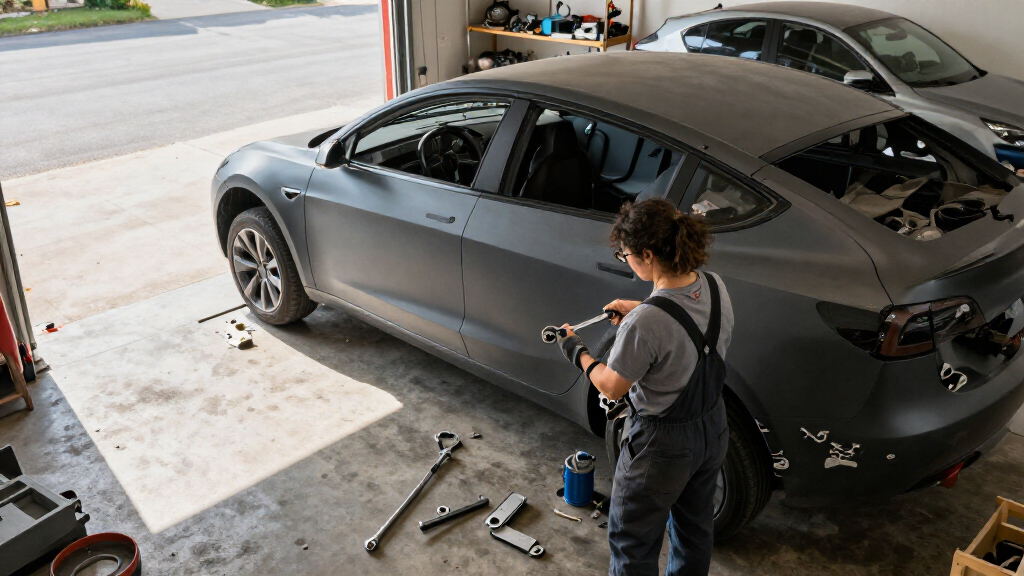
Hoffman’s approach is to recover parts from used Teslas, including seats, steering wheels, screens and airbags, as well as computers and software. The company combines those components with its own platform rather than simply converting a Tesla’s existing body. It calls the resulting vehicle concept the Badger. The Drive report says Hoffman previously worked on electric-vehicle conversions for DeLoreans.
A demonstration vehicle shown to Out of Spec Reviews was an off-road-oriented utility van. It had steep approach and departure angles, a raised battery pack to improve clearance beneath the vehicle, and removable doors and roof panels. The prototype’s interior was sparse, with a flat dashboard and floor, a Tesla steering wheel and a central touchscreen. The report describes it as a demonstration vehicle, not a finished production model.
Hoffman plans to offer a kit with a vehicle identification number, with buyers supplying the Tesla donor parts and assembling the vehicle themselves, as well as a turnkey option built by the company. CEO Geoffrey Hoffman told Out of Spec that pricing would vary with the buyer’s chosen configuration. The company’s current estimated range is $24,950 to $82,490, and it expects production capacity of about 100 vehicles annually. These are company estimates; the report does not provide a production start date or final specifications.
A Second Use for Tesla Components
The Badger concept could provide another use for components from written-off or otherwise used Teslas, while letting buyers choose vehicle shapes that Tesla does not offer through this project. Reusing existing electric-drive hardware may appeal to builders seeking a van or utility vehicle without developing a complete powertrain from scratch. However, the report does not establish how many donor vehicles Hoffman can source or how much reuse will reduce costs compared with a newly developed vehicle.
The proposed connection to Tesla’s software and services is also a selling point. Hoffman says Badger vehicles will use Tesla code and retain features such as Supercharger access and remote app control. Actual access and feature availability will depend on the final vehicle, the parts used and applicable service arrangements; the report does not detail how those systems will be supported after a conversion.
For buyers, the distinction between a kit and a turnkey vehicle matters. A kit shifts assembly work and sourcing to the customer, while a company-built vehicle would place more responsibility on Hoffman. The broad estimated price range reflects how much the final vehicle may depend on its configuration, but it is not a confirmed price list.
Products Worth Considering

Chemical Guys 10-Piece Car Wash Kit with Foam Gun

DEWALT 20V MAX XR Cordless 1/2-Inch Impact Wrench Kit (DCF900P1)

Autel Home EV Charger up to 50A, J1772 Hardwired Level 2 Charger, 25ft Cable
As an affiliate, we earn on qualifying purchases.
From Tesla Donors to Badger Builds
Hoffman’s proposal draws on a familiar electric-vehicle design idea: using a shared chassis and powertrain as a base for different vehicle bodies. Here, the company says it will pair its own platform with components harvested from Tesla Model 3s and Model Ys. The result is intended to support multiple formats, including trucks, vans and buses, rather than one fixed body style.
The plan differs from a conventional vehicle conversion described in the report. Hoffman is not presented as merely modifying the exterior of an intact Model 3 or Model Y. Instead, it intends to transfer selected Tesla hardware and software to a separate, bespoke platform. The Badger prototype shown to Out of Spec Reviews demonstrates one possible configuration, but the report does not show completed production vehicles or confirm that every planned body style has reached prototype stage.
“Pricing will obviously be highly variable depending on what the buyer wants.”
— Geoffrey Hoffman, Hoffman CEO, speaking to Out of Spec
Production Plans Still Need Testing
The report does not specify when production could begin, how many Badger vehicles have been built, or whether the prototype’s design and features will carry over unchanged. Hoffman’s estimate of roughly 100 vehicles per year describes expected capacity, but there is no confirmed schedule, order volume or delivery date in the source material.
Final prices, equipment choices and the range of available body styles also remain unsettled. The company’s estimated $24,950 to $82,490 span depends on customer configuration, and the report does not detail which parts are included in either a kit or a turnkey build. It also does not explain certification, warranty coverage, repair support, insurance treatment or how Tesla software and Supercharger access will work for each converted vehicle.
Awaiting Build and Pricing Details
The next clear milestones would be Hoffman publishing final specifications, kit contents and pricing, followed by a production timeline and information on how customers can obtain donor vehicles. Potential buyers will also need details about assembly requirements, vehicle certification and service support before judging whether the kit or turnkey option is practical for them.
Until Hoffman provides those details, the Badger remains a demonstrated concept backed by company plans and estimates. The report does not identify a confirmed launch date, announced customer deliveries or production results.
Key Questions
What is the Hoffman Badger?
The Badger is Hoffman’s planned platform for building vans, pickups and other vehicles using selected components and software from used Tesla Model 3s and Model Ys, combined with a separate chassis.
Will buyers have to assemble the vehicle themselves?
Hoffman plans to offer a self-assembly kit that requires buyers to supply Tesla donor parts, as well as a turnkey version assembled by the company. The report does not provide full details of either package.
How much is the Badger expected to cost?
The company’s current estimate is $24,950 to $82,490, with pricing expected to vary by configuration. The figures are estimates, not confirmed prices.
When will Hoffman begin production?
The report gives no production start date. Hoffman expects capacity of about 100 vehicles per year, but that is a company estimate rather than confirmed output.
Will Badger vehicles use Tesla’s charging network and app?
Hoffman says the vehicles will run Tesla code and support features such as Supercharger access and remote app control. The report does not explain the technical or service arrangements for those features in production vehicles.
Source: thedrive.com