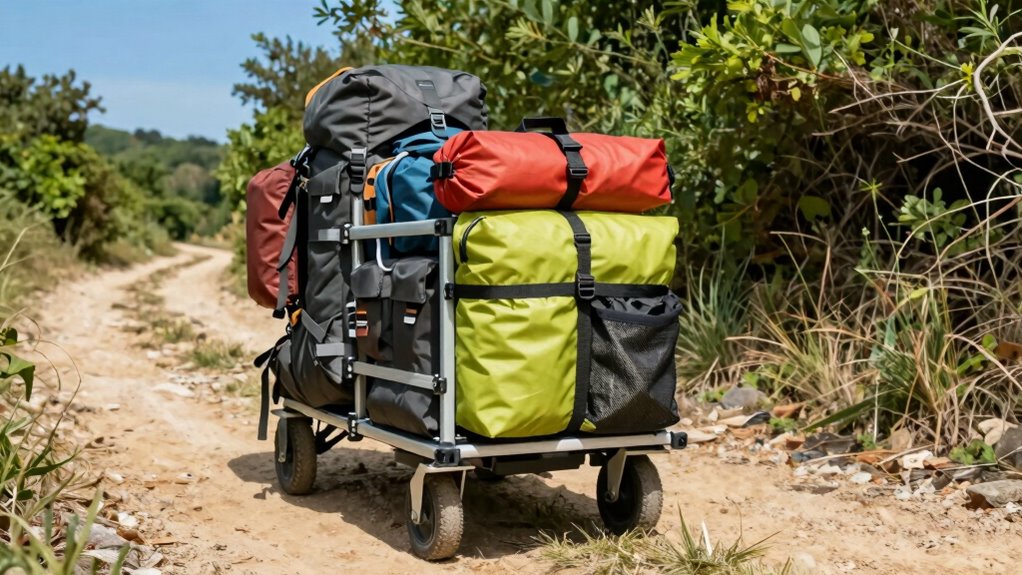

To set up a better cargo system for trail days, start by organizing gear into essentials like water, food, and navigation, and non-essentials like extra clothing. Use clear, labeled containers for easy access and keep heavy items close to your back for better balance. Secure loose gear with straps, and place frequently used items in easy-to-reach spots. Regularly reassess your setup to maintain stability and comfort—keep going to discover even more tips for a smooth hike.

Get business pricing on garage and car supplies
- Business-only prices and quantity discounts
- Tax-exempt purchasing
- Multiple users, one account, clear invoices
Key Takeaways
- Organize gear into essentials and non-essentials with labeled containers for quick access and visibility.
- Distribute weight by placing heavy items near the pack’s back and lighter items toward the outside.
- Secure loose gear with straps or bungee cords to prevent shifting during movement.
- Position frequently used items in easily accessible spots for quick retrieval.
- Regularly reassess and adjust your cargo setup to maintain balance and accessibility throughout the trip.

When preparing for trail days, having a well-organized cargo system can make all the difference in comfort and efficiency. You want your gear to be accessible, balanced, and secure so that you can focus on the trail instead of searching for items or dealing with shifting weight. The foundation of that system starts with supply organization. You should categorize your gear into essentials, like food, water, and navigation tools, and non-essentials, such as extra clothing or comfort items. Use clear, labeled containers or packs to keep everything visible and easy to find. This way, you can quickly grab what you need without rummaging through your pack, saving time and reducing frustration.
Next, pay close attention to weight distribution. Properly balancing the load not only makes your hike more comfortable but also reduces fatigue and the risk of injury. Place heavier items, like water bottles, stove, or cookware, close to your back and centered in your pack. This keeps the center of gravity aligned and prevents your pack from pulling you backward or to one side. Lighter items, such as snacks, first aid kits, or clothing, should be stored higher and toward the outside edges of your pack. This setup minimizes strain on your shoulders and hips, helping you maintain better posture and energy levels for longer stretches. Additionally, understanding cargo management techniques can further optimize your packing efficiency.
Balance your pack by placing heavy items centrally and lighter gear toward the outside for comfort and stability.
Another crucial aspect is securing your gear to prevent shifting during movement. Use straps, compression sacks, or bungee cords to tighten loose items, especially those on the outside of your pack. Shifting gear can throw off your balance, leading to discomfort or falls. Always double-check that your load is stable before setting off and periodically adjust as needed during your hike.
It’s also helpful to think ahead about accessibility. Place frequently used items — like water, snacks, or a rain jacket — in easy-to-reach spots, such as side pockets or top compartments. Less-used gear can go toward the bottom or in outer compartments. This way, you’re not digging through your entire pack every time you need something, which saves you energy and keeps your focus on the trail.
Finally, periodically reassess your cargo system throughout your trip. As your gear shifts or your needs change, make adjustments to maintain an optimal balance of supply organization and weight distribution. When your cargo is well-organized, your trail days are more comfortable, safer, and more enjoyable.
hydration water bottles for hiking
As an affiliate, we earn on qualifying purchases.
As an affiliate, we earn on qualifying purchases.
Frequently Asked Questions
What Materials Are Best for Durable Trail Cargo Containers?
You should choose durable container materials like high-density polyethylene, tough nylon, or corrosion-resistant metal for your trail cargo containers. These materials resist water, impact, and wear, ensuring your cargo stays organized and protected during trail days. Opt for lightweight, weatherproof options that handle rough conditions while keeping your gear accessible. By selecting the right cargo organization containers, you’ll improve efficiency and safeguard your gear throughout your adventure.
How Can I Secure My Cargo Against Theft on the Trail?
Worried about theft prevention on the trail? You can secure your cargo effectively by using lockable containers or padlocks on your gear. Keep valuables hidden and use camouflage covers to deter theft. Additionally, consider installing a cable lock through your cargo and attaching it to a sturdy, immovable object when resting. These cargo security tips help reduce theft risks and give you peace of mind while exploring.
What Weight Limits Should My Cargo System Adhere To?
You should adhere to your cargo system’s specified weight capacity, which guarantees safe weight distribution and prevents damage. Check your rack’s cargo capacity, and don’t overload it, as this can compromise stability and safety. Distribute weight evenly across your system to maintain balance, especially on uneven terrain. Staying within these weight limits helps you control your bike better and reduces the risk of accidents or equipment failure.
How Do I Balance Load Distribution for Comfort?
Think of your cargo system as a tightrope walk—you need perfect balance. To achieve this, use strategic packing techniques by placing heavier items close to your back and centered, reducing strain. Consider ergonomic factors like adjusting straps and distributing weight evenly across your hips and shoulders. Regularly check your load during the hike, ensuring your balance stays steady, so you move confidently without discomfort or risk of injury.
Are There Eco-Friendly Options for Trail Cargo Storage?
Yes, you can choose eco-friendly trail cargo storage options like containers made from recycled plastics and bags crafted from biodegradable fabrics. These materials reduce environmental impact and are durable enough for trail use. Look for products labeled as eco-friendly, and consider repurposing lightweight, sustainable materials. By opting for recycled plastics and biodegradable fabrics, you support conservation efforts while efficiently organizing your gear for trail days.
organized camping gear containers
As an affiliate, we earn on qualifying purchases.
As an affiliate, we earn on qualifying purchases.
Conclusion
By organizing your gear efficiently and prioritizing accessibility, you’ll enjoy smoother trail days and less frustration. For example, imagine packing a dedicated quick-access pocket for essentials like snacks and maps, saving you time and energy during your hike. With a well-thought-out cargo system, you’ll be better prepared for unexpected situations and can focus on enjoying the journey. Ultimately, a smart setup transforms your trail experience from stressful to seamless.
As an affiliate, we earn on qualifying purchases.
lightweight backpack with multiple compartments
As an affiliate, we earn on qualifying purchases.
As an affiliate, we earn on qualifying purchases.
Halloween Picks
halloween
As an affiliate, we earn on qualifying purchases.