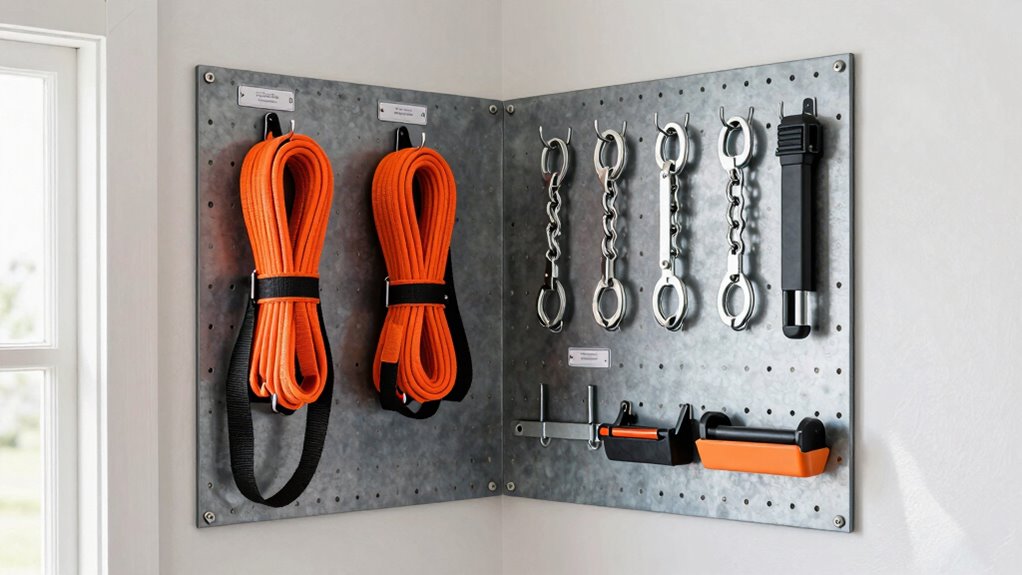

To keep your recovery straps, shackles, and tools easy to reach, organize them on wall-mounted hooks or a pegboard in your garage or vehicle area. Label each hook or container for quick identification, and store frequently used items nearby your workspace or vehicle. Use containers with compartments to prevent tangling and make sure everything stays in place. Regularly check and maintain your gear to keep it ready for use. Stay with us to learn more about efficient storage solutions.
Get ready for Prime Big Deal Days — try Prime free
Exclusive member deals on October 6–7, plus fast free delivery. Cancel anytime.
As an affiliate, we earn on qualifying purchases.
Key Takeaways
- Use labeled hooks or pegboards for quick identification and easy access to recovery gear.
- Store frequently used items within arm’s reach near the vehicle or work area.
- Organize tools and straps in compartments or containers to prevent tangling and facilitate rapid retrieval.
- Keep gear in a dedicated, visible storage area to avoid misplacement during emergencies.
- Regularly review and maintain storage to ensure gear remains accessible and in good condition.
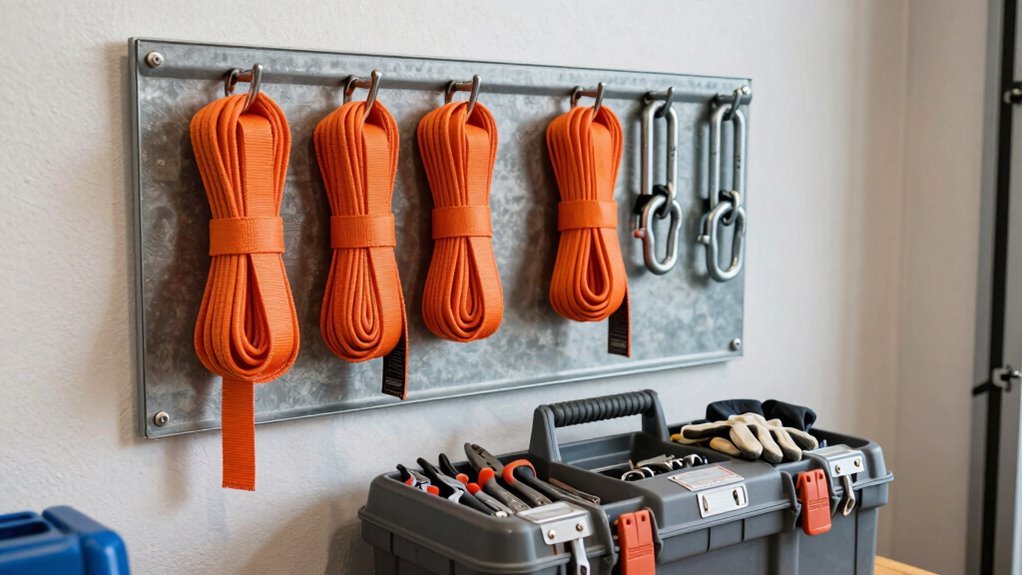
Start by choosing a dedicated storage area for your recovery gear. Whether it’s a sturdy toolbox, a wall-mounted rack, or a specialized bag, having a specific spot minimizes clutter and makes retrieval effortless. Use containers with compartments to separate straps, shackles, and tools, so nothing gets tangled or misplaced. Proper storage also involves keeping your equipment clean and dry; moisture can cause rust and weaken your gear over time. Storing items in a dry environment or using moisture-absorbing packets can extend their lifespan and ensure they’re ready to perform when needed.
Organizational tips include labeling storage containers or hooks. Clear labels help you quickly identify what you need without rummaging through multiple compartments. For example, designate one hook for shackles and another for recovery straps. Consider installing a wall-mounted pegboard or hooks in your garage or truck bed, so your gear hangs neatly and is always visible. This setup not only saves space but also allows you to see the entire inventory at a glance, reducing the risk of forgetting essential items. Additionally, understanding template compatibility can help you select storage solutions that fit seamlessly with your existing home office or garage setup. Knowing the storage capacity of your chosen containers ensures you can organize everything efficiently without overcrowding. Incorporating storage organization principles can further streamline your setup and prevent clutter from accumulating over time.
Another effective tip is to keep your most-used items within arm’s reach, ideally near your vehicle or work area. This way, during an emergency, you don’t waste time digging through storage boxes or bags. Rotating your gear periodically to ensure everything is in working condition is also beneficial; replacing worn-out straps or rusted shackles promptly helps maintain safety and reliability. It’s important to also consider gear durability, especially if you operate in rugged environments, to prevent equipment failure when it’s most needed. Ensuring proper storage maintenance can help extend the lifespan of your recovery gear and keep it in optimal condition. Consider investing in a portable recovery kit that consolidates all your essential gear in one easy-to-carry package, which you can keep in your vehicle or garage.
garage wall-mounted recovery strap hooks
As an affiliate, we earn on qualifying purchases.
As an affiliate, we earn on qualifying purchases.
Frequently Asked Questions
What Are the Best Storage Containers for Recovery Gear?
The best storage containers for recovery gear are those with clear labeling systems and sturdy construction. You should opt for mobile storage options like wheeled bins or tool chests, making it easy to transport your gear when needed. Use labeled compartments to keep recovery straps, shackles, and tools organized and accessible. This way, you’ll quickly find what you need, saving time and effort during urgent situations.
How Often Should I Check My Recovery Straps for Wear?
You should check your recovery straps for wear before each use, especially if they’ve been stored for a while. Incorporate regular inspection routines to spot any signs of fraying, cuts, or weakened material durability. Additionally, perform a more thorough check every few months or after heavy use. This guarantees your straps remain reliable and safe, preventing accidents or failures during recovery operations. Regular inspections keep your gear dependable and ready when you need it most.
Can I Store Recovery Gear in a Vehicle Trunk?
Yes, you can store recovery gear in your vehicle trunk. To guarantee vehicle organization and gear accessibility, use designated compartments or storage containers. Keep frequently used items like shackles and recovery straps near the top or in quick-access spots. Regularly check your gear for wear and tear, and make sure everything is secured to prevent movement while driving. Proper storage helps keep your recovery equipment ready when you need it most.
What Safety Precautions Should I Follow When Organizing Tools?
You should treat your tools like precious artifacts, not topple over like a Jenga tower. Proper labeling helps you find what you need in a flash, avoiding chaos. Secure fastening guarantees tools don’t become dangerous projectiles if you hit a bump. Always double-check that everything’s tight and labeled, so you avoid accidents or lost gear. Think of it as giving your tools a VIP pass—organized, safe, and ready when you need them most.
How Do I Prevent Recovery Gear From Rusting or Degrading?
To prevent your recovery gear from rusting or degrading, you should focus on corrosion prevention and choosing durable materials. Store your gear in a dry, cool place, and wipe it down after use to remove moisture. Consider applying a light coat of lubricant or rust inhibitor, especially on metal parts. Regularly inspect your gear for signs of wear and replace any compromised items to maintain material durability and guarantee safety during recovery.
pegboard tool organizer for recovery gear
As an affiliate, we earn on qualifying purchases.
As an affiliate, we earn on qualifying purchases.
Conclusion
Keeping your recovery straps, shackles, and tools within easy reach guarantees you’re always prepared for unexpected situations. While organizing might seem time-consuming, it actually saves you time and effort when you need these items quickly. Plus, knowing exactly where everything is boosts your confidence and safety during recovery. So, take a few minutes to organize your gear now—you’ll thank yourself later when you’re ready to tackle any challenge efficiently and safely.
recovery gear storage containers with compartments
As an affiliate, we earn on qualifying purchases.
As an affiliate, we earn on qualifying purchases.
As an affiliate, we earn on qualifying purchases.
Fall Picks
fall essentials
As an affiliate, we earn on qualifying purchases.