Manual locking hubs require you to physically turn a knob or lever to engage or disengage your front wheels, giving you control over when 4WD is active. Automatic hubs engage automatically when you switch into 4WD, offering convenience but sometimes risking failure in dirt or rust. Both types impact how your older 4×4 operates and how much maintenance they need. Keep going to explore how each system truly works and what suits your off-road adventures.
Key Takeaways
- Manual hubs require driver engagement, such as turning a knob or lever, to lock or unlock the wheels for 4WD use.
- Automatic hubs engage automatically when switching into 4WD, without driver input, and disengage when 4WD is turned off.
- Manual hubs offer greater control and durability, ideal for off-road conditions, while automatic hubs provide convenience for daily driving.
- Older 4×4 systems rely on mechanical locking mechanisms in manual hubs, and spring or pawl systems in automatic hubs.
- Proper maintenance of manual hubs involves periodic lubrication and inspection, whereas automatic hubs may need cleaning and internal part replacement.
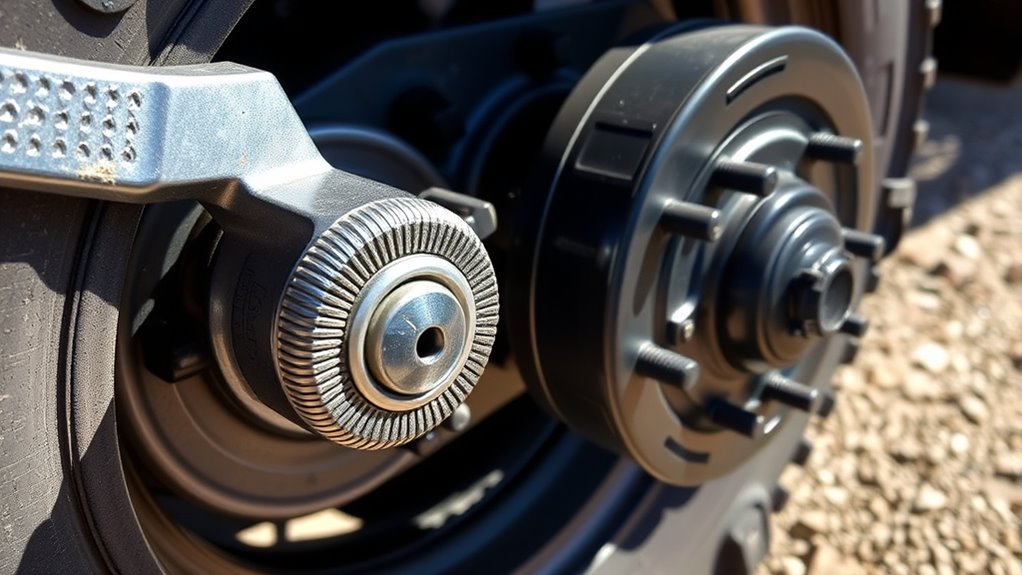
When choosing between manual and automatic locking hubs for your vehicle, understanding their differences can substantially impact your driving experience. Manual hubs require you to physically engage or disengage the hubs before and after off-road adventures or heavy-duty tasks. This means you need to get out of your vehicle, turn a knob or lever, and confirm the hubs are locked in place for 4WD operation. Once you’re done, you reverse the process to release them, saving wear on your drivetrain during regular driving. Automatic hubs, on the other hand, engage and disengage automatically when you switch into 4WD. They use locking mechanism types that activate without driver intervention, making them more convenient for everyday driving. This difference can influence how you approach hub maintenance, as manual hubs often require periodic lubrication, inspection, or replacement of parts like the locking mechanism components. Additionally, understanding the locking mechanism types is key to choosing the right system. Manual hubs typically use a simple, mechanical locking mechanism—either a manual lever or a rotational knob—that physically connects the hub to the axle. These mechanisms are straightforward, durable, and easier to service, which is why many off-road enthusiasts prefer them. They often provide better control over when your 4WD is engaged and tend to be more reliable in extreme conditions since they don’t rely on electrical systems. Automatic hubs employ a different locking mechanism that engages when you shift into 4WD and disengages when you switch back to 2WD. These hubs use a combination of springs, pawls, or free-rolling mechanisms to lock or release the hubs seamlessly. While they offer more convenience, they can sometimes fail due to dirt, corrosion, or electrical issues, impacting hub maintenance routines. Proper maintenance involves cleaning and sometimes replacing worn parts to keep the locking mechanism functioning correctly. Overall, understanding these key differences helps you weigh the convenience of automatic hubs against the control and durability of manual hubs, aligning your choice with your driving needs and maintenance preferences.
Frequently Asked Questions
Are Manual Hubs More Reliable Than Automatic Hubs?
Manual hubs are generally more reliable than automatic hubs because their manual hub durability is higher, reducing the chances of failure. You have full control over locking and disengaging, so you know exactly when your 4×4 is engaged. Automatic hubs offer greater convenience, but they can sometimes fail or slip without warning. If you prioritize dependability, manual hubs are a better choice, especially in tough off-road conditions.
How Often Should Manual Hubs Be Serviced or Replaced?
You should service your manual hubs every 30,000 miles or whenever you notice issues like difficulty engaging or disengaging. Regular hubs maintenance helps prevent failures, saving you time and money. Replacement intervals vary based on driving conditions, but most hubs last around 100,000 miles with proper care. Don’t ignore signs of wear—addressing problems early guarantees your 4×4 stays reliable and ready for off-road adventures.
Can Automatic Hubs Handle Off-Road Driving Better Than Manual Hubs?
Automatic hubs generally handle off-road driving better than manual hubs because they secure and release automatically, offering quick lock engagement without user effort. This improves hub durability by reducing the chance of user error and keeping the system engaged when needed. You’ll appreciate the convenience, especially in rough terrains, as automatic hubs guarantee consistent engagement, maintaining ideal power transfer and minimizing the risk of hub failure during demanding off-road adventures.
Do Automatic Locking Hubs Require Maintenance or Lubrication?
Automatic locking hubs are surprisingly low-maintenance, but they still need some love. You’ll want to check and grease them periodically—typically every 30,000 miles or so—to keep them performing flawlessly. Regular hub maintenance and proper lubrication frequency prevent dirt and moisture buildup, which can cause failure. While they’re more convenient, don’t forget to inspect and service them to ensure your 4×4 stays prepared for any adventure!
Are Manual Hubs Compatible With All 4×4 Vehicle Models?
Manual hubs aren’t compatible with all 4×4 vehicle models, so you need to check hub compatibility carefully. Some older or specific models may not support manual locking hubs, and vehicle model limits can restrict your options. Always verify your vehicle’s make and model before installing manual hubs to guarantee proper fit and function. This helps prevent damage and ensures you get the most reliable 4×4 performance.
Conclusion
Choosing between manual and automatic locking hubs is like picking the right gear for a journey—you want smooth control or effortless ease. Manual hubs give you the power to lock in when needed, like flipping a switch, while automatic hubs work behind the scenes, freeing you from constant attention. Understanding how each system works helps you navigate your 4×4 adventures confidently. Whichever you pick, you’re steering your truck’s destiny, making every off-road trip truly your own.